Snakehead Betta
Betta channoides
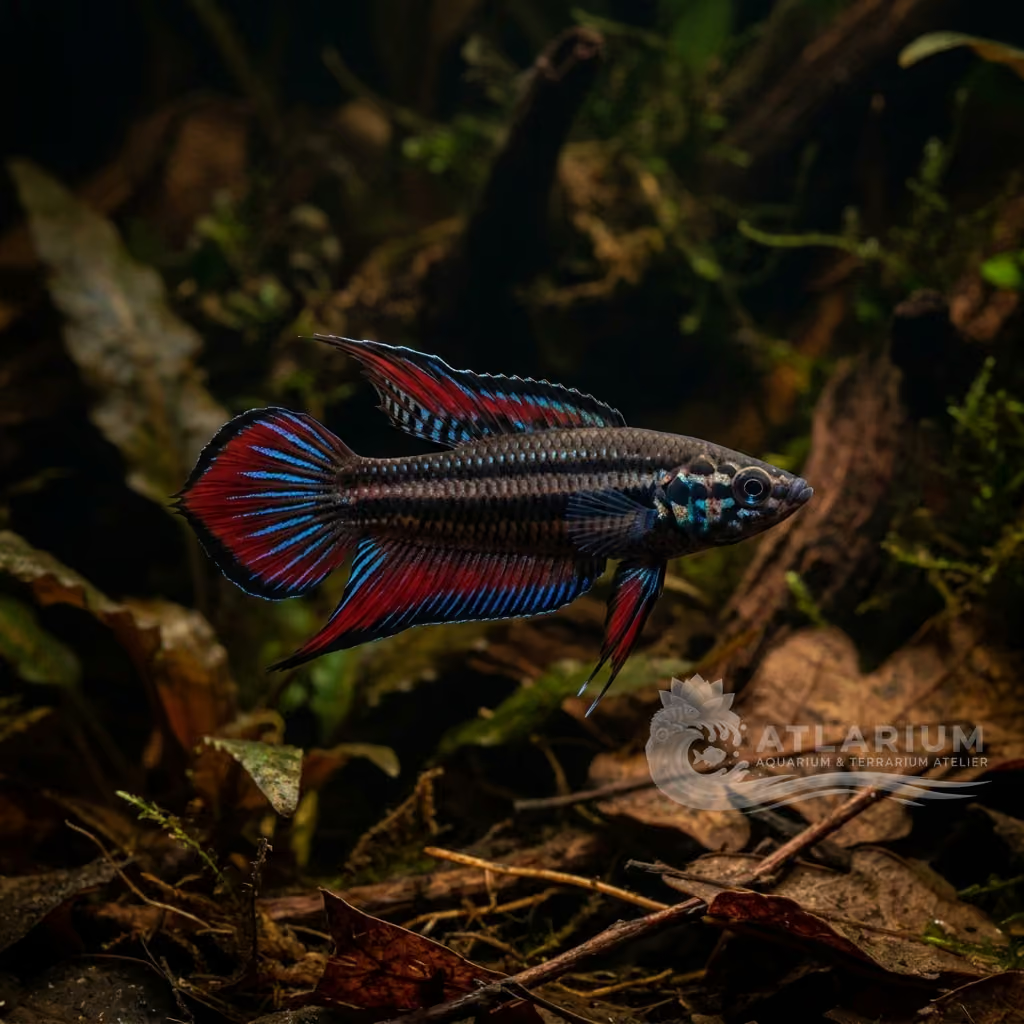
The 'Snakehead Betta' (5 cm). Splendid and peaceful oral brooding labyrinth fish native to the peat swamps of Borneo. Males show off an intense brick red livery bordered by pure white. Ideal for dark and heavily planted tanks.
Water Temperature
24 - 28 °C
pH Value
4 - 6.5
Water type
Freshwater
Tank level
All levels
Adult size
5 cm
Minimum tank volume
>= 60 L
Minimum group
>= 1
GH
1 - 5 dGH
KH
1 - 2 dKH
TDS
25 - 95 ppm
Conductivity
39 - 148 uS/cm

Species description
Geographical Origin and Habitat: Endemic to the Mahakam River basin in East Kalimantan (Indonesian Borneo). Inhabits shallow forest streams, peat swamps and flooded areas with dense decaying leaf litter and dark, acidic water.
Taxonomy and Morphology: Snakehead Betta (Betta channoides). Wild Betta closely related to B. albimarginata. The name "channoides" derives from the shape of the head, broad and massive, resembling that of Channa (snakeheads).
Social Behavior: Compared to other Bettas, it is noticeably peaceful and gregarious. Can be kept in pairs or small groups if there is enough space. Males may "display" by puffing out their throats, but rarely injure each other.
Coloration and Sexual Dimorphism: Males sport a deep brick-red or orange body with fins very sharply bordered by a black band and a pure white outer edge. Females are brownish-gray and much less conspicuous.

Care, breeding and tankmates
Aquarium Setup: Dedicated aquarium ("Blackwater" biotope) starting from 45 cm (18 inches). Mandatory a bottom of catappa, oak or beech leaves, intricate branches and low light. Sealed lid: they are formidable jumpers and need warm, humid air above the water.
Diet and Feeding: Insectivorous micro-predator. Feed predominantly with small live and frozen foods (Daphnia, Artemia, mosquito larvae, bloodworms). Rarely or with difficulty accepts commercial dry food.
Water Quality: Demands blackish, acidic (pH 4.0-6.5) and very soft waters, rich in humic acids. Extremely sensitive to pollutants and fluctuations in chemical parameters.
Compatibility and Cohabitation: Ideal in a species-only tank. In a community only with fish of similar size and equally calm and suited to "blackwaters", such as small Rasboras (Boraras) and Pangio. Never with fast or aggressive fish.
Aquarium Breeding: Paternal mouthbrooder. The male holds the eggs in his mouth (10 to 21 days depending on temperature) without eating, and then releases fully formed fry.
Risks and Diseases: Sensitive to Oodinium and bacterial infections if kept in overly hard and alkaline waters. A frightened or stressed incubating male may swallow or spit out the young prematurely.

Geographic origin and distribution
Endemic to the Mahakam River basin in East Kalimantan (Indonesian Borneo). Inhabits shallow forest streams, peat swamps and flooded areas with dense decaying leaf litter and dark, acidic water.
Origin
Tropical oceans and reefsSouth and Southeast Asia

Fish profile
- Temperament
- Semi-aggressive
- Compared to the highly aggressive domesticated Betta species, Betta channoides is remarkably peaceful and shy. They display territorial behaviors mainly towards conspecifics, which consist of harmless visual displays and flaring rather than physical damage. Males may squabble occasionally, but this rarely results in injury if the tank is spacious and well-decorated. Because of their timid nature, they can easily become intimidated by fast-moving or aggressive tankmates.
- Diet
- Omnivore
- In their natural habitat, Betta channoides are micro-predators feeding on small insects, insect larvae, and zooplankton. In the aquarium, they should be offered a varied diet consisting of live or frozen foods such as Daphnia, Artemia nauplii, microworms, and bloodworms. While they can sometimes be transitioned to accept high-quality crushed flakes or pellets, live and frozen foods are necessary to maintain their vibrant colors. Overfeeding must be carefully avoided, as Bettas are prone to obesity and digestive issues.
- Life expectancy
- 3-5 years
- Adult size
- 5 cm
- Sex ratio
- 1:1 ratio
- This species can be successfully kept in pairs (1:1 ratio) or in small, single-species groups. In a group environment, they exhibit fascinating social interactions, though males will establish minor territories and show off to one another. Having a balanced ratio of males to females is recommended to prevent any single individual from being excessively harassed. Providing plenty of plants and hiding spots ensures that submissive individuals can easily retreat and find shelter.
- Feeding frequency
- Twice daily
- It is recommended to feed Betta channoides small portions once or twice a day. Feeding them multiple smaller meals mimics their natural foraging behavior and prevents digestion problems. Providing a fasting day once a week can also help clear their digestive tract and reduce the risk of constipation. Only offer amounts that the fish can consume within a minute or two, ensuring that no uneaten food decays on the substrate.
- Bioload
- Low
- Betta channoides has a very low biological footprint due to its small size, typically reaching only 3.5 to 4 cm in length. Consequently, they generate minimal organic waste, making them well-suited for smaller, well-established aquariums. Their filtration system should prioritize biological stability rather than high turnover, with gentle air-powered sponge filters being ideal. Excessive water flow must be avoided to prevent stress, while regular, small water changes are essential to maintain the pristine water quality they require.
- Flow
- Stagnant
- This species originates from slow-moving or stagnant blackwater streams and peat swamps, meaning they have a strong preference for weak water flow. High currents cause physical exhaustion, stress, and prevent them from swimming comfortably. An air-powered sponge filter is highly recommended as it provides gentle filtration without creating disruptive surface movement. Any power filters used should be baffled or dialed down to their lowest setting to mimic their calm natural waters.
- Jump risk
- Yes
- Betta channoides is an exceptional jumper and can easily escape through even the smallest openings in the tank cover. Therefore, a completely secure, tight-fitting lid or a layer of plastic wrap is mandatory to prevent fatal jumps. Additionally, a gap of several centimeters must be left between the water surface and the lid. This headspace allows the fish access to the humid air layer required for the healthy function of their labyrinth organ.
- Reproduction
- Oviparous
- Betta channoides is a paternal mouthbrooder, which is an intriguing reproductive strategy. During spawning, the female collects the fertilized eggs and transfers them to the male, who broods them in his mouth for 10 to 21 days. The breeding aquarium must have soft, highly acidic water (pH 4.0-6.0) and be kept very quiet, as a stressed male may swallow the brood. Once the incubation is complete, the male releases fully formed, free-swimming fry that can immediately feed on microworms or freshly hatched brine shrimp.
- Compatibility & tankmates
- Species only
- Due to their timid temperament and specialized soft, acidic water requirements, Betta channoides is not suitable for a standard community tank. They are best kept in a dedicated species-only setup, either as a single pair or a small group. If tankmates are desired, they should be limited to very small, peaceful, and slow-moving species like dwarf loaches or micro-rasboras that share their environmental needs. Boisterous or aggressive species will easily outcompete them for food and cause severe chronic stress.
- Tank level
- All levels
- In the aquarium, Betta channoides is generally active across all levels, though they spend a significant amount of time in the bottom and middle zones. They naturally dwell near the substrate, seeking refuge among leaf litter, roots, and low-growing vegetation. However, as labyrinth fish, they frequently ascend to the surface to breathe atmospheric air. Providing resting places like tall plants or floating decor near the top of the tank is highly beneficial to support this behavior.

Scientific Parameters & Models
FishBase
Window to the official scientific data of the species
FishBase v25.04Data synced on: 06/15/2026
- Trophic level
- 3 ± 0.4 se
- Resilience
- High (less than 15 months)
- Phylogenetic uniqueness (PD50)
- 0.5
- Bayesian Length-Weight
- a = 0.01, b = 2.97
- VulnerabilityLow vulnerability (10 / 100)

Related species
Recommendations grouped by close relatives, companion choices, and similar care.