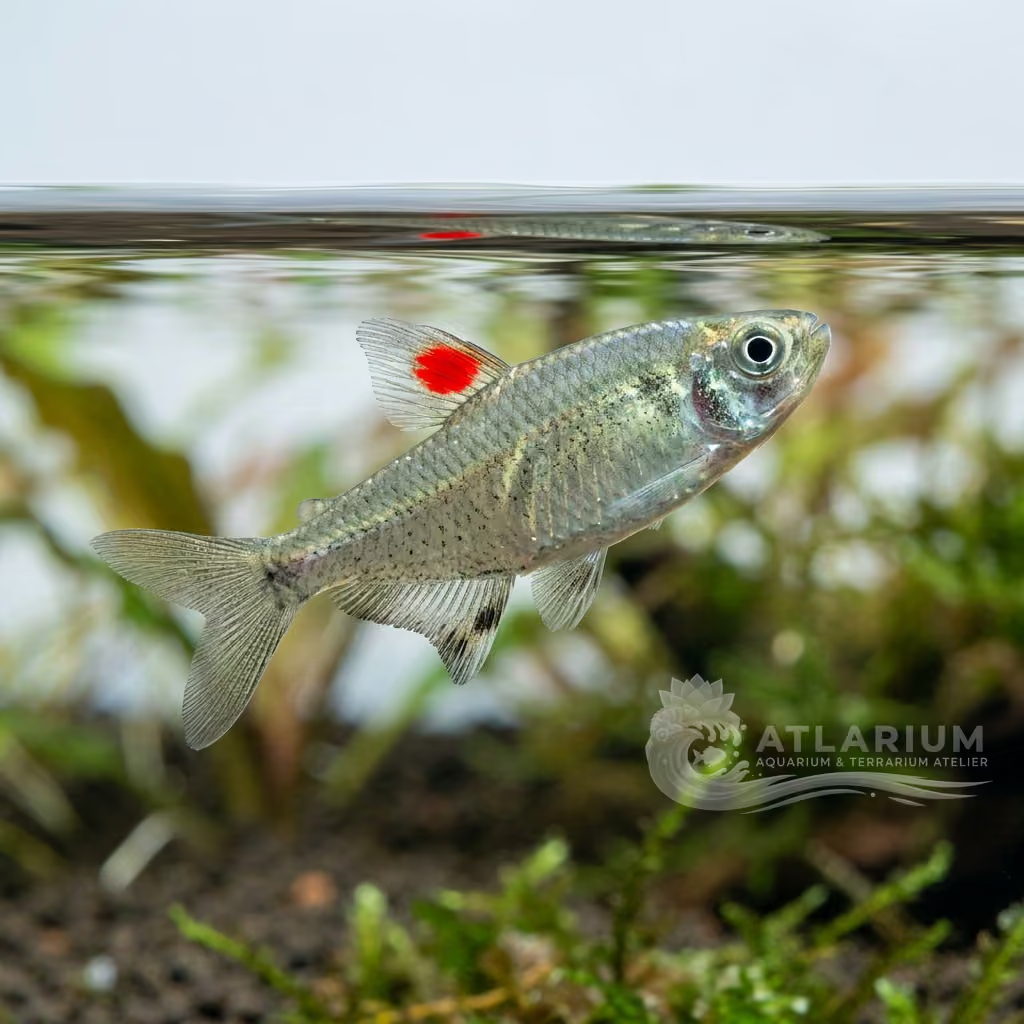
Edith's Betta
Betta edithae
The 'Edith's Betta' (6 cm). Robustly shaped oral brooding labyrinth fish from Borneo. Renowned for its ease of breeding and sober but fascinating colors, with blackish transverse bands and iridescent reflections on adult males. More sociable and easier than its extreme cousins.
Water Temperature
24 - 28 °C
pH Value
5 - 7.5
Water type
Freshwater
Tank level
All levels
Adult size
7 cm
Minimum tank volume
>= 60 L
Minimum group
>= 1
GH
1 - 10 dGH
KH
1 - 5 dKH
TDS
25 - 200 ppm
Conductivity
39 - 313 uS/cm

Species description
Geographical Origin and Habitat: Widely distributed in the lower Kapuas basin (Borneo) and various neighboring islands (e.g. Sumatra). Adapts to a wide range of biotopes: acidic peat swamps (blackwater) and clearer, slightly choppy marginal waters.
Taxonomy and Morphology: Edith's Betta (Betta edithae). A Betta of the "pugnax" group (medium-large size). Stocky and massive body with large scales; robust head. It is one of the most robust "wild" Betta species overall.
Social Behavior: Can be territorial. Males can cohabit in large tanks (over 80 cm / 32 inches) provided everyone has their portion of hiding places. They are not aggressive towards other calm fish species.
Coloration and Sexual Dimorphism: Less bright coloration compared to its "cousins". Sand/brown body with intense metallic green-blue iridescence on the opercula (cheeks) and yellowish nuances. Females and stressed specimens present two thick horizontal dark bands ("racing stripes").

Care, breeding and tankmates
Aquarium Setup: 60-80 cm (24-32 inches) aquarium. Provide a thick cover of floating plants (Salvinia, Limnobium), woods arranged to create visual barriers. It is a strong fish that can tolerate filters with a slightly more sustained flow.
Diet and Feeding: Ravenous omnivore/predator. Quickly gets used to high-quality pellets that it swallows in one bite. For the best health conditions, alternate with abundant live and frozen food, and some dried insects.
Water Quality: Tolerant and adaptable. Survives both in "black waters" at pH 5.0, and in normal aged tap water with pH up to 7.5 and medium hardness. Keep nitrate concentration low nonetheless.
Compatibility and Cohabitation: Exceptional fish for peaceful Asian community aquariums. Cohabits without any problem with Barbs (Pethia, Puntigrus), Rasboras, and Corydoras. Avoid large Gouramis or Cichlids that could attack it.
Aquarium Breeding: Mouthbrooder. Prolific species. The male can hold up to 80-100 eggs in his mouth for 10-14 days. The released young are already of good size and ready to hunt brine shrimp nauplii.
Risks and Diseases: Tends to be "bulletproof" when compared to other Bettas. Obesity is a real risk in a community aquarium, as it is able to sweep away food before other fish.

Geographic origin and distribution
Widely distributed in the lower Kapuas basin (Borneo) and various neighboring islands (e.g. Sumatra). Adapts to a wide range of biotopes: acidic peat swamps (blackwater) and clearer, slightly choppy marginal waters.
Origin
South and Southeast AsiaEast Asia

Fish profile
- Temperament
- Semi-aggressive
- Unlike the highly aggressive Siamese fighting fish, Betta edithae is a peaceful and relatively shy species. Males may exhibit minor territorial behavior, particularly when breeding, but serious fights are rare if sufficient space is provided. They are social fish that interact peacefully within their group and establish a stable hierarchy. Because of their timid nature, they can easily become stressed by very active or boisterous tankmates, requiring a calm environment.
- Diet
- Omnivore
- As carnivores, Betta edithae require a diet rich in high-quality proteins to maintain their health and color. They thrive on a variety of live and frozen foods, such as brine shrimp, daphnia, bloodworms, and white worms. While they may eventually learn to accept high-quality micro-pellets or freeze-dried foods, they are generally disinterested in standard flake foods. Feeding a varied diet is particularly important for conditioning breeding pairs and ensuring successful mouthbrooding.
- Life expectancy
- 3-5 years
- Adult size
- 7 cm
- Sex ratio
- Harem
- For Betta edithae, stocking in a harem configuration consisting of one male and two or three females is highly recommended. Alternatively, a compatible pair can be housed together in a smaller setup, or a larger, balanced group can be maintained if the tank is sufficiently spacious. In a group environment, they will establish a natural hierarchy, which helps to distribute minor territorial aggression. Providing multiple hiding spots and visual barriers is crucial to allow females and submissive males to retreat and rest.
- Feeding frequency
- Twice daily
- It is recommended to feed Betta edithae once or twice a day with small portions that they can consume within a few minutes. Overfeeding should be avoided to prevent water quality issues and health problems like bloating or constipation. Providing a weekly fast day can also be beneficial for their digestive health. During breeding, the mouthbrooding male will go without food for up to three weeks, so it is vital to condition him well beforehand.
- Bioload
- Low to Medium
- Betta edithae produces a low-to-medium biological load, making it relatively manageable in terms of aquarium filtration. However, due to its preference for clean, stable water, a reliable filtration system is necessary to prevent any accumulation of ammonia or nitrites. The filter should be sized appropriately for the aquarium volume but configured to avoid creating strong currents that can stress the fish. Regular partial water changes are essential to maintain the low nitrate levels this species needs to thrive.
- Flow
- Stagnant
- This species naturally inhabits still or very slow-moving waters, such as swamps, peatbogs, and quiet forest streams. Consequently, they prefer a weak water flow in the aquarium, as strong currents can exhaust and stress them. Air-powered sponge filters or hang-on-back filters with adjustable flow rates are excellent choices for their setup. Creating zones of calm water using dense planting and driftwood will help them navigate the tank comfortably.
- Jump risk
- Yes
- Betta edithae is an agile and accomplished jumper, representing a high risk of escape from open aquariums. They can easily leap through very small gaps in the cover, especially when startled, during spawning, or when exploring. A tight-fitting lid with no significant openings is absolutely mandatory to keep them safe inside the tank. Additionally, keeping the water level slightly below the rim and providing ample surface cover like floating plants can help minimize their jumping instincts.
- Reproduction
- Oviparous
- Betta edithae is a paternal mouthbrooder, which makes its reproductive behavior fascinating and relatively easy to observe in captivity. During spawning, which is often initiated by the female, the male fertilizes the eggs and collects them in his mouth. He will then incubate the eggs for 14 to 20 days without eating, requiring a quiet and stress-free environment. Once the fry are released, they are independent and should be fed immediately with newly hatched brine shrimp or microworms.
- Compatibility & tankmates
- Species only
- This peaceful species is highly compatible with other quiet, non-aggressive tankmates that share similar water requirements. Suitable companions include small tetras, rasboras, corydoras, and peaceful loaches. Boisterous, fast-swimming, or fin-nipping fish should be strictly avoided as they will easily outcompete or intimidate the betta. They can also be kept in a species-only tank, which is the ideal setup if successful breeding and fry survival are desired.
- Tank level
- All levels
- This benthopelagic species occupies all levels of the aquarium, actively moving throughout the entire water column. They spend a significant amount of time near the bottom and middle zones, searching for food and patrolling their territory among plants and driftwood. However, being labyrinth fish, they frequently visit the surface of the water to gulp atmospheric air. Providing floating plants and open surface areas ensures they feel secure and can breathe comfortably at the top.

Scientific Parameters & Models
FishBase
Window to the official scientific data of the species
FishBase v25.04Data synced on: 06/15/2026
- Trophic level
- 3.3 ± 0.4 se
- Resilience
- High (less than 15 months)
- Phylogenetic uniqueness (PD50)
- 0.5
- Bayesian Length-Weight
- a = 0.01, b = 2.97
- VulnerabilityLow vulnerability (10 / 100)

Related species
Recommendations grouped by close relatives, companion choices, and similar care.