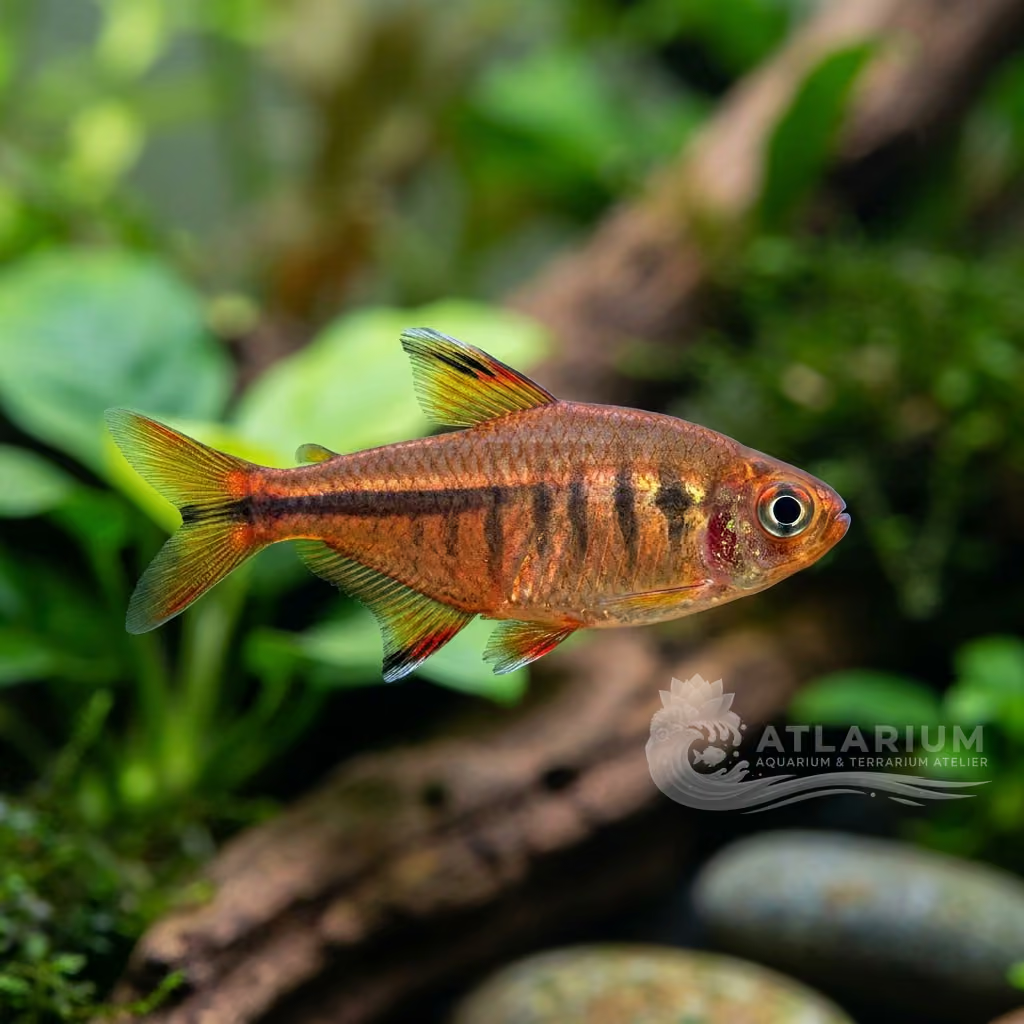
Croaking Gourami
Trichopsis vittata
The 'Croaking Gourami' (7 cm). The largest and most widespread member of the "Singing Gouramis" (Trichopsis). Robust torpedo-shaped species with enormous pointed iridescent fins, capable of emitting dry muffled croaks during disputes. Excellent inhabitant for peaceful Asian community tanks.
Water Temperature
22 - 28 °C
pH Value
6 - 7.5
Water type
Freshwater
Tank level
Middle
Adult size
7 cm
Minimum tank volume
>= 60 L
Minimum group
>= 1
GH
2 - 15 dGH
KH
1 - 7 dKH
TDS
40 - 295 ppm
Conductivity
63 - 461 uS/cm

Species description
Geographic Origin and Biotope: FishBase records a distribution from Thailand to Vietnam, including the islands of Sumatra, Borneo and Java.
Taxonomy and Morphology: FishBase records a maximum length of 8.0 cm TL, 6–8 anal spines and 24–28 branched anal rays for Trichopsis vittata.
Social Behaviour: This recovery makes no statement about social behaviour.
Colouration and Sexual Dimorphism: FishBase records two or more longitudinal stripes along the body. This recovery makes no statement about sexual dimorphism.

Care, breeding and tankmates
Verified Data: FishBase records Trichopsis vittata as a freshwater, demersal tropical species. Water parameter ranges are documented at a temperature of 22–28 °C, pH of 6.0–8.0, and hardness of 5–19 dH. It is an obligate air-breather that inhabits shallow sluggish or standing-water habitats with dense vegetation.

Geographic origin and distribution
This species originates from: Asia (Sud-Est Asiatico Continentale e Insulare).
Origin
South and Southeast Asia

Fish profile
- Temperament
- Semi-aggressive
- Known for its exceptionally calm demeanor, The Croaking gourami is an ideal candidate for a relaxed community aquarium. They rarely bother other fish and often retreat to safety rather than engage in any form of conflict. Their gentle nature means they can easily be outcompeted for food by faster, more boisterous species.
- Diet
- Omnivore
- In the wild, The Croaking gourami is an opportunistic omnivore that consumes a wide variety of plant and animal matter. In captivity, they will readily accept high-quality flakes, pellets, and frozen foods like bloodworms and brine shrimp. Supplementing their diet with blanched vegetables or spirulina-based foods will ensure optimal health and coloration.
- Life expectancy
- 4-8 years
- Adult size
- 7 cm
- Sex ratio
- Flexible
- This species exhibits distinct sexual dimorphism, making it relatively easy to distinguish males from females once they reach maturity. Males typically display much more vibrant colors and possess longer, more pointed dorsal and anal fins compared to the females. It is often recommended to keep one male with multiple females to prevent the male from excessively harassing a single female during courtship.
- Feeding frequency
- Twice daily
- To maintain optimal digestion, The Croaking gourami should be fed small meals once or twice a day. It is important to only offer as much food as they can consume entirely within two to three minutes. Overfeeding can lead to severe water quality issues and potentially fatal digestive blockages.
- Bioload
- Low to Medium
- The Croaking gourami produces a relatively low biological load due to its small size and efficient metabolism. However, maintaining excellent water quality through regular maintenance is still fundamentally necessary. A well-established biological filter will easily handle the minimal waste produced by a group of these fish.
- Flow
- Stagnant
- The Croaking gourami naturally inhabits slow-moving or stagnant waters, such as swamps, rice paddies, and densely vegetated ponds. They strongly prefer an aquarium with very gentle water circulation, as strong currents will cause them significant stress and exhaustion. Using a sponge filter or baffling the output of a power filter is highly recommended.
- Jump risk
- Yes
- Like many fish, The Croaking gourami has the capacity to jump if startled by sudden noises, aggressive tank mates, or poor water parameters. While they are not notorious escape artists, they may leap during feeding time or breeding pursuits. It is always a wise precaution to maintain a tightly fitting lid to prevent any accidental escapes.
- Reproduction
- Oviparous
- During reproduction, the male of The Croaking gourami constructs a complex bubble nest at the water's surface, often incorporating floating plant material. After a delicate courtship embrace, the female releases eggs which the male meticulously collects and places into the nest. The male then fiercely guards the nest and fry until they are free-swimming, at which point he should be removed to prevent him from eating them.
- Compatibility & tankmates
- Peaceful
- This species is generally very peaceful and makes an excellent addition to a community aquarium. They get along perfectly with other similarly sized, non-aggressive species that share similar water requirements. It is best to avoid keeping them with overly boisterous or large fin-nipping tank mates that might cause them stress.
- Tank level
- Middle
- The Croaking gourami primarily occupies the middle and lower strata of the aquarium, rarely visiting the very top unless food is present. They enjoy navigating through dense vegetation, driftwood tangles, and rocky caves near the substrate. Ensure the lower half of the tank is well-decorated to provide them with ample territories and hiding spots.

Scientific Parameters & Models
FishBase
Window to the official scientific data of the species
FishBase v25.04Data synced on: 06/15/2026
- Trophic level
- 3.4 ± 0.45 se
- Resilience
- High (less than 15 months)
- Phylogenetic uniqueness (PD50)
- 0.625
- Bayesian Length-Weight
- a = 0.01, b = 2.97
- VulnerabilityLow vulnerability (10 / 100)

Related species
Recommendations grouped by close relatives, companion choices, and similar care.