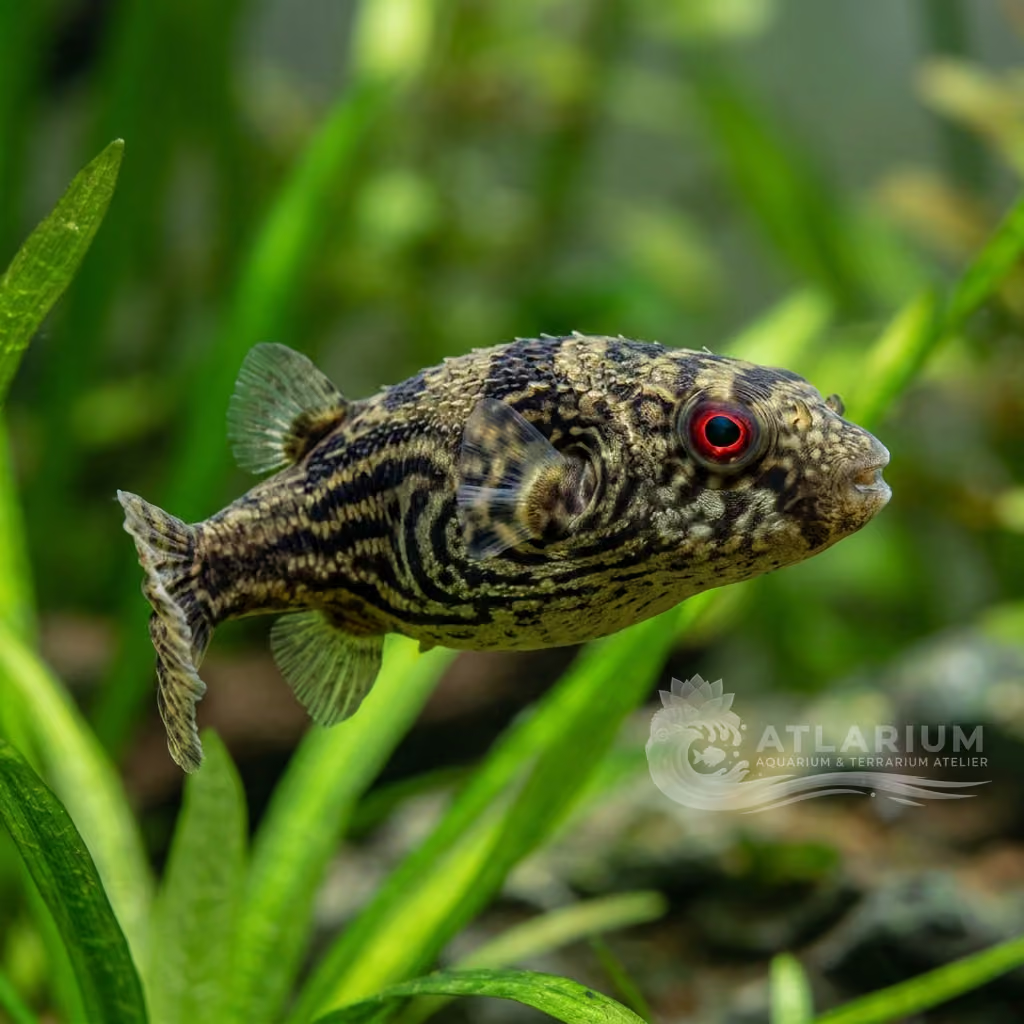
Mahachai Betta
Betta mahachaiensis
The 'Nipa Forest Betta' (6 cm). Splendid bubble-nest building labyrinth fish, native to the very rare and threatened brackish swamps near Bangkok. Splendid metallic turquoise/green "corn kernel" iridescences. Very adaptable and hardy, tolerates slight salinity.
Water Temperature
22 - 28 °C
pH Value
6.5 - 7.5
Water type
Freshwater
Tank level
All levels
Adult size
5 cm
Minimum tank volume
>= 60 L
Minimum group
>= 1
GH
5 - 15 dGH
KH
2 - 7 dKH
TDS
95 - 295 ppm
Conductivity
148 - 461 uS/cm

Species description
Geographical Origin and Habitat: Endemic to the Samut Sakhon province (central Thailand). Inhabits nipa palm swamps and brackish estuarine coastal zones. It is the only Betta species that naturally lives in moderately brackish waters.
Taxonomy and Morphology: Mahachai Betta (Betta mahachaiensis). Part of the splendens complex. Discovered and described very recently (2012). Morphologically similar to wild B. splendens but slightly more slender and with a unique iridescent coloration.
Social Behavior: Males are territorial and aggressive towards each other. It is recommended to keep a single male with one or two females, or in very large tanks with plenty of visual barriers. It is shy towards other species.
Coloration and Sexual Dimorphism: Metallic green-blue or emerald green coloration on a brownish-black background. The iridescent scales uniformly cover the body and fins. The caudal fin has a spade shape. Females are brownish with less marked iridescent scales.

Care, breeding and tankmates
Aquarium Setup: 60 cm (24 inches) tank. Setup with dense plants (that tolerate hard or slightly brackish water like Java ferns), woods and catappa leaves. Lid mandatory. It is not strictly necessary to add salt, but it can prevent diseases.
Diet and Feeding: Micro-predator. Feeds at the surface or mid-water on small insects and larvae. Accepts granular dry food, but the diet must be supplemented with live and frozen food (bloodworms, brine shrimp, daphnia) to stimulate colors.
Water Quality: Unlike other Bettas (lovers of soft and acidic waters), B. mahachaiensis thrives in neutral or slightly alkaline and hard waters, and tolerates or appreciates a slight addition of marine salt.
Compatibility and Cohabitation: Not suitable for classic community aquariums, especially if very lively. Can cohabit with small peaceful and slow fish, such as Pangios or small rasboras. Categorically avoid keeping it with other Bettas or fin-nipping fish.
Aquarium Breeding: Bubble nester. The male creates the nest often inside rolled leaves or under floating vegetation. During the embrace, the female releases the eggs; the male collects them and fiercely cares for them.
Risks and Diseases: Uncontrolled hybridization in captivity (often sold as "Alien Betta") is erasing the pure wild genetic line. In nature, its habitat (nipa swamps) is in very grave danger of destruction due to urbanization.

Geographic origin and distribution
Endemic to the Samut Sakhon province (central Thailand). Inhabits nipa palm swamps and brackish estuarine coastal zones. It is the only Betta species that naturally lives in moderately brackish waters.
Origin
South and Southeast Asia

Fish profile
- Temperament
- Semi-aggressive
- Betta mahachaiensis exhibits a relatively peaceful temperament compared to the domestic Betta splendens, but males are still territorial and will behave aggressively towards rival males. They will display, flare, and engage in skirmishes to defend their chosen nesting sites, although physical injury is less common if ample space and hiding spots are provided. Females are generally more tolerant but can establish a mild pecking order among themselves. Overall, they are shy and reclusive, preferring to stay near plants and shelter rather than swimming in open water.
- Diet
- Omnivore
- In their natural habitat, Betta mahachaiensis is a carnivorous species feeding primarily on small insects, insect larvae, zooplankton, and other aquatic invertebrates. In the aquarium, they should be offered a varied diet consisting of high-quality live or frozen foods such as daphnia, artemia, and bloodworms to maintain health and color. They will eventually adapt to high-quality dry pellets or flakes once they recognize them as food, but these should not form the sole basis of their nutrition. Gut-loading live food insects before feeding them to the fish is a beneficial practice.
- Life expectancy
- 3-5 years
- Adult size
- 5 cm
- Sex ratio
- 1:1 ratio
- For long-term success, Betta mahachaiensis is best kept in compatible male-female pairs or small groups in a spacious tank. In smaller setups, a single pair (1:1 ratio) is the ideal stocking configuration to prevent territorial conflicts. While multiple males can coexist if the aquarium is large and features plenty of cover to break lines of sight, they will still establish territories and display aggression towards rivals. Females can generally be kept together, but care should be taken to monitor their behavior for any signs of dominance.
- Feeding frequency
- Twice daily
- It is recommended to feed Betta mahachaiensis small portions once or twice a day. Since this species is highly prone to overeating and subsequent obesity, portion control is critical to maintaining their health. Any uneaten food should be removed promptly to avoid fouling the water. Fasting the fish for one day a week can be beneficial to clear their digestive system and prevent bloating.
- Bioload
- Low
- Betta mahachaiensis is a small species that produces a very low biological load, making it suitable for smaller, specialized aquariums. Because they produce minimal waste, high-capacity filtration is not necessary; in fact, strong currents should be avoided as they can stress the fish. A simple, air-powered sponge filter is highly recommended to provide gentle biological filtration without disrupting the slow-moving water conditions they prefer. Regular, small water changes are essential to prevent the accumulation of waste and maintain optimal water quality.
- Flow
- Stagnant
- In nature, Betta mahachaiensis inhabits sluggish, slow-moving tidal pools and mangrove swamps, meaning they have a strong preference for weak water flow. Strong currents should be completely avoided as they will exhaust the fish, damage their delicate fins, and prevent males from constructing their bubble nests. An air-powered sponge filter or a small hang-on-back filter with an adjustable flow rate is ideal for this setup. Using dense vegetation and driftwood can help break up any remaining current and create calm pockets of water.
- Jump risk
- Yes
- Like all members of its genus, Betta mahachaiensis is an excellent jumper and poses a high risk of leaping out of the tank. To prevent escapes, a tight-fitting lid or cover slide is absolutely mandatory, ensuring there are no open gaps around pipes or cables. It is also advised to leave a small gap of humid air between the water surface and the lid, which is vital for the health of their labyrinth organ. Incorporating floating vegetation can help reduce their jumping instinct by providing a natural cover and security.
- Reproduction
- Oviparous
- Breeding Betta mahachaiensis is a moderately challenging but highly rewarding process that follows the typical bubble-nesting pattern of osphronemids. The male constructs a nest of bubbles, often using floating leaves or artificial tubes as anchor points, and will defend it vigorously until spawning occurs. During spawning, the male wraps around the female in a close embrace to fertilize the eggs, which he then carefully collects and places into the nest. The female should be monitored closely and may be left in the tank if it is large enough, though the male will take sole responsibility for guarding the nest. Fry hatch in 24-48 hours and require very fine foods like infusoria or vinegar eels for the first few days before transitioning to microworms and artemia nauplii.
- Compatibility & tankmates
- Species only
- Betta mahachaiensis is not recommended for standard community aquariums due to its shy nature and specific habitat requirements. They are best kept in a species-only tank, either as a single pair or in a small group if the aquarium is sufficiently large and heavily planted. If tankmates are desired, they should be limited to small, peaceful, and slow-moving species such as microdevarios, small loaches, or peaceful rasboras that inhabit similar environments. Avoid any large, active, or fin-nipping species, as well as other labyrinth fishes, to prevent stress and aggressive territorial clashes.
- Tank level
- All levels
- This species occupies all levels of the aquarium, though they exhibit a strong preference for the middle and upper zones. They regularly visit the water surface to breathe atmospheric air using their specialized labyrinth organ and to build their bubble nests. However, they also frequently explore the bottom levels, searching for food and seeking shelter among leaf litter, driftwood, and caves. To make them feel secure, the aquarium should feature floating plants and plenty of cover distributed throughout the entire water column.

Scientific Parameters & Models
FishBase
Window to the official scientific data of the species
FishBase v25.04Data synced on: 06/15/2026
- Trophic level
- 3.2 ± 0.4 se
- Phylogenetic uniqueness (PD50)
- 0.5
- Bayesian Length-Weight
- a = 0.01, b = 2.97
- VulnerabilityLow vulnerability (10 / 100)

Related species
Recommendations grouped by close relatives, companion choices, and similar care.