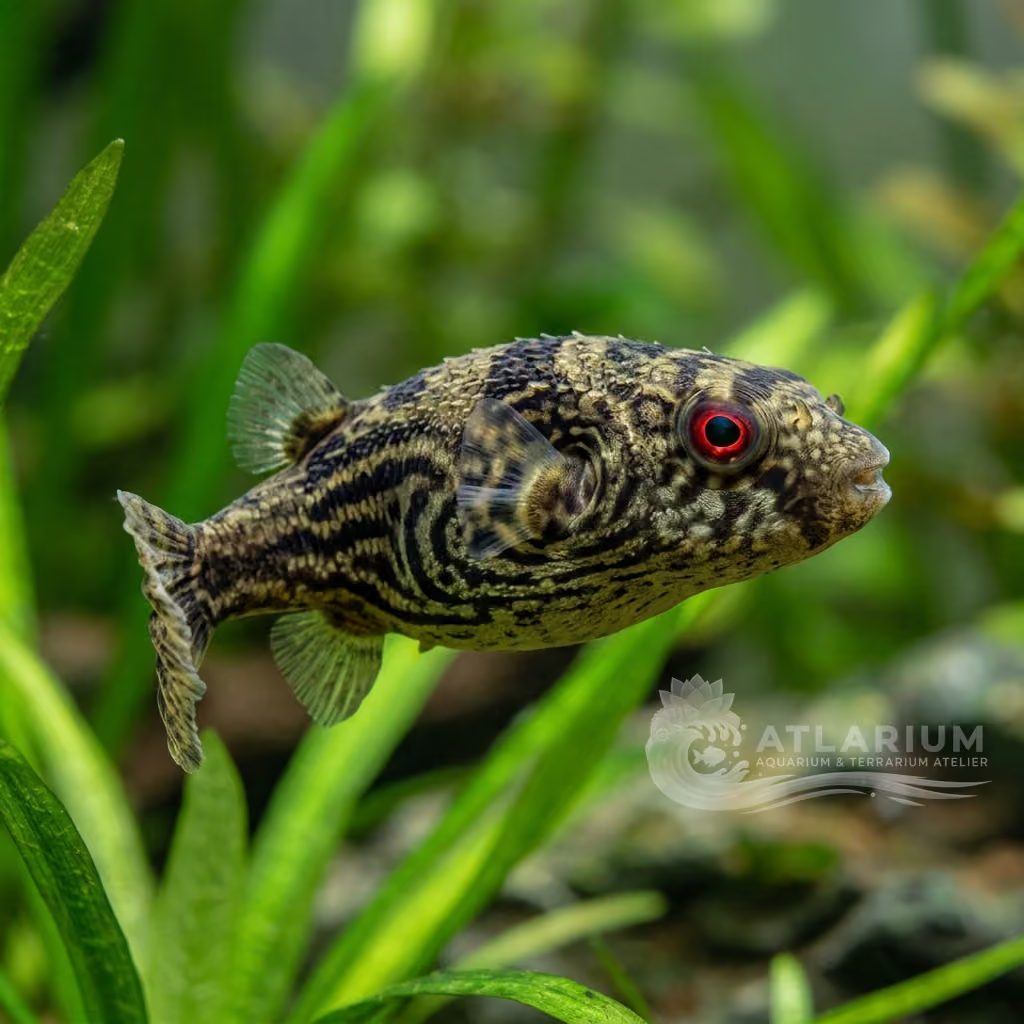
Dragon Scale Betta
Betta splendens
The Dragon Scale Betta has thickened scales, similar to metallic armor, making it one of the most spectacular fish. But this armor hides a terrible genetic cruelty. The scales never stop growing: they will progressively extend over the fish's eyes (Diamond Eye), rendering it completely blind within its first year. Breeding this fish means accepting the care of a blind animal, which must be hand-fed daily so it doesn't starve to death.
Water Temperature
24 - 29 °C
pH Value
6 - 7.5
Water type
Freshwater
Tank level
Surface and middle
Adult size
7 cm
Minimum tank volume
>= 20 L
Minimum group
>= 1
GH
4 - 15 dGH
KH
2 - 7 dKH
TDS
80 - 295 ppm
Conductivity
125 - 461 uS/cm

Species description
Geographical Origin and Habitat: Artificially created morph through complex crosses with other wild Bettas (probably B. mahachaiensis). First developed in Southeast Asia in the early 2000s to enhance metallic iridescence.
Taxonomy and Morphology: Dragon Scale Betta. Characterized by an extremely thick iridescent layer of guanine on the scales, which appear as a thick, opaque metallic armor (often white, silver or copper) raised on the fish's body.
Social Behavior: Maintains the fiercely territorial and isolationist nature of the traditional Betta splendens. They are usually bred in the "Plakat" form (short fins) which makes them active swimmers, aggressive and excellent jumpers.
Coloration and Sexual Dimorphism: Contrast is its strong point: the thick, iridescent "armor" (white or silver) on the body clashes with the deep red, blue or intense black color of the fins (e.g. Red Dragon, Black Dragon). Dimorphism follows the standard.

Care, breeding and tankmates
Aquarium Setup: Standard Betta tank (20-30 liters / 5-8 gallons). Abundance of broad-leaved real plants to rest on and absence of current. Important to have a solid lid and not too blinding light to avoid dazzling it.
Diet and Feeding: Totally carnivorous. The diet should include very high quality proteins to maintain the thickness of the scale armor healthy, combined with frozen insects (Daphnia, mysis).
Water Quality: Requires stable parameters and warm waters (26-28°C / 79-82°F). Like all Bettas, it appreciates tannins and humic compounds released by wood or Catappa leaves to naturally combat bacterial pathogens.
Compatibility and Cohabitation: Highly aggressive. Due to their often massive size (especially Giant Dragons), they should strictly live alone (except Nerite snails) as they tend to bully and kill any tankmate.
Aquarium Breeding: Bubble nester. Standard mating. Dragon genetics is partially dominant, but mating two pure Dragons often involves genetic defects, so breeders cross them with non-dragon lines.
Risks and Diseases: "Diamond Eye" (Blindness). The thick layer of guanine that creates the dragon scales tends to grow uncontrollably. In older specimens, these scales grow OVER the cornea, making the fish progressively and irreversibly blind.

Geographic origin and distribution
Artificially created morph through complex crosses with other wild Bettas (probably B. mahachaiensis). First developed in Southeast Asia in the early 2000s to enhance metallic iridescence.
Origin
Selective breeding and cultivarsSouth and Southeast Asia

Fish profile
- Temperament
- Aggressive
- Males are famously territorial and highly aggressive toward other males of their own species or any fish with similar long fins and bright colors. They will flare their opercula to display dominance and will fight to the death if confined together. Females are generally less aggressive but can still establish a strict pecking order. Despite their intraspecific aggression, they are often peaceful toward completely different species that do not resemble them.
- Diet
- Carnivore
- As obligate carnivores, Dragon Scale Bettas require a diet rich in high-quality protein. Their primary nutrition should come from specialized betta pellets or flakes formulated with marine proteins. This should be supplemented with live or frozen foods such as bloodworms, brine shrimp, and daphnia. If the fish develops diamond eye, sinking foods or feeding rings can help them locate their meals by smell and routine.
- Life expectancy
- 2-5 years
- Adult size
- 7 cm
- Sex ratio
- Solitary
- Dragon Scale Bettas are best kept individually, as they do not require or tolerate tank mates of their own species in typical setups. Keeping multiple males together will result in aggressive territorial fights that are often fatal. Females can sometimes be kept in groups, known as sororities, but this requires a large, heavily planted aquarium and significant experience. For average hobbyists, a single specimen per tank is the safest and most stress-free stocking method.
- Feeding frequency
- Twice daily
- It is recommended to feed Dragon Scale Bettas once or twice a day in small portions. Only offer what they can consume within one to two minutes to prevent overeating and water contamination. Bettas are prone to bloating and constipation, so fasting them one day a week is a highly beneficial practice. Adjust the feeding amount based on the fish's activity levels and physical condition.
- Bioload
- Low
- The biological load of a single Dragon Scale Betta is relatively low, making them suitable for smaller, filtered aquariums of at least 5 gallons. However, they are sensitive to accumulating ammonia, nitrites, and nitrates, which requires consistent water changes. A gentle filtration system is crucial to keep the water clean without creating a strong current that could exhaust the fish. Regular maintenance of the filter media ensures that the water quality remains pristine and stable.
- Flow
- Stagnant
- This species prefers calm, slow-moving, or stagnant water, reflecting their natural wild habitats in rice paddies and marshes. Strong water currents will quickly exhaust the fish, especially varieties with long, heavy fins, leading to stress and immune system suppression. A gentle sponge filter or an adjustable filter set to the lowest flow is ideal. You can also use tall plants and decor to break up any remaining water currents.
- Jump risk
- Yes
- Dragon Scale Bettas are excellent jumpers and can easily leap out of an open aquarium. They are often startled by sudden movements or lighting changes, which can trigger an escape jump. A tight-fitting lid or cover slides are absolutely essential to prevent fatal accidents. Additionally, keeping the water level slightly below the rim provides an extra safety margin.
- Reproduction
- Oviparous
- Breeding this species is a complex process that involves the male building a bubblenest at the water's surface. The male coaxes the female to spawn, fertilizes the eggs as they are released, and carefully places them into the bubbles. After spawning, the female must be removed immediately to prevent the male from attacking her out of parental protectiveness. The male will guard the nest until the fry are free-swimming, at which point he also must be removed.
- Compatibility & tankmates
- Solitary
- Males must be kept solitary or with carefully selected tank mates in a community tank of at least 15 gallons. Suitable companions include peaceful bottom-dwellers like Corydoras catfishes and small, fast-swimming, short-finned schooling fish like rasboras. Avoid housing them with fin-nippers, highly active species, or fish with bright colors and long fins that might trigger aggression. Females can sometimes cohabitate in large, heavily decorated tanks, but individual personalities vary significantly.
- Tank level
- Top/Middle
- This species primarily inhabits the middle to top levels of the aquarium, where they can easily access the surface. As labyrinth fish, they possess a specialized organ that allows them to breathe atmospheric air directly. Providing floating plants or resting ledges near the surface will give them comfortable spots to rest and breathe. They will occasionally explore the bottom of the tank, but their main activity is concentrated in the upper water column.

Scientific Parameters & Models
FishBase
Window to the official scientific data of the species
FishBase v25.04Data synced on: 06/15/2026
- Trophic level
- 3.3 ± 0.41 se
- Resilience
- High (less than 15 months)
- Phylogenetic uniqueness (PD50)
- 0.5
- Bayesian Length-Weight
- a = 0.01, b = 2.97
- VulnerabilityLow vulnerability (10 / 100)

Related species
Recommendations grouped by close relatives, companion choices, and similar care.