Back to atlas
FishFreshwaterIntermediate

Encyclopaedia

Sparkling Gourami (Pygmy Gourami)

Trichopsis pumila

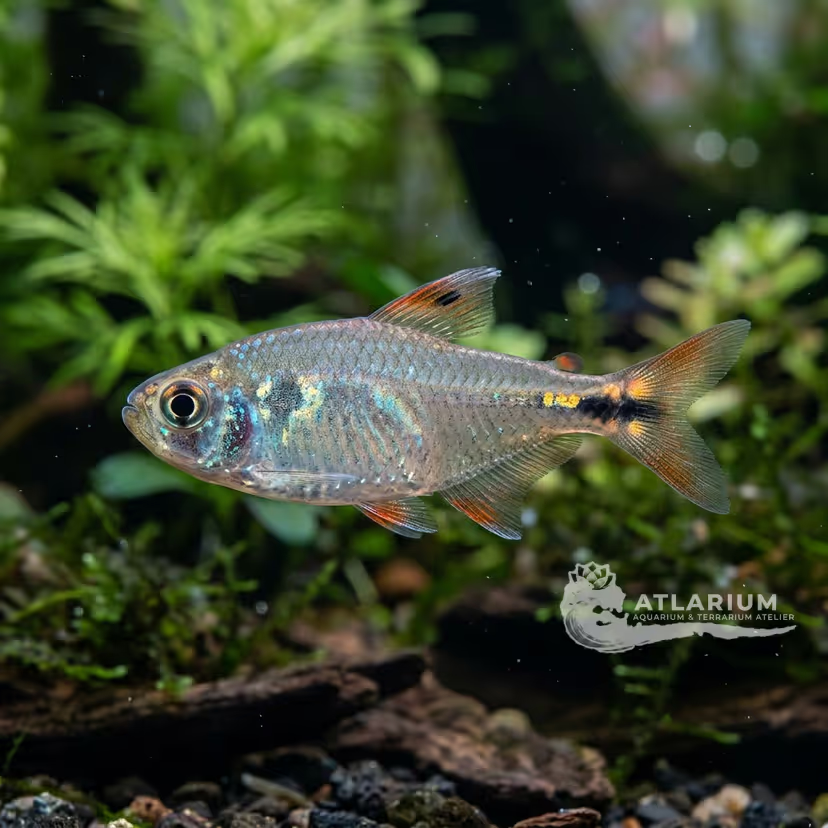
The Sparkling Gourami (*Trichopsis pumila*), also known as the Pygmy Gourami, is one of the tiniest and most fascinating jewels in the fishkeeping world. With a maximum size of just 4 centimeters (1.5 inches), its elongated and transparent body seems insignificant at first glance, but under the right lighting it explodes into a hypnotic mosaic of iridescent red, green and neon blue dots, resembling tiny stars (hence the name "Sparkling"). This micro-labyrinth fish hides an incredible secret, however: it is capable of 'croaking' audibly from outside the tank, emitting loud snapping sounds during courtship or territorial disputes.

Family
Osphronemidae
Origin
Sud-est asiatico (Bacino del Mekong inferiore: Vietnam, Cambogia, Thailandia, Penisola Malese)
Origin
Extra-Amazon South AmericaSouth and Southeast AsiaEast Asia
Tank use
Used in 0 tanks

Share

Species challenges
Temperature

22 °C - 28 °C

pH

5.5 - 7.5

Water type

Freshwater

Tank level

All levels

Adult size

4 cm

Description

Geographic Origin and Biotope: The Croaking Gourami (Pygmy Gourami) is a microscopic, shimmering jewel hailing from the oppressively humid, stagnant, densely choked swamps, murky ditch-ponds, weed-infested monsoon rice paddies, and severely sluggish streams of Southeast Asia (spanning Thailand, Laos, Cambodia, and Vietnam). It actively shares this dark, muddy, impenetrable habitat directly alongside wild Siamese Fighting Fish (*Betta splendens*), fundamentally demanding a suffocating, incredibly heavy canopy of submerged and emergent aquatic jungle to survive.

Taxonomy and Morphology: A true, incredibly minuscule member of the Osphronemidae (labyrinth lung) family. It bears the "Pygmy" title with absolute justification: it is unequivocally one of the smallest gouramis on the planet, halting its growth at a laughably tiny, fragile 3.5 - 4 cm (approx. 1.5 inches) even fully grown. Instead of the typical round pancake shape, its body is highly elongated, torpedo-like, and slender, heavily compressed on the flanks. It features a single, incredibly fine set of modified tactile filaments (ventral fins). Its snout is uniquely sharp and pointed, dominated by exceptionally large, protruding, piercing neon-blue eyes, granting it a cute, highly alert, predatory appearance.

Social Behavior: Microscopically tiny, yet breathtakingly charismatic and vocal. It is a highly peaceful shoaling fish, but boasts a spectacular and utterly unique territorial behavior: it is audibly vocal. Yes, they physically "sing": *Trichopsis pumila* are famously christened "Croaking Gouramis" because, utilizing highly specialized, stretched pectoral fin tendons acting like guitar strings, they literally "croak", "purr", or emit rapid, highly audible clicking sounds (resembling tiny crickets, frogs, or metallic ticks) to aggressively define micro-territories, furiously attract females from across the tank, or engage in spectacular, flared threat displays among rival males. They are intensely shy, spending their days literally crawling and hovering millimeters above the dark leaf litter, inspecting every grain of sand.

Coloration and Sexual Dimorphism: A masterpiece of camouflage exploding with hidden, blinding neon. The base body is a dull, drab golden-beige/olive, expertly evolved to blend perfectly with muddy rotting leaves. However, its true, unbelievable glory ignites under oblique lighting: the flanks are violently bisected horizontally by a broken, jagged chain of dark, muddy spots, heavily speckled and heavily blasted by hundreds of blindingly iridescent, LED-bright speckles of electric ice-blue or neon emerald-green. The dead center of the massive, dark eye is ringed perfectly in a vibrating ring of electric blue neon. **Virtually Invisible Dimorphism:** The sexes are tragically identical to the naked eye. To an expert under a flashlight, males croak aggressively, and possess slightly longer, more sharply pointed anal and dorsal fins extending further back. Plump females possess a more convex, bulging lower abdomen, and holding them up to a strong backlight often reveals the yellowish, transparent ovary sack.

Care and observations

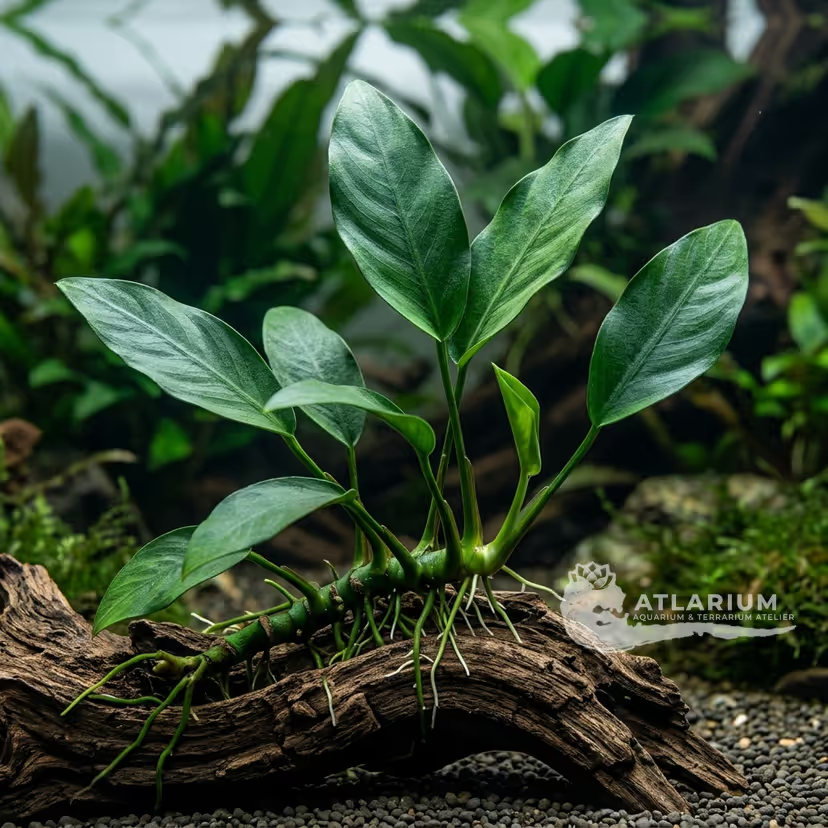
Tank Setup: Because this fish is physically the size of a large medicinal pill, it thrives spectacularly in densely packed, tiny Nano-Cubes (20-30 liters / 5-8 Gallons for a tightly knit shoal of 6). Dumping them into an oversized, barren, brilliantly lit 55-gallon tank will violently terrify them into a lethal, stress-induced shock. They strictly demand a dark, heavy, claustrophobic, impenetrable jungle: massive thickets of dense epiphytes (Java Fern, massive tangles of Java Moss, Anubias), rotting spiderwood, complex roots, and an absolute, mandatory heavy carpet of rotting botanical leaf litter (Oak, Beech, Catappa leaves) scattered across the bottom substrate, which is critically essential for extracting microscopic prey. Filter flow must equal absolute, dead ZERO: the faintest bubbling air-driven sponge filter is the only acceptable option to avoid blowing them into the glass.

Feeding and Diet: A hyper-miniaturized, lethal, creeping ambush micro-predator. Crawling deliberately among the leaf debris, it is perpetually hunting for wriggling life. Burdened with microscopic jaws, it MUST be aggressively fed with exclusive size-XS micro-foods: live baby brine shrimp (nauplii), microworms, vinegar eels, and incredibly fine frozen/live daphnia. After grueling months of training, they might accept the finest, highest-quality crushed, pulverized carnivorous micro-dust/pellets. The dead, rotting leaves in the tank are the ultimate secret weapon: they naturally breed invisible colonies of infusoria and paramecium (microscopic bugs), acting as a vital, permanent, self-sustaining 24/7 buffet for their insatiable, tiny throats.

Water Quality: A strict, uncompromising Blackwater paradise. Much like the delicate Chocolate Gourami, it thrives best in deeply amber-stained, hot, and frustratingly soft water to massively suppress bacterial growth and drastically calm its hyper-tense nerves. A reliable heater locked firmly between 25-28°C (77-82°F) is critical; a sudden crash to 22°C (72°F) obliterates its fragile immune system, ushering in lethal, flesh-eating velvet (Oodinium) within hours. Extremely soft water (GH 2-8) and a strictly acidic to sub-neutral pH (5.5 - 7.0) are mandatory. They physically despise clinical, perfectly sterile, hospital-clean tap water tanks: the dissolved organic tannins, humic acids, and decaying matter from the wood and dropped leaves literally revitalize them, granting them the supreme confidence to hover in the open water and intensely croak at each other.

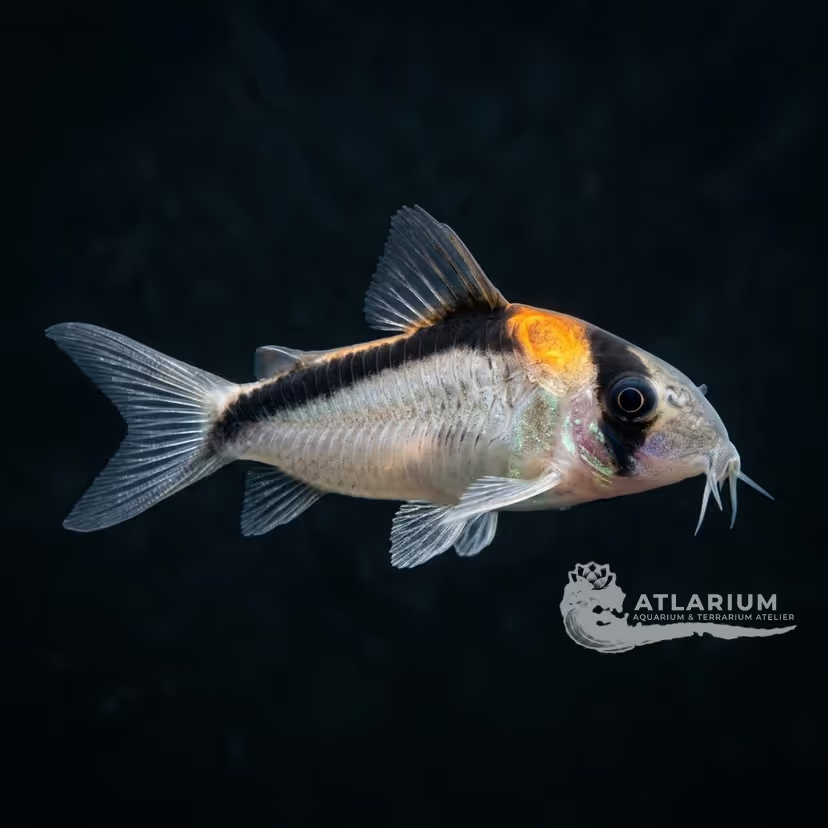
Compatibility: The "Microscopic Tenant". Because of its laughable, pill-sized stature and its slow, deliberate, leaf-crawling movements, it will be mercilessly, constantly bullied, terrified into permanent hiding, outcompeted and starved for food, or simply swallowed whole as a live snack by absolutely ANY fish exceeding 5 cm (2 inches) in length (including Barbs, large Danios, Bettas, Angelfish, and larger Tetras). The ultimate, undisputed best practice is a dedicated "Species-Only Tank" to properly enjoy their tiny, musical croaking displays in a loose, confident group of 6-8. They can only successfully coexist with equally harmless, microscopic entities: Chili Rasboras (Boraras brigittae), Pygmy Corydoras, Otocinclus, and adult ornamental shrimp (Cherry/Amano shrimp).

Reproduction in Captivity: Highly intimate, incredibly exhausting, yet profoundly sweet to witness. Sparked by a rapid-fire chorus of vibrating, loud "croaks" from the males, the Pygmy male constructs a microscopic, rudimentary, almost invisible tiny bubble nest stubbornly and firmly wedged deep inside the darkest, most impenetrable tangles of Java Moss, or plastered directly underneath a massive, half-submerged broad leaf right at the water tension line. The classic labyrinth nuptial embrace occurs secretly, hidden deep within the jungle foliage. The female drops surprisingly massive (relative to her tiny body), heavy micro-clusters of eggs. Instantly following the crushing embrace, the microscopic male furiously defends his invisible cave, violently driving away the female and any massive predators with shocking, lion-hearted courage.

Risks and Diseases: 1. The Sin of Extreme Starvation (Prolonged Lethal Inedia): Given the Pygmy's legendary, crippling timidity and millimeter-sized jaws, committing the foolish error of housing them with greedy, fast, voracious fish will result in the fast fish stealing every single flake or mysis shrimp. The Trichopsis will hopelessly languish in the dark corners, succumbing to certain, agonizing death via severe malnutrition (evidenced by a hollow, sunken, knife-blade belly). 2. Immune Collapse from "Clean, Hard, New Water": If dumped into a sterile, freshly set up, spotless aquarium devoid of biofilm, algae, and dark tannins, they will wither away from unprecedented systemic shock. 3. Fatal Velvet Parasitosis (Oodinium) sparked by sudden thermal drops.

Fish profile

Temperament
Timido, elusivo, ma sorprendentemente fiero. Mentre ignorano totalmente le altre specie, i maschi formano piccole gerarchie e si scontrano con parate a pinne spiegate accompagnate da scatti sonori.
Diet
Micro-Predatore insettivoro. Bocca lillipuziana. Spesso rifiutano il secco. Devono essere nutriti con micro-vivo o congelato (naupli d'artemia, cyclops, daphnia, microworms). Passano le giornate a 'brucare' infusori tra le foglie vive e il muschio.
Tank level
All levels
Minimum group
4
Adult size
4 cm
Minimum tank
40 L
GH
2 dGH - 12 dGH
KH
n/a
TDS
n/a
Conductivity
n/a
Sex ratio
Gruppo. Dimorfismo sessuale bassissimo: i maschi hanno pinne leggermente più a punta, ma il sessaggio visivo certo si fa guardando gli ovari della femmina in controluce.
Feeding frequency
Piccole quantità 1-2 volte al giorno, somministrate tra la vegetazione densa.
Bioload
Bassissimo
Flow
Corrente da Nulla a Debole. Vengono spazzati via dai getti forti.
Reproduction
Bubble nesters. Costruiscono il nido di bolle all'interno di un intrico vegetale o perfino sotto le larghe foglie subacquee (come le Anubias), non necessariamente in superficie. Dopo la deposizione il maschio fa la guardia e può diventare insolitamente aggressivo verso pesci molto più grandi di lui.
Compatibility
Mantenimento ottimale ESCLUSIVAMENTE con altre specie di taglia micro e dal temperamento iper-pacifico: Boraras, microrasbore, Corydoras pygmaeus e Otocinclus. Non inserire MAI con Betta o pesci grossi che li ingoierebbero interamente. Attenzione: predano accanitamente le neocaridine nane (gamberetti).

Image gallery

Licensed images linked to the species or, when marked, to the closest representative taxon.