Persephone Betta
Betta persephone
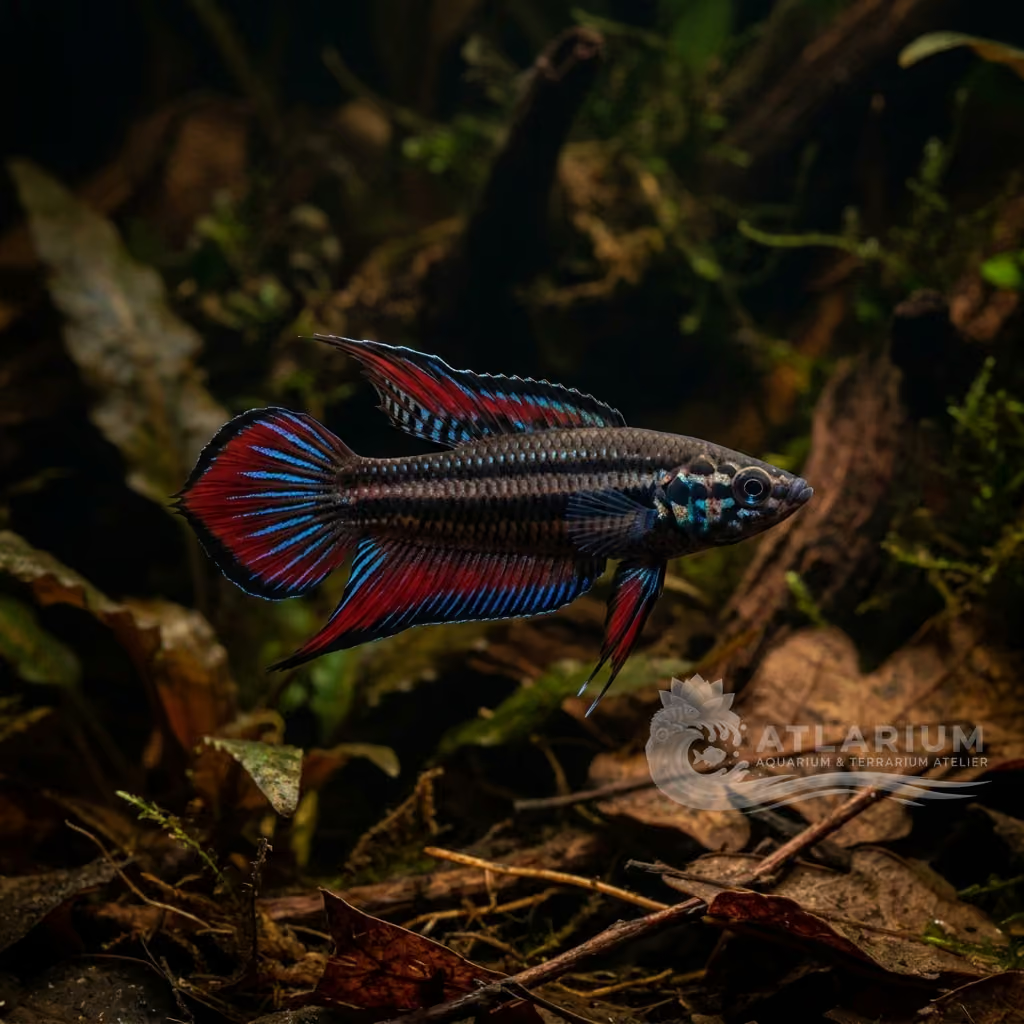
The 'Underworld Betta' (3.5 cm). Tiny and very rare bubble nest builder, critically threatened in nature. Of a fascinating deep ink blue/black color. A jewel of the dark and acidic Malaysian peat swamps, reserved for highly specialized breeders.
Water Temperature
22 - 27 °C
pH Value
3.5 - 5.5
Water type
Freshwater
Tank level
Bottom and middle
Adult size
4 cm
Minimum tank volume
>= 30 L
Minimum group
>= 1
GH
1 - 4 dGH
KH
1 - 2 dKH
TDS
25 - 80 ppm
Conductivity
39 - 125 uS/cm

Species description
Geographical Origin and Habitat: Extremely restricted to deeply shaded peat swamps in the state of Johor, Malaysia. Lives in pools among submerged roots, immersed in total darkness (hence the name Persephone, goddess of the underworld).
Taxonomy and Morphology: Black Betta (Betta persephone). Critically endangered species belonging to the "coccina" group. A tiny Betta with a tapered torpedo body, large eyes and relatively short fins. The only Betta in the group not to be red.
Social Behavior: Relatively peaceful but males are slightly territorial in tiny spaces. Forms fluid hierarchies and it is recommended to keep them in pairs or small groups, given their shy and delicate nature.
Coloration and Sexual Dimorphism: Males are inky black, with red pelvic fins, black fins with an electric blue or iridescent green margin. Females are brownish, less black, and show dark horizontal bands depending on stress or reproductive cycle.

Care, breeding and tankmates
Aquarium Setup: A strictly "Blackwater" mono-specific nano-aquarium (min 30 cm / 12 inches). Substrate of pure peat and catappa; the water must be tinted a dense "strong tea" color. Faint lighting. Hiding places created from small interwoven twigs or clay tubes.
Diet and Feeding: Strictly carnivorous, prefers very small live food (brine shrimp nauplii, micro-worms). Often does not recognize or refuses commercial dry food.
Water Quality: Extreme chemical conditions: pH 3.5 - 5.5. In waters with a pH above 6.0 and non-zero hardness, the immune defenses collapse rapidly. Water quality must be pristine but free of violent flow.
Compatibility and Cohabitation: Exclusively Species-Tank. Given the size, the extreme chemical requirements and the extreme shyness, any other species would be a stressful or deadly tankmate (perhaps tolerates only micro-larvae or small caridinas).
Aquarium Breeding: Submerged bubble nester. Creates small hidden nests in tubes or under huge leaves on the bottom (not on the surface). The brood produces 20 to 50 eggs which the male cares for with absolute dedication.
Risks and Diseases: Species considered IUCN "Critically Endangered" (CR) and close to extinction in the wild due to the drainage of swamps for palm oil. Its purchase is an act of ethical conservation and must be treated as such.

Geographic origin and distribution
Extremely restricted to deeply shaded peat swamps in the state of Johor, Malaysia. Lives in pools among submerged roots, immersed in total darkness (hence the name Persephone, goddess of the underworld).
Origin
Tropical oceans and reefsSouth and Southeast AsiaEast Asia

Fish profile
- Temperament
- Semi-aggressive
- Betta persephone is a shy and cryptic species that is generally peaceful toward other non-threatening tank mates, but territorial toward conspecifics. Males will engage in minor flaring and territorial displays to establish dominance, but serious injuries are rare in well-structured tanks. Because of their timid nature and specialized care needs, they are best kept in a species-only environment.
- Diet
- Omnivore
- In the wild, Betta persephone is a micro-predator feeding on small aquatic insects and invertebrates. In the aquarium, they should be fed a diet composed primarily of live and frozen foods such as baby brine shrimp, daphnia, grindal worms, and small bloodworms. They are notorious for refusing dry foods, though some individuals can be slowly acclimated to high-quality micro-granules.
- Life expectancy
- 2-5 years
- Adult size
- 4 cm
- Sex ratio
- 1:1 ratio
- Betta persephone can be kept in pairs (1:1 ratio) or in small groups (e.g., a harem of one male and multiple females, or multiple pairs if the tank is large enough). Keeping them in a 1:1 pair is the most common recommendation for breeding, as it minimizes territorial conflicts between males. If kept in a group, the tank must be sufficiently large (at least 15 gallons) and filled with numerous hiding places to allow individuals to establish territories.
- Feeding frequency
- Twice daily
- It is recommended to feed Betta persephone once or twice daily in small portions that they can consume within a couple of minutes. Overfeeding should be strictly avoided, as uneaten food will quickly spoil the soft, poorly buffered water they inhabit. Providing a fasting day once a week can help maintain their digestive health and prevent issues like bloating.
- Bioload
- Low
- Due to their tiny size (reaching only about 2.5 to 3.5 cm), Betta persephone produces very little waste, resulting in a low biological load. However, because they are extremely sensitive to fluctuations in water chemistry and require pristine water conditions, a high-quality sponge filter is essential. Gentle filtration is crucial to prevent strong currents, which can stress these slow-moving labyrinth fish. Regular small water changes using RO water are recommended to maintain low nitrate levels without altering water stability.
- Flow
- Stagnant
- Betta persephone prefers very weak or virtually no water flow, replicating the stagnant, slow-moving peat swamps of their native habitat. Strong currents will exhaust these small fish, increase their stress levels, and disrupt their ability to build bubble nests. An air-powered sponge filter or a heavily baffled filter outlet is ideal to provide gentle circulation without creating noticeable current.
- Jump risk
- Yes
- Like most wild bettas, Betta persephone is an excellent jumper and can escape through even the smallest openings. A tight-fitting lid or cover slide is absolutely mandatory to prevent them from jumping out of the aquarium. Floating plants can help reduce this risk by covering the water surface, but a secure cover is the only guarantee of safety.
- Reproduction
- Oviparous
- Breeding Betta persephone is challenging but highly rewarding for experienced aquarists. They are bubble nesters, with the male constructing a small nest under floating leaves, plastic film, or inside a film canister. The spawning process involves the male wrapping around the female, after which he places the fertilized eggs into the nest. Providing very acidic water (pH 4.5–5.0) and rich leaf litter is crucial to stimulate spawning and protect the fry from bacterial infections.
- Compatibility & tankmates
- Species only
- Betta persephone is best kept in a species-only setup due to its small size, shyness, and highly specific water requirements. They can be housed with other peaceful, very small tank mates that thrive in acidic blackwater, such as small rasboras (e.g., Boraras species) or small peaceful loaches. Avoid any large, active, or aggressive species that could outcompete them for food or stress them.
- Tank level
- Middle/Bottom
- This species is primarily a mid-depth to bottom-dwelling fish, often navigating through leaf litter, roots, and low-lying vegetation. While they are labyrinth fish and will visit the surface to breathe air, they feel safest in the lower and middle sections of the water column under dense cover. In the aquarium, providing floating plants and tall driftwoods will encourage them to utilize all levels of the tank.

Scientific Parameters & Models
FishBase
Window to the official scientific data of the species
FishBase v25.04Data synced on: 06/15/2026
- Trophic level
- 3.1 ± 0.4 se
- Resilience
- High (less than 15 months)
- Phylogenetic uniqueness (PD50)
- 0.5
- Bayesian Length-Weight
- a = 0.01, b = 2.97
- VulnerabilityLow vulnerability (10 / 100)

Related species
Recommendations grouped by close relatives, companion choices, and similar care.