Red Sumatran betta
Betta rubra
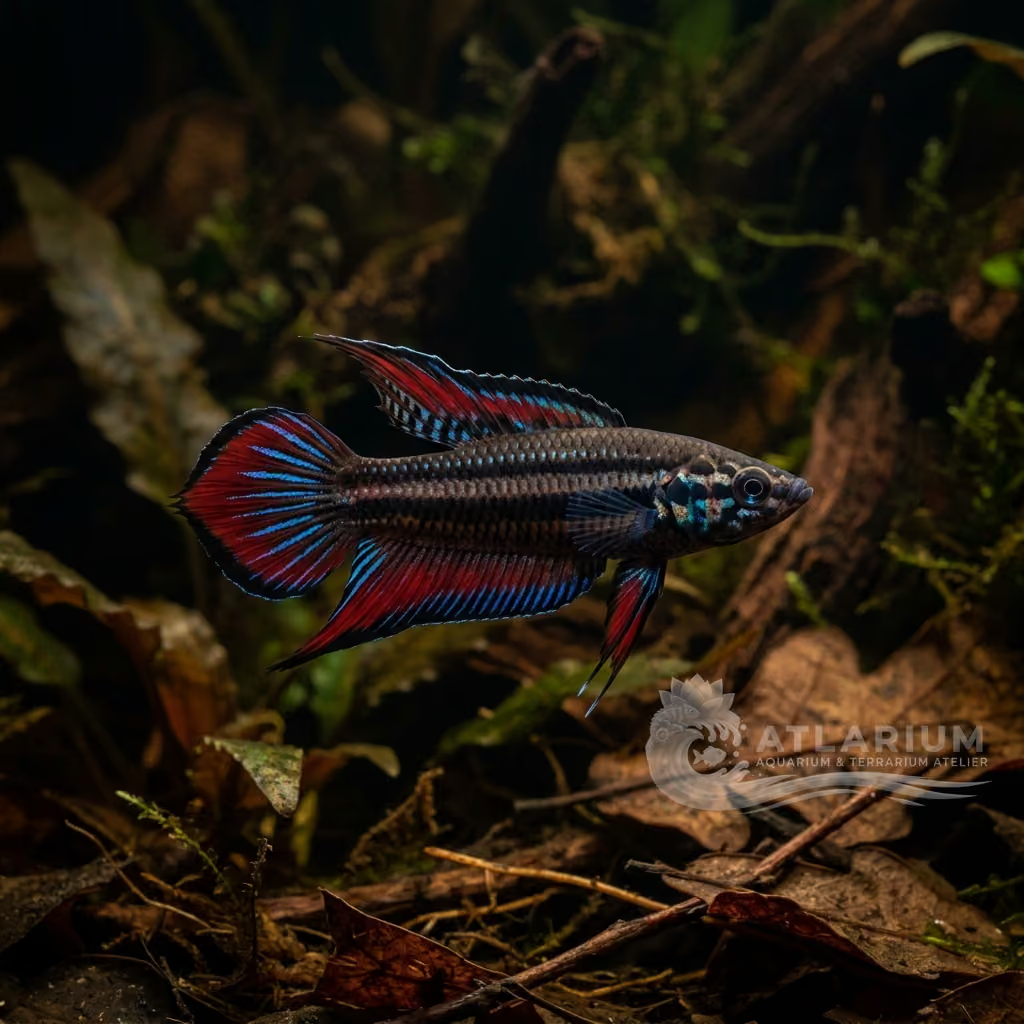
A wild betta with an intense reddish livery and dark lateral bands, native to the blackwater environments of northern Sumatra's forests. Unlike bubble-nesting bettas, it belongs to the paternal mouthbrooding group: the male collects fertilized eggs in his mouth and holds them for 12–17 days without feeding — a fascinating natural spectacle to observe. Relatively peaceful among conspecifics compared to other bettas, tannins in the water are considered crucial for its health and optimal coloration. Fry, upon release, are already relatively large and immediately accept baby brine shrimp.
22 - 27 °C
5 - 6.5
Freshwater
Bottom and middle
5 cm
>= 40 L
>= 2
1 - 5 dGH
1 - 2 dKH
25 - 95 ppm
39 - 148 uS/cm

Species description

Care, breeding and tankmates

Geographic origin and distribution
Origin

Fish profile
- Temperament
- Territorial
- Betta rubra is relatively peaceful compared to other members of the genus, but it does exhibit territorial behavior, particularly among competing males. Minor chasing and fin-nipping can occur during courtship or when establishing hierarchies, though serious physical injuries are rare in a well-decorated tank. Brooding males become notably shy and reclusive, requiring quiet zones where they can hide undisturbed during the incubation period.
- Diet
- Carnivore
- In their natural habitat, Betta rubra feeds primarily on insects, insect larvae, and other small aquatic invertebrates. In the aquarium, they will eventually accept high-quality dry foods, but their staple diet should consist of live or frozen options such as Daphnia, Artemia, and bloodworms. Feeding small insects like fruit flies (Drosophila) is also highly recommended, but caretakers must avoid overfeeding as these fish are prone to obesity.
- Life expectancy
- 3-5 years
- Adult size
- 5 cm
- Sex ratio
- 1:1 ratio
- Betta rubra is most commonly and safely kept in single pairs (a 1:1 ratio), which is highly recommended for smaller aquariums to minimize territorial disputes. In larger, well-structured setups, group keeping is possible, often favoring a "reverse trio" of two males and one female to prevent the female from overly harassing a single male during courtship. Providing ample cover, leaf litter, and visual barriers is crucial when keeping multiple specimens together to mitigate conspecific aggression and territorial squabbles.
- Feeding frequency
- Twice daily
- For adult Betta rubra, feeding once or twice a day with small portions that are consumed within a few minutes is recommended. For growing juveniles and fry, offering smaller amounts of food two to three times daily is preferred to support their rapid metabolism and growth rate. A weekly fasting day is highly beneficial for adults to help prevent digestive blockages and maintain optimal body weight.
- Bioload
- Low
- Betta rubra has a low biological waste production due to its small adult size of approximately 3 to 4 centimeters. However, it requires efficient biological filtration that does not create strong currents, making a gentle, air-powered sponge filter the ideal choice. As a blackwater species, it is highly sensitive to the accumulation of organic waste and fluctuations in water quality, necessitating frequent, small water changes rather than large, disruptive ones.
- Flow
- Stagnant
- Betta rubra prefers a weak, gentle water flow, replicating the slow-moving ditches and stagnant peat swamps of their native Sumatran habitat. Strong water currents will stress the fish, cause physical exhaustion, and make swimming difficult for this labyrinth species. Utilizing an air-powered sponge filter or heavily baffling the outflow of a power filter is highly recommended to maintain a calm environment.
- Jump risk
- Yes
- Betta rubra is an exceptional jumper and poses a very high risk of escaping through even the smallest gaps in the aquarium cover. It is absolutely necessary to secure the tank with a tight-fitting lid or cover slide, leaving a small pocket of humid air above the water. This air gap is critical not only to prevent jumping but also to ensure the fish can breathe the warm, humid air required to keep their labyrinth organ functional.
- Reproduction
- Mouthbrooder
- Betta rubra is a paternal mouthbrooder, where spawning involves a characteristic embrace after which the eggs are caught in the female's anal fin and then collected by the male. The male broods the eggs in his mouth for approximately 10 to 17 days before releasing fully formed, free-swimming fry. Breeding is of moderate difficulty, requiring soft, acidic water and a tightly covered tank to maintain a humid air layer above the surface, which is critical for the fry's labyrinth organ development.
- Compatibility & tankmates
- Peaceful
- Betta rubra is not recommended for standard community aquariums, as larger or more active fish will easily intimidate them and outcompete them for food. They can be successfully housed with very peaceful, small tankmates that thrive in similar soft, acidic blackwater conditions, such as tiny cyprinids or peaceful loaches. However, keeping them in a dedicated single-species tank is always the preferred approach, especially if breeding is the primary goal.
- Tank level
- Middle/Bottom
- Betta rubra primarily occupies the bottom and middle zones of the aquarium, spending much of its time navigating through dense vegetation, leaf litter, and driftwood crevices. However, as a member of the labyrinth fish family, it frequently visits the surface to breathe atmospheric air. Providing floating plants is highly beneficial, as they offer shade and security when the fish venture to the top layer to use their labyrinth organ.

Scientific Parameters & Models
Window to the official scientific data of the species
- Trophic level
- 3.2 ± 0.4 se
- Resilience
- High (less than 15 months)
- Phylogenetic uniqueness (PD50)
- 0.5
- Bayesian Length-Weight
- a = 0.01, b = 2.97
- VulnerabilityLow vulnerability (10 / 100)

Related species
Recommendations grouped by close relatives, companion choices, and similar care.