Hovering zebra loach
Yunnanilus cruciatus
A nano-loach from Vietnam with white and black zebra vertical bands on a streamlined body — swims 'hovering' in the water column rather than staying on the bottom like its cousins. Extremely gregarious: in groups of 6–10+ becomes active and confident, otherwise hides. Micropredator with fast metabolism: small, frequent feedings. Fine sand mandatory. Mature tank. One of the most fascinating nano-fish for planted aquariums. Breeding rare but documented in densely planted tanks.
Water Temperature
21 - 26 °C
pH Value
6 - 7.5
Water type
Freshwater
Tank level
Middle
Adult size
3.4 cm
Minimum tank volume
>= 40 L
Minimum group
>= 6
GH
7 - 14 dGH
KH
3 - 7 dKH
TDS
135 - 280 ppm
Conductivity
211 - 438 uS/cm

Species description
Geographical Origin and Habitat: Endemic exclusively to a highly restricted, heavily localized, and intensely pristine geographical range encompassing the shallow coastal rivers and densely vegetated clearwater streams of central Vietnam. Yunnanilus cruciatus (universally known as the Hovering Zebra Loach or Vietnamese Multi-Banded Loach) natively colonizes the sluggish, sandy margins of these tropical waterways. These specific micro-habitats are completely completely choked with massive, dense thickets of submerged aquatic vegetation, thick algae mats, and smooth river stones.
Taxonomy and Morphology: Scientifically classified within the Nemacheilidae family (the stone loaches), it is a spectacular, biologically bizarre, and uniquely adapted micro-fish. Morphologically, fully mature adults reach a maximum of only 3.0 to 4.0 centimeters (1.2-1.6 inches) in length. It possesses a deeply compact, highly streamlined, torpedo-shaped body. Its absolute defining anatomical feature—which radically separates it from almost all other loaches—is its highly modified swim bladder, which allows it to permanently hover perfectly motionless in the mid-water column, rather than resting on the bottom.
Social Behavior: They are highly active, exceptionally peaceful, and absolutely obligate shoaling micro-loaches. They strictly MUST be kept in a sizable group (absolute minimum 8-10, but a massive school of 15-20+ creates a breathtaking, synchronized display). In the aquarium, they possess a fascinating, deliberate swimming style. Unlike standard benthic loaches, they spend their entire day hovering conspicuously in the mid-water column, meticulously inspecting the undersides of broad leaves and driftwood for microscopic prey in a tight, highly coordinated formation.
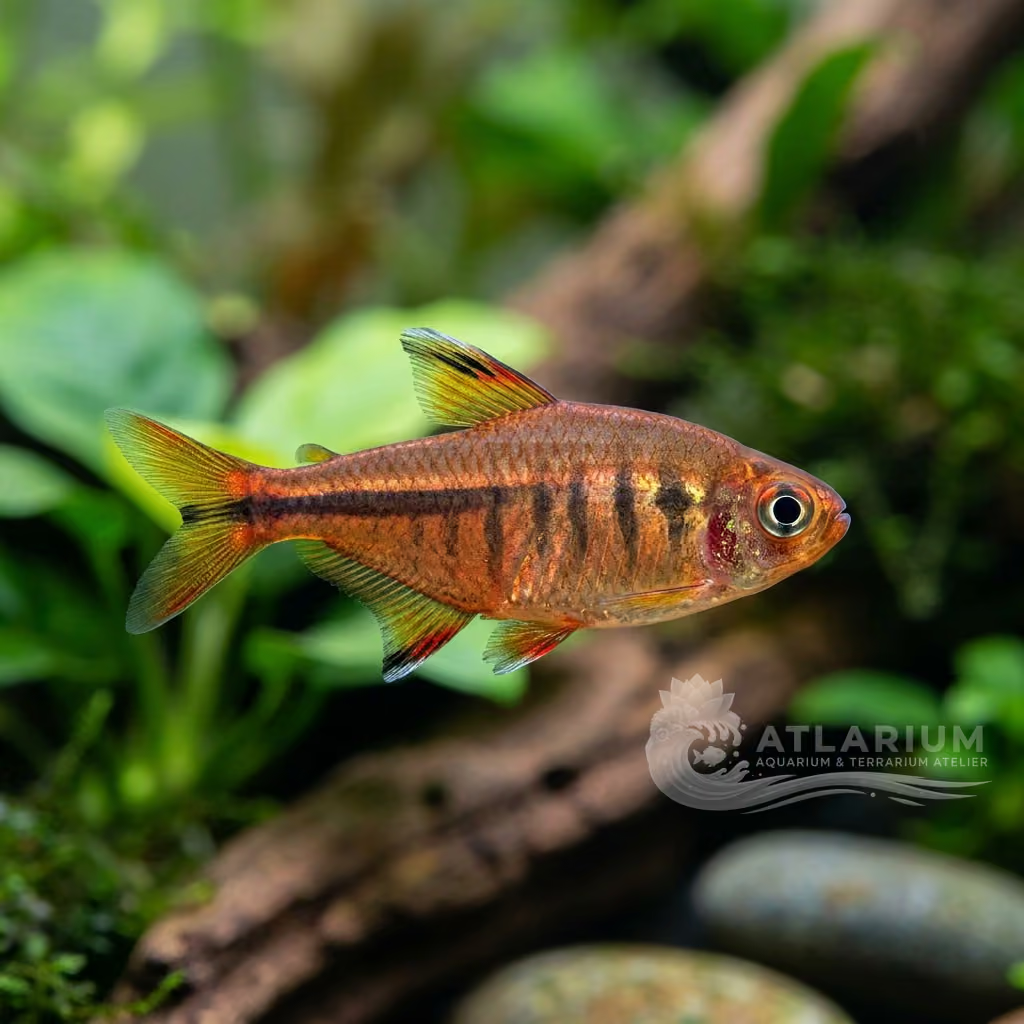
Coloration and Sexual Dimorphism: Sexual dimorphism is subtle but distinct when mature; mature females are noticeably plumper and slightly larger, while males remain extremely slim. The coloration of the Hovering Zebra Loach is incredibly striking, deeply contrasting, and highly recognizable: the base body is a pale, translucent golden-yellow or creamy-silver. The absolute highlight is a spectacular series of 14-18 stark, pitch-black vertical stripes extending completely from the back down to the belly, perfectly resembling a tiny, hovering zebra. The fins are completely transparent.

Care, breeding and tankmates
Aquarium Setup: The aquarium architecture MUST flawlessly replicate a tranquil, heavily planted, and deeply pristine Vietnamese clearwater stream. A minimum 60-liter (15-gallon) tank (at least 60 cm long) is required to accommodate their active hovering behavior. The absolute most critical requirement is overwhelming, dense vegetation; the tank MUST be packed with broad-leaved plants (Anubias) and mosses for them to hover over and inspect. A fine sand substrate is strictly mandatory to protect their delicate barbels when they occasionally forage on the bottom.
Diet and Feeding: They are highly active, methodical micro-predators (carnivores) with tiny mouths adapted for picking microscopic invertebrates off surfaces. In the aquarium, they are unfussy but require a specialized micro-diet to thrive. They will accept high-quality crushed flakes and sinking micro-pellets, but this MUST be heavily supplemented with meaty micro-foods. Daily offerings of live or frozen micro-foods are absolutely mandatory: newly hatched Artemia (brine shrimp), Cyclops, Daphnia, and micro-worms. They will spend hours meticulously cleaning plants of microscopic life.
Water Quality: Originating from pristine Vietnamese coastal streams, they are highly sensitive to poor water quality and demand immaculate conditions. They thrive in slightly cooler tropical temperatures (22-26°C / 72-79°F). Crucially, they require soft to moderately hard water (GH 4-12) and a neutral to slightly alkaline pH (6.5 - 7.5). They possess absolute zero tolerance for dissolved organic waste, Ammonia, or Nitrites; rigorous weekly water changes are absolutely mandatory. The water flow MUST be incredibly gentle; strong currents will violently blow them around while hovering.
Compatibility and Cohabitation: Compatibility is strictly limited by their microscopic size, utterly peaceful nature, and unique hovering behavior. They are the perfect, spectacular mid-water centerpiece for a peaceful, densely planted nano biotope. Excellent companions include tiny, peaceful micro-fish: Boraras species (Chili Rasboras), Pygmy Corydoras, peaceful Otocinclus, and small freshwater shrimp (Neocaridina). They MUST NEVER be housed with fast, aggressive mid-water fish (like Zebra Danios) that will stress them, nor with any standard community fish large enough to swallow them whole.
Aquarium Breeding: Breeding is virtually undocumented and exceptionally rare in the home aquarium. In the wild, they are believed to be continuous, open-water egg-scatterers that spawn among dense thickets of fine-leaved aquatic vegetation during the rainy season. Replicating the precise environmental triggers (likely a combination of massive water changes, slightly cooler water, and heavy feeding of live micro-foods) has rarely been achieved. If successful, the microscopic fry would require infusoria immediately, as the parents provide zero care.
Risks and Diseases: The absolute greatest physical risk is severe physiological collapse caused by keeping them in strong water currents; they are adapted to hover motionless, and strong flow will utterly exhaust and kill them. Utterly gentle flow is unconditionally mandatory. The second major risk is lethal starvation or being eaten alive; they are microscopic and will be easily swallowed whole by almost any standard-sized community fish. Finally, they require pristine water; organic waste will cause immediate, lethal bacterial infections.

Geographic origin and distribution
Endemic exclusively to a highly restricted, heavily localized, and intensely pristine geographical range encompassing the shallow coastal rivers and densely vegetated clearwater streams of central Vietnam. Yunnanilus cruciatus (universally known as the Hovering Zebra Loach or Vietnamese Multi-Banded Loach) natively colonizes the sluggish, sandy margins of these tropical waterways. These specific micro-habitats are completely completely choked with massive, dense thickets of submerged aquatic vegetation, thick algae mats, and smooth river stones.
Origin
South and Southeast AsiaEast Asia

Fish profile
- Temperament
- Peaceful
- They possess an incredibly active, inquisitive, and sometimes comical temperament, constantly exploring their environment. They are highly social and rely on the presence of conspecifics to feel confident and exhibit their natural behaviors. While generally peaceful toward other species, their boisterous activity and intra-species squabbling can be overwhelming for shy or delicate tankmates. They establish a distinct pecking order, and harmless skirmishes to determine dominance are a normal and fascinating part of their behavior.
- Diet
- Omnivore
- They are enthusiastic micropredators and scavengers, requiring a varied diet rich in protein to thrive. A staple of high-quality sinking pellets or wafers is necessary to ensure the food reaches the bottom of the tank. They relish live and frozen foods such as bloodworms, daphnia, tubifex worms, and brine shrimp, which should be offered regularly. They are also known for their invaluable ability to hunt and eradicate pest snails in the aquarium.
- Life expectancy
- 3-5 years
- Adult size
- 3.4 cm
- Sex ratio
- Pair
- There is no strict sex ratio required, as they do not form pairs and their social structure is based more on size and dominance than gender. Purchasing a group of juveniles naturally results in a mixed sex ratio, which is perfectly fine for their complex social interactions. The alpha individual in the group is often a large, robust female. Keeping a sufficiently large group is more important than worrying about the specific number of males versus females to prevent bullying.
- Feeding frequency
- 2-3 times daily
- Feeding them one to two times daily with small portions is generally optimal for their metabolism. Because they are active mostly near the bottom, care must be taken to ensure that aggressive mid-water feeders do not consume all the food before it sinks. Providing sinking wafers right before turning out the lights can help ensure these sometimes nocturnal or crepuscular fish get enough to eat. Overfeeding should be avoided to maintain water quality, but their energetic foraging means they need consistent nutrition.
- Bioload
- Low
- This loach has a moderate bioload, producing typical waste levels for a bottom-dwelling omnivore of its size. Because they often sift through the substrate and uproot fine detritus, they require good mechanical filtration to keep the water clear. Regular vacuuming of the substrate during water changes is essential to prevent the accumulation of organic matter where they spend most of their time. Excellent biological filtration is also required to maintain zero ammonia and nitrite, as they are highly sensitive to poor water quality.
- Flow
- Strong
- Originating from flowing rivers and streams, they have a distinct preference for moderately strong water flow and high dissolved oxygen levels. The use of a powerhead, wavemaker, or a high-capacity canister filter can simulate their natural environment and encourage healthy activity. Strong circulation helps to keep the bottom of the tank free of stagnant areas where debris might accumulate. While they enjoy current, it is also important to provide sheltered areas among rocks and driftwood where they can rest.
- Jump risk
- Yes
- They present a moderate jump risk, particularly when first introduced to a new aquarium or if the water parameters deteriorate. Their frantic swimming patterns when stressed can easily result in them launching themselves out of the tank. A tightly fitting lid with no large gaps around filter tubes or heaters is essential to keep them safe. Providing plenty of hiding spots on the substrate can make them feel secure, significantly reducing the likelihood of them attempting to escape.
- Reproduction
- Oviparous
- Breeding this species in the home aquarium is exceptionally rare and poorly documented, with most specimens in the trade being wild-caught or hormonally bred on commercial farms. They are believed to be egg scatterers that migrate to flooded areas or specific river zones to spawn during the rainy season. Replicating these complex seasonal changes, including fluctuations in water chemistry and temperature, is difficult for hobbyists. There are no reliable reports of spontaneous spawning occurring in standard community setups.
- Compatibility & tankmates
- Community
- They are generally social and active bottom dwellers, making them suitable for community tanks with fish that occupy the middle and upper levels. It is highly recommended to keep them in groups of at least five or six, as they are gregarious and establish a complex social hierarchy. If kept in too small a group, they can become withdrawn or excessively nippy toward other species. Avoid housing them with slow-moving or long-finned fish, as their boisterous nature can cause stress to more delicate tankmates.
- Tank level
- Middle
- They are quintessential bottom dwellers, spending almost all of their time navigating the substrate, searching for food among the gravel and decor. They love to wedge themselves into tight crevices in rocks, driftwood, or PVC pipes to rest and feel secure. Occasionally, they may swim up the sides of the glass or engage in rapid, frantic swimming across the middle levels, particularly when playing or anticipating food. A soft, sandy substrate is strongly recommended to protect their delicate sensory barbels as they forage.

Scientific Parameters & Models
FishBase
Window to the official scientific data of the species
FishBase v25.04Data synced on: 06/15/2026
- Trophic level
- 3.1 ± 0.3 se
- Resilience
- High (less than 15 months)
- Phylogenetic uniqueness (PD50)
- 0.5
- Bayesian Length-Weight
- a = 0.00724, b = 3.01
- VulnerabilityLow vulnerability (10 / 100)

Related species
Recommendations grouped by close relatives, companion choices, and similar care.