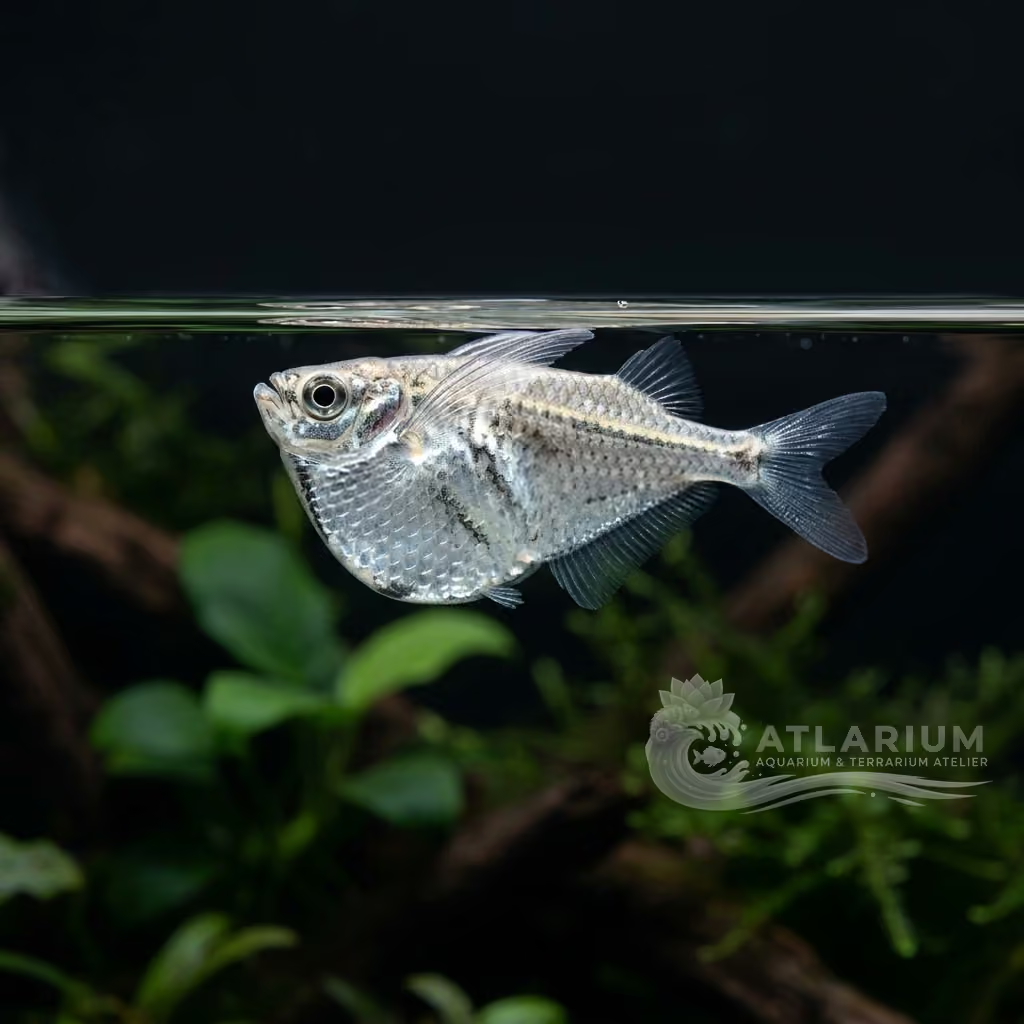
Silver hatchetfish
Thoracocharax stellatus
A unique freshwater fish with an extremely compressed body, specialized for surface life and famous for its ability to leap out of the water. Requires a tight-fitting canopy.
Water Temperature
23 - 28 °C
pH Value
6 - 7.5
Water type
Freshwater
Tank level
Bottom and middle
Adult size
7 cm
Minimum tank volume
>= 80 L
Minimum group
>= 6
GH
2 - 12 dGH
KH
1 - 6 dKH
TDS
40 - 240 ppm
Conductivity
63 - 375 uS/cm

Species description
Geographical Origin and Habitat: Thoracocharax stellatus, commonly known as the silver hatchetfish or spot-fin hatchetfish, is native to South America. It is widely distributed in the river basins of the Amazon, Orinoco, and Paraguay-Paraná, covering countries such as Brazil, Colombia, Venezuela, Paraguay, and Argentina. It inhabits slow-moving rivers, forest streams, oxbow lakes, and flooded areas of the tropical forest, remaining strictly in the top few centimeters of the water column under the cover of floating plants.
Taxonomy and Morphology: It belongs to the class Actinopterygii, order Characiformes, family Gasteropelecidae, and genus Thoracocharax. It is the largest member of the hatchetfish family, capable of reaching a maximum length of 7-9 centimeters (2.7 to 3.5 inches). The morphology is extraordinarily specialized: the body is extremely laterally compressed, with a deep, arched sternal keel housing powerful pectoral muscles. The pectoral fins are long and strong, resembling wings.
Social Behavior: It is a peaceful, timid, and schooling fish that must be kept in groups of at least 6-8 individuals to reduce stress and promote natural behavior. It spends 100% of its time near the water surface. If startled by sudden movements or changes in light, it reacts by performing spectacular leaps out of the water, using its strong pectoral fins to glide over the surface.
Coloration and Sexual Dimorphism: The body presents a highly brilliant, mirror-like silvery coloration with golden and greenish reflections depending on the angle of light. A dark longitudinal line runs along the sides from the operculum to the base of the caudal fin. A characteristic dark spot is present on the dorsal fin. Sexual dimorphism is minimal: mature females are slightly larger and show a rounder, more swollen abdomen than males.

Care, breeding and tankmates
Aquarium Setup: Requires a long aquarium with a minimum length of 100 cm (approx. 39 inches) to allow school swimming. The crucial aspect of the setup is the water surface, which must be partially covered with floating plants (such as Pistia stratiotes, Salvinia, or Limnobium) to provide shade and security. It is absolutely mandatory to install a tight-fitting, gap-free lid, as these fish will jump out at the slightest startle.
Diet and Feeding: It is a specialized surface predator with an upward-pointing mouth. In the aquarium, it feeds exclusively on food floating on the water surface, completely ignoring anything that falls to the bottom. The diet must include small live insects such as fruit flies (drosophila), micro-crickets, high-quality floating flakes or small pellets, and floating frozen or freeze-dried foods like white or black mosquito larvae.
Water Quality: Requires soft, slightly acidic or neutral water. Optimal parameters are: temperature between 23°C and 28°C (73°F - 82°F), pH between 6.0 and 7.0 (can tolerate up to 7.5), and hardness GH between 4 and 12. Filtration must be efficient to keep the water clear and free of pollutants (nitrates < 15 ppm), but the water flow at the surface must be kept weak to moderate so as not to hinder their peaceful swimming.
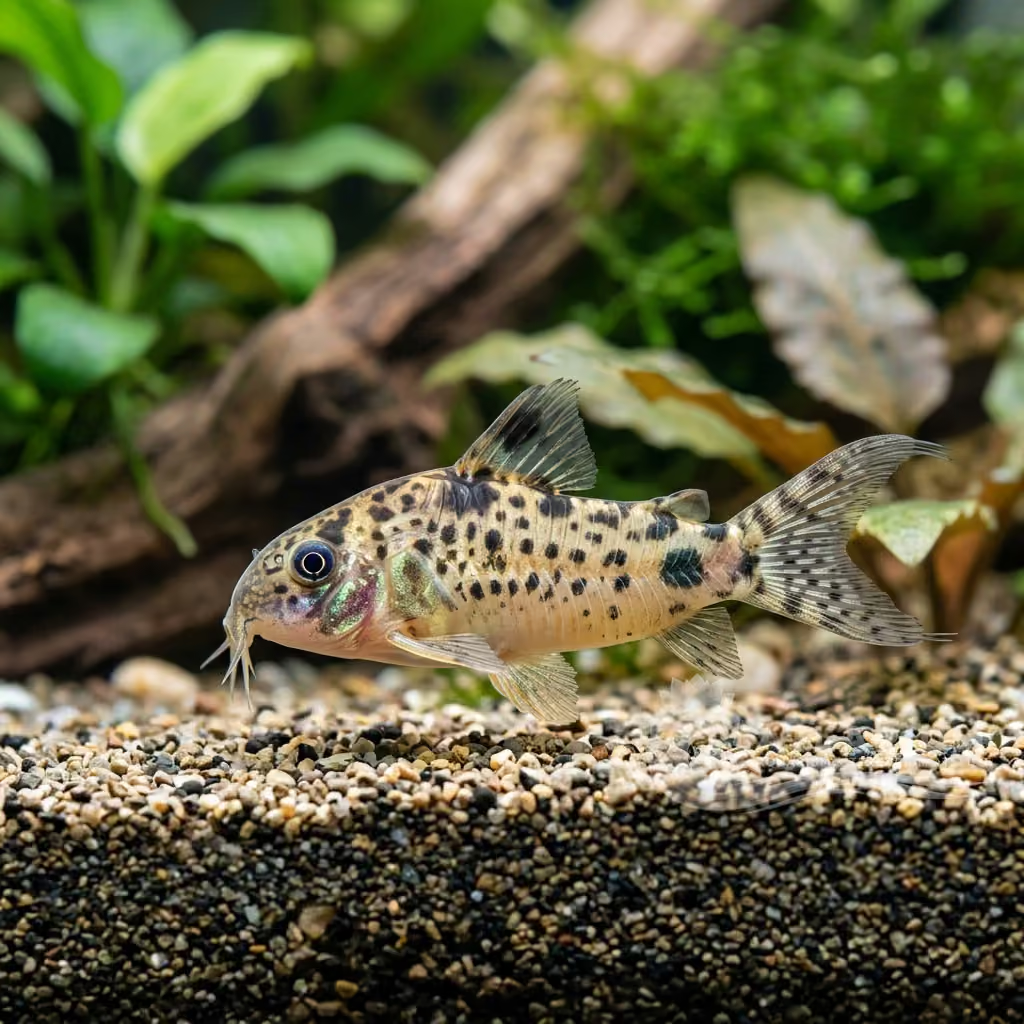
Compatibility and Cohabitation: An ideal guest for community aquariums dedicated to the South American biotope. Being peaceful and occupying only the surface zone, it can be combined with fish that inhabit the middle and lower zones of the aquarium, such as small characins (neons, cardinals), dwarf cichlids (Apistogramma), corydoras, and small loricariids. Avoid aggressive surface fish or large, boisterous tankmates.
Aquarium Breeding: Breeding in home aquariums is extremely difficult and very rarely reported. It requires a dedicated breeding tank with extremely soft and acidic water (pH 5.5-6.0) filtered over peat, and a dense layer of floating plants. Spawning occurs among the plant roots, and the eggs are adhesive. Parents must be removed immediately after spawning. Fry are extremely small and must be fed with infusoria.
Risks and Diseases: The primary lethal risk is jumping out of the aquarium due to the lack of an adequate cover. Because of their timid nature, they are particularly prone to contracting Ichthyophthirius multifiliis (Ich, or white spot disease) in case of sudden temperature drops during water changes. It is recommended to heat new water to the same temperature as the tank before adding it.

Geographic origin and distribution
Thoracocharax stellatus, commonly known as the silver hatchetfish or spot-fin hatchetfish, is native to South America. It is widely distributed in the river basins of the Amazon, Orinoco, and Paraguay-Paraná, covering countries such as Brazil, Colombia, Venezuela, Paraguay, and Argentina. It inhabits slow-moving rivers, forest streams, oxbow lakes, and flooded areas of the tropical forest, remaining strictly in the top few centimeters of the water column under the cover of floating plants.
Origin
Tropical oceans and reefsAmazon, Orinoco, and Guianas

Fish profile
- Temperament
- Peaceful
- Spotfin Hatchetfish are peaceful, shy, and highly nervous fish that rely entirely on their school for a sense of security. If kept in inadequate numbers, they become extremely stressed and prone to disease or erratic jumping. With the right setup and tank mates, they provide fascinating top-level activity.
- Diet
- Carnivore
- In the wild, they are specialized surface feeders, preying almost exclusively on small insects that fall onto the water. In the aquarium, they require floating foods such as high-quality flakes, freeze-dried bloodworms, and daphnia. They will rarely, if ever, venture down into the water column to chase sinking food.
- Life expectancy
- 3-5 years
- Adult size
- 7 cm
- Sex ratio
- School
- There are no specific sex ratio requirements, as they are a peaceful schooling species with minimal intraspecific aggression. Keeping them in a group of at least six is essential for their well-being and natural schooling behavior. A larger group size significantly boosts their confidence and reduces skittishness.
- Feeding frequency
- Twice daily
- Feeding them small amounts twice a day is recommended, ensuring all food remains on the surface long enough for them to eat. They are precise surface feeders, so offering too much at once can lead to food sinking and spoiling the water. Carefully observing their feeding habits ensures the entire school gets enough nutrition.
- Bioload
- Low to Medium
- The Spotfin Hatchetfish contributes a relatively low bioload to the aquarium, thanks to its small size and primarily insectivorous diet. Due to their strict top-dwelling nature, their waste disperses into the water column and is easily handled by standard filtration. A well-maintained tank with regular water changes is essential for keeping their environment clean.
- Flow
- Strong
- They strongly prefer calm, slow-moving water at the surface, mimicking the quiet margins of their native rivers. Excessive surface agitation makes it difficult for them to feed and forces them to expend too much energy. Using a spray bar or baffling the filter output is highly recommended to maintain a placid surface.
- Jump risk
- Yes
- This species has a uniquely high jump risk, as their deep bodies and powerful pectoral fins allow them to literally fly out of the water to catch insects or escape predators. An absolutely secure, tight-fitting aquarium lid with no gaps is mandatory. Floating plants can also help make them feel safer and less prone to leaping.
- Reproduction
- Oviparous
- Breeding the Spotfin Hatchetfish in captivity is exceptionally rare and difficult, requiring specific environmental triggers like simulating a wet season. They are egg-scatterers that deposit eggs among floating vegetation roots, offering no parental care. Successfully raising fry requires infusoria and a highly specialized surface-feeding regimen.
- Compatibility & tankmates
- Community
- They are exceptionally peaceful but easily intimidated by aggressive or fast-swimming mid-water fish. Ideal companions are peaceful, bottom-dwelling species like Corydoras, or calm mid-water schooling fish like tetras and pencilfish. Aggressive surface dwellers or fin-nippers must be completely avoided to prevent extreme stress.
- Tank level
- Middle/Bottom
- They are strict surface dwellers, spending nearly their entire lives just millimeters below the water line. Their upward-pointing mouths and flat backs are perfectly evolved for this unique ecological niche. They require an aquarium with a large surface area rather than excessive depth.

Scientific Parameters & Models
FishBase
Window to the official scientific data of the species
FishBase v25.04Data synced on: 06/15/2026
- Trophic level
- 3.5 ± 0.4 se
- Phylogenetic uniqueness (PD50)
- 0.752
- Bayesian Length-Weight
- a = 0.01479, b = 3.16
- VulnerabilityLow vulnerability (10 / 100)

Related species
Recommendations grouped by close relatives, companion choices, and similar care.