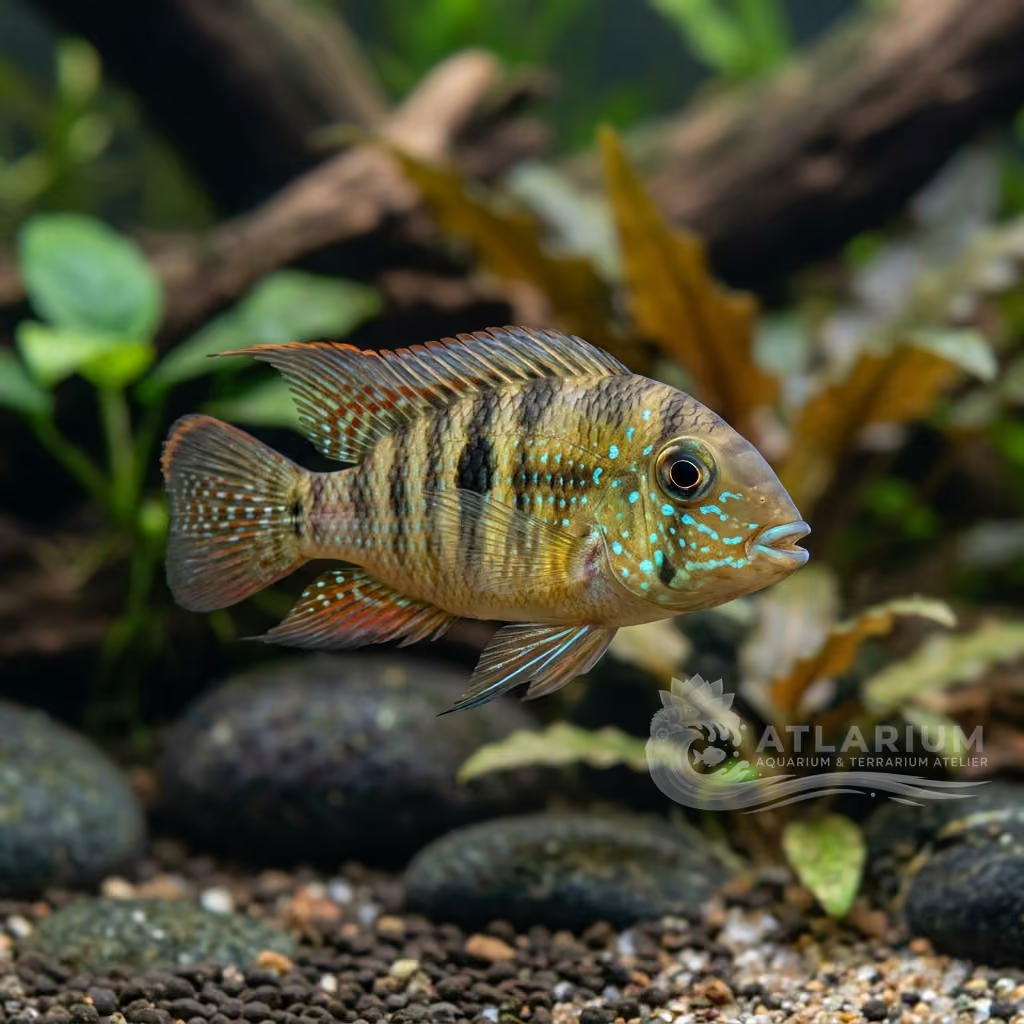
Inca Stone Fish
Tahuantinsuyoa macantzatza
The mysterious and fascinating 'Inca Stone Fish' (10-12 cm). Hard to find and to pronounce, the T. macantzatza is a small jewel of Peru. A peaceful cichlid of contained size, it compensates for a non-flashy livery with extraordinary reproductive behavior: it is a biparental mouthbrooder. Fascinating in biotope tanks set up with an abundance of river pebbles.
Water Temperature
24 - 28 °C
pH Value
6.5 - 7.5
Water type
Freshwater
Tank level
Bottom
Adult size
12 cm
Minimum tank volume
>= 100 L
Minimum group
>= 1
GH
5 - 15 dGH
KH
2 - 7 dKH
TDS
95 - 295 ppm
Conductivity
148 - 461 uS/cm

Species description
Geographic Origin and Biotope: FishBase records Tahuantinsuyoa macantzatza from South America, in the Aguaytía River basin in Peru, in the Amazon basin. It records the species as tropical, freshwater and demersal, with a temperature of 25–28 °C, pH 6.3–7.7 and hardness 2–2.5 dH.
Taxonomy and Morphology: FishBase records a maximum length of 12.0 cm TL.
Social Behaviour: This recovery makes no statement about social behaviour.
Colouration and Sexual Dimorphism: This recovery makes no statement about colouration or sexual dimorphism.

Care, breeding and tankmates
FishBase records Tahuantinsuyoa macantzatza as freshwater, demersal and tropical, with pH 6.3–7.7, hardness 2–2.5 dH and temperature 25–28 °C. Its recorded distribution is the Aguaytía River basin in Peru, within the Amazon River basin, and FishBase states that it inhabits rivers and streams. The page reports spawning on fallen leaves or pieces of wood; both parents guard the eggs and take the larvae in the mouth.

Geographic origin and distribution
This species originates from: Sud America (Perù, Bacino del fiume Aguaytía - Sistema dell'Ucayali).
Origin
Amazon, Orinoco, and GuianasEast Asia

Fish profile
- Temperament
- Semi-aggressive
- They have a bold and fiercely territorial temperament, typical of many cichlids. While they may ignore top-dwelling fish, they will aggressively defend their chosen area from bottom dwellers. Their behavior is highly complex and interesting to observe, especially during courtship and brood care. They demand respect from their tankmates and will not tolerate intruders.
- Diet
- Omnivore
- They are omnivores with a strong preference for meaty foods. In the aquarium, they will readily accept high-quality cichlid pellets, frozen bloodworms, mysis shrimp, and chopped earthworms. Their diet should be supplemented with some vegetable matter, such as spirulina flakes, for balanced nutrition. Live foods are excellent for conditioning them to breed.
- Life expectancy
- 5-8 years
- Adult size
- 12 cm
- Sex ratio
- Pair
- They are best kept as a single mated pair. Males are highly intolerant of other males and will fight aggressively. Keeping multiple females with one male is not recommended, as the pair bond is strong and the extra females will be outcast and harassed. A large tank is needed if attempting to keep more than one pair.
- Feeding frequency
- Twice daily
- Feed them one to two times a day with portions they can consume within a few minutes. They are vigorous eaters and will quickly clear the substrate of sinking foods. Care should be taken to ensure that more timid tankmates get a chance to eat. Fasting them one day a week can be beneficial for their digestion.
- Bioload
- Medium
- This medium-sized cichlid produces a moderate bioload that is easily managed with standard filtration. They are messy eaters, so good mechanical filtration is necessary to remove particulate waste. Regular water changes are important to maintain low nitrates and simulate their natural riverine environment. A well-cycled tank is essential to prevent ammonia spikes.
- Flow
- Stagnant
- Originating from the fast-flowing rivers of Peru, they prefer moderate to strong water currents. Good oxygenation is crucial, and a powerhead can help recreate their natural environment. The flow should not be so strong that it prevents them from resting or claiming a territory. They enjoy areas where the current sweeps food past them.
- Jump risk
- Yes
- The jump risk is generally low, as they spend most of their time near the bottom or mid-water. However, aggressive disputes or sudden frights can cause them to dart unpredictably. A standard, well-fitting aquarium lid is strongly recommended. This also helps prevent evaporation and keeps the environment stable.
- Reproduction
- Oviparous
- They are fascinating biparental mouthbrooders, a rare trait among South American cichlids. They spawn on a movable substrate, like a leaf or piece of wood, which they often drag to safety. Once the eggs hatch, both parents take turns holding the fry in their mouths to protect them. The parents are fiercely protective and will attack any fish that comes near.
- Compatibility & tankmates
- With caution
- They can be kept in a community tank but are aggressively territorial, especially when breeding. Suitable tankmates include fast-swimming tetras and robust catfish that stay out of their way. They should not be kept with other cichlids that will compete for bottom territory. Small, slow-moving fish may be bullied or viewed as food.
- Tank level
- Bottom
- They primarily occupy the lower to middle levels of the aquarium. They are very structure-oriented and will claim a specific rock or piece of driftwood as their territory. The tank should be decorated with plenty of caves, rocks, and tough plants to break lines of sight. Sand substrate is preferred for their foraging behavior.

Scientific Parameters & Models
FishBase
Window to the official scientific data of the species
FishBase v25.04Data synced on: 06/15/2026
- Trophic level
- 3.2 ± 0.4 se
- Resilience
- High (less than 15 months)
- Phylogenetic uniqueness (PD50)
- 0.75
- Bayesian Length-Weight
- a = 0.02188, b = 3.05
- VulnerabilityLow vulnerability (10 / 100)

Related species
Recommendations grouped by close relatives, companion choices, and similar care.