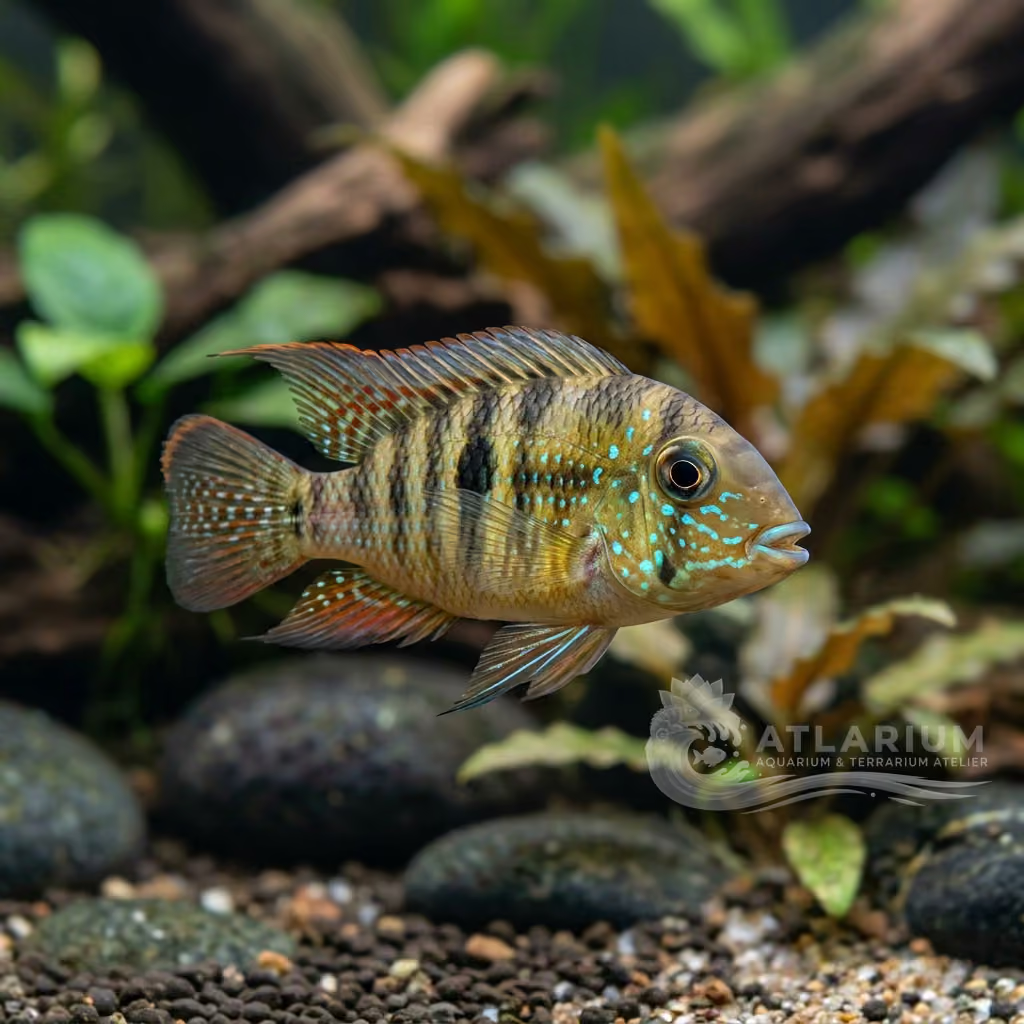
Monogramma Goby Cichlid
Teleocichla monogramma
The incredible 'Tocantins Goby Cichlid' (5-7 cm). Congener of the centrarchus, the Teleocichla monogramma is another astounding "cichlid without a swim bladder" forced to benthic life. It differs by origin (Rio Tocantins, a moderately cooler habitat) and by livery: it shows off a very marked continuous black stripe (a monogram) from snout to tail that enhances its flattened cigar shape. It too is an evolutionary relic adapted exclusively to life in extremely violent rapids (Clearwater rapids). Devastating towards conspecifics if confined in little space, it is a jewel of extreme technical difficulty.
24 - 28 °C
6 - 7.5
Freshwater
Bottom
7 cm
>= 100 L
>= 1
1 - 5 dGH
1 - 2 dKH
25 - 95 ppm
39 - 148 uS/cm

Species description

Care, breeding and tankmates

Geographic origin and distribution
Origin

Fish profile
- Temperament
- Semi-aggressive
- Teleocichla monogramma is exceptionally aggressive, highly territorial, and fearless. They command the bottom of the tank and will violently expel any intruders from their chosen area. They are reclusive by nature, preferring to observe the tank from the safety of a rocky crevice. They are a specialized fish meant only for dedicated and experienced aquarists.
- Diet
- Omnivore
- They are strict carnivores that thrive on a diet of small aquatic invertebrates. In the aquarium, they heavily rely on frozen foods like bloodworms, brine shrimp, and mysis. They will usually refuse all dry prepared foods like flakes and pellets. A varied meaty diet is necessary to maintain their health and stimulate breeding.
- Life expectancy
- 3-5 years
- Adult size
- 7 cm
- Sex ratio
- Pair
- They should only be kept as a single mated pair in most aquariums. Intraspecific aggression is extreme, and any extra conspecifics will be ruthlessly hunted down and killed. Forming a pair usually requires purchasing a group of juveniles and carefully observing them until two pair off, then immediately removing the rest. Males are generally slightly larger and more colorful than females.
- Feeding frequency
- Twice daily
- They should be fed small amounts once or twice daily. As ambush predators, they will patiently wait for food to drift past their hiding spots before striking. Care must be taken to ensure they receive enough food without overfeeding the tank and ruining the water quality. Siphoning out uneaten food is a mandatory maintenance task.
- Bioload
- Low to Medium
- Similar to its relative T. centrarchus, this dwarf cichlid has a manageable bioload but zero tolerance for poor water quality. The necessity for a pristine, highly oxygenated environment means massive over-filtration is required. Regular, large water changes are vital to keep nitrogenous waste to an absolute minimum. They are highly susceptible to disease if water quality drops even slightly.
- Flow
- Stagnant
- They are extreme rheophiles requiring a specialized river-manifold aquarium setup with unidirectional, torrential flow. The strong current mimics their natural habitat in the clearwater rapids of the Xingu basin. High flow rates ensure the maximum dissolved oxygen levels they absolutely require to survive. Without this vigorous current, they will quickly deteriorate and perish.
- Jump risk
- Yes
- Due to the required strong currents and their darting swimming style, the jump risk is high. They can easily propel themselves over the tank rim during territorial disputes or while striking at food. A heavy, completely sealed glass or polycarbonate lid is strictly necessary. Care must be taken during maintenance not to startle them.
- Reproduction
- Oviparous
- Breeding this species is a significant challenge achieved by few aquarists. They are cave spawners that lay their eggs in the tightest possible crevices beneath heavy river stones. The female guards the clutch aggressively, while the male protects the surrounding territory. If successful, the fry require immediate access to microscopic live foods in a high-flow environment.
- Compatibility & tankmates
- With caution
- They are fiercely territorial bottom dwellers that are intolerant of other benthic fish. Suitable tankmates are limited to active, top-dwelling schooling fish like hatchetfish or specific robust tetras. Keeping them with Corydoras, plecos, or other bottom-feeding cichlids will inevitably result in severe stress and fatalities. They will eagerly consume any tankmate small enough to fit in their mouths.
- Tank level
- Bottom
- They are entirely restricted to the bottom substrate due to their specialized anatomy and lack of a swim bladder. They move by hopping and darting among smooth river rocks and gravel. The aquarium must be scaped with a complex matrix of stones to provide the tight crevices they use for shelter and spawning. Plants are generally unnecessary and often destroyed by the high current.

Scientific Parameters & Models
Window to the official scientific data of the species
- Trophic level
- 3.2 ± 0.5 se
- Resilience
- High (less than 15 months)
- Phylogenetic uniqueness (PD50)
- 0.502
- Bayesian Length-Weight
- a = 0.00776, b = 3.12
- VulnerabilityLow vulnerability (10 / 100)

Related species
Recommendations grouped by close relatives, companion choices, and similar care.