Encyclopaedia

FishFreshwaterIntermediate
©AI Generated·Proprietary

Huascar Dwarf Cichlid

Apistogramma huascar

An elegant dwarf cichlid from the Peruvian Amazon, showcasing metallic blue-green flanks and a beautiful lyrate tail with extended filaments. It requires soft, acidic blackwater to flourish.

Taxonomy
Class:Actinopteri
Order:Perciformes
Family:Cichlidae
Subfamily:Cichlinae
Genus:Apistogramma
Species:Apistogramma huascar

Share

Check out Huascar Dwarf Cichlid on Atlarium

PracticeRecognition quizzesPhotos, names, origins, and puzzles to review Atlas species.Open quizzes
Water Temperature

23 - 28 °C

pH Value

5 - 6.8

Water type

Freshwater

Tank level

Bottom

Adult size

7 cm

Minimum tank volume

>= 60 L

Minimum group

>= 2

GH

1 - 6 dGH

KH

0.5 - 3 dKH

TDS

20 - 120 ppm

Conductivity

31 - 188 uS/cm

Species description

Geographical Origin and Habitat: This species is native to the Peruvian Amazon, specifically the Rio Yavari basin, a tributary of the Amazon River that forms the border between Peru and Brazil. It inhabits slow-flowing forest streams, oxbow lakes, and flooded forest areas (igapó) characterized by highly acidic, tannin-rich blackwater with a thick layer of decomposing leaf litter covering the sandy bottom.
Taxonomy and Morphology: Belonging to the family Cichlidae, this fish exhibits the classic elongated and laterally compressed body shape of the genus Apistogramma. Adult males develop elongated, pointed dorsal and anal fins, and a lyrate caudal fin with extended filaments. Males reach a size of 6-7 cm, while females are significantly smaller at 4-5 cm.
Social Behavior: Territorial but generally peaceful toward non-cichlid tankmates. Males establish a territory which they defend vigorously against rival males. Their social structure is polygamous; a single dominant male will defend a large territory that encompasses the smaller sub-territories of several breeding females.
Coloration and Sexual Dimorphism: Sexual dimorphism is highly pronounced. Males exhibit metallic blue-green coloration on their flanks with yellow tones on the throat and colorful fin margins. Females are generally greyish-yellow but turn brilliant lemon-yellow with stark black markings on their face and flanks when breeding or guarding fry.

Care, breeding and tankmates

Aquarium Setup: A tank of at least 20 gallons (approx. 75-80 liters) is required for a single pair, while a harem group requires 40 gallons or more. The setup must feature a soft sand substrate, plenty of driftwood branches, and floating plants to diffuse the light. Crucially, provide multiple caves (coconut shells or small clay pots) for the females to use as nesting sites.
Diet and Feeding: Primarily carnivorous, requiring small, high-protein foods. Feed a varied diet of live or high-quality frozen foods, such as baby brine shrimp, daphnia, mysis, and whiteworms. While they may eventually accept high-quality dry pellets or flakes, these should not be the primary source of nutrition.
Water Quality: Extremely sensitive to nitrate buildup and water parameter fluctuations. They require very soft (dH 1-5) and acidic water, with pH kept between 5.0 and 6.5. Keep the temperature stable between 24 and 28°C. Adding Indian almond leaves (Catappa) or filtering through peat is highly recommended to introduce beneficial humic substances.
Compatibility and Cohabitation: Excellent tankmates include peaceful schooling characins (like neon or cardinal tetras) which act as dither fish, reducing the cichlids' shyness. Avoid keeping them with other substrate-dwelling territorial fish, or with large, aggressive tankmates that could outcompete them for food.
Aquarium Breeding: Cave spawners. The female deposits eggs on the ceiling of a cave and assumes sole responsibility for brood care, driving the male away from the immediate nesting area. Eggs hatch in 48-72 hours, and the mother will guide the free-swimming fry around the tank to forage once their yolk sacs are absorbed.
Risks and Diseases: Delicate fish that are susceptible to bacterial infections and external parasites if water quality deteriorates. They are prone to Head and Lateral Line Erosion (HLLE) and systemic infections if kept in hard, alkaline water. Regular water changes and a stress-free environment are critical for prevention.

Geographic Origin and Distribution

This species is native to the Peruvian Amazon, specifically the Rio Yavari basin, a tributary of the Amazon River that forms the border between Peru and Brazil. It inhabits slow-flowing forest streams, oxbow lakes, and flooded forest areas (igapó) characterized by highly acidic, tannin-rich blackwater with a thick layer of decomposing leaf litter covering the sandy bottom.

Origin

Amazon, Orinoco, and Guianas

Fish profile

Temperament
Territorial
Overall, they exhibit a peaceful demeanor towards other species, but they are known to be territorial among their own kind. During the breeding season, both sexes become fiercely protective of their spawning sites and fry, potentially showing aggression to any intruders. Outside of breeding, they are somewhat shy and require a complex environment with plenty of hiding spaces to feel secure. Creating distinct visual barriers helps manage their territorial nature.
Diet
Carnivore
In their natural habitat, they are micro-predators that sift through the substrate for small invertebrates, insect larvae, and zooplankton. In captivity, they should be offered a varied and high-quality diet consisting of sinking micro-pellets and flakes. Supplementing their diet regularly with live or frozen foods like daphnia, baby brine shrimp, and bloodworms will promote optimal health and vibrant coloration. Variety is key to preventing nutritional deficiencies.
Sex ratio
Harem
In a suitably sized aquarium, they are best maintained in a harem configuration consisting of one dominant male and several females. If the tank is on the smaller side, maintaining a single compatible pair is the safest approach to minimize intraspecific aggression. Keeping multiple males usually requires a very large footprint with complex hardscape to break lines of sight and establish distinct territories. Proper sex ratios are vital for a peaceful tank.
Feeding frequency
Twice daily
It is highly recommended to feed them small portions once or twice daily to maintain their metabolism and overall well-being. Care must be taken to only offer an amount they can completely consume within a couple of minutes to avoid fouling the water. Overfeeding is a common mistake that can lead to severe water quality issues. Fasting the fish for one day per week can also help clear their digestive tract.
Bioload
This species has a relatively low bioload compared to larger cichlids, making it suitable for appropriately sized setups. However, they are highly sensitive to deteriorating water conditions and elevated nitrates. Maintaining pristine water quality through adequate filtration and regular water changes is absolutely crucial for their long-term health. A heavily planted tank can also help absorb excess nutrients and keep the environment stable.
Flow
Weak
Originating from slow-moving streams, backwaters, and sluggish tributaries, they strongly prefer gentle water flow in the aquarium. Strong currents will cause them undue stress and force them to expend unnecessary energy just to maintain their position. Filtration should be baffled if necessary to provide a calm environment, particularly near the substrate where they spend most of their time. Mimicking this natural calm flow is essential for their comfort.
Jump risk
No
Reproduction
Oviparous
They are typical cave spawners, utilizing secluded crevices, leaf litter, or natural hollows to lay their eggs. The female assumes the primary responsibility of guarding the eggs and the subsequent fry, often becoming highly reclusive. The male's role involves defending a larger peripheral territory against any perceived threats. Providing plenty of hiding spots like coconut caves, PVC pipes, and dense vegetation is critical for successful breeding.
Compatibility & tankmates
Territorial
They are best kept in a species-specific aquarium or a peaceful community tank with small, non-aggressive dither fish like tetras or rasboras. Fast-swimming or boisterous tank mates should be avoided as they will easily outcompete this species for food and induce stress. Bottom-dwelling species such as Corydoras might face territorial disputes, especially if breeding behaviors commence. Careful selection of tank mates is necessary to ensure a harmonious environment.
Tank level
Bottom
These fish primarily inhabit the lower third of the water column, spending the vast majority of their day navigating the substrate. They are often seen foraging among leaf litter, driftwood, and plant roots in search of food. They rarely venture into the upper levels of the aquarium unless enticed by feeding or if they lack sufficient cover below. A well-structured bottom layout is highly appreciated.

Window to the official scientific data of the species

Data synced on: 06/15/2026

Scientific Parameters & Models

Trophic level
3.3 ± 0.4 se
Resilience
Medium (1.4 - 4.4 years)
Phylogenetic uniqueness (PD50)
0.5
Bayesian Length-Weight
a = 0.0182, b = 2.99
VulnerabilityLow vulnerability (10 / 100)

Image gallery

Licensed images linked to the species or, when marked, to the closest representative taxon.

Related species

Recommendations grouped by close relatives, companion choices, and similar care.

Variants and close relatives

Same atlas type, nearby scientific identity, genus, or family.

Juruá Dwarf Cichlid

Juruá Dwarf Cichlid

Apistogramma juruensis

View details->
Atahualpa Dwarf Cichlid

Atahualpa Dwarf Cichlid

Apistogramma atahualpa

View details->
Panda Apisto

Panda Apisto

Apistogramma nijsseni

View details->
Mouthbrooding Dwarf Cichlid

Mouthbrooding Dwarf Cichlid

Apistogramma barlowi

View details->
Hongslo's Dwarf Cichlid

Hongslo's Dwarf Cichlid

Apistogramma hongsloi

View details->
Two-Stripe Dwarf Cichlid

Two-Stripe Dwarf Cichlid

Apistogramma bitaeniata

View details->
Playayacu Dwarf Cichlid

Playayacu Dwarf Cichlid

Apistogramma playayacu

View details->
Bandtail Dwarf Cichlid

Bandtail Dwarf Cichlid

Apistogramma eunotus

View details->
Agassiz's Dwarf Cichlid

Agassiz's Dwarf Cichlid

Apistogramma agassizii

View details->
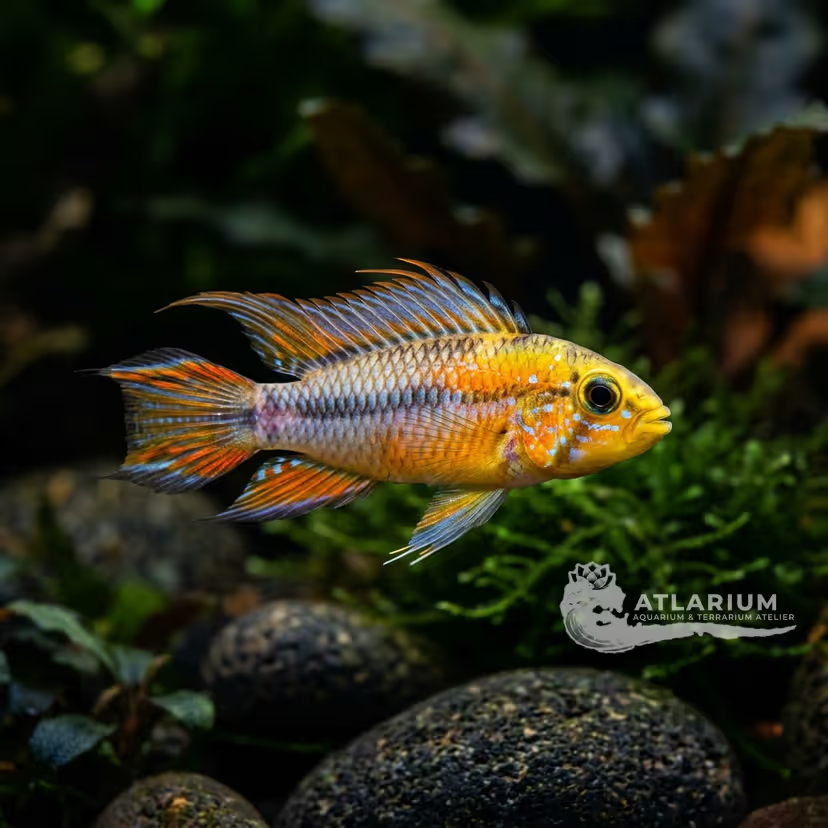
Sailfin Dwarf Cichlid (Apistogramma velifera)

Sailfin Dwarf Cichlid (Apistogramma velifera)

Apistogramma velifera
View details->
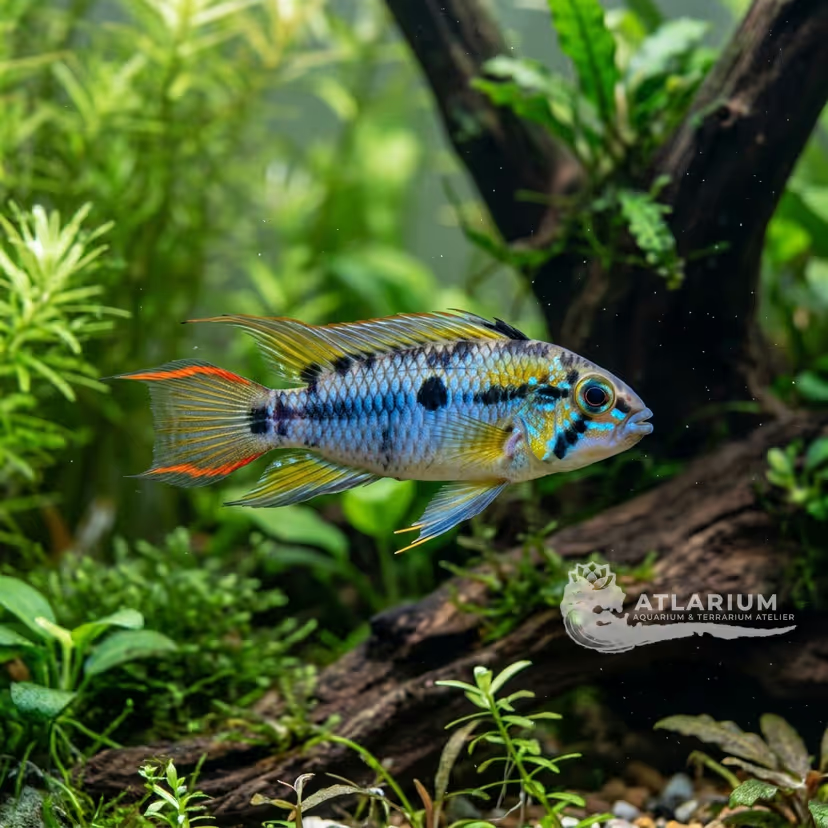
Mendezi dwarf cichlid

Mendezi dwarf cichlid

Apistogramma mendezi
View details->
Panduro Dwarf Cichlid (Apistogramma panduro)

Panduro Dwarf Cichlid (Apistogramma panduro)

Apistogramma panduro

View details->
Macmaster's Dwarf Cichlid

Macmaster's Dwarf Cichlid

Apistogramma macmasteri

View details->
Viejita dwarf cichlid

Viejita dwarf cichlid

Apistogramma viejita

View details->
Norbert's dwarf cichlid

Norbert's dwarf cichlid

Apistogramma norberti

View details->
Red-line dwarf cichlid

Red-line dwarf cichlid

Apistogramma rubrolineata

View details->

Recommended companions

Compatible cards from coherent ecosystems with matching parameters.

Aldrovanda vesiculosa
Plant

Aldrovanda vesiculosa

Aldrovanda vesiculosa

View details->
Ammannia latifolia
Plant

Ammannia latifolia

Ammannia latifolia

View details->
Blyxa alternifolia
Plant

Blyxa alternifolia

Blyxa alternifolia

View details->
Blyxa cf. vietii
Plant

Blyxa cf. vietii

Blyxa cf. vietii

View details->
Bacopa crenata
Plant

Bacopa crenata

Bacopa crenata

View details->
Aciotis acuminifolia
Plant

Aciotis acuminifolia

Aciotis acuminifolia

View details->
Ammannia crassicaulis
Plant

Ammannia crassicaulis

Ammannia crassicaulis

View details->
Anubias gracilis
Plant

Anubias gracilis

Anubias gracilis

View details->
Alternanthera reineckii "rosaefolia minor"
Plant

Alternanthera reineckii "rosaefolia minor"

Alternanthera reineckii "rosaefolia minor"

View details->
Ammannia mauritiana
Plant

Ammannia mauritiana

Ammannia mauritiana

View details->
Golden Nesaea
Plant

Golden Nesaea

Ammannia pedicellata

View details->
Amblystegium serpens
Plant

Amblystegium serpens

Amblystegium serpens

View details->
Ammannia sp. 'Bonsai'
Plant

Ammannia sp. 'Bonsai'

Ammannia sp. 'Bonsai'

View details->
Ammannia praetermissa
Plant

Ammannia praetermissa

Ammannia praetermissa
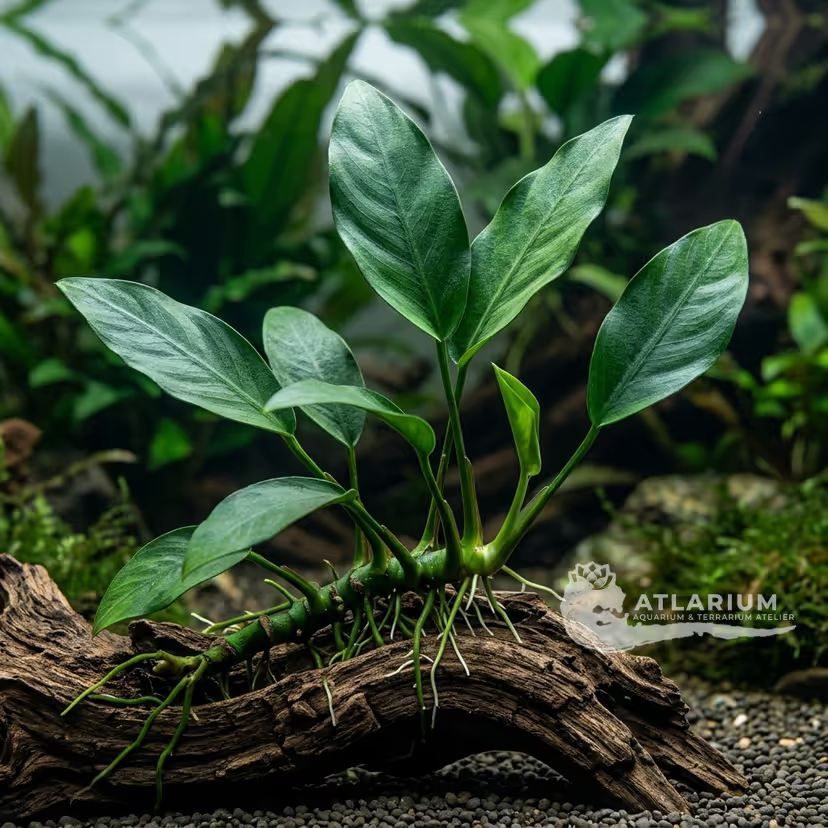
View details->
Anubias
Plant

Anubias

Anubias barteri

View details->
Anubias nana
Plant

Anubias nana

Anubias barteri var. nana

View details->

Similar care

Cards with similar requirements, difficulty, habitat, and husbandry profile.

Gephyra Apisto

Gephyra Apisto

Apistogramma gephyra

View details->
Mueller's Dwarf Cichlid

Mueller's Dwarf Cichlid

Apistogramma paulmuelleri

View details->
Ashes Dwarf Cichlid

Ashes Dwarf Cichlid

Apistogramma cinilabra
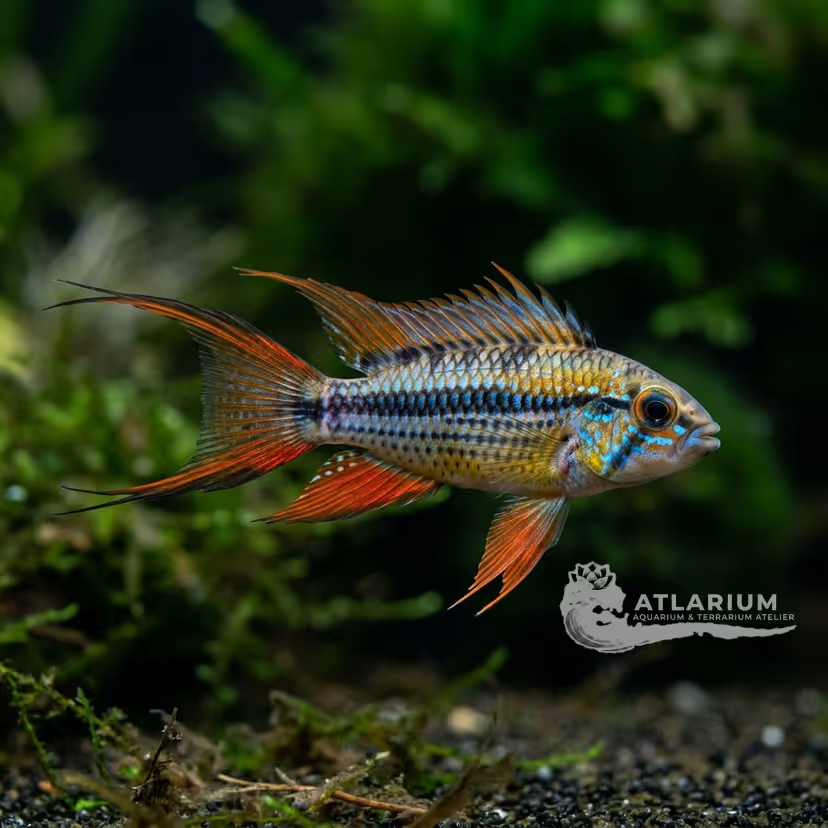
View details->
Lyretail Dwarf Cichlid

Lyretail Dwarf Cichlid

Apistogramma uaupesi

View details->
Red-tailed apisto

Red-tailed apisto

Apistogramma erythrura

View details->
Inka Dwarf Cichlid or Inka 50 (Apistogramma baenschi)

Inka Dwarf Cichlid or Inka 50 (Apistogramma baenschi)

Apistogramma baenschi

View details->
Dwarf Pike Cichlid

Dwarf Pike Cichlid

Crenicichla compressiceps

View details->
Checkerboard Cichlid (Crenicara punctulatum)

Checkerboard Cichlid (Crenicara punctulatum)

Crenicara punctulatum

View details->
Regan's Dwarf Pike Cichlid

Regan's Dwarf Pike Cichlid

Crenicichla regani

View details->
Elizabethae Dwarf Cichlid (Apistogramma elizabethae)

Elizabethae Dwarf Cichlid (Apistogramma elizabethae)

Apistogramma elizabethae

View details->
Meta Cichlid / Yellow Acara (Aequidens metae)

Meta Cichlid / Yellow Acara (Aequidens metae)

Aequidens metae

View details->
Cockatoo Cichlid

Cockatoo Cichlid

Apistogramma cacatuoides

View details->
Flag Acara (Smiling Cichlid)

Flag Acara (Smiling Cichlid)

Laetacara curviceps

View details->
Diadem Cichlid (Aequidens diadema)

Diadem Cichlid (Aequidens diadema)

Aequidens diadema
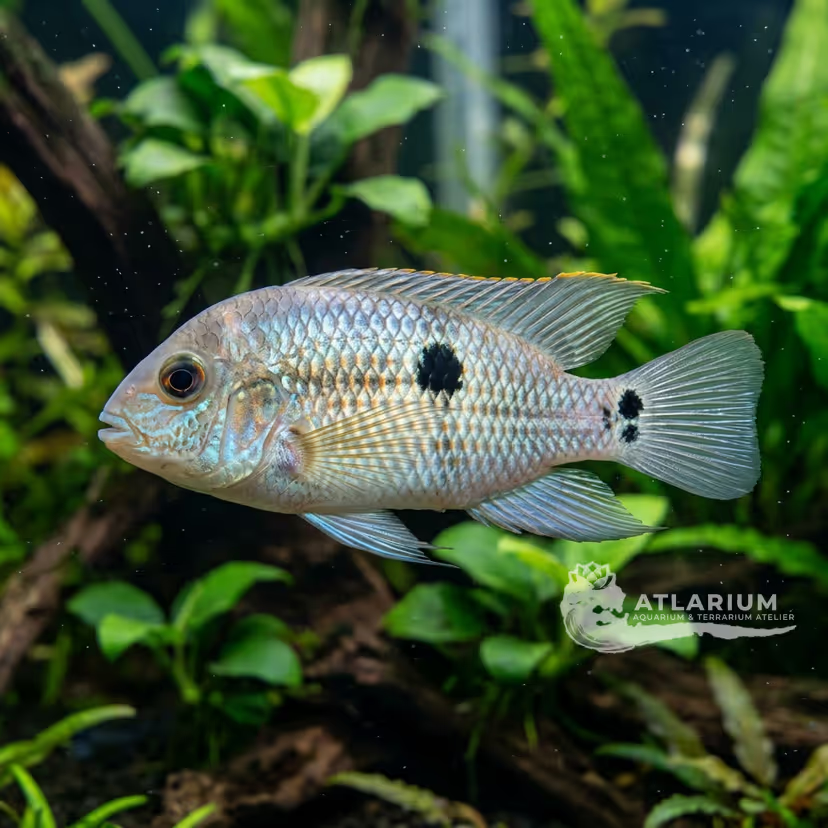
View details->
Double-spot Acara (Aequidens pallidus)

Double-spot Acara (Aequidens pallidus)

Aequidens pallidus

View details->
Cupid cichlid

Cupid cichlid

Biotodoma cupido

View details->
Last updated: 06/30/2026