Encyclopaedia

FishFreshwaterIntermediate
©AI Generated·Proprietary

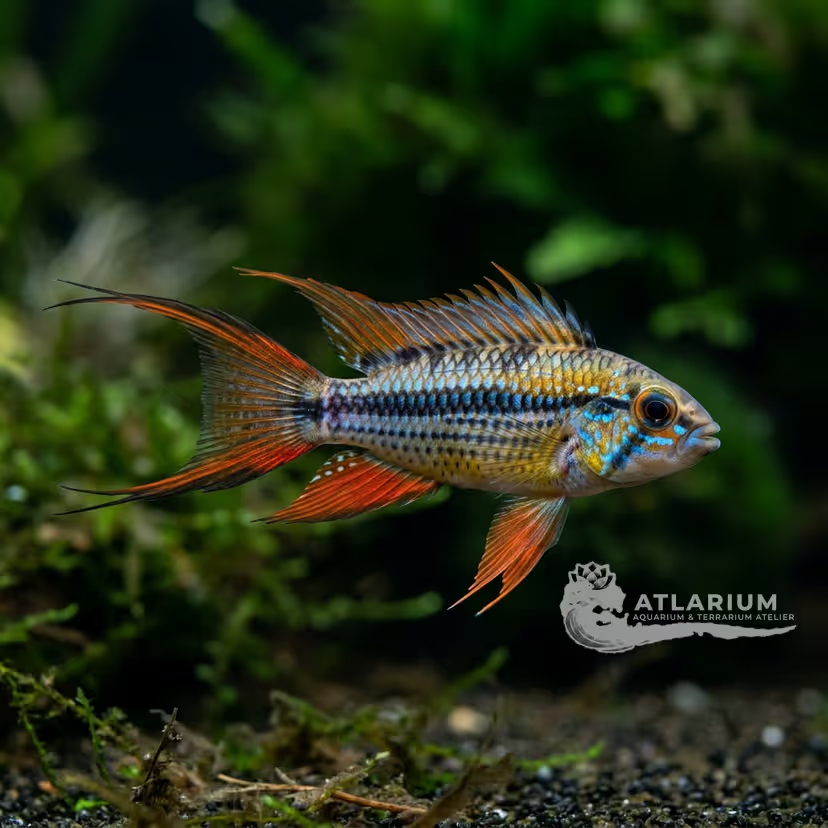
Norbert's dwarf cichlid

Apistogramma norberti

Apistogramma norberti is a beautiful Amazonian freshwater dwarf cichlid. It requires very soft, acidic, and clean water along with appropriate territory management.

Taxonomy
Class:Actinopteri
Order:Perciformes
Family:Cichlidae
Subfamily:Cichlinae
Genus:Apistogramma
Species:Apistogramma norberti

Share

Check out Norbert's dwarf cichlid on Atlarium

PracticeRecognition quizzesPhotos, names, origins, and puzzles to review Atlas species.Open quizzes
Water Temperature

22 - 26 °C

pH Value

5.5 - 6.8

Water type

Freshwater

Tank level

Bottom

Adult size

7 cm

Minimum tank volume

>= 80 L

Minimum group

>= 2

GH

2 - 8 dGH

KH

0 - 3 dKH

TDS

30 - 100 ppm

Conductivity

50 - 200 uS/cm

Species description

Geographical Origin and Habitat:
This species is native to the Rio Ucayali basin in the Amazonian rainforest of Peru. It inhabits small forest streams (igarapés), swamps, and river margins characterized by calm, shallow, and heavily shaded waters. The bottom is typically covered with a thick layer of leaf litter and fallen branches that release organic tannins.
Taxonomy and Morphology:
Belonging to the family Cichlidae, Apistogramma norberti is a dwarf cichlid featuring a moderately compressed body and prominent lips. Adult males reach a maximum length of about 8 centimeters, while females remain smaller, topping out at around 5 centimeters. They possess a high, pointed dorsal fin.
Social Behavior:
It is a highly territorial species, especially during the breeding season. Males defend a territory that may encompass the sub-territories of multiple females (polygyny). It displays intraspecific aggression but is peaceful toward non-territorial tankmates. Providing ample hiding spots is essential to reduce conflicts.
Coloration and Sexual Dimorphism:
Shows strong sexual dimorphism. Males display a spectacular coloration with blue-cyan reflections on the scales, prominent orange or yellow lips, and a high dorsal fin with orange highlights. Females are smaller, yellowish-gray with a distinct dark spot on the flanks, turning bright yellow when guarding eggs or fry.

Care, breeding and tankmates

Aquarium Setup:
Requires a mature freshwater aquarium of at least 80 liters for a single pair. The ideal substrate is fine, dark sand. The tank must be densely planted and decorated with driftwood, roots, and half coconut shells to serve as caves. Adding dried leaves (such as catappa or oak leaves) helps replicate their natural blackwater habitat.
Diet and Feeding:
Prefers dimmed, diffused lighting. Floating plants are highly recommended to block direct light. Heating must maintain a stable temperature between 24°C and 28°C. A high-quality heater is required, along with a digital thermometer to monitor temperature stability closely.
Water Quality:
In the context of this aquatic species, this refers to water chemistry. It requires extremely soft and acidic water: pH between 5.0 and 6.0, carbonate hardness (KH) of 0 to 2 dKH, and conductivity below 100 µS/cm. Regular, gentle water changes using reverse osmosis (RO) water are mandatory.
Compatibility and Cohabitation:
It is a carnivorous micropredator. In captivity, it prefers live or frozen foods such as baby brine shrimp (artemia nauplii), daphnia, copepods, and bloodworms. It can be difficult to transition to dry foods, which must be high-quality, small sinking pellets. Feed in small amounts.
Aquarium Breeding:
Coexists well with small, peaceful characins (such as pencilfish or neon tetras) that act as dither fish. Avoid housing it with other territorial dwarf cichlids or larger, boisterous tankmates that could outcompete it for food or cause chronic stress. It is a shy fish that needs quiet companions.
Risks and Diseases:
Highly sensitive to water pollution and organic waste build-up. Elevated nitrate levels quickly lead to bacterial infections or hole-in-the-head disease. It is also prone to digestive issues if fed low-quality foods. Routine water maintenance is vital, avoiding sudden changes in water parameters.

Geographic Origin and Distribution

This species is native to the Rio Ucayali basin in the Amazonian rainforest of Peru. It inhabits small forest streams (igarapés), swamps, and river margins characterized by calm, shallow, and heavily shaded waters. The bottom is typically covered with a thick layer of leaf litter and fallen branches that release organic tannins.

Origin

Tropical oceans and reefsAmazon, Orinoco, and Guianas

Fish profile

Temperament
Territorial
Overall, they exhibit a peaceful demeanor towards other species, but they are known to be territorial among their own kind. During the breeding season, both sexes become fiercely protective of their spawning sites and fry, potentially showing aggression to any intruders. Outside of breeding, they are somewhat shy and require a complex environment with plenty of hiding spaces to feel secure. Creating distinct visual barriers helps manage their territorial nature.
Diet
Carnivore
In their natural habitat, they are micro-predators that sift through the substrate for small invertebrates, insect larvae, and zooplankton. In captivity, they should be offered a varied and high-quality diet consisting of sinking micro-pellets and flakes. Supplementing their diet regularly with live or frozen foods like daphnia, baby brine shrimp, and bloodworms will promote optimal health and vibrant coloration. Variety is key to preventing nutritional deficiencies.
Sex ratio
Pair
In a suitably sized aquarium, they are best maintained in a harem configuration consisting of one dominant male and several females. If the tank is on the smaller side, maintaining a single compatible pair is the safest approach to minimize intraspecific aggression. Keeping multiple males usually requires a very large footprint with complex hardscape to break lines of sight and establish distinct territories. Proper sex ratios are vital for a peaceful tank.
Feeding frequency
Twice daily
It is highly recommended to feed them small portions once or twice daily to maintain their metabolism and overall well-being. Care must be taken to only offer an amount they can completely consume within a couple of minutes to avoid fouling the water. Overfeeding is a common mistake that can lead to severe water quality issues. Fasting the fish for one day per week can also help clear their digestive tract.
Bioload
This species has a relatively low bioload compared to larger cichlids, making it suitable for appropriately sized setups. However, they are highly sensitive to deteriorating water conditions and elevated nitrates. Maintaining pristine water quality through adequate filtration and regular water changes is absolutely crucial for their long-term health. A heavily planted tank can also help absorb excess nutrients and keep the environment stable.
Flow
Strong
Originating from slow-moving streams, backwaters, and sluggish tributaries, they strongly prefer gentle water flow in the aquarium. Strong currents will cause them undue stress and force them to expend unnecessary energy just to maintain their position. Filtration should be baffled if necessary to provide a calm environment, particularly near the substrate where they spend most of their time. Mimicking this natural calm flow is essential for their comfort.
Jump risk
No
Reproduction
Oviparous
They are typical cave spawners, utilizing secluded crevices, leaf litter, or natural hollows to lay their eggs. The female assumes the primary responsibility of guarding the eggs and the subsequent fry, often becoming highly reclusive. The male's role involves defending a larger peripheral territory against any perceived threats. Providing plenty of hiding spots like coconut caves, PVC pipes, and dense vegetation is critical for successful breeding.
Compatibility & tankmates
Territorial
They are best kept in a species-specific aquarium or a peaceful community tank with small, non-aggressive dither fish like tetras or rasboras. Fast-swimming or boisterous tank mates should be avoided as they will easily outcompete this species for food and induce stress. Bottom-dwelling species such as Corydoras might face territorial disputes, especially if breeding behaviors commence. Careful selection of tank mates is necessary to ensure a harmonious environment.
Tank level
Bottom
These fish primarily inhabit the lower third of the water column, spending the vast majority of their day navigating the substrate. They are often seen foraging among leaf litter, driftwood, and plant roots in search of food. They rarely venture into the upper levels of the aquarium unless enticed by feeding or if they lack sufficient cover below. A well-structured bottom layout is highly appreciated.

Window to the official scientific data of the species

Data synced on: 06/15/2026

Scientific Parameters & Models

Trophic level
3.3 ± 0.4 se
Resilience
Medium (1.4 - 4.4 years)
Phylogenetic uniqueness (PD50)
0.5
Bayesian Length-Weight
a = 0.0182, b = 2.99
VulnerabilityLow vulnerability (10 / 100)

Image gallery

Licensed images linked to the species or, when marked, to the closest representative taxon.

Related species

Recommendations grouped by close relatives, companion choices, and similar care.

Variants and close relatives

Same atlas type, nearby scientific identity, genus, or family.

Red-line dwarf cichlid

Red-line dwarf cichlid

Apistogramma rubrolineata

View details->
Playayacu Dwarf Cichlid

Playayacu Dwarf Cichlid

Apistogramma playayacu

View details->
Bandtail Dwarf Cichlid

Bandtail Dwarf Cichlid

Apistogramma eunotus

View details->
Mouthbrooding Dwarf Cichlid

Mouthbrooding Dwarf Cichlid

Apistogramma barlowi

View details->
Macmaster's Dwarf Cichlid

Macmaster's Dwarf Cichlid

Apistogramma macmasteri

View details->
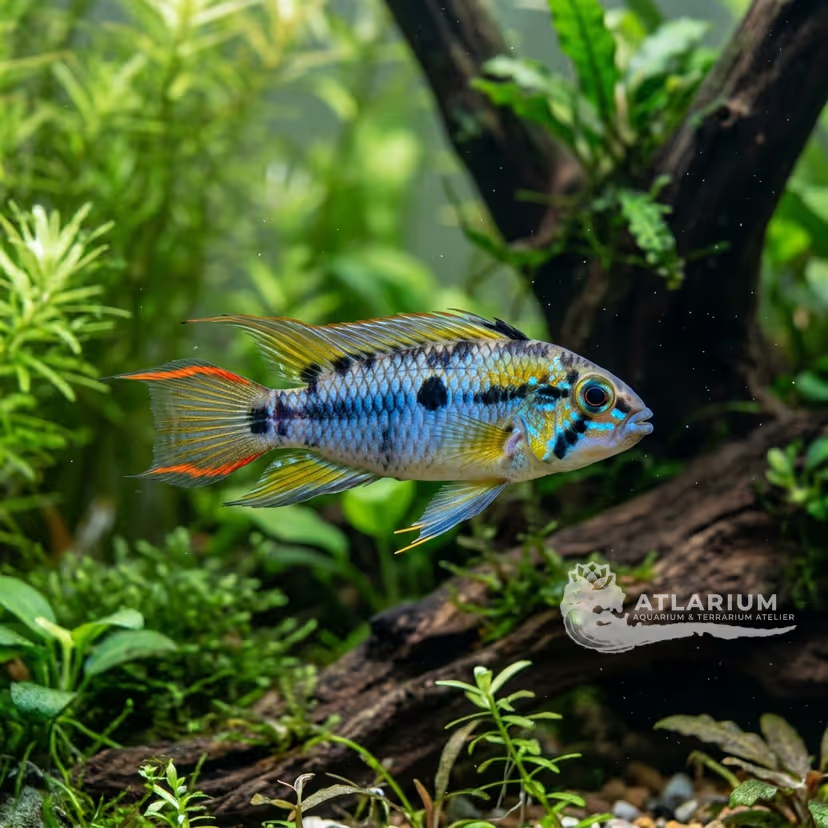
Viejita dwarf cichlid

Viejita dwarf cichlid

Apistogramma viejita
View details->
Panduro Dwarf Cichlid (Apistogramma panduro)

Panduro Dwarf Cichlid (Apistogramma panduro)

Apistogramma panduro

View details->
Huascar Dwarf Cichlid

Huascar Dwarf Cichlid

Apistogramma huascar

View details->
Juruá Dwarf Cichlid

Juruá Dwarf Cichlid

Apistogramma juruensis

View details->
Two-Stripe Dwarf Cichlid

Two-Stripe Dwarf Cichlid

Apistogramma bitaeniata

View details->
Inka Dwarf Cichlid or Inka 50 (Apistogramma baenschi)

Inka Dwarf Cichlid or Inka 50 (Apistogramma baenschi)

Apistogramma baenschi

View details->
Atahualpa Dwarf Cichlid

Atahualpa Dwarf Cichlid

Apistogramma atahualpa

View details->
Agassiz's Dwarf Cichlid

Agassiz's Dwarf Cichlid

Apistogramma agassizii

View details->
Sailfin Dwarf Cichlid (Apistogramma velifera)

Sailfin Dwarf Cichlid (Apistogramma velifera)

Apistogramma velifera

View details->
Hongslo's Dwarf Cichlid

Hongslo's Dwarf Cichlid

Apistogramma hongsloi

View details->
Panda Apisto

Panda Apisto

Apistogramma nijsseni

View details->

Recommended companions

Compatible cards from coherent ecosystems with matching parameters.

Blyxa alternifolia
Plant

Blyxa alternifolia

Blyxa alternifolia

View details->
Blyxa cf. vietii
Plant

Blyxa cf. vietii

Blyxa cf. vietii

View details->
Aldrovanda vesiculosa
Plant

Aldrovanda vesiculosa

Aldrovanda vesiculosa

View details->
Ammannia latifolia
Plant

Ammannia latifolia

Ammannia latifolia

View details->
Alternanthera reineckii "rosaefolia minor"
Plant

Alternanthera reineckii "rosaefolia minor"

Alternanthera reineckii "rosaefolia minor"

View details->
Ammannia mauritiana
Plant

Ammannia mauritiana

Ammannia mauritiana

View details->
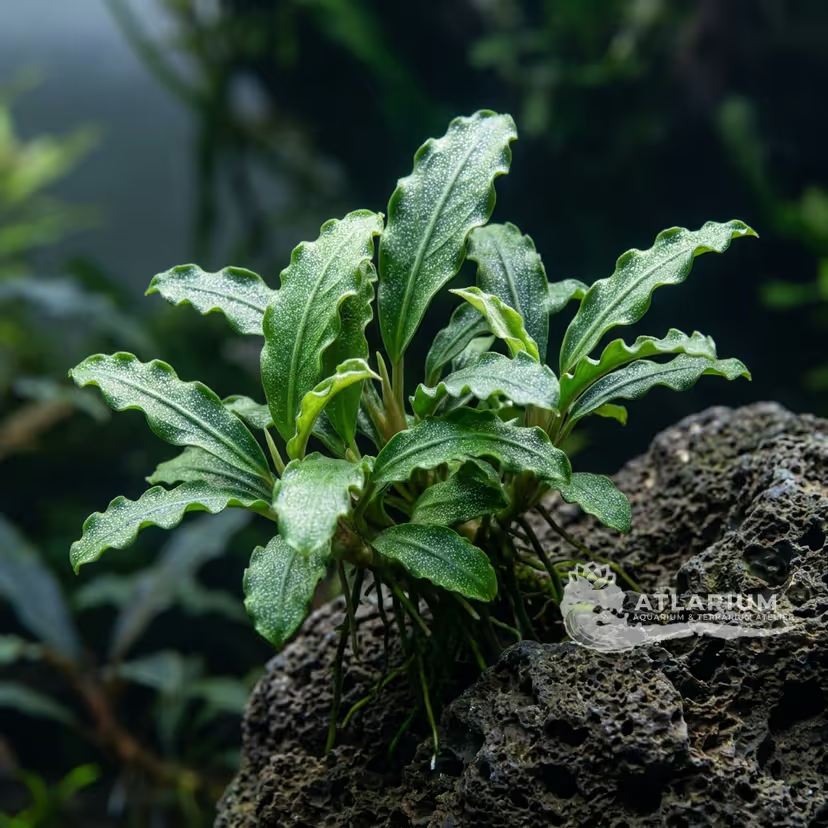
Ammannia sp. 'Bonsai'
Plant

Ammannia sp. 'Bonsai'

Ammannia sp. 'Bonsai'
View details->
Bucephalandra pygmaea "Bukit Kelam / Sintang"
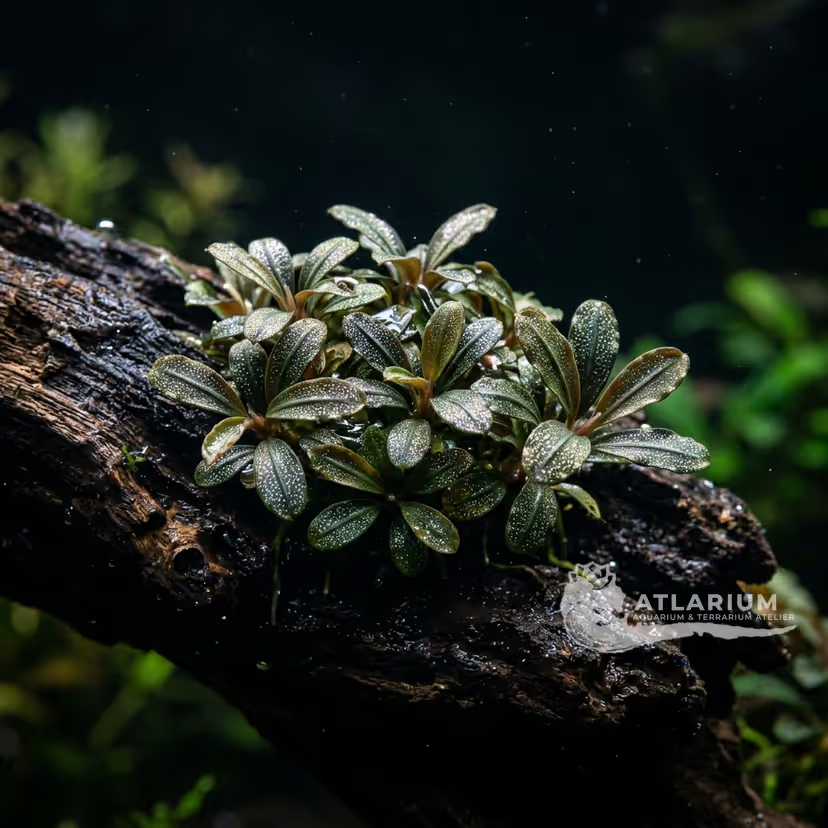
Plant

Bucephalandra pygmaea "Bukit Kelam / Sintang"

Bucephalandra pygmaea "Bukit Kelam / Sintang"

View details->
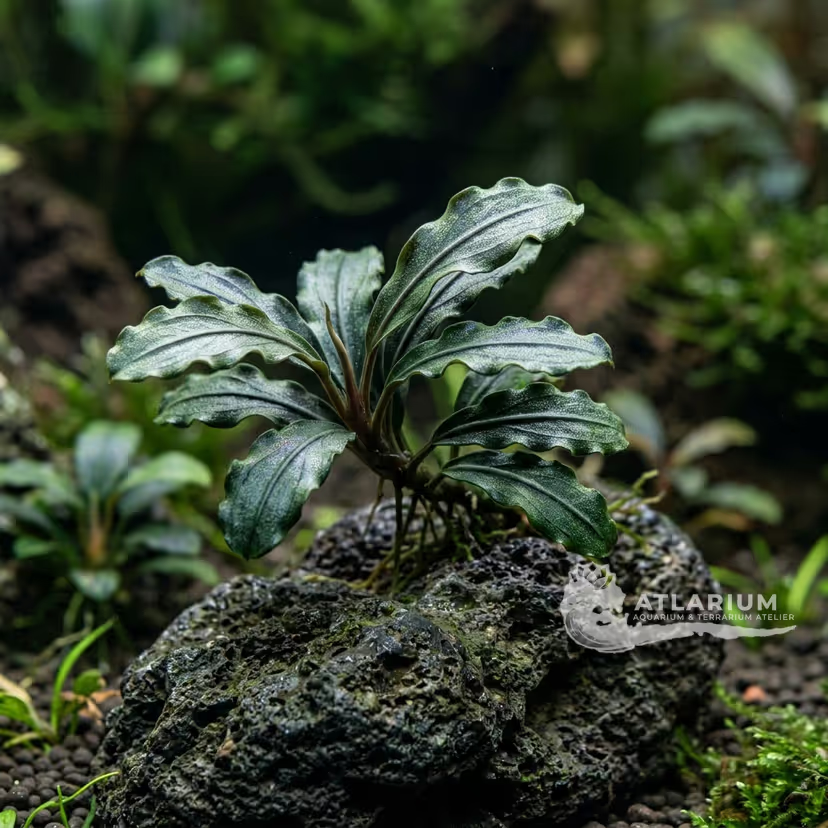
Bucephalandra pygmaea "Kapit"
Plant

Bucephalandra pygmaea "Kapit"

Bucephalandra pygmaea "Kapit"
View details->
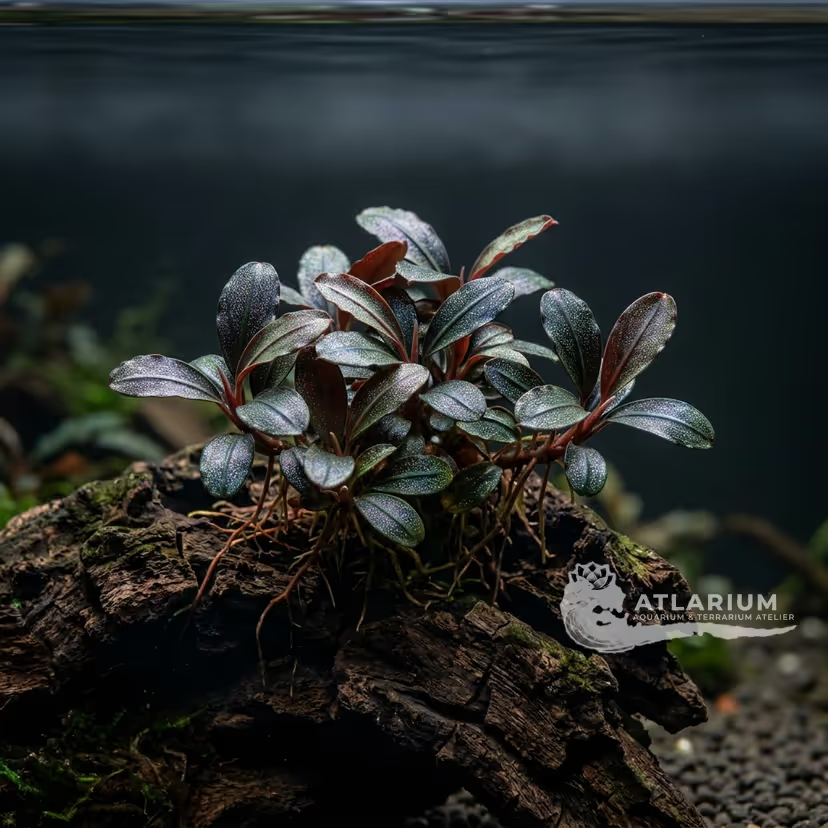
Bucephalandra sordidula
Plant

Bucephalandra sordidula

Bucephalandra sordidula
View details->
Bucephalandra sp. "Bodok"
Plant

Bucephalandra sp. "Bodok"

Bucephalandra sp. "Bodok"

View details->
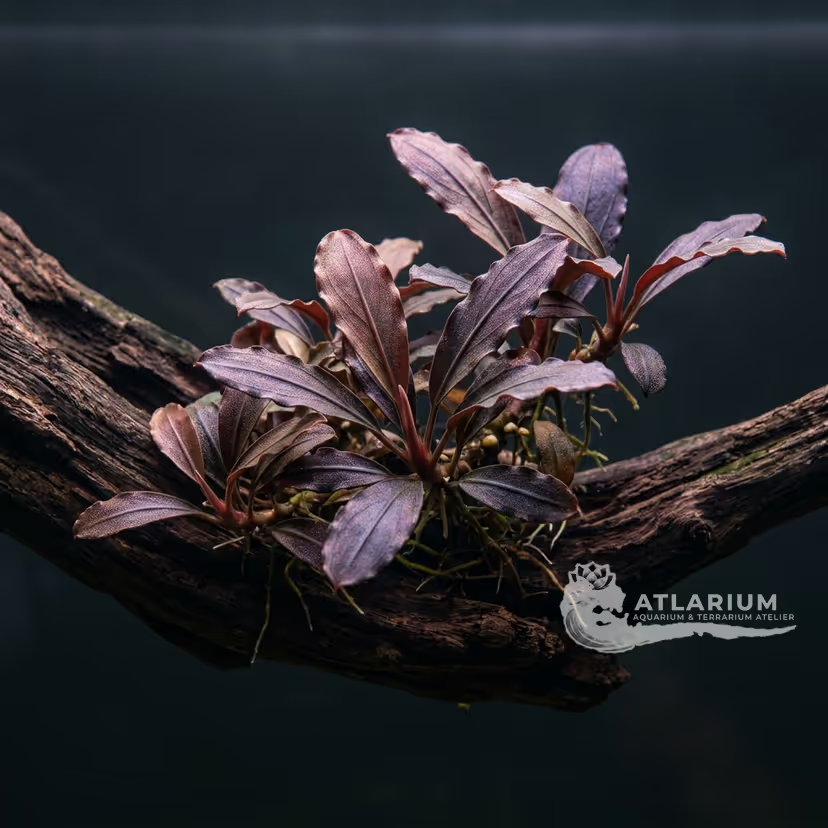
Bucephalandra sp. "Braun-rot narrow"
Plant

Bucephalandra sp. "Braun-rot narrow"

Bucephalandra sp. "Braun-rot narrow"
View details->
Bucephalandra sp. "Braun-rot" ("Serimbu")
Plant

Bucephalandra sp. "Braun-rot" ("Serimbu")

Bucephalandra sp. "Braun-rot"
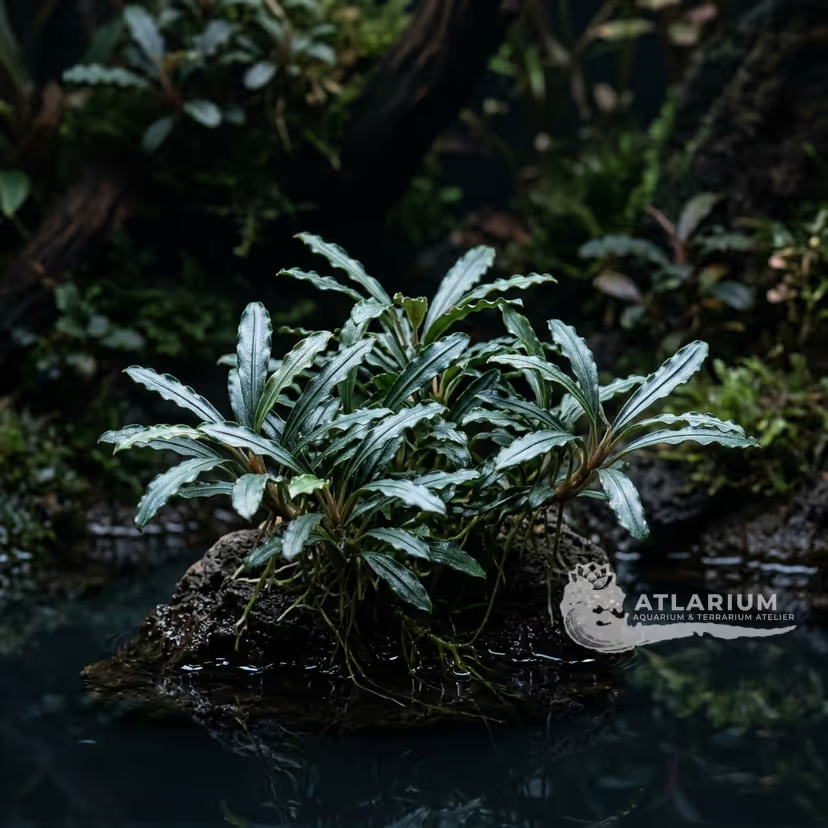
View details->
Bucephalandra sp. "Gunung Sumpit"
Plant

Bucephalandra sp. "Gunung Sumpit"

Bucephalandra sp. "Gunung Sumpit"
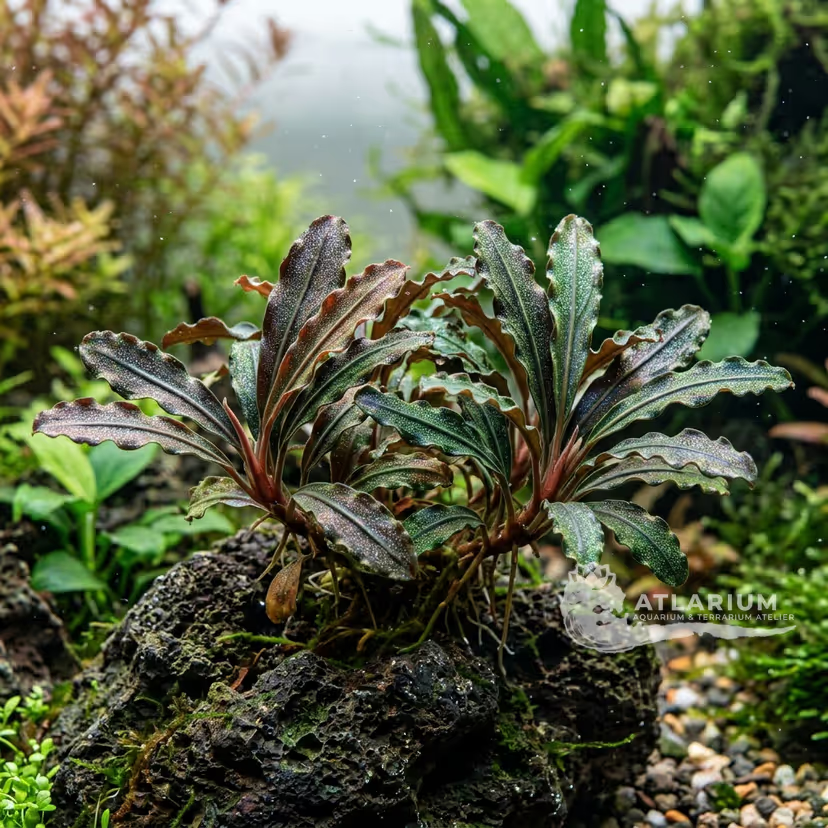
View details->
Bucephalandra sp. "Kedagang"
Plant

Bucephalandra sp. "Kedagang"

Bucephalandra sp. "Kedagang"

View details->
Bacopa crenata
Plant

Bacopa crenata

Bacopa crenata

View details->

Similar care

Cards with similar requirements, difficulty, habitat, and husbandry profile.

Mueller's Dwarf Cichlid

Mueller's Dwarf Cichlid

Apistogramma paulmuelleri
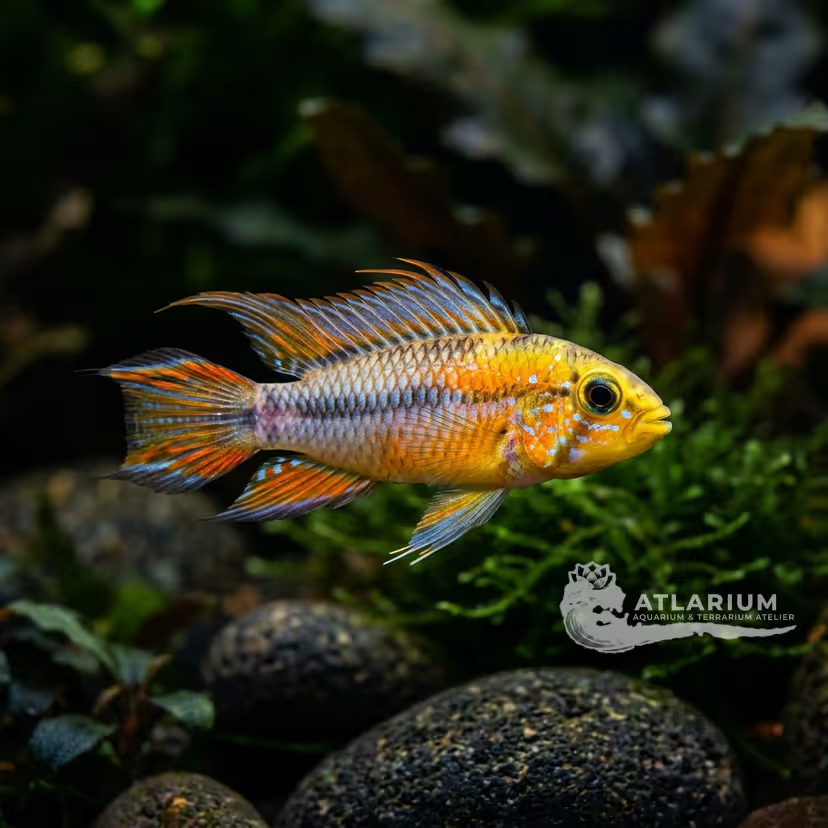
View details->
Mendezi dwarf cichlid

Mendezi dwarf cichlid

Apistogramma mendezi

View details->
Red-tailed apisto

Red-tailed apisto

Apistogramma erythrura

View details->
Gephyra Apisto

Gephyra Apisto

Apistogramma gephyra

View details->
Lyretail Dwarf Cichlid

Lyretail Dwarf Cichlid

Apistogramma uaupesi

View details->
Ashes Dwarf Cichlid

Ashes Dwarf Cichlid

Apistogramma cinilabra

View details->
Checkerboard Cichlid (Crenicara punctulatum)

Checkerboard Cichlid (Crenicara punctulatum)

Crenicara punctulatum
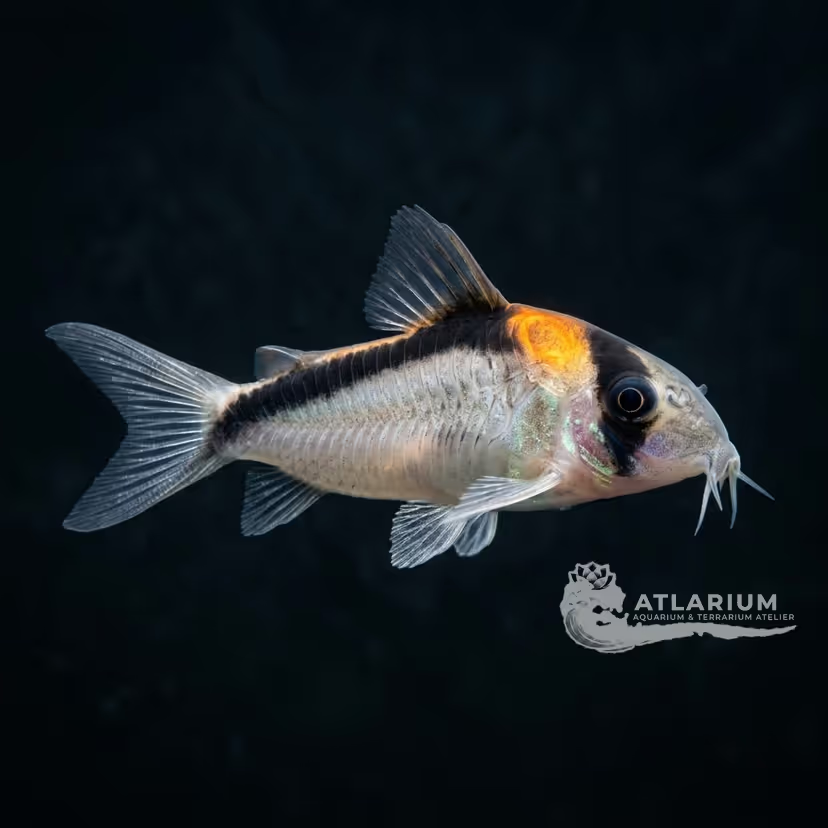
View details->
Adolfo's cory

Adolfo's cory

Corydoras adolfoi

View details->
False Bandit Cory

False Bandit Cory

Corydoras melini

View details->
Flag Acara (Smiling Cichlid)

Flag Acara (Smiling Cichlid)

Laetacara curviceps

View details->
Dwarf Pike Cichlid

Dwarf Pike Cichlid

Crenicichla compressiceps

View details->
Cryptic Corydoras

Cryptic Corydoras

Corydoras crypticus

View details->
Panda Cory

Panda Cory

Corydoras panda

View details->
Cockatoo Cichlid

Cockatoo Cichlid

Apistogramma cacatuoides

View details->
Umbrella dwarf cichlid

Umbrella dwarf cichlid

Apistogramma borellii

View details->
Regan's Dwarf Pike Cichlid

Regan's Dwarf Pike Cichlid

Crenicichla regani

View details->
Last updated: 06/30/2026
Norbert's dwarf cichlid (Apistogramma norberti) Care Guide & Tank Setup | Atlarium