

Encyclopaedia
Gephyra Apisto
Apistogramma gephyra
A striking dwarf cichlid from the Rio Negro, celebrated for the male's bright red dorsal fin edge. It requires extremely soft, acidic blackwater and a well-structured habitat to thrive.
Share
Check out Gephyra Apisto on Atlarium
24 - 27 °C
4.5 - 6
Freshwater
Bottom
7.5 cm
>= 80 L
>= 2
1 - 5 dGH
1 - 3 dKH
25 - 105 ppm
39 - 164 uS/cm
Species description
Care, breeding and tankmates
Geographic Origin and Distribution
Origin
Fish profile
- Temperament
- Territorial
- Diet
- Carnivore
- Sex ratio
- Harem
- Feeding frequency
- Twice daily
- Bioload
- This species has a relatively low bioload compared to larger cichlids, making it suitable for appropriately sized setups. However, they are highly sensitive to deteriorating water conditions and elevated nitrates. Maintaining pristine water quality through adequate filtration and regular water changes is absolutely crucial for their long-term health. A heavily planted tank can also help absorb excess nutrients and keep the environment stable.
- Flow
- Stagnant
- Jump risk
- No
- Reproduction
- Oviparous
- Compatibility & tankmates
- They are best kept in a species-specific aquarium or a peaceful community tank with small, non-aggressive dither fish like tetras or rasboras. Fast-swimming or boisterous tank mates should be avoided as they will easily outcompete this species for food and induce stress. Bottom-dwelling species such as Corydoras might face territorial disputes, especially if breeding behaviors commence. Careful selection of tank mates is necessary to ensure a harmonious environment.
- Tank level
- Bottom
Window to the official scientific data of the species
Scientific Parameters & Models
- Trophic level
- 3.3 ± 0.4 se
- Resilience
- Medium (1.4 - 4.4 years)
- Phylogenetic uniqueness (PD50)
- 0.5
- Bayesian Length-Weight
- a = 0.0182, b = 2.99
Image gallery
Licensed images linked to the species or, when marked, to the closest representative taxon.
Related species
Recommendations grouped by close relatives, companion choices, and similar care.
Variants and close relatives
Same atlas type, nearby scientific identity, genus, or family.

Inka Dwarf Cichlid or Inka 50 (Apistogramma baenschi)
Apistogramma baenschi
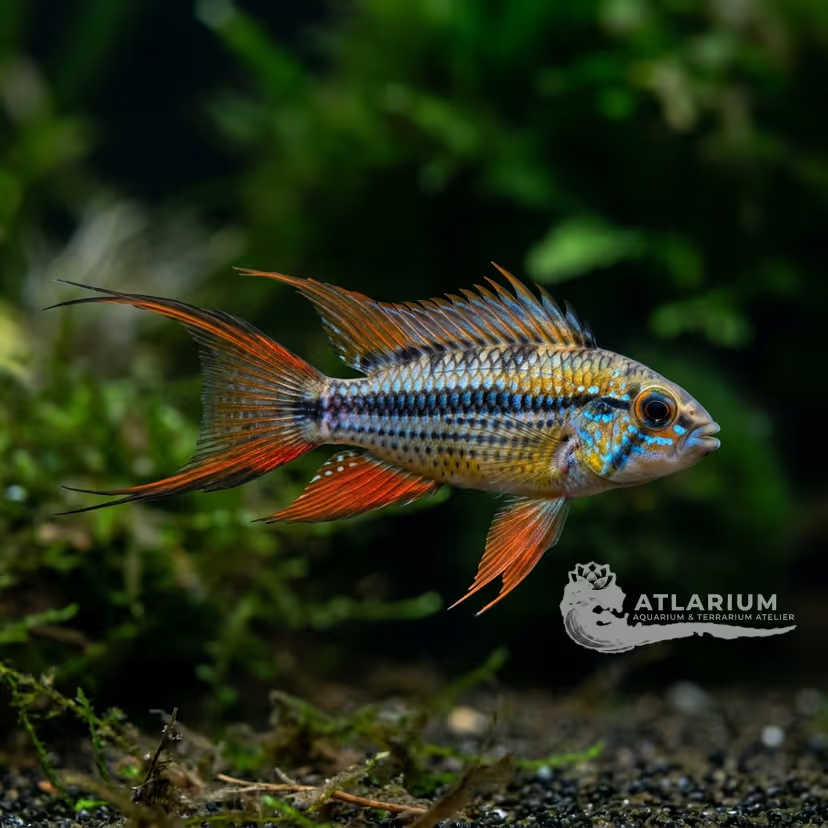
Lyretail Dwarf Cichlid
Apistogramma uaupesi

Panda Apisto
Apistogramma nijsseni

Atahualpa Dwarf Cichlid
Apistogramma atahualpa
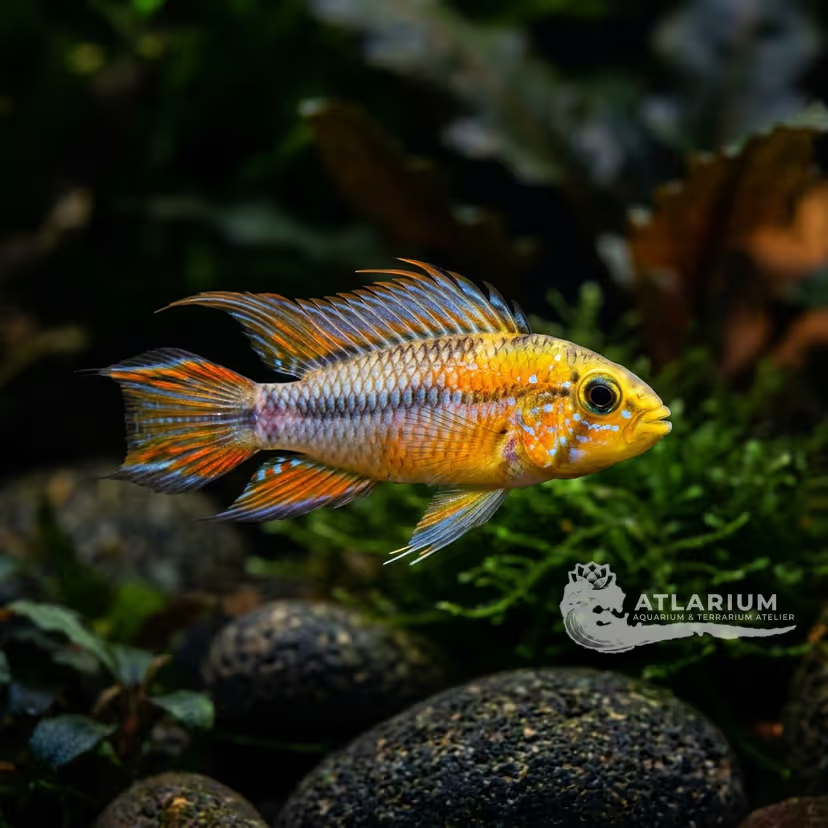
Mendezi dwarf cichlid
Apistogramma mendezi

Huascar Dwarf Cichlid
Apistogramma huascar

Juruá Dwarf Cichlid
Apistogramma juruensis
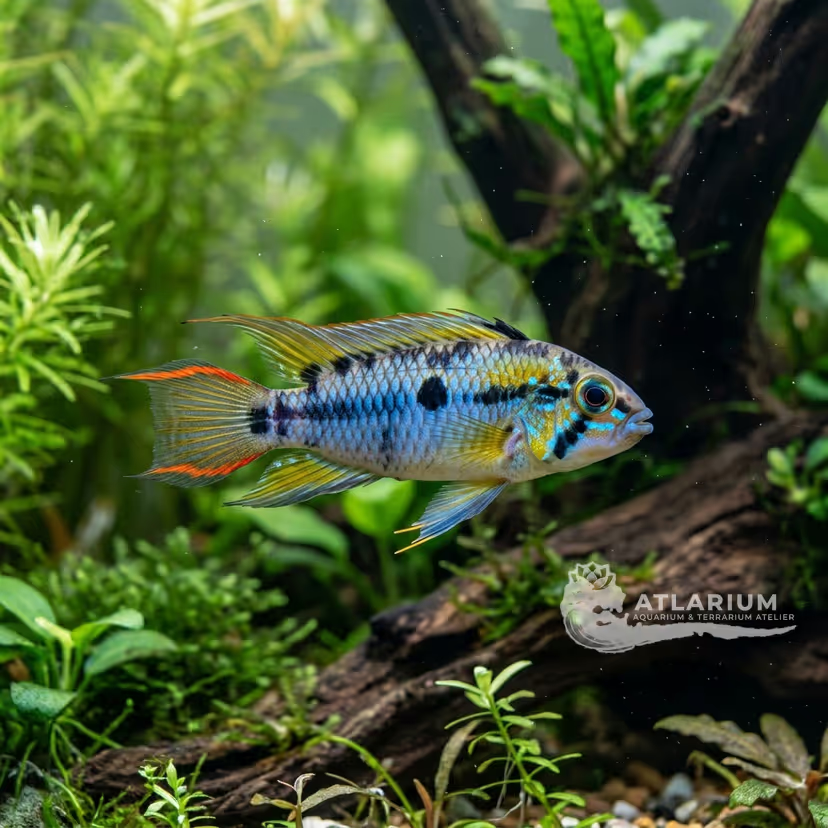
Panduro Dwarf Cichlid (Apistogramma panduro)
Apistogramma panduro

Ashes Dwarf Cichlid
Apistogramma cinilabra

Two-Stripe Dwarf Cichlid
Apistogramma bitaeniata

Hongslo's Dwarf Cichlid
Apistogramma hongsloi

Apistogramma paucisquamis
Apistogramma paucisquamis

Elizabethae Dwarf Cichlid (Apistogramma elizabethae)
Apistogramma elizabethae

Mouthbrooding Dwarf Cichlid
Apistogramma barlowi

Playayacu Dwarf Cichlid
Apistogramma playayacu

Bandtail Dwarf Cichlid
Apistogramma eunotus
Recommended companions
Compatible cards from coherent ecosystems with matching parameters.
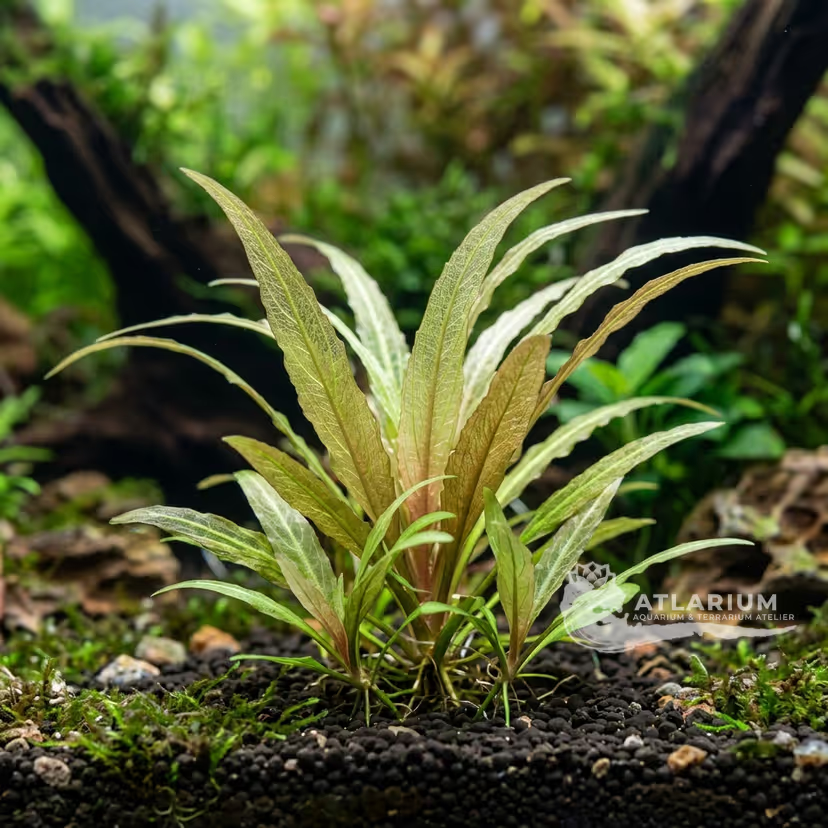
Blyxa japonica var. alternifolia
Blyxa japonica var. alternifolia

Aldrovanda vesiculosa
Aldrovanda vesiculosa

Ammannia praetermissa
Ammannia praetermissa

Ammannia latifolia
Ammannia latifolia

Bacopa crenata
Bacopa crenata

Aciotis acuminifolia
Aciotis acuminifolia

Blyxa alternifolia
Blyxa alternifolia

Blyxa cf. vietii
Blyxa cf. vietii

Ammannia crassicaulis
Ammannia crassicaulis

Anubias gracilis
Anubias gracilis

Golden Nesaea
Ammannia pedicellata
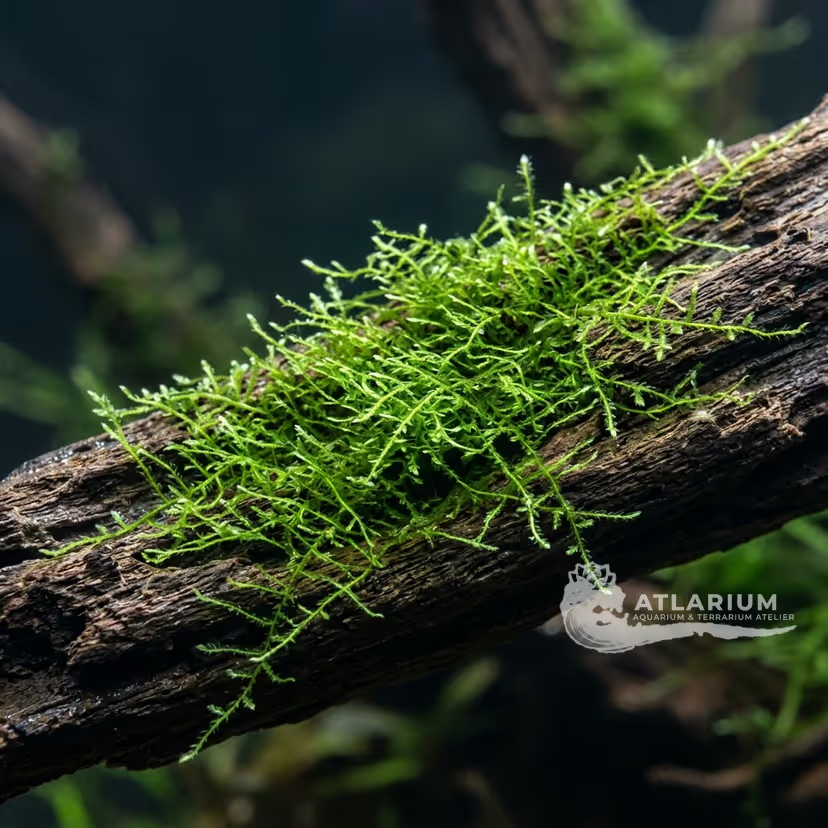
Amblystegium serpens
Amblystegium serpens

Barbula sp.
Barbula sp.
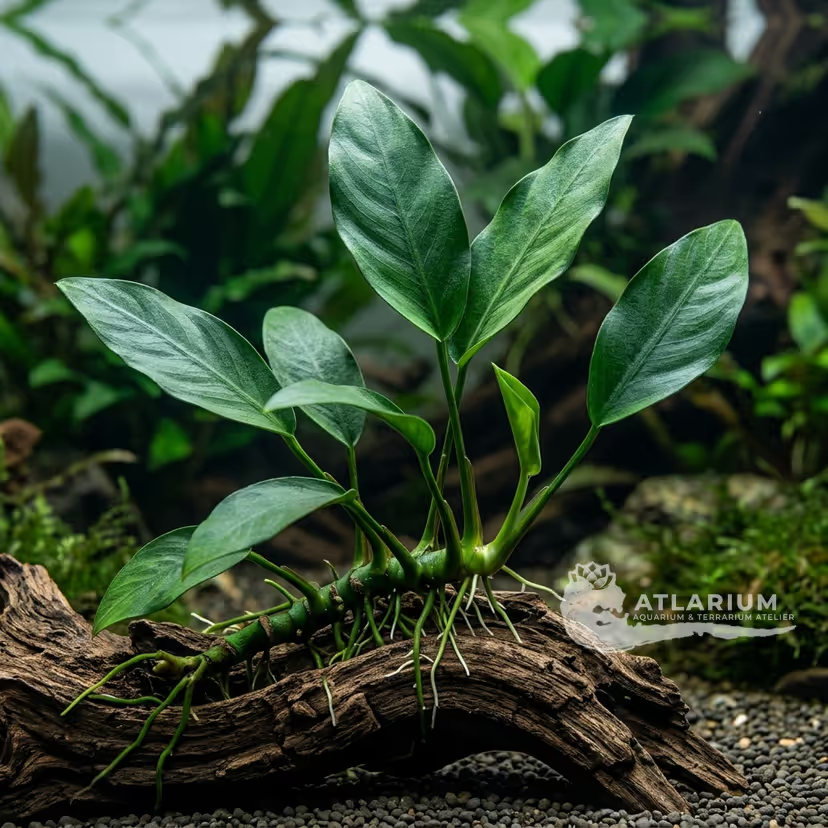
Anubias
Anubias barteri

Anubias nana
Anubias barteri var. nana
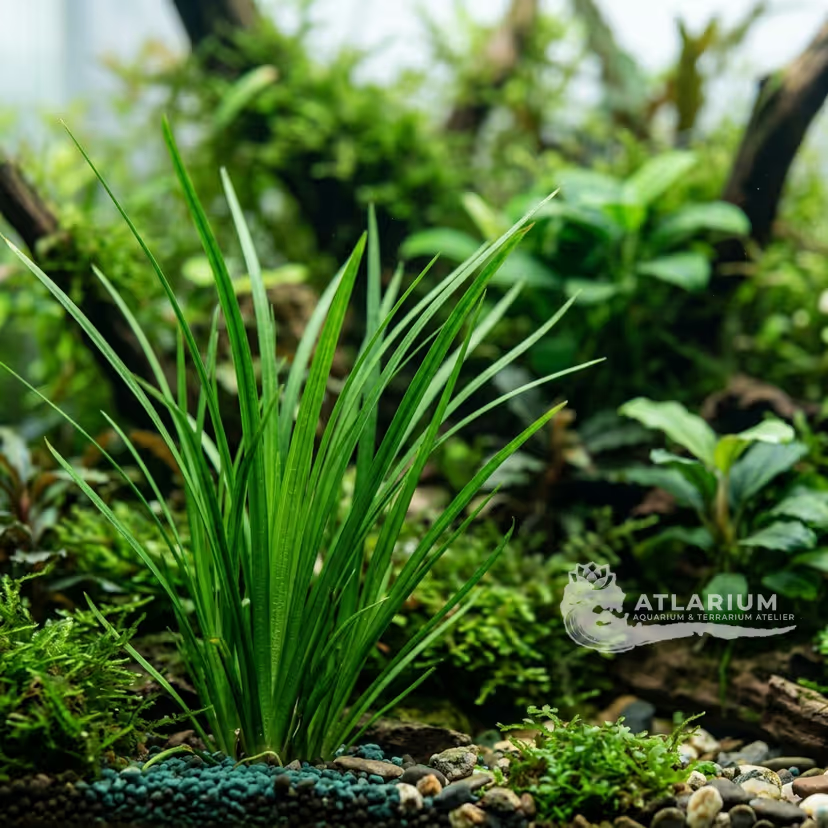
Acorus gramineus
Acorus gramineus
Similar care
Cards with similar requirements, difficulty, habitat, and husbandry profile.

Red-line dwarf cichlid
Apistogramma rubrolineata

Mueller's Dwarf Cichlid
Apistogramma paulmuelleri

Norbert's dwarf cichlid
Apistogramma norberti

Agassiz's Dwarf Cichlid
Apistogramma agassizii

Red-tailed apisto
Apistogramma erythrura

Sailfin Dwarf Cichlid (Apistogramma velifera)
Apistogramma velifera

Macmaster's Dwarf Cichlid
Apistogramma macmasteri

Dwarf Pike Cichlid
Crenicichla compressiceps

Orinoco Cupid Cichlid (Biotodoma wavrini)
Biotodoma wavrini

Viejita dwarf cichlid
Apistogramma viejita

Three-Stripe Dwarf Cichlid (Apistogramma trifasciata)
Apistogramma trifasciata

Checkerboard Cichlid (Crenicara punctulatum)
Crenicara punctulatum

Cockatoo Cichlid
Apistogramma cacatuoides

Regan's Dwarf Pike Cichlid
Crenicichla regani
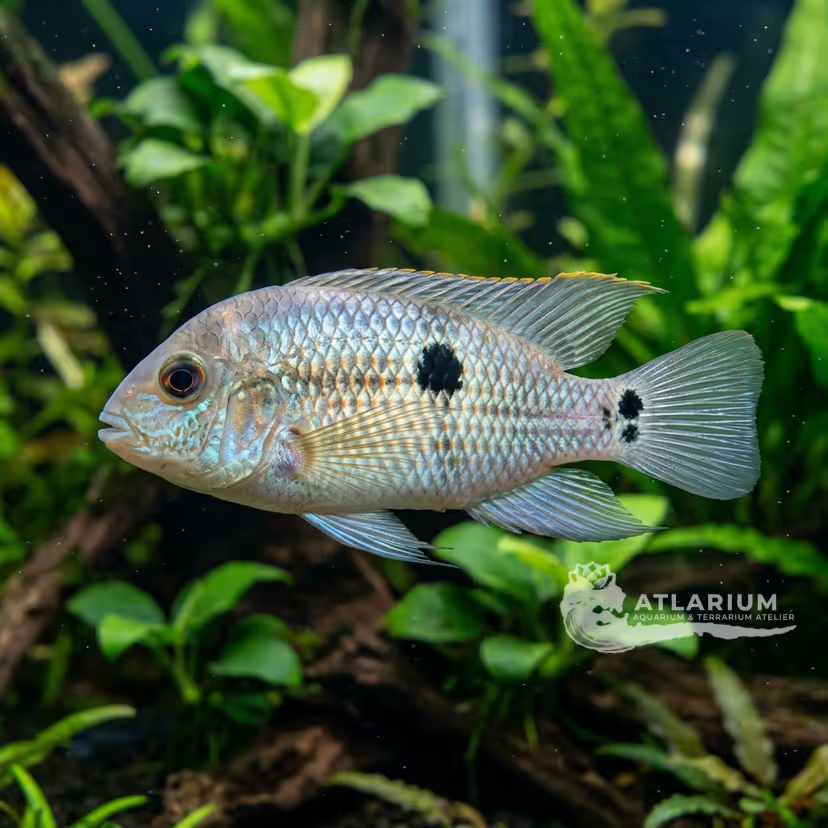
Double-spot Acara (Aequidens pallidus)
Aequidens pallidus

Zebrina Pike Cichlid (Crenicichla zebrina)
Crenicichla zebrina