Encyclopaedia
Dubois' Cichlid
Tropheus duboisi
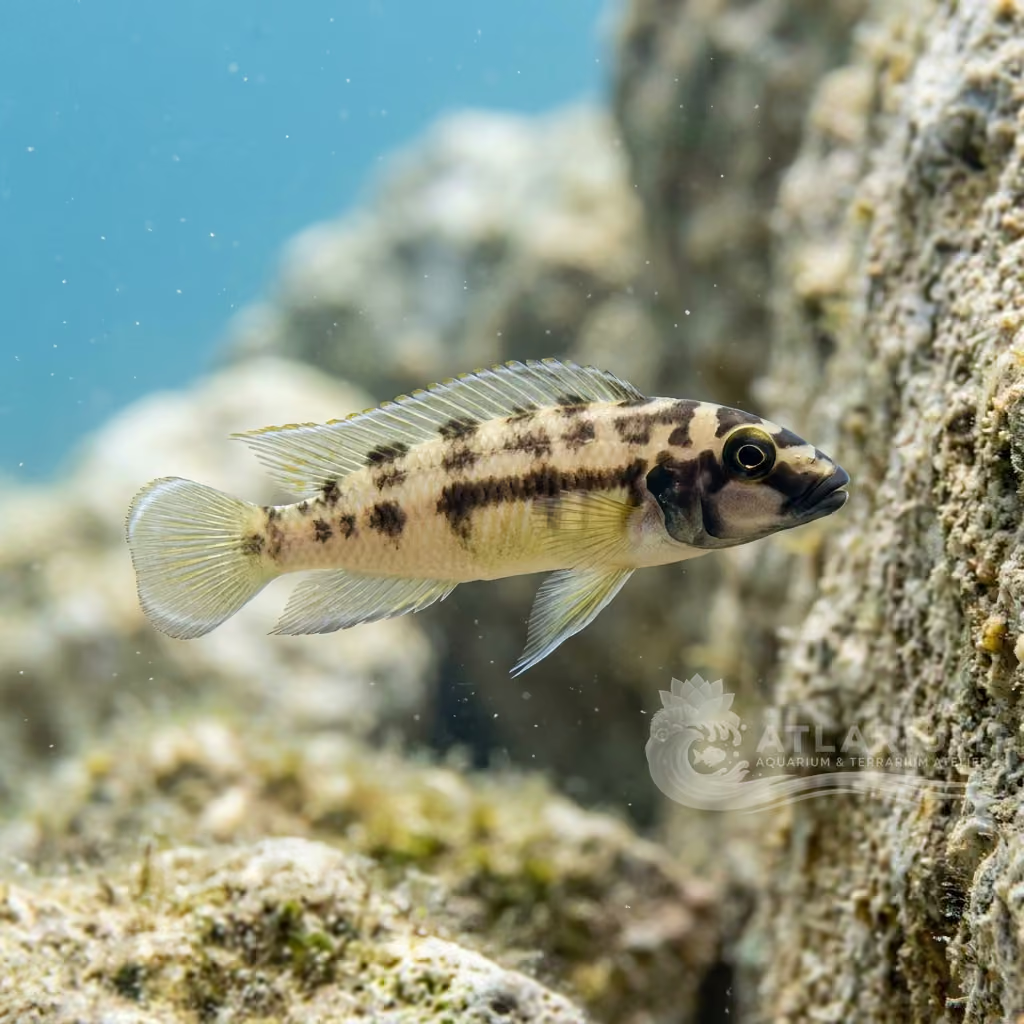
The 'Polka-Dot' Cichlid of Tanganyika (12 cm / 5 inches). Highly sought-after for its shocking metamorphosis: it is born as a pure velvet-black fish covered entirely in bright glowing white polka-dots, but as it matures, it loses all spots and transforms into a deep-blue/black powerhouse with a single, incredibly stark yellow or white vertical 'belt' across its body. A beautiful but demanding fish that requires massive tanks, strict vegan diets, and huge colonies to disperse their wildly aggressive, murderous behavior.
- Family
- Cichlidae
- Origin
- Africa (Endemico del Lago Tanganica)
- Origin
- Africa and Madagascar
- Tank use
- Used in 0 tanks
Share
24 °C - 28 °C
8 - 9
Freshwater
Bottom and middle
12 cm
Description
Geographic Origin and Biotope: Vastly distributed along the northern wave-battered, rocky rubble coasts of Lake Tanganyika. This species represents the Tanganyika equivalent of the Malawi Mbunas. They spend every single minute of their lives relentlessly picking and violently scraping at the extremely thick, flat green algae carpets ('Aufwuchs') covering the rocky reefs in the top 5 to 15 meters of water.
Taxonomy and Morphology: A key member of the notoriously difficult and rewarding Tropheus genus. Peaks around 12 cm (5 inches) in length. They are built like tanks: highly cylindrical, incredibly muscular, thick-set, and tall. Their mouth is situated underneath the snout (sub-terminal), equipped with specialized brushing, chisel-like teeth designed explicitly by millions of years of evolution to scrape micro-algae and organisms flat against rough stone surfaces.
Social Behavior: Absolutely hyperactive, neurotic, and incredibly brutal. Tropheus are universally known for their explosive 'Intraspecific Aggression' (they violently hate and attempt to murder members of their own exact species). A single dominant Alpha male will tirelessly and viciously pursue, bite, and beat submissive Dubois cichlids in his territory. To prevent murder, they must be kept in highly 'overstocked' swarms where the Alpha's fury is divided among twenty fish instead of just one victim. They are constantly swimming in endless motion.
Coloration and Sexual Dimorphism: The ultimate example of an 'Ontogenetic Shift' (color change as it ages). This is why everyone buys them: The juveniles are staggeringly beautiful. They are inky, jet-black, heavily saturated with hundreds of perfectly round, brilliant glowing white or neon-blue spots (the 'Starry Night' or 'Polka Dot' look). But beware the magic ends: At 5 to 6 cm (2-3 inches), the spots completely fade away and vanish forever. The adult turns a solid, very dark bluish-charcoal or pitch black, and develops ONE MASSIVE, incredibly striking, solid vertical band (a thick 'belt' or 'stripe') across its mid-section. This band is either blazing white, or bright buttery-yellow (the highly prized 'Maswa' variant). Males and females are completely identical to the naked eye.
Care and observations
Tank Setup: Due to their swimming energy and violent social structure, massive tanks are mandatory. Minimum 150 cm (5 feet) footprint, or 100+ gallons. THE ROCKSCAPE RULE: Do not build enclosed caves. Build enormous, solid barriers and piles of huge, smooth river rocks or limestone directly under extremely bright, intense LED lighting. The goal is to grow massive carpets of natural green algae on the rocks for them to graze continuously, 16 hours a day. Huge water flow from powerheads is needed to mimic wave action and heavily oxygenate the water.
Feeding: OBLIGATE BENTHIC HERBIVORE (Aufwuchs Grazer). DIET IS THE #1 KILLER OF THIS FISH. They possess incredibly long, fragile digestive tracts designed only for low-nutrient, high-fiber algae. YOU MUST FEED THEM STRICTLY PREMIUM VEGETARIAN/SPIRULINA FLAKES OR PELLETS. Never switch brands of food suddenly, as the enteric shock will kill them. ABSOLUTE DEATH SENTENCE: Even a single feeding of Bloodworms, Beefheart, frozen brine shrimp, or cheap tropical flakes will inevitably rot in their gut, triggering the universally fatal, agonizing disease 'TROPHEUS BLOAT'. They will swell like balloons and die in 48 hours.
Water Quality: African Rift Lake Chemistry is a must. Needs crystal clear, incredibly hard, alkaline water. pH 8.0-9.2. High GH and KH buffers (crushed coral substrate helps). Temp 24-27°C (75-80°F). Pristine water is an absolute requirement. High nitrates or slight pH crashes will stress the colony, triggering 'Bloat' and wiping out hundreds of dollars of fish in a week. Extreme heavy mechanical filtration and weekly large water changes are vital.
Compatibility: THE 'MASS COLONY' AND 'ONE-SHOT' RULES: 1. You MUST buy a massive group of at least 15 to 20 juvenile Dubois all at once, and put them into the giant tank together on the very same day. This spreads the aggression so no one fish gets bullied to death. 2. NEVER, ever try to add a new 'stranger' Dubois to an established colony months later; the colony will brutally murder the newcomer in under 10 minutes. 3. NEVER mix two different species of Tropheus (like T. moorii) or they will hybridize into ugly mutts and fight to the death. Only keep with robust Gobies or Julidochromis.
Reproduction: Extremely difficult for beginners due to the extreme violence involved. The Alpha male 'shimmies' and aggressively bites at a female to force her into a rocky depression. She drops huge eggs, scoops them into her mouth, and noses the male's anal fin for fertilization. She will then retreat into the rocks, literally starving herself for a brutal 4-week holding period while her chin swells grotesquely. She eventually releases 10-15 giant, perfectly formed polka-dot fry. If the tank ratio is wrong (not enough females), the male will batter the pregnant female to death instantly after breeding.
Risks: 1. 'TROPHEUS BLOAT' EPIDEMIC: Instant, incurable swelling and death of the entire tank caused by the owner feeding them carnivorous treats or cheap community flakes instead of high-grade spirulina. 2. 'The Lone Survivor': If you buy only 3 or 4 of these fish, the dominant male will quickly torture the others to death until he is the only one left alive. 3. New-addition massacre (adding fish to an established group).
Fish profile
- Temperament
- Nevrotico, iperattivo e furiosamente aggressivo (verso i propri simili). Tra loro formano una gerarchia sociale rigida e implacabile. L'inserimento di un nuovo individuo in un branco già stabilito porta quasi sempre alla sua uccisione in 24 ore. Sono incessanti nuotatori da roccia.
- Diet
- Erbivoro Estremo / Brucatore. ASSOLUTAMENTE SENSIBILE AL BLOAT. Come il Red Zebra del Malawi, l'apparato digerente del Tropheus è un nastro lungo e delicatissimo adatto solo a processare alghe 'Aufwuchs' sulle rocce. L'alimentazione è il motivo numero uno di morte in cattività: vietati assolutamente artemia, chironomus, cuori di bue o pellet misti. Esigono mangimi premium a base di pura e rigorosa Spirulina verde (in scaglie).
- Tank level
- Bottom and middle
- Minimum group
- 12
- Adult size
- 12 cm
- Minimum tank
- 300 L
- GH
- 10 dGH - 25 dGH
- KH
- n/a
- TDS
- n/a
- Conductivity
- n/a
- Sex ratio
- Grande Harem Sovraffollato (es. 2-3 maschi dominanti e 10-15 femmine). Il dimorfismo sessuale è nullo in età adulta: sia il maschio che la femmina presentano la tipica striscia bianca/gialla su fondo scuro. L'unico modo pratico (e vitale) per gestire l'aggressività è avere una quantità sproporzionata di femmine per 'diluire' la carica di stress imposta dal maschio.
- Feeding frequency
- 2 volte al giorno in piccolissime dosi. I Tropheus sono ingordi bulimici: mangeranno fino a letteralmente esplodere. Se somministrate il mangime in troppa quantità, si ingozzeranno e moriranno di blocco intestinale. Devono spiluccare piccole scaglie.
- Bioload
- Alto (A causa dell'obbligo di inserire un branco numeroso e delle enormi quantità di feci vegetali prodotte).
- Flow
- Corrente Molto Forte. Il loro habitat sono le coste poco profonde spazzate dalle onde, quindi pompe di movimento possenti e forte ossigenazione dell'acqua sono graditissime.
- Jump risk
- Covered tank required
- Reproduction
- Incubatori orali materni attivissimi ma con prole ridotta. Producono uova enormi ma in numero esiguo (spesso tra 5 e 15). La femmina in incubazione non si nasconde come gli altri ciclidi, ma continua a nuotare con il branco; questo spesso le costa la vita a causa dello stress inferto dal maschio che ignora la sua condizione e continua a volerla accoppiare o scacciare.
- Compatibility
- Specie Estremamente Specifica (Species Tank Monospecifico). La regola d'oro dei cultori dei Tropheus è non mischiarli MAI con altri ciclidi del Tanganica o con Mbuna, o i regimi alimentari (o le diverse forme d'aggressività) risulteranno incompatibili. L'unico inquilino accettabile in vasche giganti sono banchi di Goby Cichlid (Eretmodus) o una singola colonia fittissima e isolata di Tropheus della STESSA specie ma NON di specie affini (per evitare l'ibridazione rovinosa).
Image gallery
Licensed images linked to the species or, when marked, to the closest representative taxon.