Encyclopaedia

FishFreshwaterEasy
©AI Generated·Proprietary

Featherfin Squeaker

Synodontis eupterus

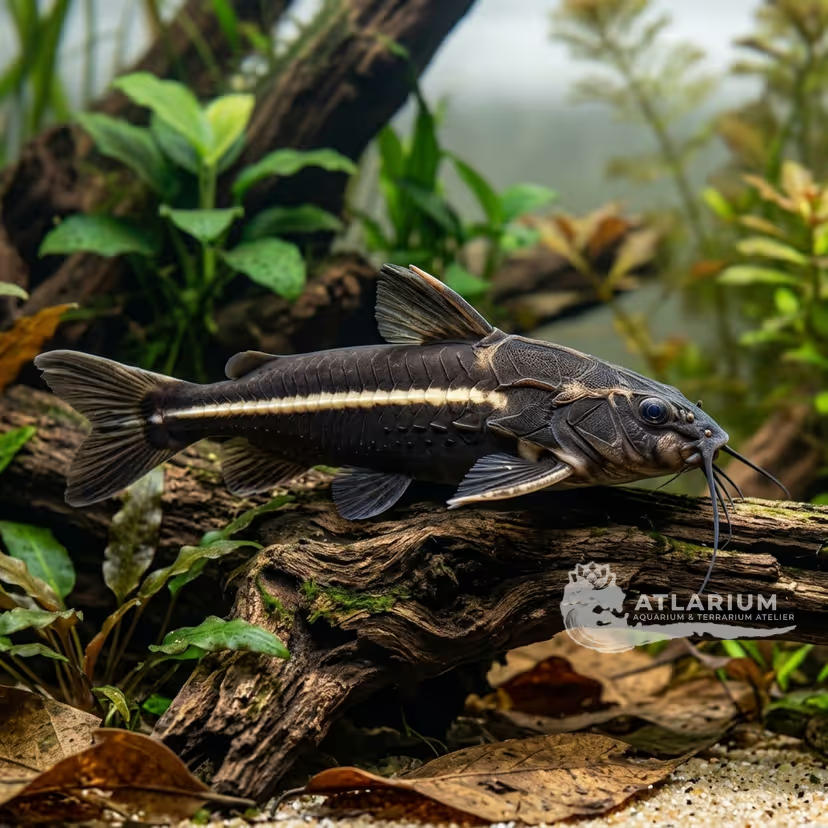
The Eupterus possesses a gigantic reticulated dorsal fin, which frays as an adult giving it the appearance of a 'Featherfin'. Often swims upside down to feed on the surface.

Taxonomy
Class:Actinopteri
Order:Siluriformes
Family:Mochokidae
Genus:Synodontis
Species:Synodontis eupterus

Share

Check out Featherfin Squeaker on Atlarium

PracticeRecognition quizzesPhotos, names, origins, and puzzles to review Atlas species.Open quizzes
Water Temperature

22 - 28 °C

pH Value

6 - 8

Water type

Freshwater

Tank level

Bottom

Adult size

30 cm

Minimum tank volume

>= 200 L

Minimum group

>= 1

GH

5 - 20 dGH

KH

4 - 15 dKH

TDS

115 - 450 ppm

Conductivity

180 - 703 uS/cm

Species description

Geographical Origin and Habitat: Wide African distribution: White Nile basin, Niger and Chad rivers, up to Sudan. Thrives in the rocky areas of fast-flowing rivers and in riverbeds dotted with sunken logs.
Taxonomy and Morphology: Featherfin Squeaker (Synodontis eupterus). "Featherfin" refers to the superb sail-like dorsal fin formed by extended and extremely developed spiny rays that resembles a majestic feathered crest.
Social Behavior: Gregarious when young, they become intensely territorial and pugnacious as they grow. The alpha male angrily defends the rock or cave he has chosen, both from other Synodontis and from unsuspecting Cichlids, sometimes swimming proudly upside down.
Coloration and Sexual Dimorphism: In juveniles, a zebra "tiger pattern" dominates. As they mature, the livery evolves into a dark smoke/olive gray, completely studded with very dense black spots (dots). Females disproportionately more swollen in size, males with hyper-developed dorsal fin.

Care, breeding and tankmates

Aquarium Setup: Lake Tanganyika-type rocky layouts are ideal, but at least 150 cm (60 inches) long. Overlap large limestone boulders or roots to form wide passages and dark caves where the animal will spend most of the day.
Diet and Feeding: Opportunistic and ravenous omnivore. Sweeps the bottom hunting for everything. Will devour any sinking tablet, vegetable pellet and meat granule, also demonstrating a fierce predatory instinct towards live small items placed in the tank.
Water Quality: It is a "tank". Lives in almost any water condition but excels in hard and moderately basic waters (pH up to 8.0). Needs a powerful filtration to dispose of its gigantic fecal and protein input.
Compatibility and Cohabitation: Perfect squire for "Monster Fish" and massive African Cichlids from Lake Malawi and Tanganyika. It defends itself strenuously even from dominant cichlids. Forbidden to mix it with tiny fish: they will be considered expensive nocturnal snacks.
Aquarium Breeding: Non-existent in the home environment. No documented reproductions have been recorded within closed aquariums. The large bulk on the market derives from industrial-scale reproductions mediated by Asian hormonal induction.
Risks and Diseases: Many eupterus are blind due to eye trauma caused by failure to siphon the gravel, or suffer necrosis of the "featherfin" due to fierce territorial brawls. Lethal spines for gauze nets.

Geographic Origin and Distribution

Wide African distribution: White Nile basin, Niger and Chad rivers, up to Sudan. Thrives in the rocky areas of fast-flowing rivers and in riverbeds dotted with sunken logs.

Origin

Africa and Madagascar

Fish profile

Temperament
Semi-aggressive
They possess a generally peaceful but somewhat boisterous and territorial temperament. While they ignore mid and top-water fish, they will fiercely defend their favorite caves from other bottom dwellers. They are hardy and confident, holding their own against semi-aggressive cichlids. Once comfortable, they become quite active and visible during the evening.
Diet
Omnivore
Synodontis eupterus is a completely unfussy omnivore that accepts a wide variety of foods. Their natural diet consists of insect larvae, small crustaceans, and plant matter. In the aquarium, they eagerly eat sinking pellets, algae wafers, frozen bloodworms, and brine shrimp. Providing some vegetable matter ensures proper digestion and long-term health.
Sex ratio
Solitary
There is no strict sex ratio required for this species, as they are not schooling fish. A single specimen is perfectly fine and often preferred to prevent territorial disputes. If keeping multiple individuals, a very large tank is needed so each can establish a territory. Visual sexing is very difficult, making specific ratios hard to maintain.
Feeding frequency
Twice daily
Being primarily nocturnal and crepuscular, it is best to feed them once or twice a day. The main feeding should occur just before or after the aquarium lights are turned off. This gives them a chance to forage naturally without competing with fast, diurnal fish. Avoid overfeeding, as they will constantly search the bottom for scraps.
Bioload
This relatively large catfish produces a moderate to high biological load in the aquarium. Due to their robust appetite and size, an efficient filtration system is absolutely essential. Regular partial water changes are also required to keep nitrate levels manageable. They contribute significantly to the overall bioload of a community tank.
Flow
Stagnant
Originating from rivers, they appreciate a moderate water flow that provides excellent oxygenation. While they don't require torrential currents, steady water movement mimics their natural habitat perfectly. Powerheads or spray bars can help achieve this gentle yet consistent flow. They also need calm resting spots behind driftwood or rocks.
Reproduction
Oviparous
Breeding this species in a home aquarium is extremely rare and poorly documented. In commercial aquaculture, they are bred using hormone injections to induce spawning. They are naturally egg-scatterers that breed during seasonal floods in the wild. Casual aquarists should not expect them to reproduce without specialized setups.
Compatibility & tankmates
They are generally peaceful with fish that are too large to be considered prey. However, they can be highly territorial and aggressive towards other bottom-dwelling species. Robust tankmates like medium to large African cichlids are ideal companions. Very small, delicate fish should be avoided as they may be eaten.
Tank level
Bottom
This species almost exclusively occupies the bottom levels of the aquarium. They constantly interact with the substrate, exploring caves and crevices. They are also famous for swimming upside down under pieces of driftwood or large leaves. Providing plenty of hiding spots near the substrate is crucial for their comfort.

Window to the official scientific data of the species

Data synced on: 06/15/2026

Scientific Parameters & Models

Trophic level
2.7 ± 0.28 se
Resilience
Medium (1.4 - 4.4 years)
Phylogenetic uniqueness (PD50)
0.5
Bayesian Length-Weight
a = 0.01445, b = 2.9
VulnerabilityLow to moderate vulnerability (27 / 100)

Image gallery

Licensed images linked to the species or, when marked, to the closest representative taxon.

Related species

Recommendations grouped by close relatives, companion choices, and similar care.

Recommended companions

Compatible cards from coherent ecosystems with matching parameters.

Anubias barteri var. nana 'Round Leaf'
Plant

Anubias barteri var. nana 'Round Leaf'

Anubias barteri var. nana 'Round Leaf'

View details->
Anubias congensis
Plant

Anubias congensis

Anubias congensis

View details->
Anubias gigantea
Plant

Anubias gigantea

Anubias gigantea

View details->
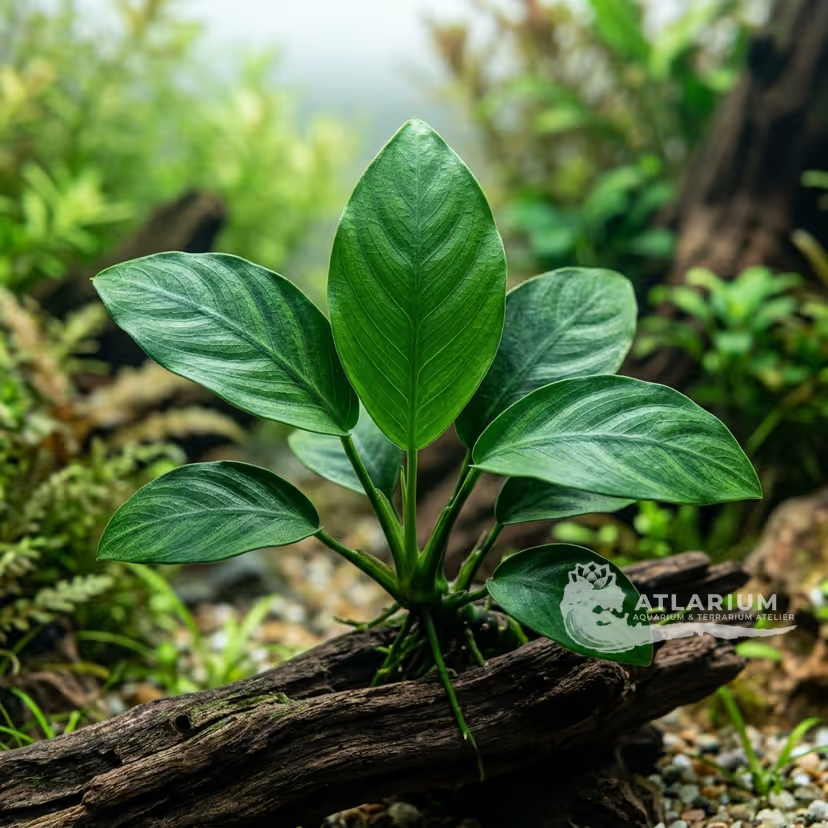
Anubias lanceolata
Plant

Anubias lanceolata

Anubias lanceolata
View details->
Anubias minima
Plant

Anubias minima

Anubias minima

View details->
Anubias
Plant

Anubias

Anubias barteri

View details->
Anubias nana
Plant

Anubias nana

Anubias barteri var. nana

View details->
Arrowhead Anubias
Plant

Arrowhead Anubias

Anubias hastifolia

View details->
Azolla caroliniana
Plant

Azolla caroliniana

Azolla caroliniana

View details->
Azolla mexicana
Plant

Azolla mexicana

Azolla mexicana

View details->
Amazon Sword
Plant

Amazon Sword

Aquarius grisebachii

View details->
Ammannia sp. 'Bonsai'
Plant

Ammannia sp. 'Bonsai'

Ammannia sp. 'Bonsai'

View details->
Acorus gramineus 'Pusillus'
Plant

Acorus gramineus 'Pusillus'

Acorus gramineus 'Pusillus'

View details->
Bacopa sp. "Japan"
Plant

Bacopa sp. "Japan"

Bacopa sp. "Japan"

View details->
Bolbitis heteroclita
Plant

Bolbitis heteroclita

Bolbitis heteroclita

View details->
Ammannia latifolia
Plant

Ammannia latifolia

Ammannia latifolia

View details->

Similar care

Cards with similar requirements, difficulty, habitat, and husbandry profile.

Atipa, Brown Hoplo

Atipa, Brown Hoplo

Hoplosternum littorale

View details->
Rabaut's Corydoras / Rust Corydoras

Rabaut's Corydoras / Rust Corydoras

Corydoras rabauti

View details->
Three Stripe Corydoras (False Julii)

Three Stripe Corydoras (False Julii)

Corydoras trilineatus

View details->
Zygatus Cory

Zygatus Cory

Corydoras zygatus

View details->
Java Barb

Java Barb

Systomus rubripinnis

View details->
Costatus Striped Raphael

Costatus Striped Raphael

Platydoras costatus

View details->
Bronze cory

Bronze cory

Corydoras aeneus

View details->
African Butterfly Cichlid

African Butterfly Cichlid

Anomalochromis thomasi

View details->
Bumblebee Catfish

Bumblebee Catfish

Microglanis iheringi

View details->
Blackmask Corydoras

Blackmask Corydoras

Corydoras atropersonatus

View details->
Nicaragua Cichlid (Macaw Cichlid)

Nicaragua Cichlid (Macaw Cichlid)

Hypsophrys nicaraguensis

View details->
Coppename Cory

Coppename Cory

Corydoras coppenamensis

View details->
Schwartz's Corydoras

Schwartz's Corydoras

Corydoras schwartzi

View details->
Common Bristlenose Pleco

Common Bristlenose Pleco

Ancistrus cf. cirrhosus

View details->
Britski's Brochis

Britski's Brochis

Corydoras britskii

View details->
Blue Acara

Blue Acara

Andinoacara pulcher

View details->
Last updated: 06/30/2026
Featherfin Squeaker (Synodontis eupterus) Care Guide & Tank Setup | Atlarium