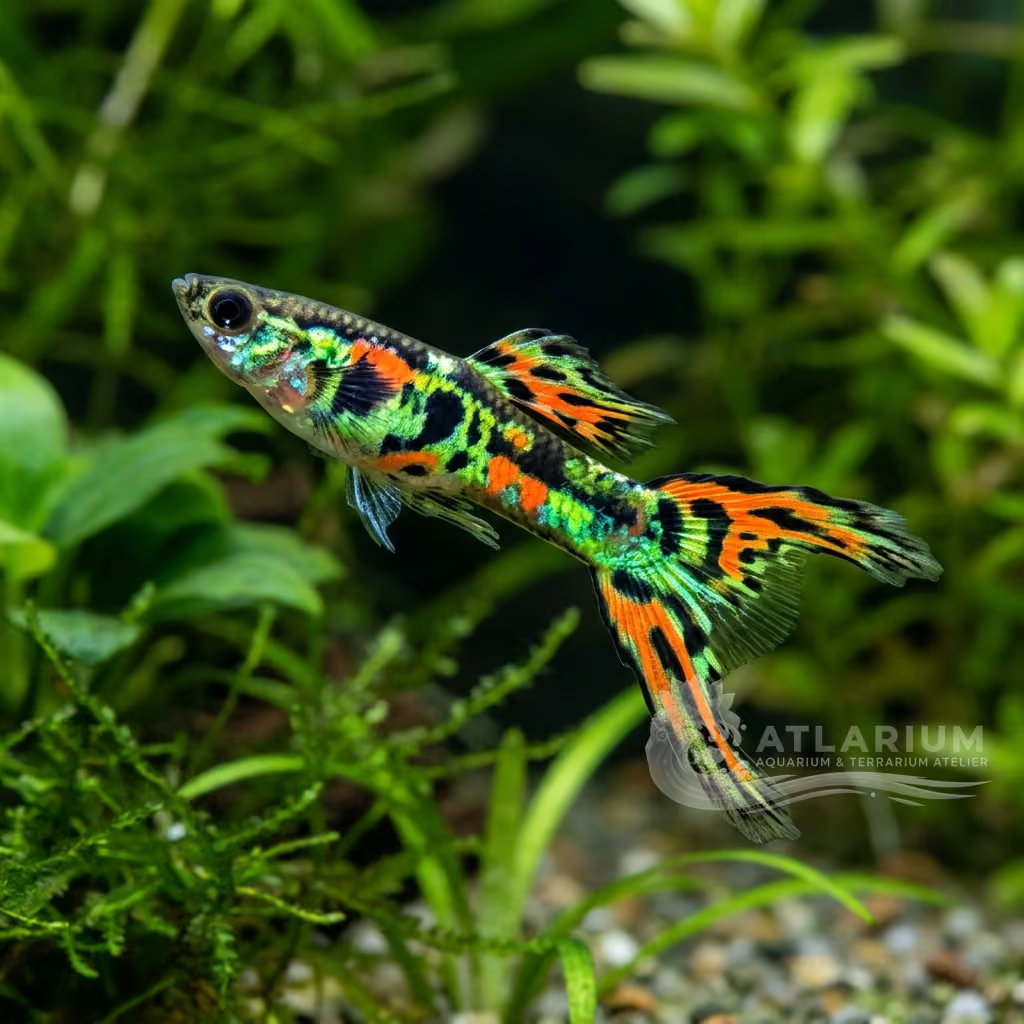
Lyretail Swordtail
Xiphophorus hellerii
The Lyretail Swordtail is one of the most elegant and tragic fishes in aquariums. Its fins grow endlessly like ribbons, making it majestic. But nature presented a cruel bill: this hypertrophy also affects the male's reproductive organ. His penis (gonopodium) becomes a very long dangling ribbon, impossible to use. Therefore, ALL Lyretail males are beautiful biological "eunuchs", condemned to mechanical infertility.
Water Temperature
22 - 28 °C
pH Value
7 - 8.5
Water type
Freshwater
Tank level
Surface and middle
Adult size
12 cm
Minimum tank volume
>= 100 L
Minimum group
>= 2
GH
12 - 30 dGH
KH
6 - 15 dKH
TDS
240 - 600 ppm
Conductivity
375 - 938 uS/cm

Species description
Geographical Origin and Habitat: Variety selected in breeding, not present in nature. The original strain comes from the fresh and alkaline waters of Central America.
Taxonomy and Morphology: Lyretail Swordtail (Xiphophorus hellerii). Long-finned variant. The main feature is the extension of the upper AND lower rays of the caudal fin (lyre shape), often combined with a veil dorsal fin.
Social Behavior: Slower due to fins. Maintains the lively and dominant temperament of the swordtail, but the large fins make it a clumsier swimmer, sometimes hindering courtship.
Coloration and Sexual Dimorphism: Available in many colors (red, green, neon). Males feature the complex "lyre tail" (two swords or extended rays) and the gonopodium (which in some extreme selections is so elongated as to make physical mating almost impossible).

Care, breeding and tankmates
Aquarium Setup: River Aquarium (Minimum 100 cm / 40 inches). Needs free space but less violent currents than the wild strain so as not to fatigue the veil-finned fish.
Diet and Feeding: Adaptable omnivore. Likes flakes, granules, algae and frozen foods (brine shrimp and bloodworms).
Water Quality: Hard and alkaline water. A high GH and a pH above 7.2 are fundamental. Acidic water corrodes their long and delicate fins.
Compatibility and Cohabitation: Avoid "fin-nipper" tankmates like Tiger Barbs (Puntigrus tetrazona) or certain Tetras (Serpae), which would instantly destroy their lyretails.
Aquarium Breeding: Ovoviviparous. Very often, due to the excessively elongated and deformed (hypertrophic) gonopodium typical of the Lyretail selection, males are functionally sterile. Non-Lyretail males are often used to fertilize Lyretail females.
Risks and Diseases: Fin Rot. The greatest risk for Lyretails is the fraying of their huge tails due to bacteria, stress or attacks from other fish.

Geographic origin and distribution
Variety selected in breeding, not present in nature. The original strain comes from the fresh and alkaline waters of Central America.
Origin
Selective breeding and cultivarsCentral America and CaribbeanNorth America

Fish profile
- Temperament
- Active
- Overall, they possess an active, curious, and largely peaceful temperament suitable for many community aquariums. While generally tolerant of other species, males are known to exhibit territorial behavior and aggression toward rival males of their own kind. They are constantly in motion, exploring their environment and interacting with their surroundings. Their energetic nature adds a lot of movement to the tank, but it means they should not be housed with shy or easily stressed tankmates.
- Diet
- Omnivore
- As omnivores, they readily accept a wide variety of commercially prepared flakes, pellets, and freeze-dried foods. Their diet should be regularly supplemented with live or frozen foods such as daphnia, bloodworms, and brine shrimp to ensure optimal health and coloration. Plant-based matter is also essential, so providing spirulina flakes or blanched vegetables will help meet their nutritional needs. A varied diet ensures strong immune system function and vibrant, healthy growth.
- Life expectancy
- 3-5 years
- Adult size
- 12 cm
- Sex ratio
- Specific M:F ratio
- To maintain a harmonious aquarium environment, a sex ratio of one male to at least two or three females is strongly recommended. Males possess a strong mating drive and will relentlessly pursue females, which can lead to severe stress and exhaustion if the ratio is imbalanced. Having multiple females helps to disperse this constant attention and ensures no single female is overly harassed. Keeping multiple males in the same tank often leads to aggressive territorial disputes unless the aquarium is exceptionally large and heavily planted.
- Feeding frequency
- Twice daily
- Adults should typically be fed one to two times daily, offering only as much food as they can completely consume within two to three minutes. Overfeeding should be strictly avoided to prevent water quality deterioration and health issues like obesity or swim bladder disorders. Fry and juveniles require more frequent feedings, ideally three to four times a day with appropriately sized foods. Fasting them for one day a week can also help clear their digestive tracts and mimic natural feeding cycles.
- Bioload
- Medium
- This species has a moderate bioload that is proportional to its active swimming nature and relatively large adult size. As active foragers and regular eaters, they produce a consistent amount of waste that necessitates robust mechanical and biological filtration. Frequent water changes are highly recommended to prevent the buildup of nitrates and other harmful organic compounds. Care should be taken not to overstock the aquarium, as their waste production can quickly overwhelm a marginally filtered system.
- Flow
- Stagnant
- They prefer moderate water flow that provides adequate oxygenation without creating an overpowering current. In the wild, they inhabit flowing streams and rivers, so a steady, gentle current mimics their natural environment and encourages active swimming. A high-quality canister filter or hang-on-back filter usually provides the ideal amount of water movement and surface agitation. Excessively strong flow should be avoided, as it can cause exhaustion and stress, particularly for long-finned varieties.
- Jump risk
- Yes
- These fish are notorious jumpers and possess a strong instinct to leap out of the water when startled or stressed. A tight-fitting aquarium lid or a secure cover glass is absolutely essential to prevent them from jumping to their deaths. Care should be taken during maintenance or feeding, as sudden movements or changes in lighting can trigger this jumping behavior. Floating plants can also be used to provide a sense of security and deter them from attempting to jump.
- Reproduction
- Oviparous
- They are prolific livebearers, meaning the females give birth to fully formed, free-swimming fry rather than laying eggs. Males possess a modified anal fin called a gonopodium, which is used to internally fertilize the females. A single mating can result in multiple batches of fry over several months, as females can store sperm. If the fry are to be raised, providing dense vegetation or using a breeding box is necessary to protect them from being eaten by the adults.
- Compatibility & tankmates
- Harem only
- They are generally peaceful community fish, but males can display pronounced aggression and territoriality toward one another. It is best to keep them in a ratio of one male to several females to disperse any harassment and reduce stress. They do well with other similarly sized, active, and peaceful community species like tetras, corydoras, and larger rasboras. Avoid keeping them with very long-finned or slow-moving fish that might be prone to fin-nipping, or with species small enough to be eaten.
- Tank level
- Top/Middle
- They are highly active fish that utilize all levels of the aquarium, frequently swimming from the bottom to the surface in search of food. However, they tend to spend the majority of their time in the middle and upper levels of the water column. Providing plenty of open swimming space in these areas is crucial to accommodate their energetic nature. They also appreciate access to the surface for occasional feeding, but will explore the substrate when scavenging for leftover food.

Scientific Parameters & Models
FishBase
Window to the official scientific data of the species
FishBase v25.04Data synced on: 06/15/2026
- Trophic level
- 3.2 ± 0.43 se
- Resilience
- High (less than 15 months)
- Phylogenetic uniqueness (PD50)
- 0.5
- Bayesian Length-Weight
- a = 0.01, b = 3.06
- VulnerabilityLow vulnerability (10 / 100)

Related species
Recommendations grouped by close relatives, companion choices, and similar care.