Platinum Guppy
Poecilia reticulata
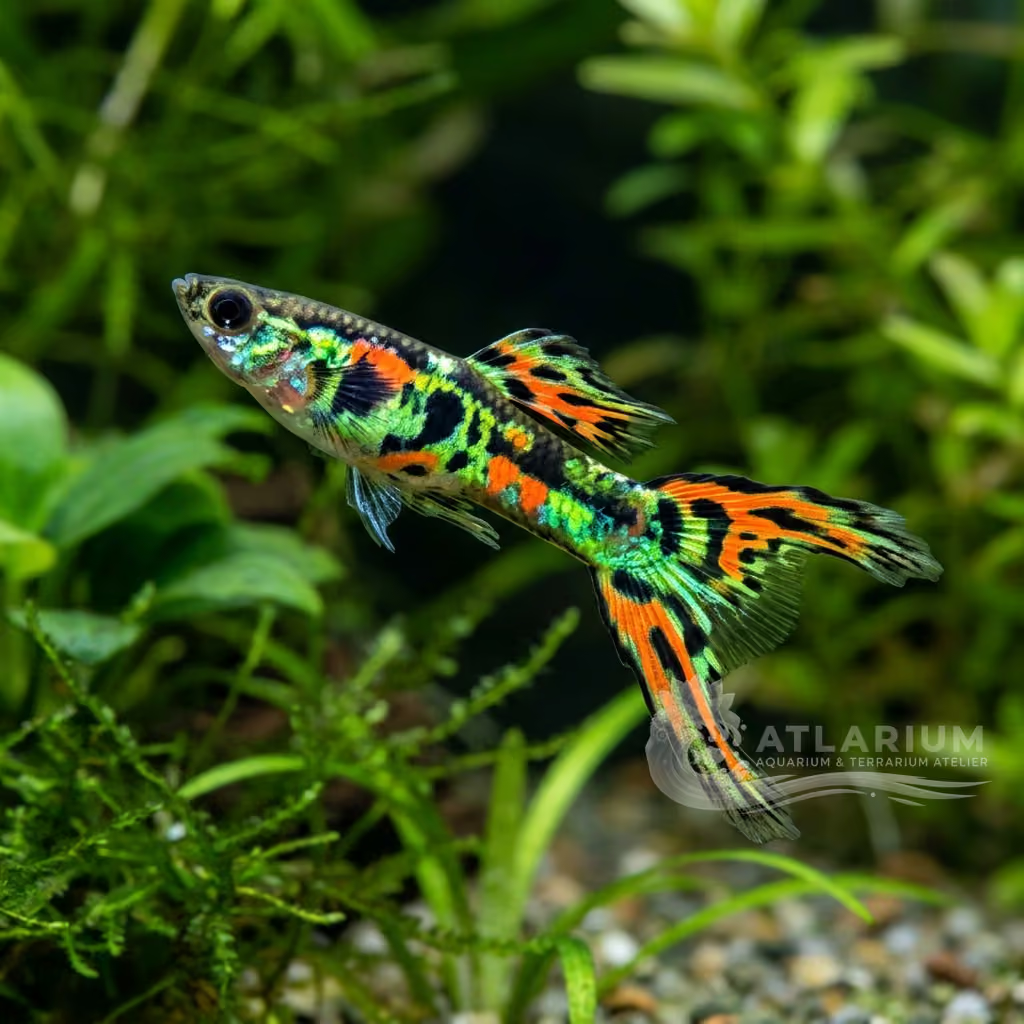
Liquid light: a Guppy with an entirely metallic silver-white body, luminous as molten platinum. The tail can be pure white or with delicate sky-blue hues. Under LED lighting, the metallic reflection creates an almost bioluminescent effect. Excellent in aquascaping with dark green plants — the contrast is breathtaking. Among the hardiest varieties.
Water Temperature
22 - 28 °C
pH Value
6.8 - 8.5
Water type
Freshwater
Tank level
Middle
Adult size
5 cm
Minimum tank volume
>= 40 L
Minimum group
>= 3
GH
8 - 28 dGH
KH
4 - 14 dKH
TDS
160 - 560 ppm
Conductivity
250 - 875 uS/cm

Species description
Geographical Origin and Habitat: The Platinum Guppy is a spectacular, highly stabilized, entirely captive-bred ornamental strain, representing a brilliant triumph of selective livebearer breeding. Derived from wild Poecilia reticulata lines natively endemic to the warm, slow-moving freshwater pools of South America, this highly refined strain requires a pristine, mature captive aquarium. The "biotope" MUST be characterized by dense thickets of aquatic plants, floating vegetation, and excellent water quality to protect its massive fins and highly reflective, delicate scales.
Taxonomy and Morphology: Scientifically classified within the Poeciliidae family, the Platinum Guppy is a stunning morphological variant bred specifically for hyper-reflective iridophores. Morphologically, they are small, streamlined micro-predators. Mature females reach roughly 5.0 to 6.0 centimeters (2.0-2.4 inches), while the highly ornamented males remain smaller at 2.5 to 3.5 centimeters (1.0-1.4 inches). The "Platinum" trait is a highly prized genetic mutation where the fish is completely covered in intensely reflective, metallic, silver-white or pearlescent pigmentation.
Social Behavior: They are highly intelligent, incredibly hyperactive, and intensely social mid-to-top-dwelling community fish. They are completely peaceful toward other species but exhibit a frenetic, non-stop mating and chasing behavior within their own kind. They absolutely MUST be kept in a sizable shoal (minimum 6 individuals). Because males are relentless in their pursuit of mating, it is an unconditional, absolute requirement to maintain a strict ratio of at least two (preferably three) females for every one male to disperse the constant, exhausting harassment.
Coloration and Sexual Dimorphism: Sexual dimorphism is absolute, extreme, and unmistakable. Mature females are vastly larger, heavier-bodied, generally display a pale silvery-white base coloration, and exhibit a distinct dark "gravid spot" near the anal fin. Mature males are vastly smaller, possess a modified anal fin (the gonopodium), and boast breathtaking colors. The male Platinum Guppy is a visual masterpiece; the entire body, from head to tail, is deeply saturated with a blindingly reflective, solid metallic silver or white-gold hue, resembling liquid metal.

Care, breeding and tankmates
Aquarium Setup: The aquarium architecture MUST flawlessly accommodate their highly active swimming nature and provide massive physical barriers to break line-of-sight during mating chases. A minimum 40-liter (10-gallon) tank is required for a small harem. The absolute most critical requirement is overwhelming plant cover; the tank MUST feature massive thickets of tall, stem plants (like Water Sprite) and specifically, dense carpets of floating plants (like Salvinia or Hornwort) which are unconditionally mandatory to provide a secure refuge for exhausted females and newborn fry.
Diet and Feeding: They are highly active, voracious omnivores and natural micro-predators. In the aquarium, their diet MUST be comprehensive and balanced to maintain their reflective scales and massive fins. They strictly MUST be fed a high-quality mix of protein and vegetable matter. Daily offerings of premium micro-pellets, freeze-dried tubifex, and specifically, live or frozen meaty foods (like bloodworms, brine shrimp, and daphnia) are unconditionally mandatory for vibrant, metallic coloration and long-term immune health.
Water Quality: They strictly demand highly oxygenated, warm tropical heat (24-28°C / 75-82°F). Crucially, highly inbred ornamental strains like the Platinum Guppy are vastly more delicate than wild guppies. They absolutely require moderately hard, heavily mineralized water (GH 8-15) and a neutral to alkaline pH (7.2 - 8.0) to truly thrive and prevent lethal osmotic stress. They possess absolute zero tolerance for Ammonia, Nitrites, or high Nitrates; a highly mature filter and rigorous weekly 30% water changes are unconditionally mandatory.
Compatibility and Cohabitation: Compatibility is excellent due to their completely peaceful nature, but their massive, flowing fins and highly reflective bodies make them extremely vulnerable targets. They are the perfect centerpiece for a peaceful, single-species or highly curated community aquarium. They MUST NEVER be housed with aggressive fin-nippers (like Tiger Barbs) or large, fast predatory fish (like Angelfish or Cichlids) that will violently shred their tails. Excellent companions include peaceful bottom-dwellers (Corydoras, Kuhli Loaches) and Otocinclus.
Aquarium Breeding: Breeding is spectacularly prolific, but breeding true "Platinums" requires strict culling to prevent the return of dull grey or colorful patches. They are livebearers; they do NOT lay eggs. Following internal fertilization, the female will gestate for roughly 21-30 days, evidenced by a massively swelling belly. She will then give live birth to 20-50 fully formed fry. The adults are aggressively cannibalistic; massive, impenetrable thickets of floating plants are absolutely mandatory to ensure the fry survive.
Risks and Diseases: The absolute greatest physical risk is rapid, lethal toxicity from Ammonia/Nitrite spikes; their highly inbred genetics grant them a vastly weaker immune system compared to standard guppies. The second major risk is lethal exhaustion; failing to maintain the strict 2:1 female-to-male ratio will inevitably result in the females being chased to death. Finally, their massive, flowing tails are highly susceptible to severe fin rot (caused by poor water quality) and physical shredding by aggressive tankmates.

Geographic origin and distribution
The Platinum Guppy is a spectacular, highly stabilized, entirely captive-bred ornamental strain, representing a brilliant triumph of selective livebearer breeding. Derived from wild Poecilia reticulata lines natively endemic to the warm, slow-moving freshwater pools of South America, this highly refined strain requires a pristine, mature captive aquarium. The "biotope" MUST be characterized by dense thickets of aquatic plants, floating vegetation, and excellent water quality to protect its massive fins and highly reflective, delicate scales.
Origin
Selective breeding and cultivarsExtra-Amazon South America

Fish profile
- Temperament
- Peaceful
- They possess a peaceful, active, and generally social temperament. They are constantly in motion, exploring their environment and interacting with conspecifics. While males may display and occasionally spar for dominance or mating rights, serious injuries are rare. Their inquisitive nature makes them very engaging and entertaining to observe. A well-structured environment further encourages their natural, peaceful behaviors to shine through.
- Diet
- Omnivore
- They are omnivorous and thrive on a varied diet to maintain optimal health. High-quality flake foods or micro-pellets should form the staple of their daily feeding. Supplementing their diet with live or frozen foods like daphnia, brine shrimp, and bloodworms is highly recommended. Including vegetable matter such as spirulina will also benefit their digestive system. A balanced and varied diet enhances their immune system and brings out their best colors.
- Life expectancy
- 1-3 years
- Adult size
- 5 cm
- Sex ratio
- Specific M:F ratio
- A recommended sex ratio is keeping at least two or three females for every male. This ratio helps to disperse the male's constant harassment and mating attempts among several females. Keeping a balanced ratio significantly reduces the stress experienced by the females. If too many males are present, the constant pursuit can lead to exhaustion and compromised immune systems in females. In larger setups, this ratio can naturally fluctuate but should generally be maintained to ensure harmony.
- Feeding frequency
- Twice daily
- It is optimal to feed them small amounts multiple times a day, ideally two to three times. This frequent feeding mimics their natural foraging behavior in the wild. Ensure that only an amount they can consume within a couple of minutes is provided to prevent overfeeding. Leftover food can rapidly degrade water quality and lead to health issues. Adjusting the feeding frequency based on the fish's activity levels and age is a good practice.
- Bioload
- Low
- They produce a relatively low bioload compared to larger aquarium fish. This makes them suitable for smaller aquariums if maintained properly. However, their prolific breeding can quickly increase the total bioload of the tank. Regular water changes and good filtration are essential to maintain water quality. Monitoring nitrate levels is important to ensure the bioload is being effectively managed.
- Flow
- Moderate
- They typically prefer gentle to moderate water movement within the aquarium. Strong currents can be exhausting for them, especially for males with large, flowing fins. A sponge filter or a well-baffled hang-on-back filter often provides the ideal flow rate. Providing areas of both slight movement and still water allows them to rest when needed. An appropriate flow rate also ensures adequate oxygenation without causing undue stress to the fish.
- Jump risk
- No
- Reproduction
- Viviparous
- As livebearers, they are exceptionally easy to breed and will often multiply without any special intervention. Females can store sperm for several months, resulting in multiple drops of fry from a single mating. The gestation period typically lasts around three to four weeks, depending on water temperature. To ensure the survival of the fry, providing plenty of hiding spaces like dense vegetation or breeding grass is essential. Adults may predate on their own young, so a separate breeding tank might be necessary for maximum yield.
- Compatibility & tankmates
- Peaceful
- These fish are generally peaceful and make excellent additions to community aquariums. They can be kept with other small, non-aggressive species like tetras and corydoras. It is best to avoid keeping them with known fin-nippers such as tiger barbs. Aggressive or much larger fish might view them as food and should be avoided. A harmonious community tank ensures their long-term health and vibrant coloration.
- Tank level
- Middle
- They are extremely active and will utilize all levels of the aquarium. However, they show a strong preference for the middle and upper levels of the water column. They are frequently seen swimming near the surface, especially during feeding times. Providing open swimming space in the upper regions alongside some floating cover makes them feel secure. Their presence in the upper layers adds vibrant movement and life to the top portion of the tank.

Scientific Parameters & Models
FishBase
Window to the official scientific data of the species
FishBase v25.04Data synced on: 06/15/2026
- Trophic level
- 3.2 ± 0.4 se
- Resilience
- High (less than 15 months)
- Generation time
- 0.6 years
- Phylogenetic uniqueness (PD50)
- 0.5
- Bayesian Length-Weight
- a = 0.01288, b = 3.14
- VulnerabilityLow to moderate vulnerability (33 / 100)

Related species
Recommendations grouped by close relatives, companion choices, and similar care.