Blind Cave Tetra
Astyanax mexicanus
The Blind Cave Tetra is a fascinating, eyeless fish that navigates using its lateral line. Highly active and voracious, it thrives in spacious tanks with dark backgrounds and blunt rocks.
Water Temperature
20 - 25 °C
pH Value
6.5 - 8
Water type
Freshwater
Tank level
All levels
Adult size
12 cm
Minimum tank volume
>= 100 L
Minimum group
>= 6
GH
5 - 25 dGH
KH
2 - 12 dKH
TDS
95 - 495 ppm
Conductivity
148 - 773 uS/cm

Species description
Geographical Origin and Habitat: Native to North and Central America (Texas, New Mexico, east-central Mexico). The surface form inhabits rocky streams and rivulets, while the famous blind form lives exclusively in dark underground pools and limestone caves.
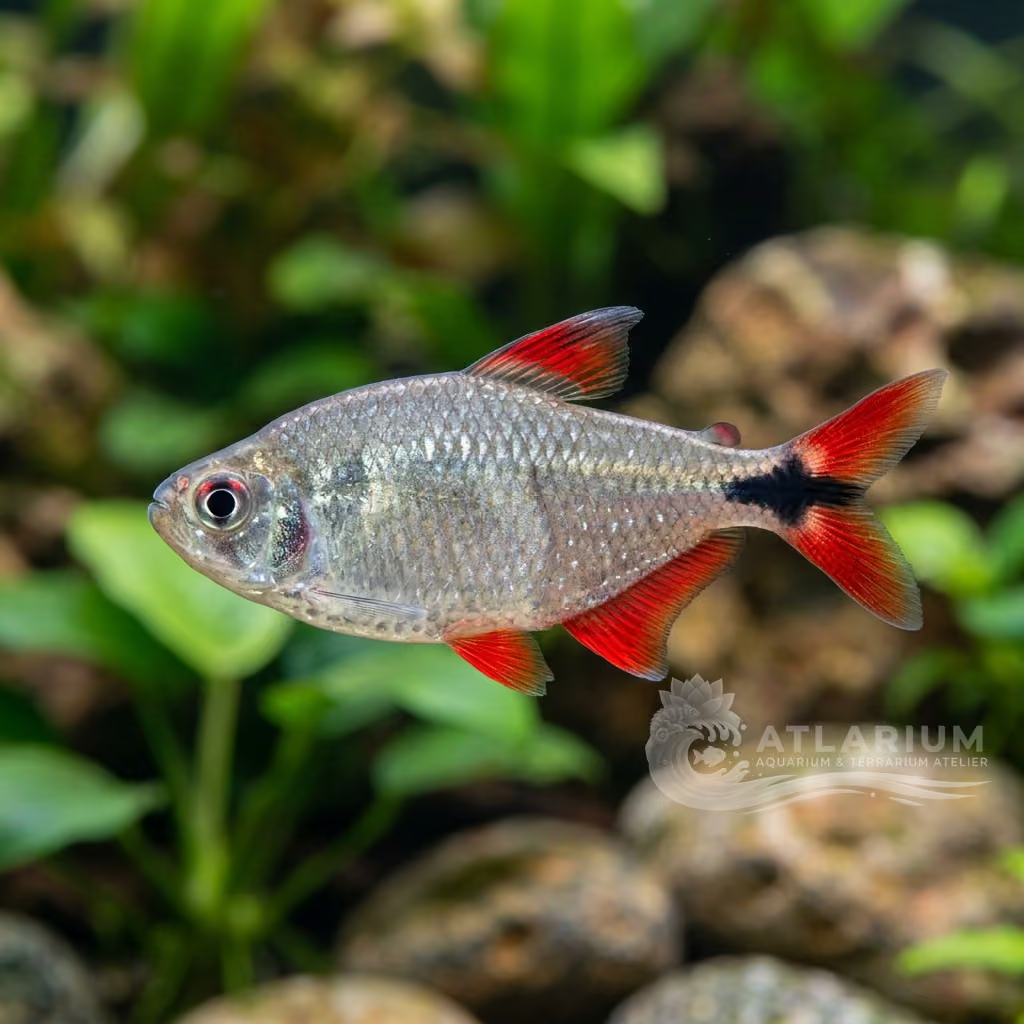
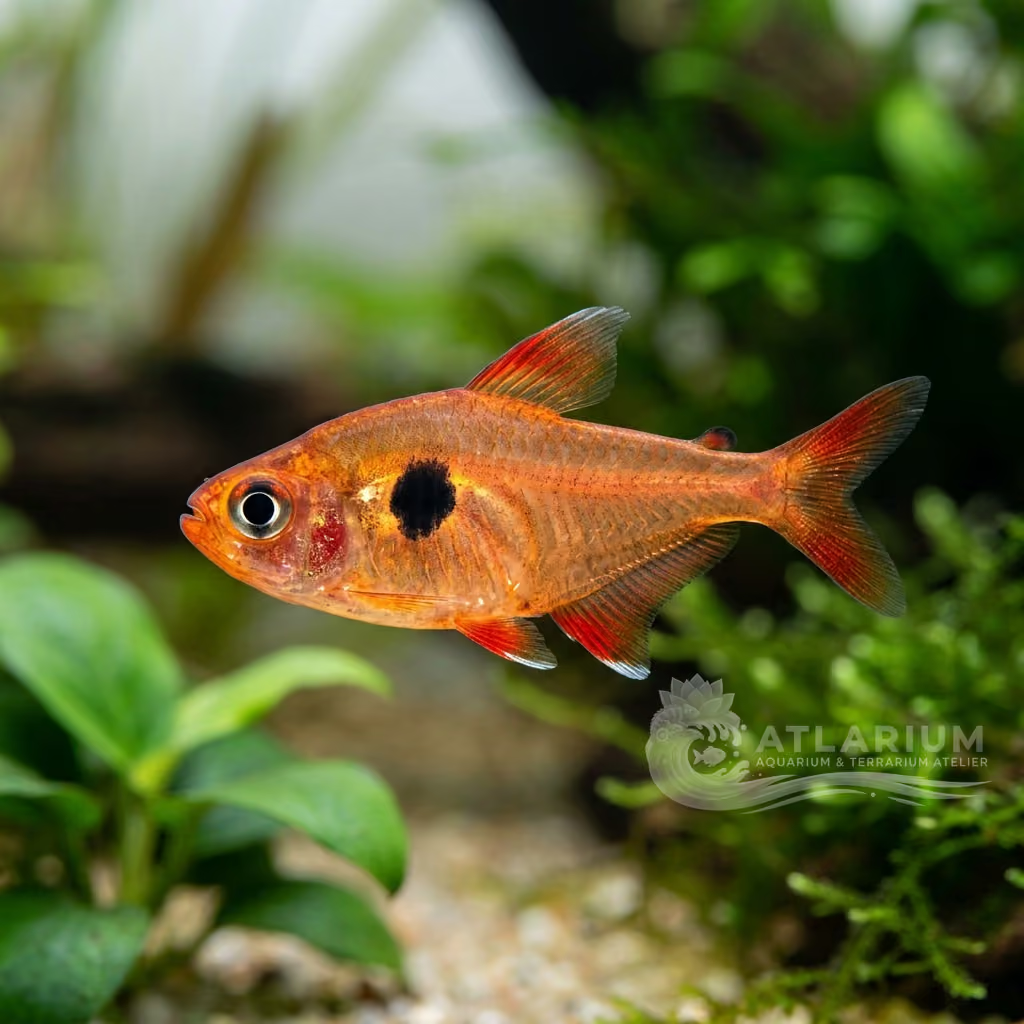
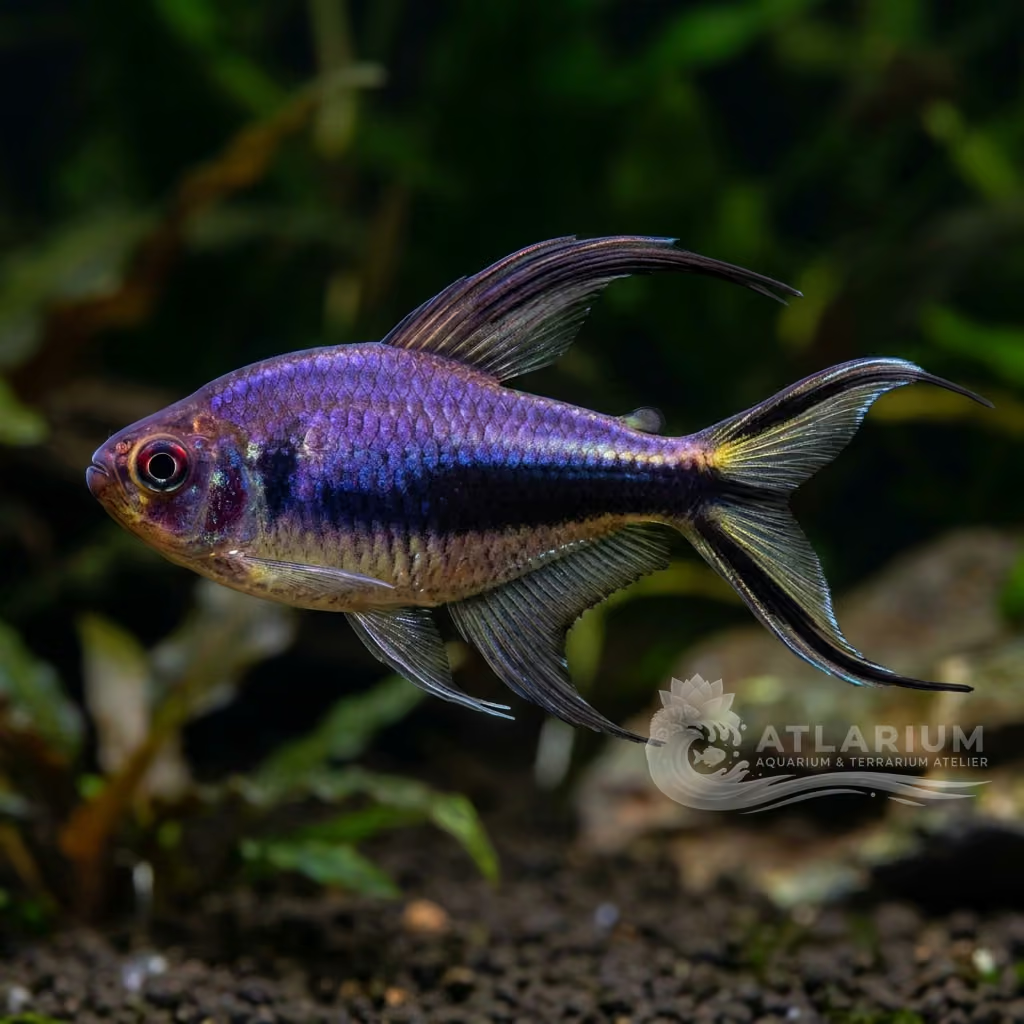
Taxonomy and Morphology: Blind Cave Tetra (Astyanax mexicanus). In the aquarium hobby almost only the cave variant is known: robust and corpulent fish, totally depigmented and completely devoid of eyes, which orient themselves and hunt via a hyper-developed lateral line.
Social Behavior: Exuberant, chaotic and gregarious. Swims non-stop feeling the environment. Has no cognition of "visual territory", so it often bumps into other fish until it learns to map the tank with its pressure sensors.
Coloration and Sexual Dimorphism: The cave form is a translucent pinkish-white; the scales reflect silvery iridescence. Healthy adult females become significantly larger and rounder ventrally than males.

Care, breeding and tankmates
Aquarium Setup: Spacious tanks (min. 100 cm / 40 inches). Prefers dark backgrounds, blunt limestone rocks and sand. Light does not bother it (it is blind), but delicate plants will be destroyed by its incessant exploratory swimming. Avoid sharp decorations or pointed branches.
Diet and Feeding: Voracious omnivore. Instantly perceives food in the water. Frantically pounces on flakes, granules, bottom tablets, bloodworms and brine shrimp. Their voracity can prevent other slow fish from feeding sufficiently.
Water Quality: Exceptionally tolerant and robust. Thrives in hard and alkaline tap waters (pH > 7.5), preferably cool (20-24°C / 68-75°F). Does not require heaters in mild climates and can withstand slightly polluted waters better than other tetras.
Compatibility and Cohabitation: Due to its perennial agitation and habit of "tasting" tankmates, pairing with shy or slow fish (like Angelfish) should be avoided. Ideal in active community tanks with Danios, large Barbs or moderate Central American Cichlids.
Aquarium Breeding: Free spawner, randomly scatters eggs on the substrate. Group reproduction is easy if parents are well fed and then removed. The fry (which initially have eye rudiments that later degenerate) are robust and voracious.
Risks and Diseases: Rarely gets sick. The real problems stem from unintentional "nipping": lacking sight, they nibble on long veil fins to understand who is in front of them, causing serious damage to slow ornamental fish.

Geographic origin and distribution
Native to North and Central America (Texas, New Mexico, east-central Mexico). The surface form inhabits rocky streams and rivulets, while the famous blind form lives exclusively in dark underground pools and limestone caves.
Origin
Central America and CaribbeanNorth AmericaEast Asia

Fish profile
- Temperament
- Semi-aggressive
- Astyanax mexicanus is a hardy and generally peaceful species, making it an excellent choice for community aquariums. They are active, shoaling fish that feel most secure and behave naturally when kept in groups of six or more. While not aggressive, they can be boisterous during feeding times and may occasionally nip at tankmates. This nipping behavior is typically a result of their blind navigation and food-seeking technique rather than true territorial aggression.
- Diet
- Omnivore
- As omnivores, Astyanax mexicanus are opportunistic feeders that are not picky about their food. In the home aquarium, their diet should consist of high-quality dried foods like flakes and sinking pellets as a daily staple. This should be supplemented regularly with live or frozen foods such as brine shrimp, bloodworms, daphnia, and tubifex to ensure optimal health and color. Because they lack vision, they rely heavily on their sense of smell and lateral line to locate food as it falls through the water column.
- Life expectancy
- 3-10 years
- Adult size
- 12 cm
- Sex ratio
- Group
- There are no strict stocking requirements for sex ratios in Astyanax mexicanus, but a balanced ratio of 1:1 or a general group is highly recommended. They are shoaling fish that should be kept in a group of at least six individuals to feel secure and display natural behaviors. In larger groups, any chasing or minor fin-nipping behavior is widely dispersed among the school rather than focused on a single individual. Females are generally larger and fuller-bodied than males, which can be distinguished by a curved anal fin.
- Feeding frequency
- Twice daily
- Astyanax mexicanus should ideally be fed one to two times daily with portions they can consume within two to three minutes. Regular, small feedings help maintain their high energy levels and keep their active metabolisms satisfied. Care should be taken not to overfeed, as uneaten food will sink to the bottom and quickly degrade water quality. Spreading the food across the water surface allows all individuals, despite their lack of vision, to locate and consume their share.
- Bioload
- Low to Medium
- The biological load of Astyanax mexicanus is relatively low-medium, but a school requires efficient filtration due to their active nature. An aquarium with a reliable biological filter is recommended to process organic waste, ideally with a water turnover rate of 4 to 5 times the tank volume per hour. Regular partial water changes are essential to maintain low nitrate levels and ensure water quality remains stable. Although they are hardy and can tolerate some water chemistry variations, clear and clean water is key to their long-term health.
- Flow
- Stagnant
- Astyanax mexicanus adapts well to a variety of water flows but thrives best in moderate water flow conditions. The movement of water helps ensure high oxygenation levels and provides mild sensory stimulation, which they detect through their lateral line system. While excessive or torrential currents should be avoided as they can exhaust the fish, a gentle, steady flow helps keep them active. A filter with a turnover rate of 4 to 5 times the aquarium volume per hour is ideal for establishing this flow.
- Jump risk
- Yes
- There is a significant risk of Astyanax mexicanus jumping out of the aquarium, making a tight-fitting cover or lid mandatory. These fish are fast, highly active, and can easily leap from the water when startled or during active feeding sessions. Ensuring that there are no open gaps in the lid will prevent accidental escapes. A secure lid also helps maintain a humid layer of air above the surface, which is beneficial for the fish's overall environment.
- Reproduction
- Oviparous
- Breeding Astyanax mexicanus is relatively easy and straightforward for aquarists. To breed them, a separate spawning tank with a mesh floor or breeding mop is recommended to prevent the adults from consuming their own eggs. The parents should be conditioned separately with live foods before being introduced to the spawning tank in the evening, where they will typically spawn by morning. A single female can lay up to 1,000 adhesive eggs, which hatch within 24 hours, and the fry will become free-swimming in about 5 to 7 days.
- Compatibility & tankmates
- Peaceful
- Astyanax mexicanus is a compatible community fish, but their tankmates must be chosen with care. Because they are blind and highly active, they navigate using their lateral lines and can sometimes bump into or accidentally nip at slow-moving or long-finned fish, especially during feeding. Sluggish, shy, or very delicate tankmates should be avoided. Excellent companions include active, robust species of a similar size, such as larger tetras, barbs, danios, and peaceful bottom-dwelling catfish.
- Tank level
- All levels
- Astyanax mexicanus is an active and curious swimmer that typically occupies all levels of the aquarium. Because they are blind, they rely on a highly sensitive lateral line system to map their surroundings and locate food across the tank. They can be seen scanning the bottom substrate for food particles, cruising through the middle water column, or rising to the surface during feeding time. Providing an open swimming area alongside cave-like structures allows them to explore their environment comfortably.

Scientific Parameters & Models
FishBase
Window to the official scientific data of the species
FishBase v25.04Data synced on: 06/15/2026
- Trophic level
- 3.2 ± 0.38 se
- Resilience
- Medium (1.4 - 4.4 years)
- Phylogenetic uniqueness (PD50)
- 0.5
- Bayesian Length-Weight
- a = 0.00912, b = 3.05
- VulnerabilityLow to moderate vulnerability (33 / 100)

Related species
Recommendations grouped by close relatives, companion choices, and similar care.