Encyclopaedia

FishFreshwaterEasy

Flag-tail Cory

Corydoras robineae

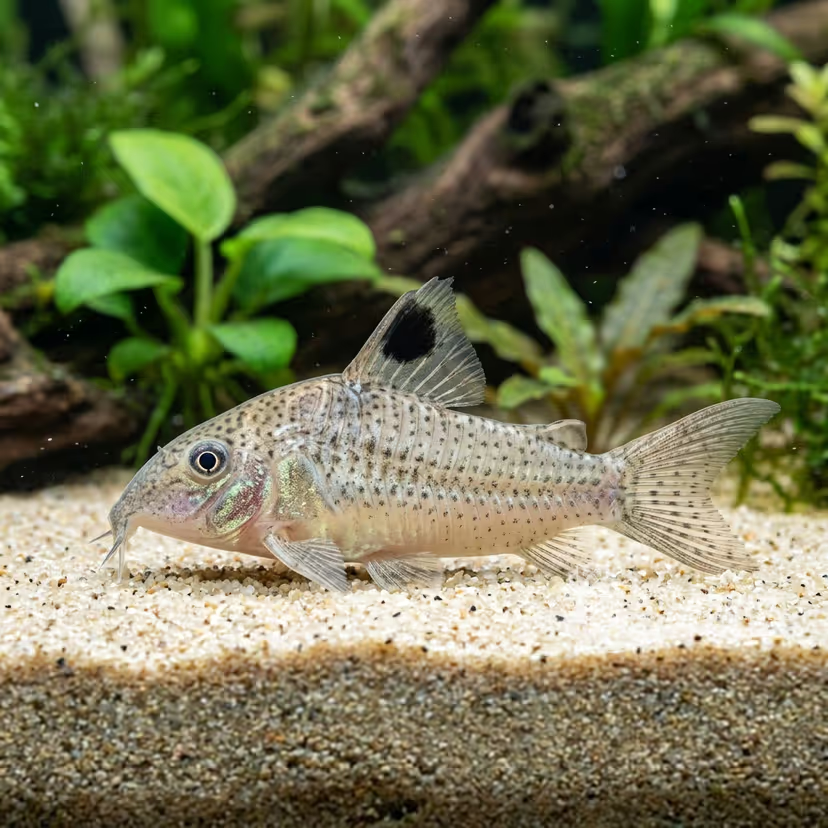
One of the most spectacular and easily identifiable species, unique in possessing a sharp horizontal black zebra striping ('flag') on the entire caudal fin.

Taxonomy
Class:Actinopteri
Order:Siluriformes
Family:Callichthyidae
Subfamily:Corydoradinae
Genus:Corydoras
Species:Corydoras robineae

Share

Check out Flag-tail Cory on Atlarium

PracticeRecognition quizzesPhotos, names, origins, and puzzles to review Atlas species.Open quizzes
Water Temperature

22 - 26 °C

pH Value

6 - 7.2

Water type

Freshwater

Tank level

Bottom

Adult size

4.5 cm

Minimum tank volume

>= 100 L

Minimum group

>= 6

GH

2 - 12 dGH

KH

1 - 8 dKH

TDS

40 - 260 ppm

Conductivity

63 - 406 uS/cm

Species description

Geographical Origin and Habitat: Jewel of the Rio Negro basin, in Brazil. Inhabits the bottom of rivers with very clear but distinctly black and acidic waters (blackwater) generated by the massive organic decay (leaf tannins) in the jungle, sheltered from weak sunlight.
Taxonomy and Morphology: Belonging to the Callichthyidae family. Tiny Corydoras (maximum 4.5 cm / 1.8 inches) with a moderately round snout. Has a slender and armored chassis, which visually stands out for a markedly flattened profile compared to others.
Social Behavior: Radical gregariousness. Forces the breeder to purchase large swarms (from 8 to 15 members). Very elusive, it takes time to acclimatize and does not accept external disturbances. Indefatigable rooters if united in their thick reassurance group.
Coloration and Sexual Dimorphism: Undoubtedly one of the most unique corys. Whitish tapered body, adorned with 4 or 5 powerful parallel horizontal black bands along all the flanks. Tail entirely furrowed by parallel blackish stripes (banded-tail pattern). Females much taller and more massive than males.

Care, breeding and tankmates

Aquarium Setup: Setups without very fine sand are torture for this species. The ideal layout is blackwater: very intricate woods, alder cones, thick carpets of dead leaves. The presence of a weak current is tolerated and appreciated.
Diet and Feeding: Omnivorous benthic micro-digger. Nocturnal or evening feeding highly recommended to evade bullying fish. Administer rapid sinking crumbled tablets, obligatorily combining brine shrimp nauplii and red bloodworms/tubifex (live or frozen).
Water Quality: The native Amazonian black waters demand acidic/neutral pH (6.0 - 7.2), extremely low GH (2-12) and a constant temperature at 22-26°C (72-79°F). Bacterial and nitrate accumulation will lead to lethargy, infections and early death; careful changes are vital.
Compatibility and Cohabitation: Delicious companion, tiny and shy, must be introduced solely with small gentle "dither fish": schools of Paracheirodon innesi/axelrodi, small Nannostomus or Otocinclus. Banned large or moderately aggressive fish.
Aquarium Breeding: Rare trial and for experts. Necessary substantial monsoon simulations (cool RO water changes and live hyper-protein feeding). Classic T-mating with meager deposition of adhesive eggs; extreme parental propensity to eat their own brood.
Risks and Diseases: Any abrasive substrate fatally wears the barbels leading to silent starvation and fungal infection of the mouth. They tolerate aggressive preparations very badly, especially copper ones, making it necessary to halve the curative dose.

Geographic Origin and Distribution

Jewel of the Rio Negro basin, in Brazil. Inhabits the bottom of rivers with very clear but distinctly black and acidic waters (blackwater) generated by the massive organic decay (leaf tannins) in the jungle, sheltered from weak sunlight.

Origin

Amazon, Orinoco, and Guianas

Fish profile

Temperament
Semi-aggressive
The temperament of Corydoras robineae is exceedingly peaceful and sociable, making them a favorite among community tank enthusiasts. They show absolutely no aggression towards other fish species and prefer to go about their daily foraging undisturbed. They are highly gregarious and derive comfort from the presence of their own kind, frequently resting and moving together as a unified group. Isolation can cause them immense stress, resulting in hiding and refusing to eat.
Diet
Omnivore
Corydoras robineae are omnivorous bottom feeders that require a varied diet to thrive in captivity. A high-quality sinking pellet or wafer specifically formulated for bottom dwellers should form the staple of their daily meals. They also greatly benefit from regular offerings of live or frozen foods such as bloodworms, daphnia, and brine shrimp. It is important to ensure that food reaches the bottom before being consumed by mid-water fish so they do not go hungry.
Sex ratio
School
A recommended sex ratio for Corydoras robineae, especially if breeding is desired, is two or three males for every female. This mimics their natural breeding groups and increases the chances of successful fertilization of the eggs. In a standard display tank, exact ratios are less critical as long as they are kept in a sufficiently large shoal of six or more. Having more males ensures that the female is constantly courted during the breeding cycle.
Feeding frequency
Twice daily
Feeding Corydoras robineae one or two times a day is generally sufficient to maintain their health and vitality. Care should be taken to provide only what they can actively consume within three to five minutes to prevent water fouling. If kept in a community setup with aggressive surface feeders, it may be beneficial to feed them after lights out. Observing their belly fullness can help determine if the feeding frequency and amounts are appropriate.
Bioload
Corydoras robineae produces a moderate bioload, making them excellent candidates for community tanks. Their efficient scavenging habits actually help maintain water quality by consuming uneaten food that would otherwise decay. Despite their modest size, a school of six or more does contribute somewhat to the tank's waste output. Regular water changes and adequate filtration are still necessary to keep the bioload manageable and nitrate levels low.
Flow
Stagnant
This species prefers gentle to moderate water flow that mimics the slow-moving streams and tributaries of various South American river basins. Excessive flow can cause unnecessary stress and fatigue, as they are not built for constant swimming against strong currents. A well-placed sponge filter or a canister filter with a spray bar can provide the ideal balance of filtration and gentle water movement. Oxygenation remains important, so ensuring surface agitation without overpowering the bottom areas is key.
Reproduction
Oviparous
Breeding Corydoras robineae can be achieved in a dedicated breeding setup with cool water changes used to trigger spawning behavior. The females are typically larger and more robust, scattering adhesive eggs onto broad-leaved plants, aquarium glass, or spawning mops. Once spawning is complete, the adult fish should be removed to prevent them from eating the eggs. The fry hatch after a few days and require very small live foods like microworms or freshly hatched brine shrimp.
Compatibility & tankmates
These peaceful catfish are highly compatible with a wide variety of community fish. They do exceptionally well with small tetras, rasboras, and dwarf cichlids that inhabit the middle and upper levels of the aquarium. Aggressive or large bottom-dwelling species should be avoided as they may bully the Corydoras robineae or outcompete them for food. Keeping them in groups of at least six of their own kind is vital for their sense of security.
Tank level
Bottom
Corydoras robineae are strictly bottom dwellers, spending almost the entirety of their day sifting through the substrate in search of food. They require a soft, sandy substrate to prevent damage to their delicate barbels, which are essential for sensing their environment. While they occasionally dart to the surface to take in a breath of atmospheric air, they immediately return to the bottom. Decor elements like caves, driftwood, and low-lying plants provide them with much-needed resting spots.

Window to the official scientific data of the species

Data synced on: 06/15/2026

Scientific Parameters & Models

Trophic level
2.9 ± 0.3 se
Resilience
High (less than 15 months)
Phylogenetic uniqueness (PD50)
0.5
Bayesian Length-Weight
a = 0.01778, b = 3.02
VulnerabilityLow vulnerability (10 / 100)

Image gallery

Licensed images linked to the species or, when marked, to the closest representative taxon.

Related species

Recommendations grouped by close relatives, companion choices, and similar care.

Variants and close relatives

Same atlas type, nearby scientific identity, genus, or family.

Burgess's Corydoras

Burgess's Corydoras

Corydoras burgessi
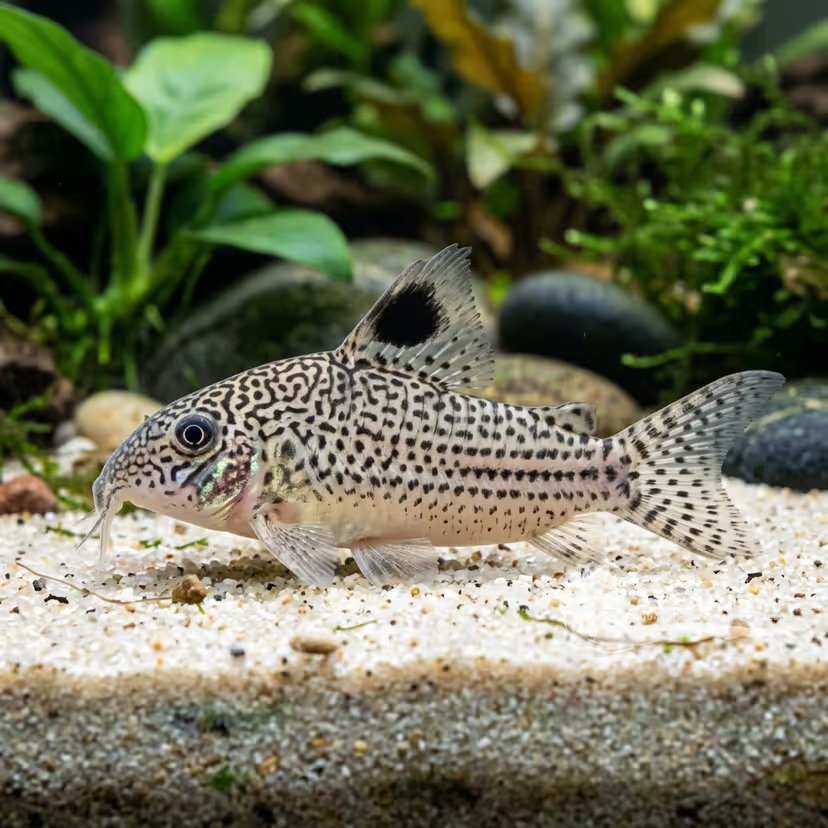
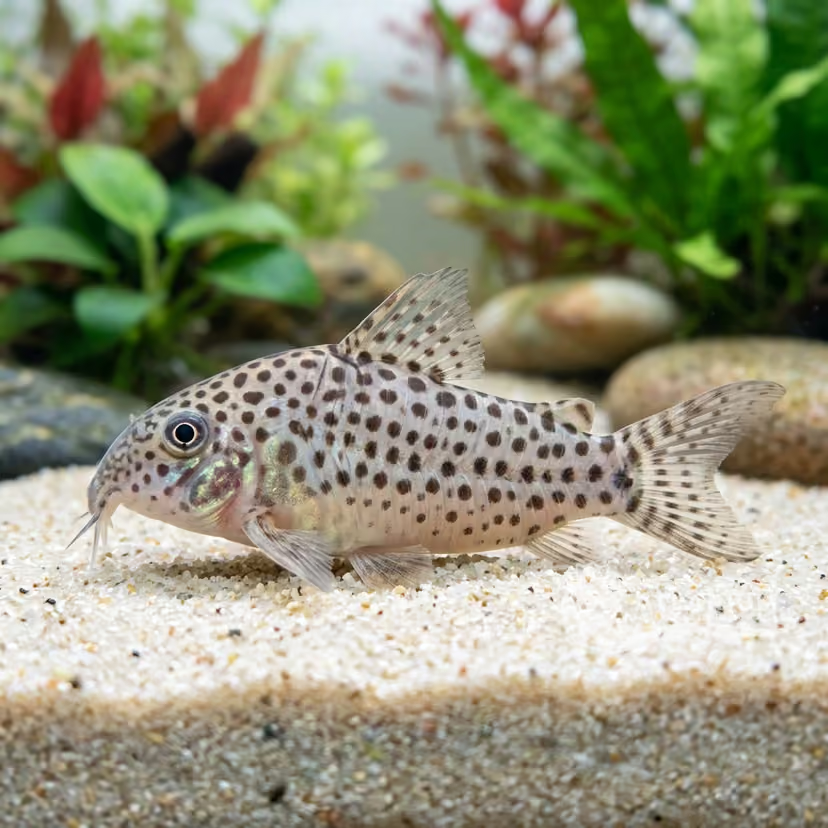
View details->
Agassiz's Corydoras

Agassiz's Corydoras

Corydoras agassizii

View details->
Bandit cory

Bandit cory

Corydoras metae

View details->
Blacktop Corydoras

Blacktop Corydoras

Corydoras acutus

View details->
Concolor Cory

Concolor Cory

Corydoras concolor

View details->
Pink Corydoras (Axelrod's Cory)

Pink Corydoras (Axelrod's Cory)

Corydoras axelrodi

View details->
Reticulated Corydoras

Reticulated Corydoras

Corydoras reticulatus

View details->
Bader's Corydoras

Bader's Corydoras

Corydoras baderi

View details->
Banded Corydoras

Banded Corydoras

Corydoras vittatus

View details->
Bicolor Corydoras

Bicolor Corydoras

Corydoras bicolor

View details->
Broad Corydoras

Broad Corydoras

Corydoras latus

View details->
Carla's Cory

Carla's Cory

Corydoras carlae

View details->
Condiscipulus Cory

Condiscipulus Cory

Corydoras condiscipulus

View details->
Cope's Corydoras

Cope's Corydoras

Corydoras copei

View details->
Corantijn Cory

Corantijn Cory

Corydoras breei

View details->
Evelyn's Corydoras

Evelyn's Corydoras

Corydoras evelynae

View details->

Recommended companions

Compatible cards from coherent ecosystems with matching parameters.

Alternanthera reineckii "rosaefolia minor"
Plant

Alternanthera reineckii "rosaefolia minor"

Alternanthera reineckii "rosaefolia minor"

View details->
Ammannia mauritiana
Plant

Ammannia mauritiana

Ammannia mauritiana

View details->
Ammannia sp. 'Bonsai'
Plant

Ammannia sp. 'Bonsai'

Ammannia sp. 'Bonsai'

View details->
Blyxa alternifolia
Plant

Blyxa alternifolia

Blyxa alternifolia

View details->
Blyxa cf. vietii
Plant

Blyxa cf. vietii

Blyxa cf. vietii

View details->
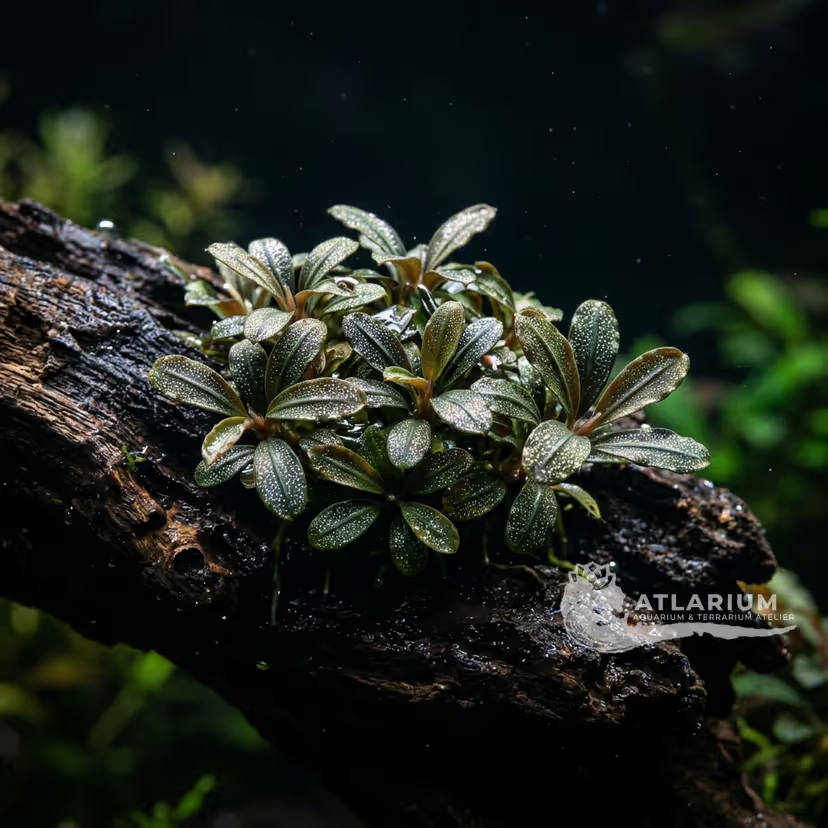
Bucephalandra pygmaea "Bukit Kelam / Sintang"
Plant

Bucephalandra pygmaea "Bukit Kelam / Sintang"

Bucephalandra pygmaea "Bukit Kelam / Sintang"

View details->
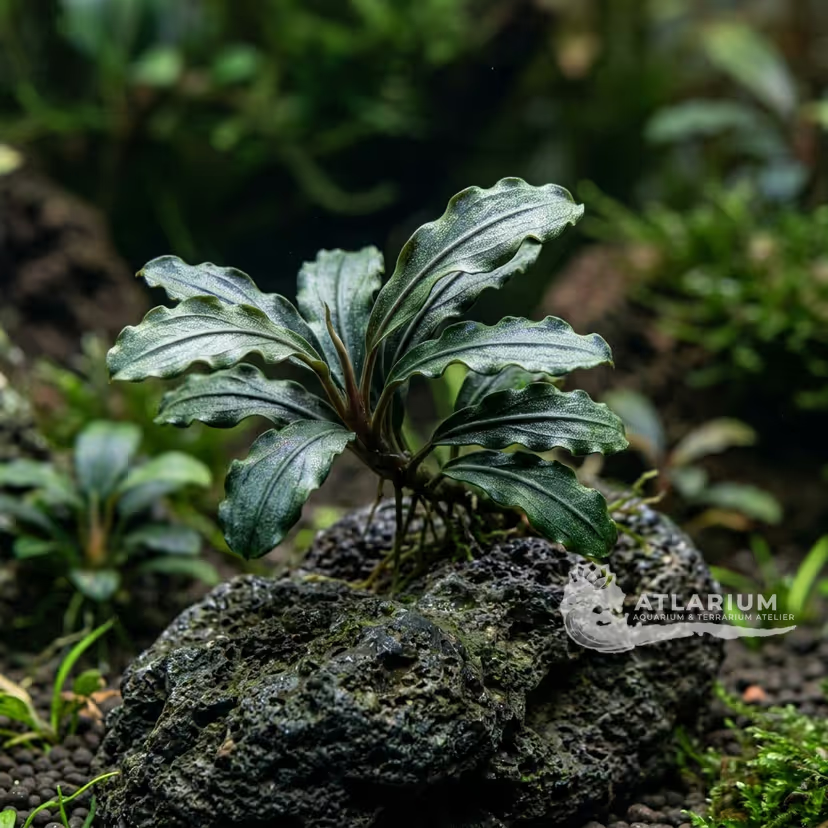
Bucephalandra pygmaea "Kapit"
Plant

Bucephalandra pygmaea "Kapit"

Bucephalandra pygmaea "Kapit"
View details->
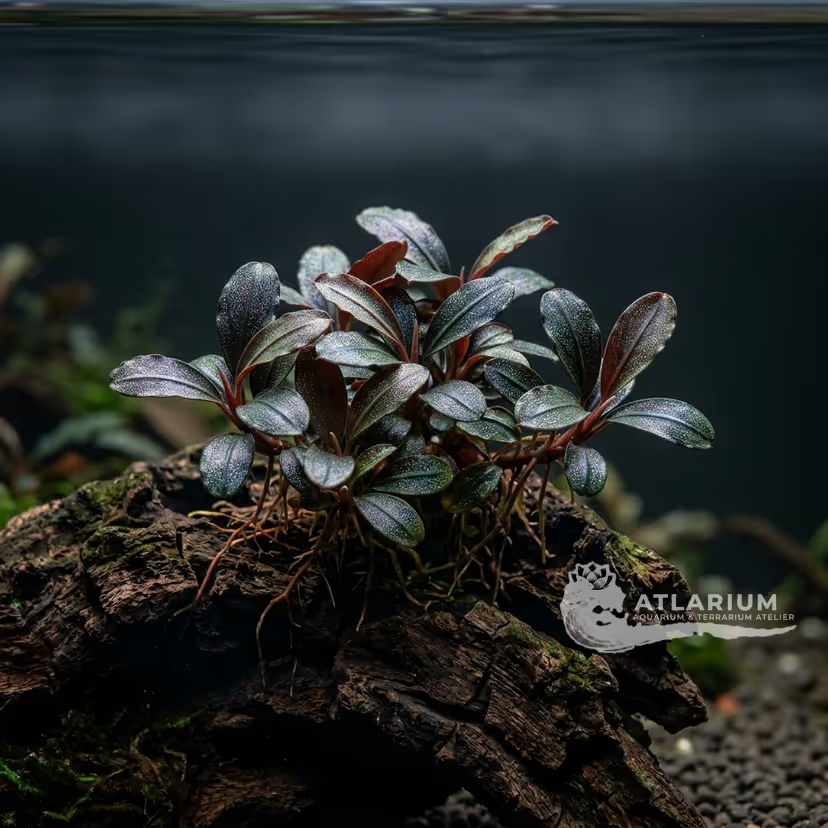
Bucephalandra sordidula
Plant

Bucephalandra sordidula

Bucephalandra sordidula
View details->
Bucephalandra sp. "Bodok"
Plant

Bucephalandra sp. "Bodok"

Bucephalandra sp. "Bodok"

View details->
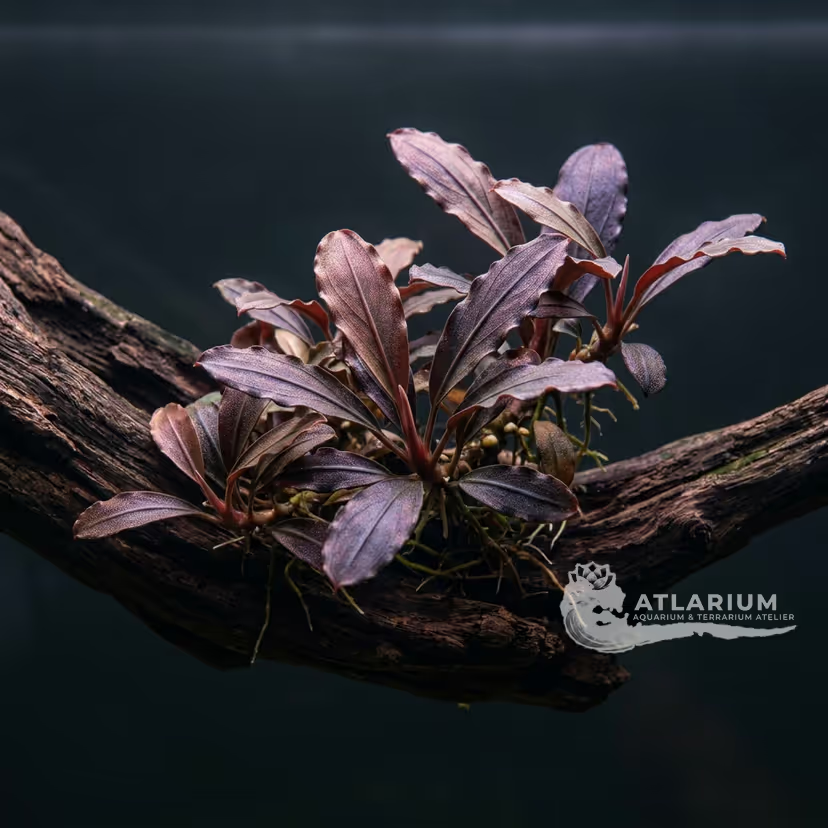
Bucephalandra sp. "Braun-rot narrow"
Plant

Bucephalandra sp. "Braun-rot narrow"

Bucephalandra sp. "Braun-rot narrow"
View details->
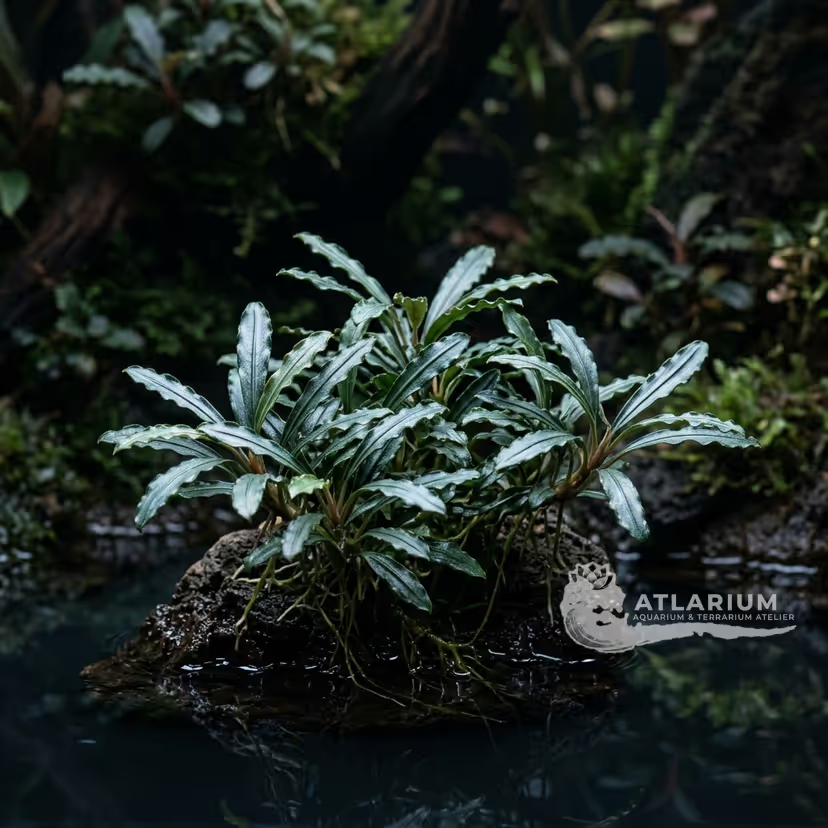
Bucephalandra sp. "Braun-rot" ("Serimbu")
Plant

Bucephalandra sp. "Braun-rot" ("Serimbu")

Bucephalandra sp. "Braun-rot"
View details->
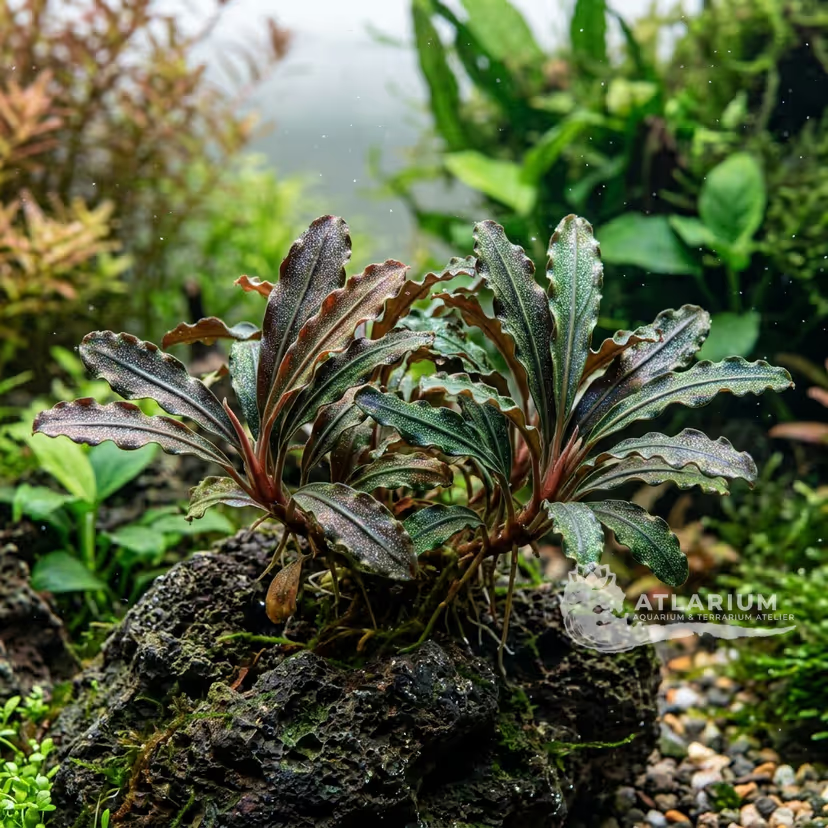
Bucephalandra sp. "Gunung Sumpit"
Plant

Bucephalandra sp. "Gunung Sumpit"

Bucephalandra sp. "Gunung Sumpit"
View details->
Bucephalandra sp. "Kedagang"
Plant

Bucephalandra sp. "Kedagang"

Bucephalandra sp. "Kedagang"

View details->
Bacopa sp. "Japan"
Plant

Bacopa sp. "Japan"

Bacopa sp. "Japan"

View details->
Bolbitis heteroclita
Plant

Bolbitis heteroclita

Bolbitis heteroclita

View details->
Arrowhead Anubias
Plant

Arrowhead Anubias

Anubias hastifolia

View details->

Similar care

Cards with similar requirements, difficulty, habitat, and husbandry profile.

False Blochi Cory

False Blochi Cory

Corydoras delphax

View details->
Filament Cory

Filament Cory

Corydoras filamentosus

View details->
Fowler's Cory

Fowler's Cory

Corydoras fowleri

View details->
Gery's Corydoras

Gery's Corydoras

Corydoras geryi

View details->
Gomez's Cory

Gomez's Cory

Corydoras gomezi

View details->
Gray Cory

Gray Cory

Corydoras griseus

View details->
Green Gold Cory

Green Gold Cory

Corydoras melanotaenia

View details->
Içana Cory

Içana Cory

Corydoras incolicana

View details->
Kane's Corydoras

Kane's Corydoras

Corydoras kanei

View details->
Lambert's Cory

Lambert's Cory

Corydoras lamberti

View details->
Leopard Cory

Leopard Cory

Corydoras leopardus

View details->
Loreto Cory

Loreto Cory

Corydoras loretoensis

View details->
Maculifer Cory

Maculifer Cory

Corydoras maculifer

View details->
Blue Spotted Corydoras / Guianacara

Blue Spotted Corydoras / Guianacara

Corydoras melanistius

View details->
False Spotted Corydoras

False Spotted Corydoras

Corydoras leucomelas

View details->
Geoffroy's Corydoras

Geoffroy's Corydoras

Corydoras geoffroy

View details->
Last updated: 06/30/2026
Flag-tail Cory (Corydoras robineae) Care Guide & Tank Setup | Atlarium