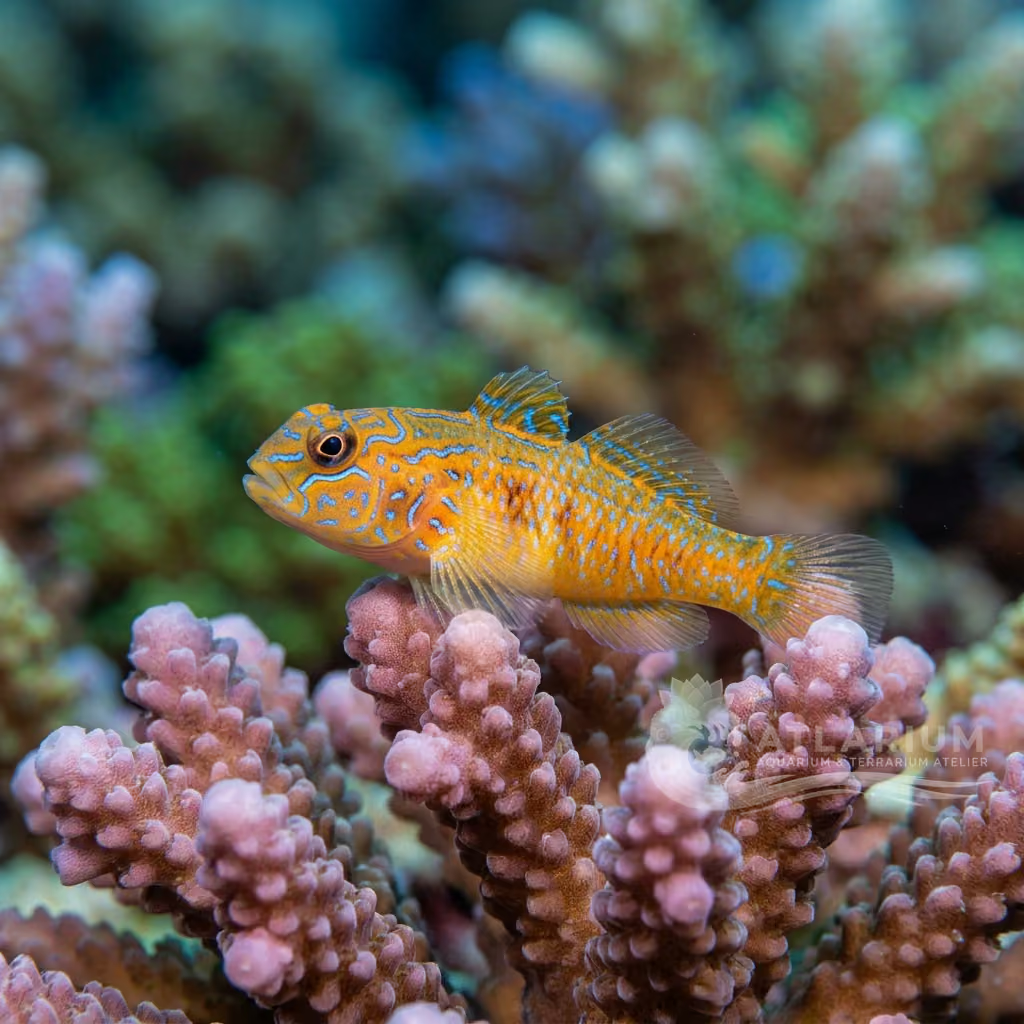
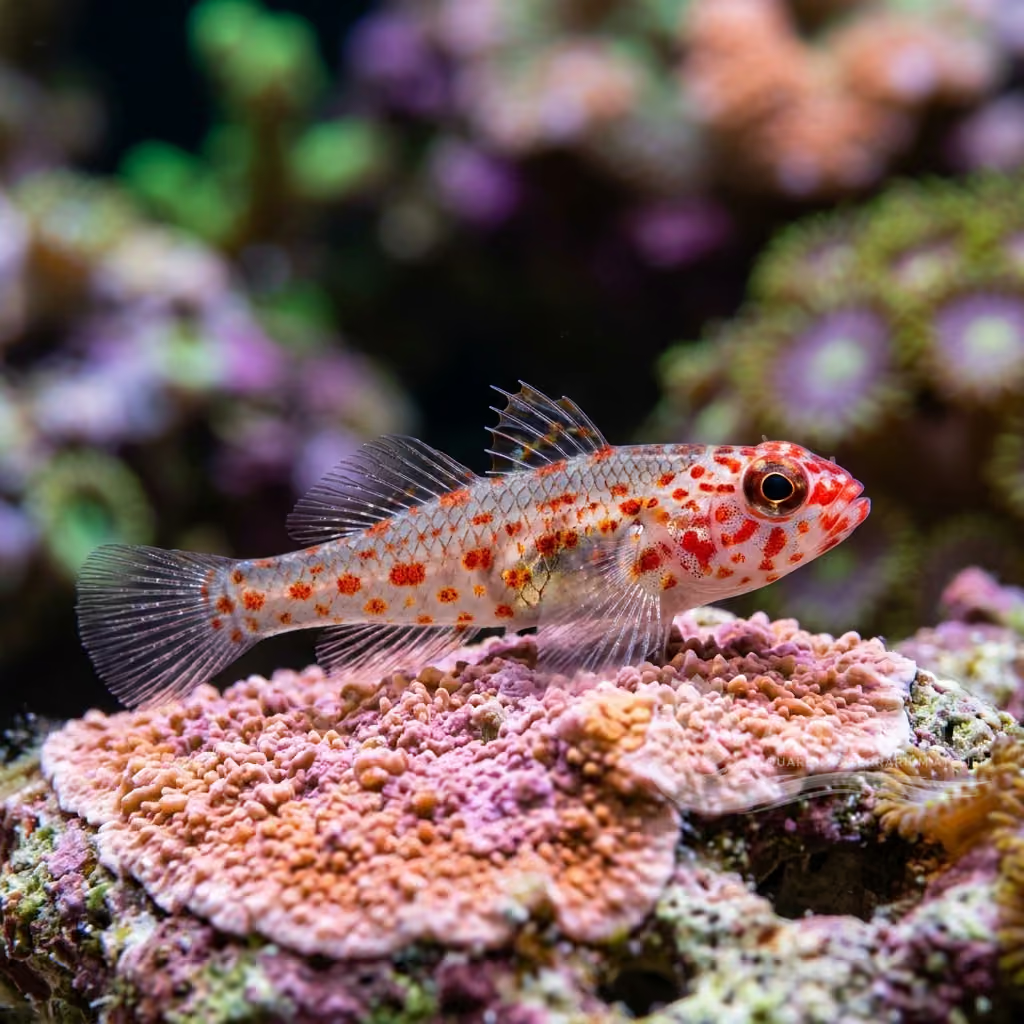
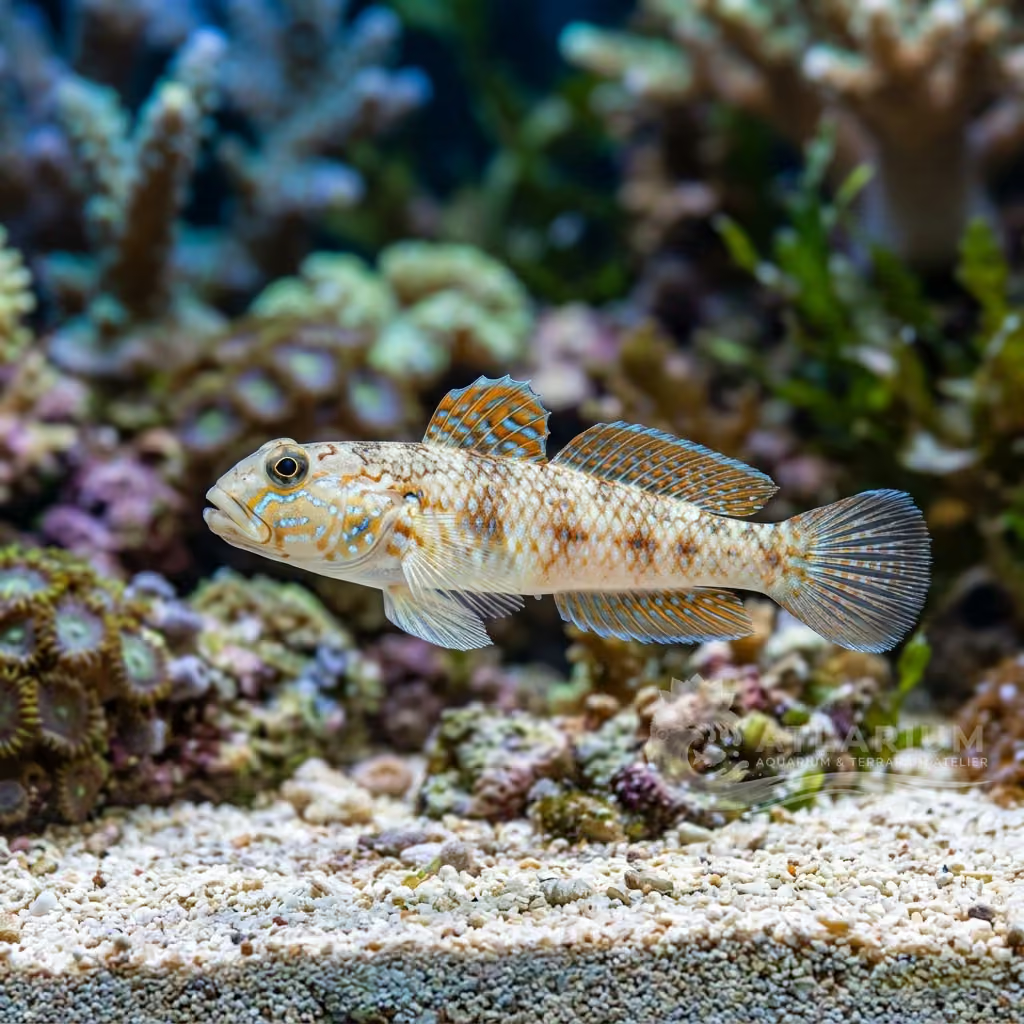
Green coral goby
Gobiodon atrangulatus
A minuscule, incredibly charming coral-dwelling goby from the Pacific. It seeks permanent refuge exclusively within the branching skeletons of live Acropora corals, completely ignoring the rest of the tank.
Water Temperature
22 - 27 °C
pH Value
8 - 8.5
Water type
Marine
Tank level
All levels
Adult size
3.5 cm
Minimum tank volume
>= 40 L
Minimum group
>= 1
KH
8 - 12 dKH

Species description
Geographical Origin and Habitat: Gobiodon atrangulatus is native to the tropical waters of the Western Central Pacific Ocean, with populations primarily located in the Great Barrier Reef, the Solomon Islands, Fiji, and north to the Ryukyu Islands of Japan. It inhabits sheltered coral lagoons and shallow outer reefs, at depths up to 15 meters, where it lives almost exclusively in close association with colonies of branching Acropora stony corals.
Taxonomy and Morphology: Belonging to the family Gobiidae, subfamily Gobiinae, and the genus Gobiodon. This tiny fish has a stout, laterally compressed, scaleless body covered in a thick, toxic mucus layer that protects it from predators. The head is large with prominent, forward-facing eyes. Adult specimens reach a very small size, typically between 3 and 4 centimeters in length.
Social Behavior: A peaceful, benthic fish that spends its entire life perched within the branches of a host Acropora coral. It exhibits territorial behavior only toward conspecifics or other Gobiodon species competing for the same coral colony. It rarely swims in open water, instead performing short darts from one branch to another within its territory.
Coloration and Sexual Dimorphism: The coloration is a uniform, vibrant lime-green, which provides perfect camouflage among the polyps of its host coral. It may display small reddish or brownish lines or spots on the head and at the base of the pectoral fins. There is no visible sexual dimorphism; they are bi-directional hermaphrodites, meaning they can change sex in either direction to form a breeding pair.

Care, breeding and tankmates
Aquarium Setup: Due to its tiny size, it can be kept in nano reef aquariums starting from 40-50 liters (approx. 10-15 gallons). The most critical element of the setup is the presence of live branching small-polyp stony (SPS) corals, particularly Acropora species, which serve as its natural home. In the absence of live corals, skeleton structures may be used, though live colonies are highly preferred.
Diet and Feeding: Carnivorous. Naturally feeds on zooplankton, copepods, and tiny planktonic organisms. In captivity, they must be fed microscopic frozen foods such as cyclops, oyster eggs, baby brine shrimp, and finely minced mysis. They may occasionally nip at the polyps of their host Acropora coral, but this rarely causes permanent damage to a healthy colony.
Water Quality: Since it requires SPS corals to thrive, water parameters must align with those of an advanced reef aquarium: temperature 24-26°C (75-79°F), pH 8.1-8.4, specific gravity 1.023-1.025, calcium 400-440 ppm, magnesium 1300-1350 ppm, and KH 8-10 dKH. Nitrate and phosphate levels must be kept extremely low through efficient filtration.
Compatibility and Cohabitation: Entirely reef-safe. It cohabitates well with other small, peaceful reef fish such as other small gobies, pipefish, clownfish, and small ornamental invertebrates. Do not house them with large, predatory, or aggressive fish (such as triggerfish, groupers, or lionfish) that could easily swallow them due to their small size.
Aquarium Breeding: Spawning occurs within the host coral. The breeding pair clears a small patch of coral tissue near the base of the branches and deposits adhesive eggs. The male guards the nest until they hatch. Raising the larvae is exceptionally difficult due to their microscopic size, requiring specialized live diets such as rotifers and copepod nauplii.
Risks and Diseases: The primary risk is starvation, especially if housed with fast-swimming tankmates that outcompete them for food. They are generally resistant to skin parasites due to their toxic protective mucus, but are highly sensitive to sudden temperature shifts and water quality degradation. Stress to the host coral can occur if the tank is too small.

Geographic origin and distribution
Gobiodon atrangulatus is native to the tropical waters of the Western Central Pacific Ocean, with populations primarily located in the Great Barrier Reef, the Solomon Islands, Fiji, and north to the Ryukyu Islands of Japan. It inhabits sheltered coral lagoons and shallow outer reefs, at depths up to 15 meters, where it lives almost exclusively in close association with colonies of branching Acropora stony corals.
Origin
Tropical oceans and reefsEast Asia

Fish profile
- Temperament
- Territorial
- They are peaceful and somewhat reclusive. They spend most of their day observing their surroundings. They only show territoriality towards other clown gobies.
- Diet
- Carnivore
- They are carnivores that feed on tiny zooplankton. In captivity, they eagerly accept small frozen mysis or brine shrimp. High-quality micro-pellets are also a good option.
- Life expectancy
- 2-5 years
- Adult size
- 3.5 cm
- Sex ratio
- Flexible
- They can change sex depending on social hierarchy. Keeping a pair is usually safe and enjoyable. They will eventually form a male-female bond.
- Feeding frequency
- Twice daily
- Feed them small amounts two times a day. Their fast metabolism requires regular energy intake. Target feeding may be necessary in competitive tanks.
- Bioload
- Low
- This tiny goby has a very low bioload. They produce minimal waste due to their small size. They are perfectly suited for nano reef setups.
- Flow
- Moderate
- They prefer areas of moderate water flow. They are often found perched on SPS corals in the current. Ensure the flow is not overpowering for their size.
- Jump risk
- Yes
- They have a low to moderate jump risk. While mostly perched, they can dart out if startled. A mesh lid provides excellent security.
- Reproduction
- Oviparous
- They are known to lay sticky eggs on coral branches. Captive breeding is difficult but occasionally happens. Rearing the microscopic fry is the primary challenge.
- Compatibility & tankmates
- Not reef safe
- They are completely reef safe and peaceful. They can safely be housed with other small, docile fish. Avoid large predatory fish that might eat them.
- Tank level
- All levels
- They spend their time in the middle to top levels. They constantly hop between coral branches and rocks. They rarely venture down to the sandy bottom.

Scientific Parameters & Models
FishBase
Window to the official scientific data of the species
FishBase v25.04Data synced on: 06/15/2026
- Trophic level
- 3.2 ± 0.4 se
- Resilience
- High (less than 15 months)
- Phylogenetic uniqueness (PD50)
- 0.5
- Bayesian Length-Weight
- a = 0.01995, b = 3.01
- VulnerabilityLow vulnerability (10 / 100)

Related species
Recommendations grouped by close relatives, companion choices, and similar care.