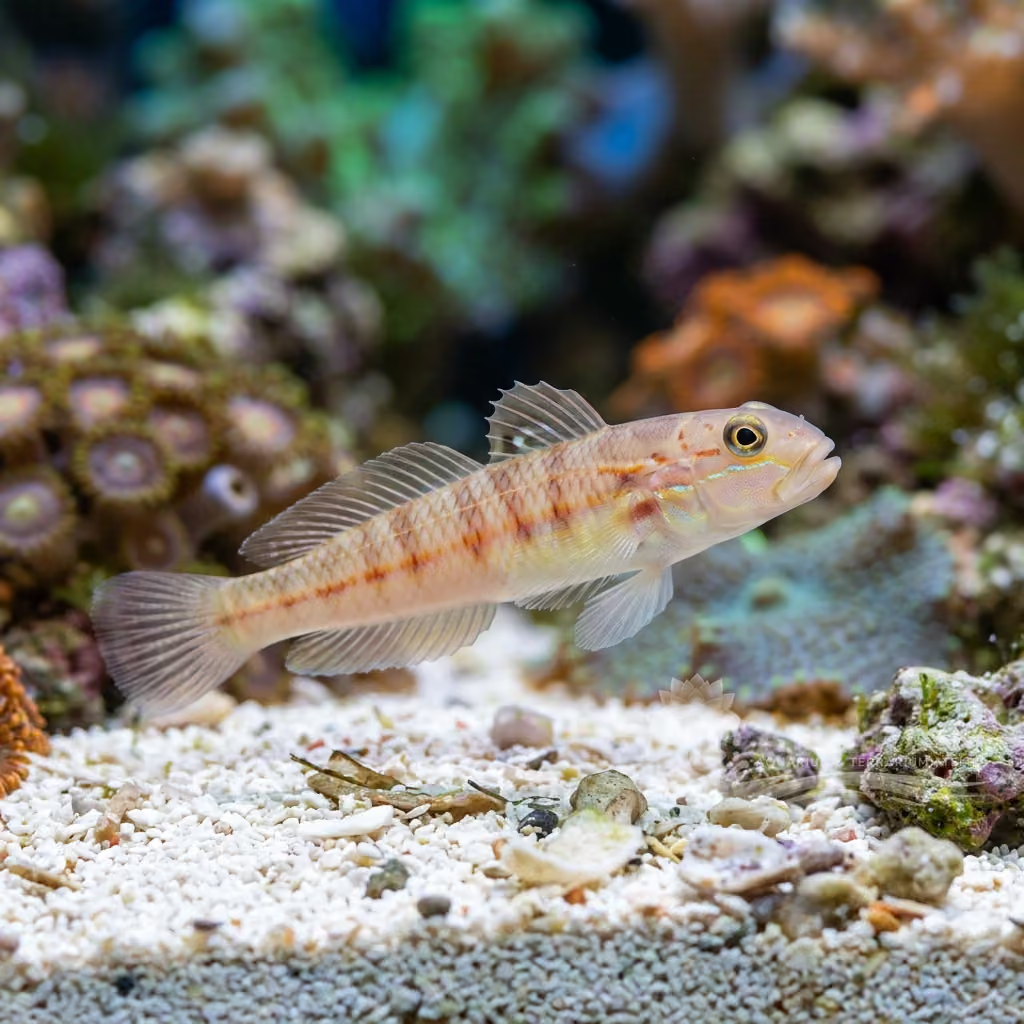
Harlequin filefish
Oxymonacanthus longirostris
The Harlequin filefish is a delicate, strikingly patterned corallivore. Notoriously difficult to keep, it requires a pristine, mature reef aquarium populated exclusively by living Acropora corals.
Water Temperature
24 - 28 °C
pH Value
8.1 - 8.4
Water type
Marine
Tank level
Middle
Adult size
10 cm
Minimum tank volume
>= 150 L
Minimum group
>= 1

Species description
Geographical Origin and Habitat: The Harlequin filefish is widely distributed throughout the coral reefs of the Indo-Pacific, from the Red Sea and East Africa to Samoa, north to the Ryukyu Islands, and south to the Great Barrier Reef. It lives in shallow, protected lagoons and seaward reefs at depths of 1 to 30 meters, in close association with live branching Acropora corals.
Taxonomy and Morphology: Belongs to the family Monacanthidae and the genus Oxymonacanthus. It features a highly laterally compressed body and a long, tubular snout adapted for extracting individual polyps from coral skeletons. Adults reach a maximum length of about 10 centimeters. It has an erectile dorsal spine used to lock itself into coral branches at night.
Social Behavior: An exceptionally peaceful, slow-moving, and shy species. In the wild, it is typically observed living in stable pairs or small groups among coral branches. It displays no aggression toward other fish and is defenseless against faster or territorial tankmates.
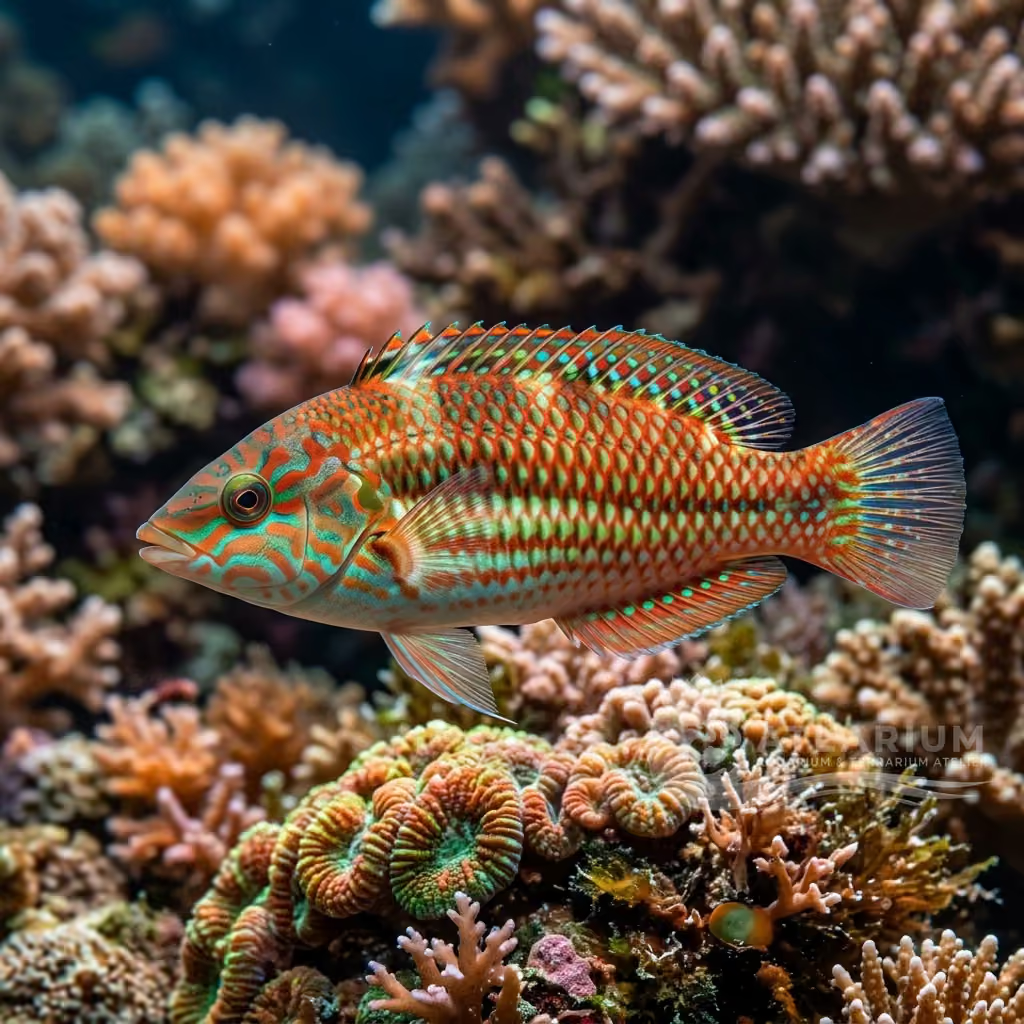
Coloration and Sexual Dimorphism: Its color pattern is an outstanding example of marine camouflage: the body has a pale blue-green base covered with regular rows of orange or yellow-orange spots, perfectly mimicking the polyps of branching Acropora corals. Sexual dimorphism is subtle: adult males possess a black patch with a yellow border on the pelvic fin/spine structure, which is absent in females.

Care, breeding and tankmates
Aquarium Setup: Requires a mature marine aquarium of at least 150 liters with a large population of live Acropora corals. The setup must replicate a healthy, stable reef system. Keep water flow moderate, as this fish is a weak swimmer that struggles in high-velocity currents. Provide quiet spots and narrow passages between coral branches for resting.
Diet and Feeding: This is the critical challenge for this species. In the wild, it is an obligate corallivore (eating only Acropora polyps). In captivity, unless provided with an endless supply of live corals to feed on (highly expensive), it must be carefully weaned onto alternative foods. This is done by smearing gel-based food or minced clam, fish eggs, and mysis onto dead coral skeletons. Many specimens die of starvation if they refuse prepared foods.
Water Quality: Demands pristine and stable water conditions, equivalent to those required for sensitive SPS corals. Maintain temperature between 24 and 28 °C, pH of 8.1 to 8.4, and specific gravity between 1.021 and 1.025. Nitrates and phosphates must be kept near zero using high-efficiency protein skimmers and regular water changes.
Compatibility and Cohabitation: Suitable only for dedicated tanks or with extremely peaceful, slow-moving tankmates such as pipefish, mandarinfish, or tiny gobies. Do not house with fast-swimming, aggressive feeders like tangs, large wrasses, or damselfish, which will outcompete it for food. It is not compatible with show-quality SPS tanks due to its coral-nipping behavior.
Aquarium Breeding: Breeding in captivity has been achieved only by specialists. They deposit adhesive eggs in clumps of algae or rubble. Parents do not guard the nest after spawning. Hatching the eggs and raising the tiny, delicate larvae requires complex rotifer and phytoplankton feeding protocols.
Risks and Diseases: The primary risk is death by starvation due to refusal of non-coral foods. It is also highly susceptible to Marine Ich (Cryptocaryon) and Marine Velvet (Amyloodinium). Because they lack true scales, they are sensitive to chemical treatments; avoid copper-based medications if possible.

Geographic origin and distribution
The Harlequin filefish is widely distributed throughout the coral reefs of the Indo-Pacific, from the Red Sea and East Africa to Samoa, north to the Ryukyu Islands, and south to the Great Barrier Reef. It lives in shallow, protected lagoons and seaward reefs at depths of 1 to 30 meters, in close association with live branching Acropora corals.
Origin
Tropical oceans and reefsAfrica and MadagascarEast Asia

Fish profile
- Temperament
- Peaceful
- It is an incredibly peaceful and delicate fish with a distinctly shy personality. It refuses to participate in competitive feeding frenzies and must be granted a calm, stable sanctuary. Its survival heavily depends entirely on an aquarist's ability to cater to its specialized, docile nature.
- Diet
- Omnivore
- This fish is an obligate corallivore, meaning its natural diet consists almost entirely of Acropora coral polyps. Keeping it in captivity is exceedingly difficult and generally requires a dedicated tank full of live stony corals. Attempting to wean it onto commercial prepared foods requires expert-level dedication and often fails.
- Life expectancy
- 4-7 years
- Adult size
- 10 cm
- Sex ratio
- Solitary
- This species establishes deep, life-long monogamous bonds with a single partner in the wild. They should ideally be sourced and introduced into the aquarium as a pre-existing mated pair. Solo individuals often pine and become increasingly stressed without a companion.
- Feeding frequency
- Twice daily
- This highly specialized feeder must have continuous access to live coral polyps throughout the entire day. Without constant grazing on specific Acropora corals, it will quickly decline in health. Supplemental feeding attempts should happen multiple times a day to encourage adaptation.
- Bioload
- Medium
- This species produces a relatively low amount of waste compared to other fish. A standard filtration system is usually sufficient to maintain good water quality. However, regular water changes remain essential to keep the aquarium environment pristine.
- Flow
- Moderate
- A moderate, varied water flow perfectly simulates its natural reef environment. The flow should be strong enough to keep detritus suspended, but not so strong that the fish struggles to swim. Random, alternating currents are particularly appreciated.
- Jump risk
- No
- Reproduction
- Oviparous
- This species lays demersal eggs, depositing them carefully onto hidden surfaces near their preferred habitats. The parents often remain nearby to ensure the eggs remain undisturbed by predators. Breeding in captivity is difficult but possible if dedicated feeding protocols for the larvae are strictly followed.
- Compatibility & tankmates
- Reef safe
- This is a highly specialized species that requires a peaceful environment to thrive. It should never be housed with aggressive, fast-moving, or overly boisterous tank mates. Ideal companions are small, docile fish that will not disturb its slow and deliberate feeding habits.
- Tank level
- Middle
- It generally hovers deliberately in the mid-water column, weaving intricately through the branches of stony corals. It rarely ventures down to the bare substrate or up to the very surface of the water. Its movement is slow and calculated, specifically adapted for life among coral structures.

Related species
Recommendations grouped by close relatives, companion choices, and similar care.