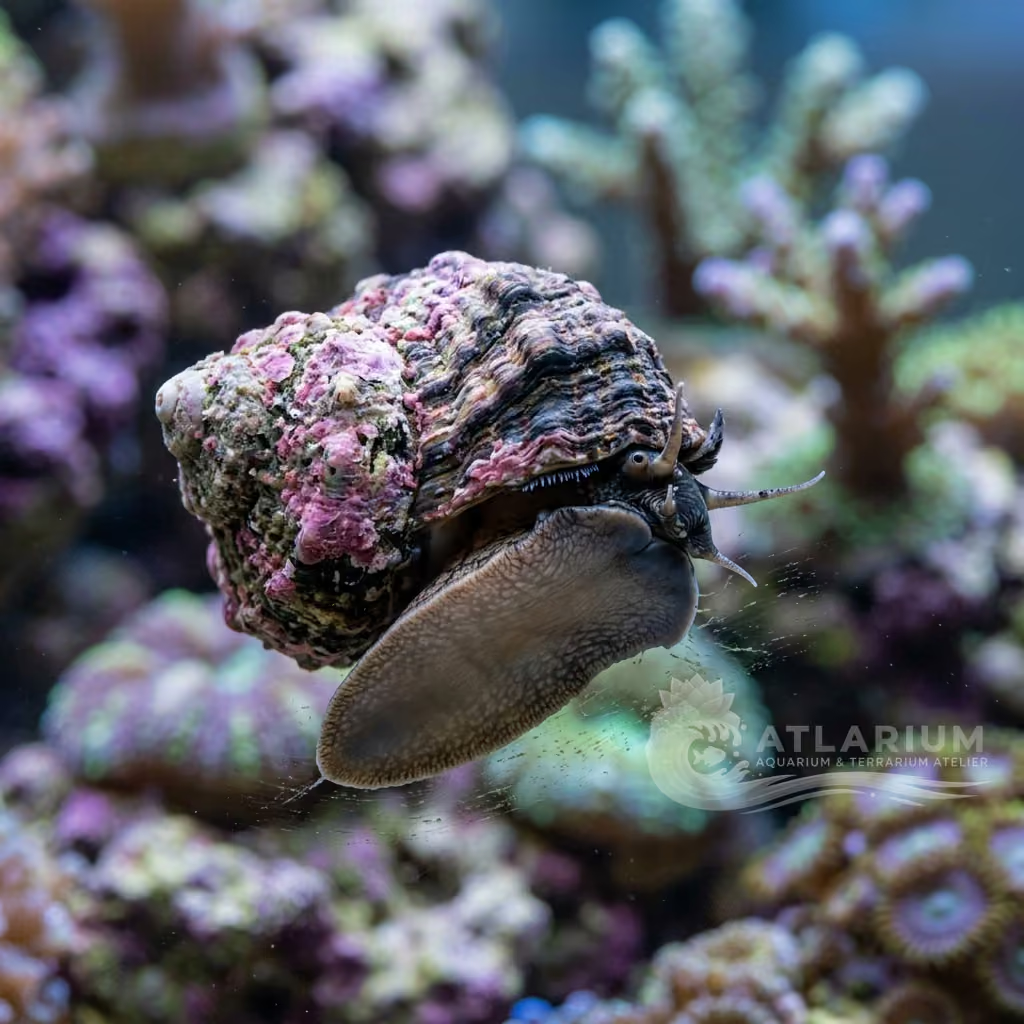
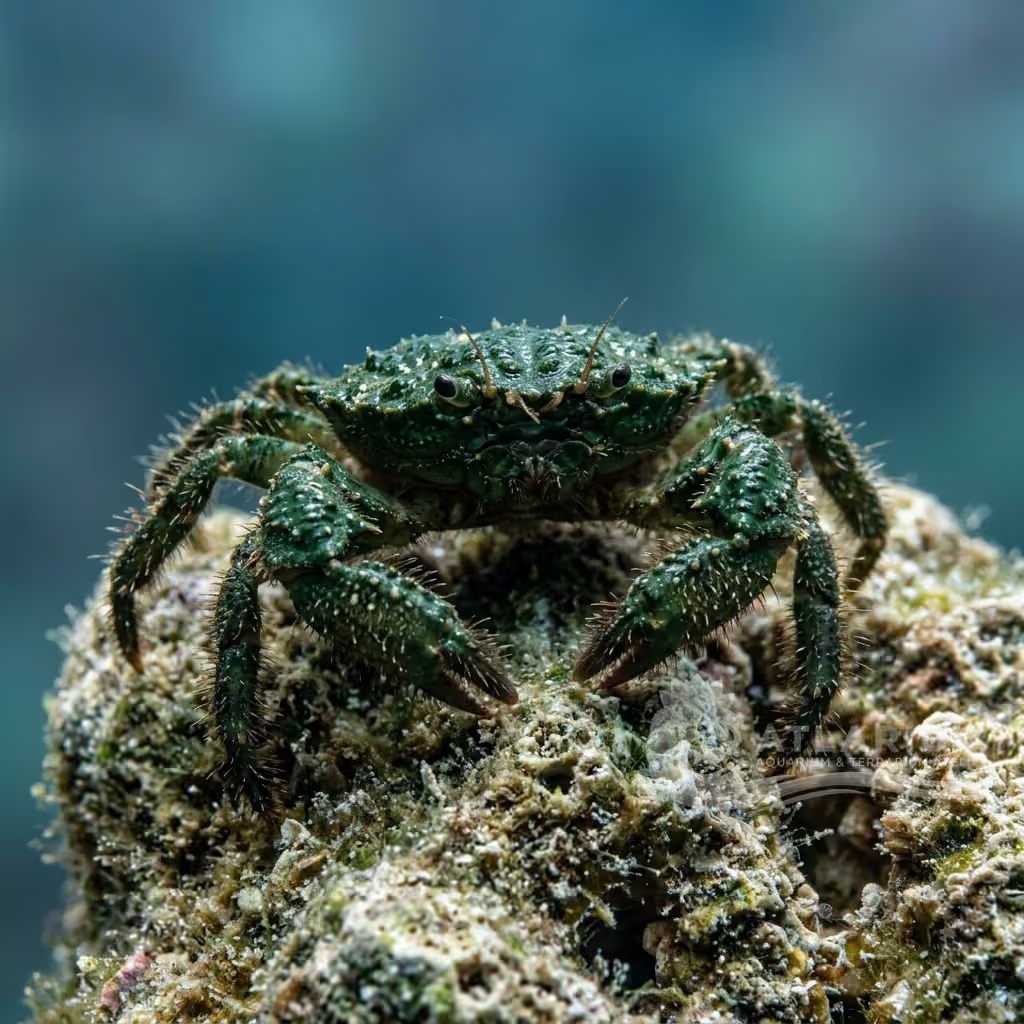
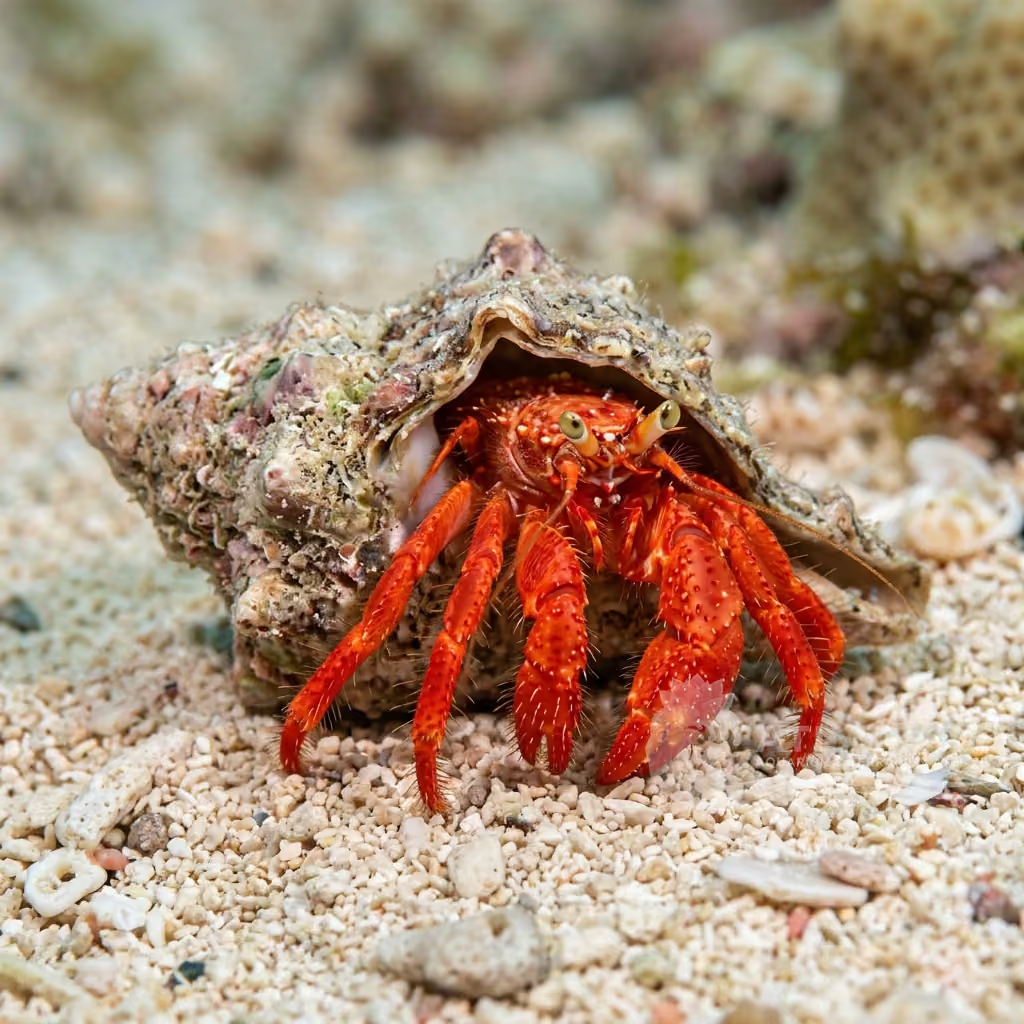
Warty Sea Hare
Dolabella auricularia
The Sea Hare is a legendary, voracious consumer of nuisance hair algae in marine tanks. It requires large amounts of algae to prevent starvation.
Water Temperature
24 - 28 °C
pH Value
8.1 - 8.4
Water type
Marine
Invertebrate type
Marine snail
Adult size
20 cm
Minimum group
>= 1
Ecological role
Scavenger
Copper sensitivity
High

Species description
Geographical Origin and Habitat: Dolabella auricularia is widely distributed throughout the tropical Indo-Pacific region, from the Red Sea and East Africa to Hawaii and northern Australia. It inhabits shallow sheltered bays, sea grass beds, inner reef flats, and sandy lagoons at depths of 1 to 20 meters.
Taxonomy: Belonging to the family Aplysiidae, this is a large sea hare species growing up to 20-30 cm. It features a wedge-shaped, stocky body covered in warty papille and skin flaps that provide excellent camouflage on sandy bottoms. An internal ear-like shell is hidden inside the mantle.
Social Behavior: Peaceful, slow-moving, and nocturnal. During the day, it remains buried in the sand or hidden under rock overhangs. If severely stressed or physically attacked, it can release a thick cloud of purple ink as a defensive deterrent to predators.
Coloration and Sexual Dimorphism: Body coloration ranges from mottled brown and olive-green to dull grey, blending with benthic algae. This species is a simultaneous hermaphrodite, meaning individuals possess both male and female reproductive organs; there is no sexual dimorphism.

Care, breeding and tankmates
Tank Setup: A large, mature marine aquarium of at least 250-300 liters is required. Provide deep sand areas and secure rock structures with large caves. The presence of a substantial, natural growth of hair algae is critical before introducing this animal.
Diet and Feeding: Voracious herbivores. They specialize in eating nuisance green hair algae, turf algae, and macro-algae. Once the natural algae in the aquarium is consumed, they must be fed daily with dried Nori seaweed sheets anchored to the bottom to prevent starvation.
Water Quality: Requires stable marine parameters: temperature 24-26°C, salinity 1.023-1.025, pH 8.1-8.4, and low nitrates. Highly sensitive to copper, chlorine, and sudden shifts in salinity. Excellent protein skimming and oxygenation are necessary.
Compatibility and Tankmates: Completely reef-safe and peaceful. Never keep with aggressive or predatory fish that might pick at its skin (e.g. puffers, triggerfish, large wrasses, or large crabs), which can trigger toxic inking events.
Aquarium Breeding: Breeding in home aquariums is highly unlikely. They mate in chains or pairs, laying gelatinous yellow egg masses resembling tangled noodles. The larvae are planktonic and require specific micro-algae cultures, making rearing impossible in a reef tank.
Risks and Diseases: Starvation is the leading cause of mortality in clean systems. The defensive release of purple ink is highly toxic to fish in closed systems and requires immediate treatment with activated carbon, protein skimming, and a large water change.

Geographic origin and distribution
Dolabella auricularia is widely distributed throughout the tropical Indo-Pacific region, from the Red Sea and East Africa to Hawaii and northern Australia. It inhabits shallow sheltered bays, sea grass beds, inner reef flats, and sandy lagoons at depths of 1 to 20 meters.
Origin
Tropical oceans and reefsAfrica and MadagascarAustralia, New Guinea, and Oceania

Invertebrate profile
- Diet
- Herbivore
- The diet of Dolabella auricularia must be carefully managed to ensure robust health, vibrant coloration, and long-term survival in captivity. In its natural environment, it has specific foraging habits that should be replicated as closely as possible in the aquarium. Supplementing its diet with high-quality, targeted commercial foods or fresh preparations ensures it receives necessary vitamins and minerals. Care should be taken not to overfeed, as uneaten food will quickly degrade water quality and harm the animal.
- Ecological role
- Scavenger
- Within its native ecosystem, Dolabella auricularia plays a vital biological role that contributes to the overall stability of the environment. Whether acting as a scavenger, filter feeder, predator, or prey, it helps to efficiently cycle nutrients through the food web. Its natural behaviors prevent the over-accumulation of organic waste or the unchecked growth of specific prey populations. Introducing this species to a home aquarium often replicates these beneficial ecological functions, promoting a cleaner and more balanced system.
- Life expectancy
- 1 years
- Adult size
- 20 cm
- Jump risk
- Yes
- While not generally known for jumping out of the water like some fish, Dolabella auricularia can exhibit sudden, frantic escape responses when startled. Crabs and snails, in particular, may deliberately climb above the waterline and explore beyond the rim of an open aquarium. To prevent tragic accidents and desiccation, a well-fitted lid or tight netting is highly recommended for any tank housing this species. Providing adequate hiding spaces also reduces the likelihood of panic-induced erratic movements.
- Shock sensitivity
- High
- Aquarists must be aware that Dolabella auricularia is exceptionally sensitive to rapid fluctuations in its surrounding water parameters. Sudden shifts in temperature, specific gravity, pH, or dissolved organics can induce severe physiological shock, leading to rapid decline or death. A prolonged and careful drip acclimation process is highly recommended whenever moving this animal between systems. Maintaining pristine and unwavering water conditions is arguably the single most critical factor for its successful husbandry.
- Calcium and minerals
- Low
- Proper mineral balance is crucial for Dolabella auricularia, as it requires consistent access to dissolved calcium and related trace elements for physiological maintenance. Depending on its specific biology, calcium is utilized for building external shells, hardening exoskeletons after molting, or supporting skeletal growth. In enclosed aquarium systems, these essential minerals can be rapidly depleted and may require regular supplementation. Routine water testing is encouraged to ensure that general hardness or specific calcium levels remain within the optimal range.
- Molting
- No
- For invertebrate species that undergo ecdysis, Dolabella auricularia requires a safe and stress-free environment to successfully shed its old exoskeleton. During and immediately following a molt, the animal's new shell is soft, leaving it extremely vulnerable to physical damage and predation. It is important to provide ample hiding spaces where it can retreat until its body fully hardens. If applicable, the discarded exoskeleton should be left in the tank, as the animal will often consume it to reclaim vital minerals.
- Reproduction
- Oviparous
- The reproductive strategies of Dolabella auricularia are varied and often highly adapted to its natural environmental conditions. Breeding efforts in a captive aquarium setting can range from straightforward to exceedingly difficult, often depending on specific larval requirements. Successful rearing of young frequently involves managing microscopic planktonic stages and specialized diets away from the main display tank. Nevertheless, captive propagation remains a rewarding endeavor that helps reduce the reliance on wild-caught specimens.
- Compatibility & tankmates
- Reef safe with caution
- Careful consideration of tank mates is required to ensure the safety and wellbeing of Dolabella auricularia in a community setup. It should generally be housed with peaceful species that will not relentlessly harass it, nip at its appendages, or view it as a food source. Conversely, its own predatory or territorial instincts must be evaluated to ensure it does not harm smaller or slower-moving tank inhabitants. Observation during the initial introduction period is vital to confirm a harmonious balance within the aquarium.

Scientific Parameters & Models
SeaLifeBase
Window to the official scientific data of the species
SeaLifeBase v26.04Data synced on: 06/15/2026
- Resilience
- High (less than 15 months)

Related species
Recommendations grouped by close relatives, companion choices, and similar care.