Emerald crab
Mithraculus sculptus
The Emerald Crab is a heavily armored marine crustacean prized for its appetite for nuisance bubble algae. It is a hardworking scavenger suitable for most reefs.
Water Temperature
24 - 28 °C
pH Value
8.1 - 8.4
Water type
Marine
Invertebrate type
Marine crab
Adult size
6 cm
Minimum group
>= 1
Ecological role
Scavenger
Copper sensitivity
High

Species description
Geographical Origin and Habitat: The Emerald Crab (*Mithraculus sculptus*) is a highly utilitarian, heavily armored marine decapod crustacean natively endemic to the warm, shallow reef flats, seagrass beds, and rubble zones of the Western Atlantic Ocean, the Caribbean Sea, and the Gulf of Mexico. Their natural biotope is defined by expansive stretches of complex coral rubble and macroalgae beds, where they spend their lives deeply wedged into tight crevices, emerging mainly at night to scavenge.
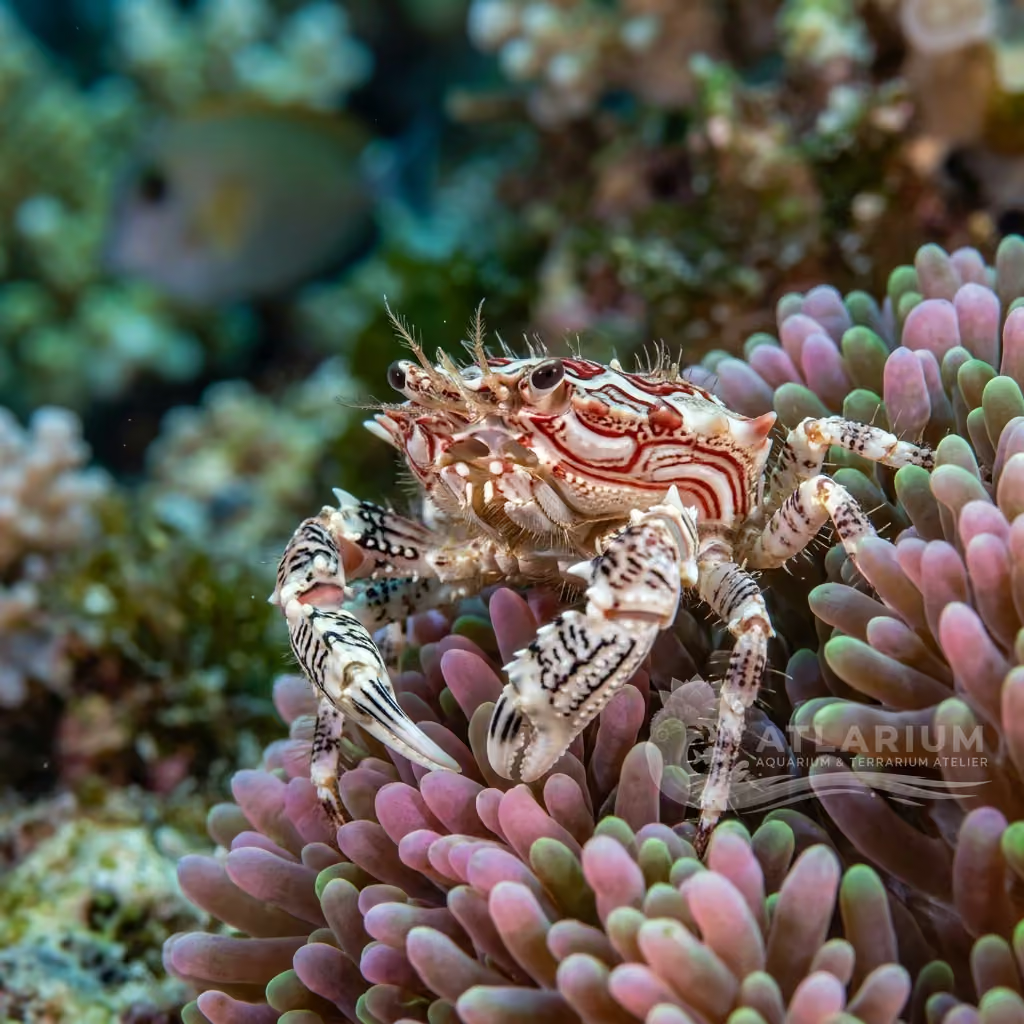
Taxonomy: Scientifically classified within the Majidae (Spider Crab) family, they are a small, robust, and highly adapted crab. Fully mature adults reach a carapace (shell) width of 3.0 to 4.0 centimeters (1.2-1.6 inches). They possess a heavily textured, nodular, and incredibly tough carapace. Their defining morphological feature is their front chelipeds (claws), which end in highly specialized, flat, spoon-shaped tips explicitly designed for scraping stubborn algae off porous rocks.
Social Behavior: They are nocturnal, cryptic, and intensely solitary scavengers. During the daylight hours, they wedge themselves securely into the darkest, tightest crevices of the live rock, relying on their green camouflage to remain invisible. When the tank lights power off, they emerge to tirelessly scour the reef for food. They are highly territorial toward other Emerald Crabs; if placed in a small tank together, they will engage in aggressive, often lethal combat over hiding spots.
Coloration and Sexual Dimorphism: Sexual dimorphism is distinct upon close inspection: mature males grow significantly larger than females and possess massively oversized, bulbous claws compared to the female's slender claws. Their coloration is iconic and designed for absolute camouflage amongst algae. The entire carapace, legs, and claws are a deep, highly saturated emerald-green. The joints of the legs are often marked with tiny, faint yellow or white bands. Their eyes are strikingly bright blue or white.

Care, breeding and tankmates
Tank Setup: The aquarium architecture MUST accommodate their need for dark, tight hiding spaces. A minimum 75-liter (20-gallon) marine aquarium is recommended.
CRITICAL REQUIREMENT: The tank MUST feature highly porous live rock with deep, shadowed crevices. If an Emerald Crab cannot find a secure hole to back into, it will suffer lethal stress. They are excellent climbers and will scale the highest rocks; a tight-fitting lid or mesh screen is highly recommended to prevent escape.
Diet and Feeding: They are heavily relied upon as biological pest controllers.
CRITICAL FEATURE: They are one of the ONLY organisms in the marine hobby that will actively seek out, puncture, and consume the dreaded *Valonia* (Bubble Algae). While they are excellent herbivores, they are fundamentally opportunistic omnivores.
CRITICAL WARNING: If the tank runs out of algae and they begin to starve, they WILL go "rogue" and start ripping apart fleshy LPS corals or hunting slow, sleeping fish.
Water Quality: As marine invertebrates, they are highly sensitive to water chemistry fluctuations. They demand stable tropical heat (24-27°C / 75-81°F). Specific gravity (salinity) MUST be maintained precisely between 1.023 and 1.025. They require hard, highly alkaline water (pH 8.1 - 8.4) with flawless Calcium (400-450 ppm) and Magnesium levels to successfully molt their thick, heavy exoskeletons. Rapid changes in salinity or pH during acclimation will cause instantaneous, lethal osmotic shock.
Compatibility and Tankmates: Compatibility requires careful observation. They are widely considered "reef-safe WITH CAUTION." While 95% of Emerald Crabs will peacefully eat algae, a starving or massively overgrown male Emerald Crab can become a predatory menace. They are safe with most peaceful fish (Clownfish, Tangs).
CRITICAL WARNING: They MUST NEVER be housed with large predatory fish (Triggerfish, Pufferfish, Hawkfish) that are biologically designed to crush and eat crabs.
Aquarium Breeding: Breeding the Emerald Crab in captivity is extremely difficult and rarely accomplished by home hobbyists. Mating occurs shortly after the female molts, while her shell is still soft. The female will carry a large mass of bright orange eggs securely tucked under her abdominal flap. She releases thousands of microscopic, pelagic larvae into the water column at night. Rearing these tiny zoea larvae through their complex planktonic stages requires specialized rotifer cultures.
Risks and Diseases:
CRITICAL TOXICITY WARNING: Like all crustaceans, they are immediately and fatally hypersensitive to COPPER (Cu) and heavy metals. They will die instantly in tanks treated with copper medications. The second major risk is death during the molting process due to low Calcium or Iodine levels. The third risk is the crab "going rogue"; if you observe an Emerald Crab actively ripping polyps out of your Acans or Zoanthids, it must be permanently removed to the sump.

Geographic origin and distribution
The Emerald Crab (*Mithraculus sculptus*) is a highly utilitarian, heavily armored marine decapod crustacean natively endemic to the warm, shallow reef flats, seagrass beds, and rubble zones of the Western Atlantic Ocean, the Caribbean Sea, and the Gulf of Mexico. Their natural biotope is defined by expansive stretches of complex coral rubble and macroalgae beds, where they spend their lives deeply wedged into tight crevices, emerging mainly at night to scavenge.
Origin
Tropical oceans and reefsCentral America and Caribbean

Invertebrate profile
- Diet
- Carnivore
- Omnivorous, primarily herbivorous. Excellent for controlling bubble algae (Valonia) and hair algae in marine aquariums.
- Ecological role
- Scavenger
- Serves as part of the clean-up crew in reef tanks, reaching into crevices to eat nuisance algae.
- Adult size
- 6 cm
- Jump risk
- Yes
- Low risk. Will climb rockwork but generally stays fully submerged.
- Shock sensitivity
- High
- Requires careful drip acclimation. Sensitive to fluctuations in salinity, pH, and temperature.
- Calcium and minerals
- Medium
- Requires proper calcium, alkalinity, and magnesium levels for successful molting and exoskeleton growth.
- Molting
- Yes
- Needs iodine supplementation and a stable environment to molt safely. Should not be disturbed during molting.
- Reproduction
- Oviparous
- Rarely breeds in captivity. Larval stages require specific planktonic foods to survive.
- Compatibility & tankmates
- Verify
- Reef safe with caution. Usually peaceful, but large individuals may opportunistically prey on small fish or other invertebrates if underfed.

Image gallery
Licensed images linked to the species or, when marked, to the closest representative taxon.

Related species
Recommendations grouped by close relatives, companion choices, and similar care.