Sally Lightfoot Crab
Percnon gibbesi
Flat and extremely fast marine crab, formidable consumer of nuisance algae in marine systems, completely reef-safe. Geographical Origin and Habitat: Percnon gibbesi is native to the warm...
Water Temperature
24 - 28 °C
pH Value
8.1 - 8.4
Water type
Marine
Invertebrate type
Crab
Adult size
8 cm
Minimum group
>= 1
Ecological role
Scavenger
Copper sensitivity
High

Species description
Geographical Origin and Habitat: Percnon gibbesi is native to the warm waters of the tropical Atlantic Ocean (from Florida to Brazil and West Africa) and the eastern Pacific. It has become an invasive species in the Mediterranean Sea. It inhabits shallow intertidal zones, living among wave-swept rocks where it retreats rapidly.
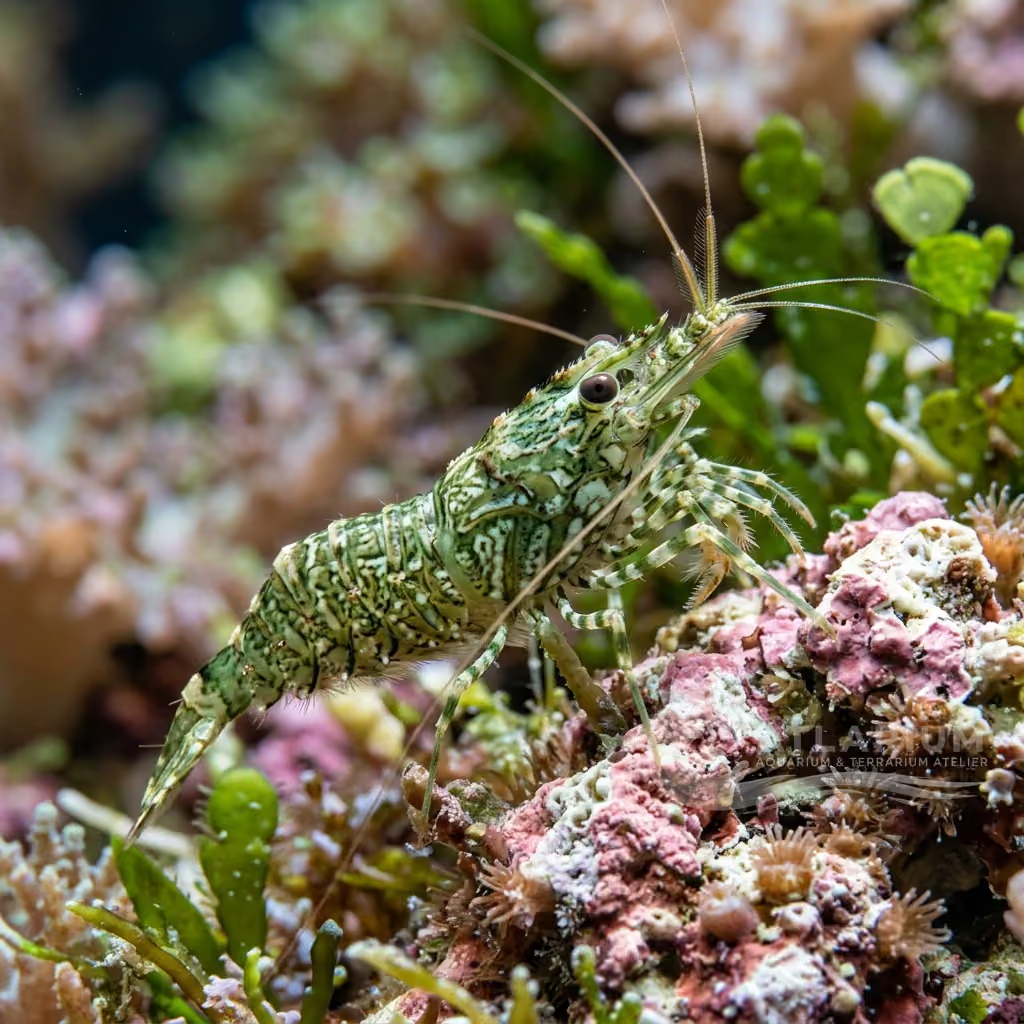
Taxonomy: It belongs to the Plagusiidae family. It features an extremely flat, disc-shaped carapace that allows it to squeeze into very narrow crevices in rocks. The maximum carapace size is about 3-4 cm in diameter. The legs are long, thin, and equipped with terminal climbing spines.
Social Behavior: It is a very active, frantic, and extremely fast-moving crab. It exhibits territorial behavior toward conspecifics of the same sex, so it is recommended to keep single specimens or mated pairs. It is usually peaceful toward fish and corals.
Coloration and Sexual Dimorphism: The base coloration is greenish-brown with a characteristic bright yellow or green longitudinal line on the back and golden rings on the legs. Sexual dimorphism is visible by observing the claws: adult males have significantly larger and more robust claws than females.

Care, breeding and tankmates
Tank Setup: Requires a marine aquarium of at least 100 liters rich in live rock. The rocks must be arranged to provide narrow horizontal crevices and natural shelters where the crab can slide to hide. The stability of the rockwork is fundamental.
Diet and Feeding: It is a voracious herbivorous algivore. It feeds mainly on green filamentous algae, microalgae, and organic detritus. It is excellent for keeping the tank clean of nuisance algae. It should be supplemented with dried fish foods based on algae, Nori seaweed sheets, and vegetable pellet food.
Water Quality: Standard and stable marine parameters: temperature 22-26°C, density 1.023-1.025, pH 8.1-8.4, low nitrates and phosphates. It requires adequate levels of calcium and magnesium for the molting of the exoskeleton. As with all crustaceans, copper is lethal.
Compatibility and Tankmates: Completely reef-safe, it does not damage corals or anemones. It can coexist with medium and small reef fish.
WARNING: If severely underfed, it might annoy small sessile invertebrates or try to catch small sleeping fish, though this is rare.
Aquarium Breeding: Breeding in the aquarium is extremely rare and complex. The female broods the eggs under her abdomen and then releases planktonic larvae that go through numerous developmental stages in the water column, inevitably being filtered out in traditional aquariums.
Risks and Diseases: The main risk is escaping from the tank: thanks to its agility and minimum thickness, it can climb pipes or exit through open crevices. Health-wise, it suffers from incomplete molts in the absence of iodine or when subjected to severe stress from harassing fish.

Geographic origin and distribution
Percnon gibbesi is native to the warm waters of the tropical Atlantic Ocean (from Florida to Brazil and West Africa) and the eastern Pacific. It has become an invasive species in the Mediterranean Sea. It inhabits shallow intertidal zones, living among wave-swept rocks where it retreats rapidly.
Origin
Cosmopolitan or introducedExtra-Amazon South AmericaNorth AmericaAfrica and MadagascarEurope, Mediterranean, and West AsiaTropical oceans and reefs

Invertebrate profile
- Diet
- Omnivore
- They are aggressive herbivores as juveniles, constantly tearing at hair algae, bubble algae, and detritus on the live rock. As they grow larger, they can become more opportunistic and omnivorous, occasionally scavenging for meaty foods. Their diet must be supplemented with seaweed or sinking pellets if algae in the tank becomes scarce.
- Ecological role
- Scavenger
- The Sally Lightfoot Crab serves as an exceptional utility animal for controlling nuisance algae on rockwork. Their flat shape allows them to reach deep into crevices where other herbivores cannot access. By keeping the rocks clean, they promote the healthy growth of beneficial coralline algae and corals.
- Life expectancy
- 3-5 years
- Adult size
- 8 cm
- Jump risk
- Yes
- Sally Lightfoot Crabs are notoriously fast and adept at climbing cables, pipes, and silicone corners. They will absolutely escape an open-topped aquarium, often found dried out on the floor several feet away. A completely sealed, tight-fitting lid is absolutely mandatory when keeping this species.
- Shock sensitivity
- Medium
- They require standard, stable marine water parameters and are sensitive to sudden swings in salinity or temperature. A careful drip acclimation is necessary to prevent osmotic shock upon introduction. Once acclimated, they are extremely hardy, provided water quality is maintained.
- Calcium and minerals
- High
- Robust calcium, alkalinity, and magnesium levels are essential for this crab to successfully build its exoskeleton. Proper reef chemistry supports their frequent molting process as they grow quite rapidly. Inadequate minerals will result in failed molts, leaving the crab vulnerable or leading to immediate death.
- Molting
- Regular
- They molt regularly, shedding an exact, translucent replica of themselves that often startles aquarists who mistake it for a dead crab. During the molting phase, they must hide deep within the rockwork until their new shell fully hardens. Leaving the shed exoskeleton in the tank allows them or others to recycle the calcium.
- Reproduction
- Oviparous
- Captive breeding of Percnon gibbesi is virtually impossible for the home aquarist. They release microscopic planktonic larvae into the water column which require vastly complex feeding and tidal conditions to develop. In an aquarium, these larvae simply become food for corals and fish.
- Compatibility & tankmates
- Reef safe with caution
- While generally reef-safe and excellent cleaners when small, large adults can become aggressive and opportunistic. Fully grown specimens have been known to hunt small sleeping fish or attack other invertebrates if underfed. They should be monitored closely as they grow and housed with appropriately sized, active tankmates.

Related species
Recommendations grouped by close relatives, companion choices, and similar care.