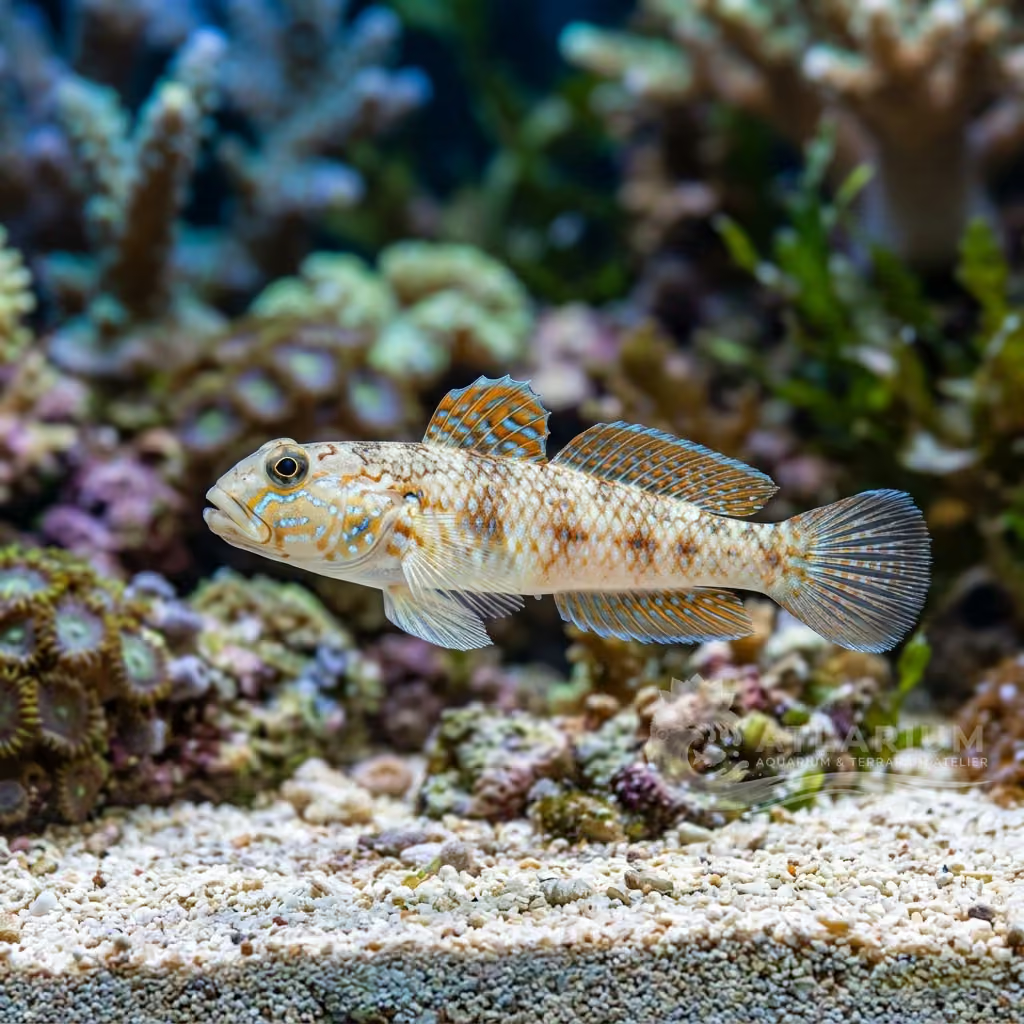
Longsnout Butterflyfish
Prognathodes aculeatus
A relatively hardy and adaptable Western Atlantic butterflyfish, renowned for its elongated snout and striking golden-orange coloration.
Water Temperature
22 - 27 °C
pH Value
8.1 - 8.4
Water type
Marine
Tank level
All levels
Adult size
10 cm
Minimum tank volume
>= 150 L
Minimum group
>= 1
KH
8 - 12 dKH

Species description
Geographical Origin and Habitat: Widespread in the tropical Western Atlantic, from southern Florida and the Gulf of Mexico through the Caribbean Sea down to Venezuela. Commonly found on coral reefs and steep rocky slopes at depths of 1 to 100 meters.
Taxonomy and Morphology: Member of the family Chaetodontidae. Features an elongated snout (shorter than Forcipiger) and a rounded, compressed body. Reaches a modest maximum size of about 8–10 cm, making it well-suited for home aquariums.
Social Behavior: Primarily solitary or found in stable pairs. Possesses a peaceful temperament, generally ignoring other tankmates, though it may show aggression toward conspecifics in smaller tanks.
Coloration and Sexual Dimorphism: Body is silvery-white anteriorly, transitioning to bright golden-orange on the posterior half and dorsal fins. A vertical black bar runs through the eye. No sexual dimorphism is present.

Care, breeding and tankmates
Aquarium Setup: Demands an aquarium of at least 150 liters with plenty of live rock arranged to create caves, archways, and hiding spots. A secure lid is recommended to prevent accidental jumps.
Diet and Feeding: Carnivore. Naturally feeds on small invertebrates, mollusk eggs, and urchin tube feet. In captivity, it readily accepts frozen mysis, brine shrimp, and finely chopped seafood, and can adapt to high-quality pellets.
Water Quality: Requires stable marine parameters. Temperature 22–27°C, pH 8.1–8.4, salinity SG 1.020–1.025, GH 15–25, and KH 8–12. Good filtration and active protein skimming are essential.
Compatibility and Cohabitation: Highly peaceful. One of the safest butterflyfishes for stony coral reefs (reef-safe with caution), but it will likely eat feather dusters, small tubeworms, and occasionally zoanthids.
Aquarium Breeding: Undocumented in captivity due to a complex pelagic larval phase. In nature, they form monogamous pairs and broadcast spawn.
Risks and Diseases: Adapts relatively quickly if introduced healthy. Can contract marine ich (Cryptocaryon) during acclimation. Avoid housing with aggressive tankmates that may bully it.

Geographic origin and distribution
Widespread in the tropical Western Atlantic, from southern Florida and the Gulf of Mexico through the Caribbean Sea down to Venezuela. Commonly found on coral reefs and steep rocky slopes at depths of 1 to 100 meters.
Origin
Selective breeding and cultivarsExtra-Amazon South AmericaCentral America and CaribbeanNorth AmericaTropical oceans and reefs

Fish profile
- Temperament
- Peaceful
- Longsnout butterflyfish possess a curious and relatively peaceful temperament when interacting with distinctly different species. They can, however, be quite shy initially and require time and a stress-free environment to settle in. Once acclimated, they are active swimmers and diligent foragers that constantly inspect their surroundings. They show intense, often lethal aggression toward other butterflyfish of the same or similar species.
- Diet
- Carnivore
- In nature, they use their elongated snouts to extract small invertebrates and crustacean prey from deep crevices in the reef. In captivity, they can be somewhat finicky initially and require a diverse offering of meaty foods to entice feeding. Good choices include fortified mysis shrimp, finely chopped seafood, and live blackworms. Providing live rock for them to graze on continuously will help supplement their diet and ease the transition to prepared foods.
- Life expectancy
- 5-10 years
- Adult size
- 10 cm
- Sex ratio
- Flexible
- There are no distinguishable sexual dimorphisms between male and female Longsnout butterflyfish. They are generally solitary in the wild or found in mated pairs. In a standard home aquarium, it is highly recommended to keep only a single specimen to avoid severe conspecific aggression. Unless a confirmed mated pair is acquired, attempting to keep multiple individuals together usually results in fatal territorial disputes.
- Feeding frequency
- 2-3 times daily
- Because of their active nature and small stomachs, they need to be fed small portions multiple times throughout the day. Offering food three to four times daily is ideal to maintain their body weight and overall health. Grazing on mature live rock provides essential supplemental nutrition between active feedings. Failure to feed them frequently enough can lead to severe weight loss and compromised immunity.
- Bioload
- Medium
- The Longsnout butterflyfish produces a moderate bioload that is typical for a marine fish of its size and activity level. Due to their specific dietary needs, uneaten food can sometimes contribute to waste buildup if not managed carefully. An efficient protein skimmer and mature live rock are essential for processing their biological output. Consistent water parameters and routine water changes are necessary to keep the system pristine and prevent nitrate accumulation.
- Flow
- Strong
- They thrive in aquariums with moderate to strong, turbulent water flow that simulates the energetic reef environments they inhabit in the wild. Varied and random currents help keep detritus suspended while providing excellent oxygenation. Wavemakers or alternating powerheads are highly effective in replicating these natural oceanic conditions. Adequate flow also encourages their natural foraging behaviors along the rockwork.
- Jump risk
- Yes
- Prognathodes aculeatus possesses a moderate risk of jumping, especially during the initial acclimation period or when startled by aggressive tank mates. A secure, tight-fitting mesh lid or canopy should be installed to prevent them from jumping out of the aquarium. They are particularly skittish when the tank lights turn on or off suddenly. Maintaining a peaceful community and providing plenty of hiding spaces within the rockwork minimizes their flight response.
- Reproduction
- Oviparous
- Breeding the Longsnout butterflyfish in a home aquarium is exceedingly rare and has rarely, if ever, been documented. They are pelagic spawners, releasing their eggs and sperm into the water column where they drift with the ocean currents. The resulting larvae undergo a prolonged pelagic stage that is almost impossible to replicate or sustain in captivity. Consequently, nearly all specimens available in the trade are wild-caught.
- Compatibility & tankmates
- With caution
- This species is generally peaceful towards other tank mates but can be aggressively territorial towards conspecifics or similar-looking butterflyfish. They are considered one of the more reef-safe butterflyfish, though they may occasionally nip at tube worms or small fleshy polyps. They fare best when housed with peaceful to semi-aggressive fish like tangs, wrasses, and dwarf angels. It is highly recommended to introduce them only to established tanks with ample hiding spots.
- Tank level
- All levels
- This species is highly active and uses all levels of the water column, continuously patrolling the rockwork for food. They tend to weave in and out of caves, overhangs, and crevices while hunting for small invertebrates. At night, they seek refuge deep within the live rock structure to sleep safely. Providing a complex aquascape with plenty of vertical and horizontal swimming space is crucial for their well-being.

Scientific Parameters & Models
FishBase
Window to the official scientific data of the species
FishBase v25.04Data synced on: 06/15/2026
- Trophic level
- 3.4 ± 0.2 se
- Resilience
- High (less than 15 months)
- Phylogenetic uniqueness (PD50)
- 0.5001
- Bayesian Length-Weight
- a = 0.02239, b = 3.01
- VulnerabilityLow vulnerability (10 / 100)

Related species
Recommendations grouped by close relatives, companion choices, and similar care.