Foureye butterflyfish
Chaetodon capistratus
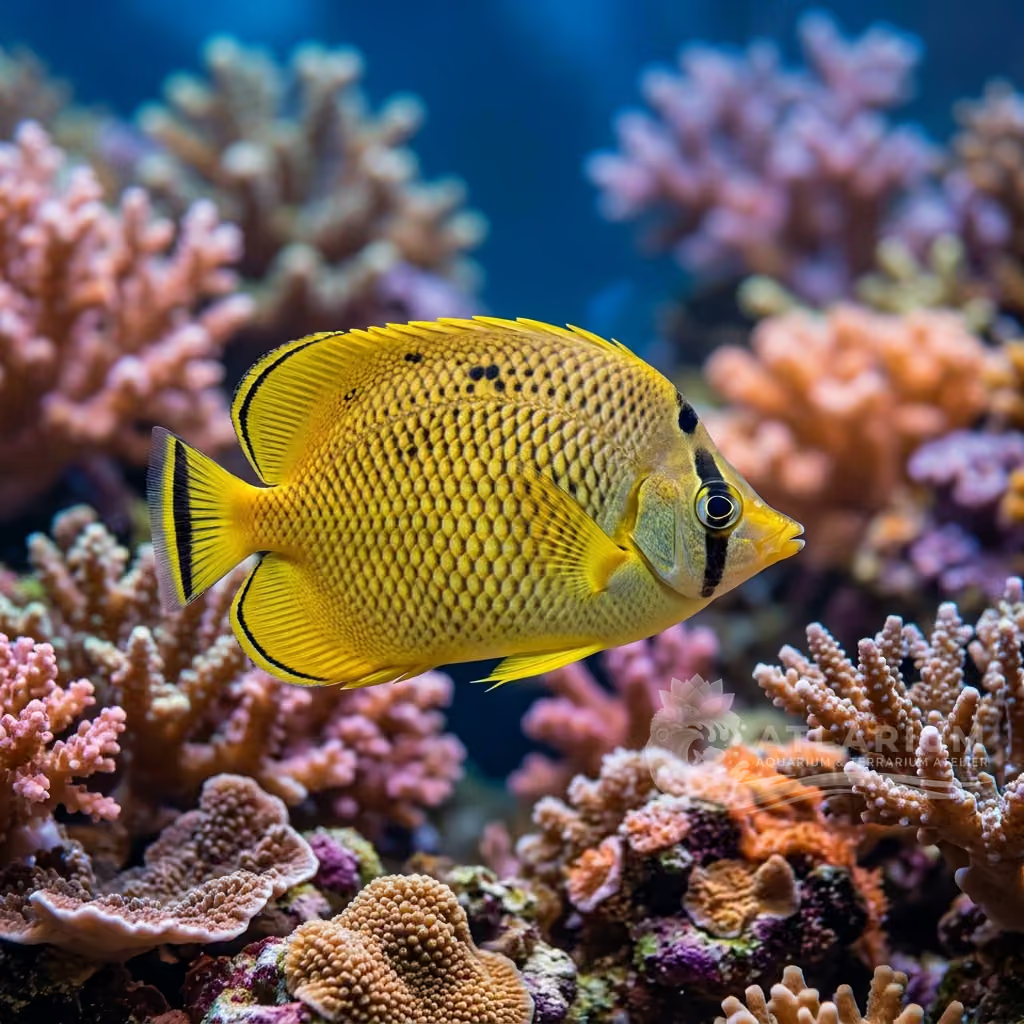
The foureye butterflyfish is a Western Atlantic species famous for its large false eyespot near the tail, which serves to confuse predators in the wild.
Water Temperature
24 - 27 °C
pH Value
8.1 - 8.4
Water type
Marine
Tank level
Bottom and middle
Adult size
15 cm
Minimum tank volume
>= 280 L
Minimum group
>= 1
KH
8 - 12 dKH

Species description
Geographical Origin and Habitat:
This species is native to the warm waters of the Western Atlantic Ocean, ranging from the coast of North Carolina (USA) and Bermuda down to southern Brazil, including the Gulf of Mexico and the entire Caribbean Sea. It commonly inhabits shallow coral reefs, seagrass beds, and rocky areas at depths ranging from 2 to 20 meters, frequently found in habitats rich in gorgonians and stony corals.
Taxonomy and Morphology:
Belonging to the family Chaetodontidae, Chaetodon capistratus features a disk-shaped, laterally compressed body with a pointed snout and a small terminal mouth containing brush-like teeth. Adults can grow to a maximum total length of approximately 15 centimeters. Its body shape is highly adapted for executing quick maneuvers within complex reef structures.
Social Behavior:
It is a diurnal and highly active swimmer. Foureye butterflyfish are known for forming long-term, stable monogamous pairs that forage together and defend a feeding territory. Juveniles are solitary and show territorial behavior in shallow micro-habitats such as tide pools or seagrass beds to avoid predators.
Coloration and Sexual Dimorphism:
The body is light gray to silvery-white with dark lines forming a chevron pattern on the flanks. Its most distinctive feature is a large black eyespot ringed in white near the tail, which mimics a real eye to confuse predators, while the actual eye is camouflaged by a dark vertical band. There is no visible external sexual dimorphism.

Care, breeding and tankmates
Aquarium Setup:
Requires a mature marine aquarium of at least 350 liters. The setup must include plenty of live rock arranged to create caves, swim-throughs, and shaded areas for shelter, while leaving a large open space for active swimming. Efficient protein skimming and moderate water flow are essential to replicate its natural environment.
Diet and Feeding:
An omnivore feeding on coral polyps, polychaete worms, tunicates, and small crustaceans. In captivity, it can be a picky feeder initially. Offer a varied diet of high-quality frozen foods like mysis shrimp, brine shrimp, and chopped clams, along with marine algae and spirulina-rich preparations. Over time, it may accept high-quality pellets.
Water Quality:
Demands clean and stable marine water parameters: temperature between 24°C and 26°C, pH range from 8.1 to 8.4, specific gravity (SG) between 1.020 to 1.025, and carbonate hardness (KH) of 8 to 12 dKH. Keep ammonia and nitrite at zero, and maintain nitrate levels below 15 ppm with regular water changes.
Compatibility and Cohabitation:
Not considered reef safe, as it will nip at stony corals, zoanthids, and soft corals. It is highly compatible with other peaceful marine species such as wrasses, tangs, clownfish, and dartfish. Do not house with aggressive or fast-feeding tankmates that might outcompete it for food or stress it.
Aquarium Breeding:
Breeding in the home aquarium has not been achieved. They are pelagic broadcast spawners, releasing gametes into open water where eggs float and drift with currents. Rearing the delicate planktonic larvae requires specific, microscopic live prey that is extremely difficult to culture in closed home systems.
Risks and Diseases:
Susceptible to common marine ectoparasites like Cryptocaryon irritans (marine ich) and Oodinium (velvet). Stress from transport, poor water quality, or inappropriate tankmates can easily trigger infections. A quarantine protocol is highly recommended before introducing this species to the main display tank.

Geographic origin and distribution
This species is native to the warm waters of the Western Atlantic Ocean, ranging from the coast of North Carolina (USA) and Bermuda down to southern Brazil, including the Gulf of Mexico and the entire Caribbean Sea. It commonly inhabits shallow coral reefs, seagrass beds, and rocky areas at depths ranging from 2 to 20 meters, frequently found in habitats rich in gorgonians and stony corals.
Origin
Tropical oceans and reefsExtra-Amazon South AmericaCentral America and CaribbeanNorth America

Fish profile
- Temperament
- Aggressive
- Foureye Butterflyfish are generally peaceful towards other non-related fish species in the aquarium. However, they can show moderate territorial aggression toward conspecifics or similar-looking butterflyfish. They are active, curious, and spend their day foraging, making them a lively addition to the tank. Their peaceful nature makes them vulnerable to bullying by highly aggressive tankmates.
- Diet
- Carnivore
- In the wild, this species is a generalist carnivore feeding on coral polyps, zoantharians, polychaete worms, and tunicates. In captivity, they are notoriously difficult to feed and may initially refuse standard aquarium fare. Success usually requires offering live foods like brine shrimp or blackworms, followed by high-quality frozen mysis and specialized gel foods. Because they feed on coral polyps, they are not considered reef-safe.
- Life expectancy
- 7-10 years
- Adult size
- 15 cm
- Sex ratio
- 1:1 ratio
- In their natural habitat, Foureye Butterflyfish form strong monogamous pair bonds and are usually observed swimming in pairs. In captivity, they are best kept as a single individual or as a established male-female pair. Attempting to house multiple specimens in a small aquarium without a formed pair can lead to aggressive territorial disputes. A 1:1 ratio is recommended if you can acquire a confirmed compatible pair.
- Feeding frequency
- Twice daily
- Due to their high activity levels and specialized metabolism, Foureye Butterflyfish should be fed multiple times a day. Feeding them small portions two to three times daily is recommended to ensure they receive adequate nutrition. Offering a variety of foods at each feeding will encourage their natural foraging behavior and support their immune system. Automated feeders can help, but manual feeding of frozen and fresh foods is preferred.
- Bioload
- Medium
- Chaetodon capistratus is a medium-sized marine fish that requires a robust filtration system to manage its biological waste. As an active feeder that consumes a variety of organic matter, a well-maintained protein skimmer and regular water changes are essential to keep nutrient levels low. The bioload is considered medium to high depending on the tank volume and stocking density. Efficient mechanical and biological filtration will help preserve the pristine water quality this species needs to thrive.
- Flow
- Strong
- This species thrives in environments with moderate to strong water flow, which mimics their natural coral reef habitats. Good water movement ensures adequate oxygenation and helps keep the water clean by circulating waste. The flow should not be so intense that it prevents the fish from swimming comfortably or resting. Designing areas with lower flow among the rockwork provides them with essential resting spots.
- Jump risk
- No
- Reproduction
- Oviparous
- Chaetodon capistratus is an oviparous, pelagic broadcast spawner that forms monogamous pairs. During courtship, the pair performs a distinct circling dance before releasing thousands of tiny eggs into the water column. There are no reports of successful captive breeding in home aquaria due to the complex pelagic larval stage. In captivity, their reproductive behavior is rarely observed beyond basic courtship displays.
- Compatibility & tankmates
- Not reef safe
- They are highly compatible with other peaceful marine species such as tangs, dwarf angels, wrasses, and clownfish. They should not be housed with aggressive fish like triggerfish or large groupers that might intimidate them. Additionally, because they naturally feed on sessile invertebrates, they are incompatible with most stony corals, sea anemones, and ornamental tube worms. They are best suited for a fish-only-with-live-rock (FOWLR) aquarium setup.
- Tank level
- Middle/Bottom
- This species is highly active and swims primarily in the middle and bottom levels of the aquarium, where it searches for food along the rockwork. They spend most of their time hovering near the substrate, investigating crevices for small invertebrates and coral polyps. Providing ample open swimming space combined with complex rock formations allows them to explore their preferred depth zones comfortably. They rarely venture to the very top unless feeding.

Scientific Parameters & Models
FishBase
Window to the official scientific data of the species
FishBase v25.04Data synced on: 06/15/2026
- Trophic level
- 3.4 ± 0 se
- Resilience
- High (less than 15 months)
- Phylogenetic uniqueness (PD50)
- 0.5
- Bayesian Length-Weight
- a = 0.0257, b = 3.09
- VulnerabilityLow vulnerability (10 / 100)

Related species
Recommendations grouped by close relatives, companion choices, and similar care.