Threadfin Butterflyfish
Chaetodon auriga
The Polyp Vacuum (9 inches / 23 cm). A stunning, highly active fish that will mercilessly graze on SPS and LPS corals until nothing but white skeleton remains.
Water Temperature
24 - 28 °C
pH Value
8.1 - 8.4
Water type
Marine
Tank level
All levels
Adult size
20 cm
Minimum tank volume
>= 180 L
Minimum group
>= 1
KH
4 - 6 dKH

Species description
Geographical Origin and Habitat: Widely distributed in the tropical Indo-Pacific, including the eastern coasts of Africa, the Red Sea, and up to Hawaii. Frequents sandy coral lagoons, mixed rubble reefs, but also exposed barrier areas up to 35 meters in depth.
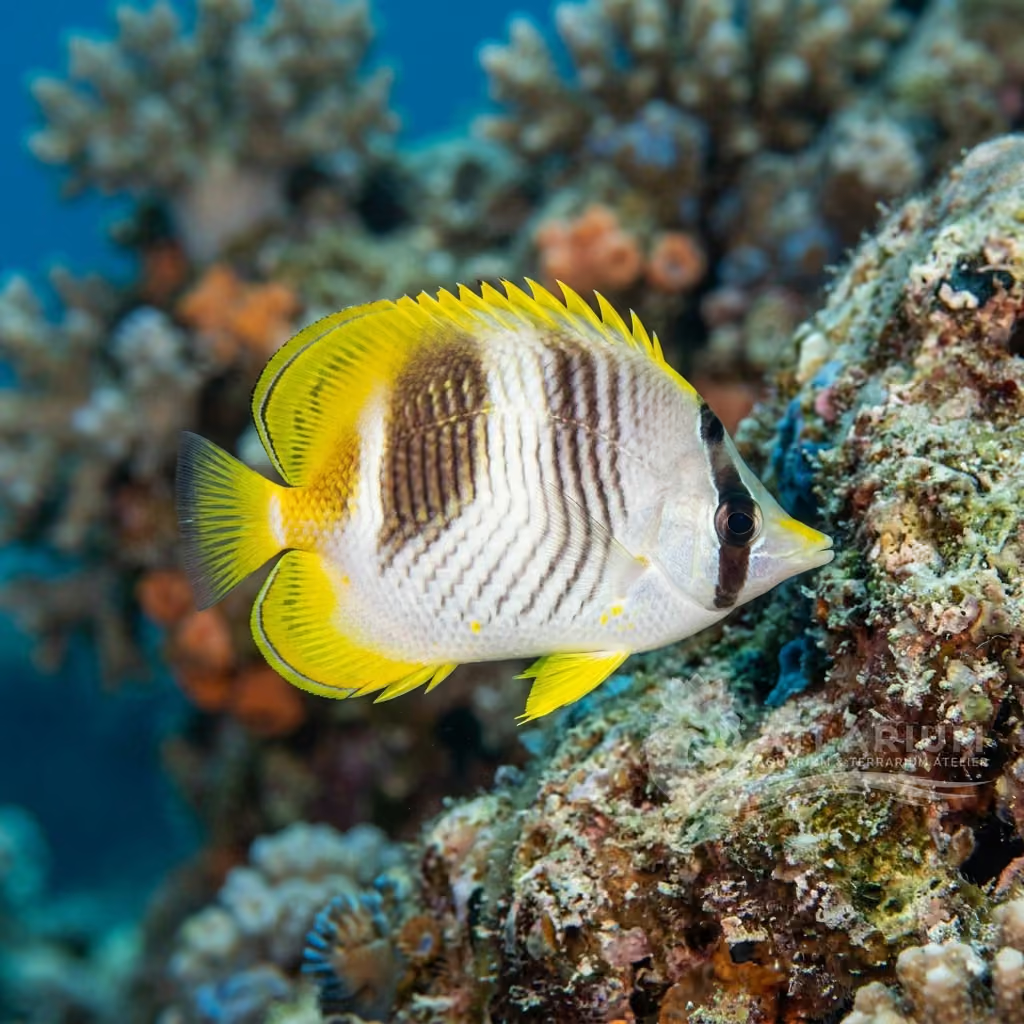
Taxonomy and Morphology: Known as the Threadfin Butterflyfish, family Chaetodontidae. Presents the iconic very flattened disc-shaped body, short tubular snout (for extracting worms from holes), and in adults an unmistakable blackish or yellowish "thread" extending dramatically from the upper rear corner of the dorsal fin. Average size 20 cm (8 inches).
Social Behavior: Placid, tireless swimmer and born explorer. Roams incessantly around the tank, literally inspecting every square millimeter of rock in search of coral polyps and small invertebrates. Lives in pairs or small non-territorial groups, being completely harmless towards other tank inhabitants.
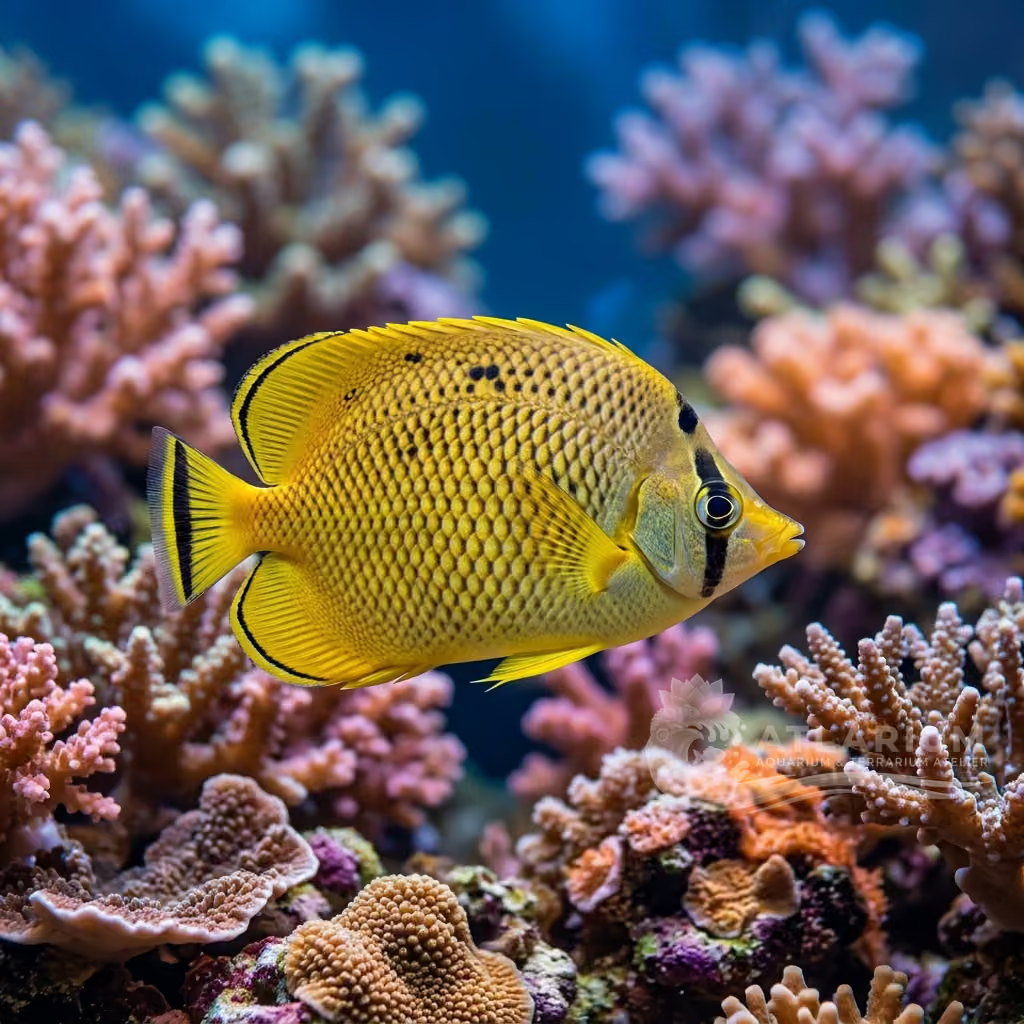
Coloration and Sexual Dimorphism: Bright silvery white in the front half, which fades into intense lemon yellow in the rear half. The body is traced by two sets of thin crossed "chevron" black lines. A vertical black mask over the eye and a black "false eye" eyespot near the caudal filament stand out (to misdirect predators). No dimorphism.

Care, breeding and tankmates
Aquarium Setup: Adult tank of at least 350-400 liters (90-105 gallons), mainly based on bare or dead rockwork with crevices to stick its snout into, and wide swimmable stretches. Loves to swim in open water but never far from shelter. Medium lighting to avoid unwanted algae explosions on the glass.
Diet and Feeding: Omnivore and destroyer of pest anemones. In the wild, it grazes on coral polyps and benthic algae, but ruthlessly devours Aiptasia (pest glass anemones), making it a beloved scavenger. In the aquarium, it easily converts to commercial granular feeds, krill, enriched brine shrimp, and vegetable mixes.
Water Quality: Robust when compared to other butterflyfish. Demands classic marine values: specific gravity 1.021-1.025, pH 8.1-8.4, Temp 24-28°C (75-82°F). Given its placid nature and a protein-rich crustacean diet that pollutes quickly, skimming and water changes must be regular.
Compatibility and Cohabitation: TOTALLY INCOMPATIBLE with a live reef aquarium (Reef Safe: ABSOLUTELY NOT). It would raze any LPS, SPS, and Gorgonian polyps to the ground. Perfect for the classic Fish Only aquarium. Compatible with almost any fish, but insertion with very large Triggerfish that could tear its filament should be avoided.
Aquarium Breeding: Totally unattainable within home walls. Spawning usually occurs in the summer months through the release of spherical pelagic eggs. The larvae present protective bony armor around the skull, which they lose (Tholichthys stage) before settling to the bottom for metamorphosis.
Risks and Diseases: Susceptible to classic marine Ich and "Lymphocystis" (cauliflower-like whitish nodules on the fins induced by stress, not fatal per se but a symptom of poor water quality). Avoid purchasing skeletal specimens that do not eat at the store: they will never recover vital weight.

Geographic origin and distribution
Widely distributed in the tropical Indo-Pacific, including the eastern coasts of Africa, the Red Sea, and up to Hawaii. Frequents sandy coral lagoons, mixed rubble reefs, but also exposed barrier areas up to 35 meters in depth.
Origin
Tropical oceans and reefsAfrica and Madagascar

Fish profile
- Temperament
- Semi-aggressive
- The Threadfin Butterflyfish is generally peaceful toward most tank mates, making it a suitable inhabitant for community marine setups. However, it can show territorial behavior and aggression toward members of its own species or other similar-looking butterflyfishes. It is an active grazer that will spend much of its day picking at rockwork. Its bold nature develops over time as it acclimates to the aquarium environment.
- Diet
- Omnivore
- As an omnivore, Chaetodon auriga requires a varied diet consisting of both meaty foods and plant matter. In the wild, they feed on algae, coral polyps, polychaetes, and small invertebrates. In captivity, they should be offered high-quality frozen foods like mysis shrimp, brine shrimp, and chopped seafood, along with marine-based flakes or pellets containing algae. They are also known to consume pest Aiptasia anemones, which makes them beneficial for biological control.
- Life expectancy
- 5-10 years
- Adult size
- 20 cm
- Sex ratio
- 1:1 ratio
- In the home aquarium, this species is best kept singly unless a confirmed, compatible mated pair can be obtained. Attempting to house multiple individuals of the same sex or similar species will often result in territorial aggression and stress. If you plan to keep a pair, they should be introduced to the aquarium simultaneously to reduce conflict. A very large tank is required if attempting to house a group of these butterflyfish.
- Feeding frequency
- Twice daily
- Due to their active nature and small stomachs, Threadfin Butterflyfish should be fed multiple times per day. Offering small portions two to three times daily helps maintain their energy levels and overall health. Providing foods that allow them to graze naturally, such as marine algae sheets or live rock colonization, is highly beneficial. Consistent feeding schedules prevent malnutrition and reduce stress-induced behaviors.
- Bioload
- Medium to High
- The Threadfin Butterflyfish produces a medium to high biological load due to its relatively large size, active nature, and frequent feeding requirements. To manage this waste effectively, a well-established aquarium with strong biological filtration and an efficient protein skimmer is highly recommended. Regular water changes and monitoring of nitrates and phosphates are essential to keep the water parameters pristine. Proper waste management helps prevent common marine diseases to which this species is susceptible.
- Flow
- Moderate
- Chaetodon auriga needs steady, moderate circulation distributed across the aquarium rather than a narrow, forceful jet. Adult tank of at least 350-400 liters (90-105 gallons), mainly based on bare or dead rockwork with crevices to stick its snout into, and wide swimmable stretches. Loves to swim in open water but never far from shelter. This preserves useful water exchange while retaining calmer shelter for rest and feeding.
- Jump risk
- Yes
- Although not classified as a notorious jumper, this species is fast and energetic, presenting a moderate risk of jumping when startled or during acclimation. A secure, tight-fitting lid or mesh cover is highly recommended to prevent accidental escapes. Startling stimuli, such as sudden lighting changes or aggressive tank mates, can trigger flight behavior. Providing ample hiding spots in the rockwork can help the fish feel secure and minimize the urge to jump.
- Reproduction
- Oviparous
- Breeding the Threadfin Butterflyfish in captivity is exceptionally difficult and rarely achieved by hobbyists. In the wild, they are monogamous broadcast spawners that release pelagic eggs into the water column. While successful larval rearing has been recorded by marine scientists, it requires complex larval feeding regimes and extended pelagic care that is beyond the scope of a standard home aquarium. Consequently, almost all specimens available in the trade are wild-caught.
- Compatibility & tankmates
- Reef safe
- The Threadfin Butterflyfish is compatible with a wide range of active, non-aggressive marine fish of similar size. However, it is not considered reef-safe, as it will actively nip at and consume hard and soft corals, anemones, and small invertebrates. Suitable tank mates include tangs, wrasses, damselfish, and larger clownfish. Overly aggressive species should be avoided to prevent stress and feeding competition.
- Tank level
- All levels
- The Threadfin Butterflyfish is a highly active and agile swimmer that utilizes all levels of the aquarium. It will constantly cruise the tank, darting through live rock in search of food and exploring open swimming spaces. Providing a balanced environment with both open water for swimming and rock structures for shelter is crucial. It is most commonly observed hovering in the middle and upper zones, but will frequently visit the bottom to graze.

Scientific Parameters & Models
FishBase
Window to the official scientific data of the species
FishBase v25.04Data synced on: 06/15/2026
- Trophic level
- 3.7 ± 0.3 se
- Resilience
- High (less than 15 months)
- Phylogenetic uniqueness (PD50)
- 0.5
- Bayesian Length-Weight
- a = 0.0257, b = 2.98
- VulnerabilityLow vulnerability (23 / 100)

Related species
Recommendations grouped by close relatives, companion choices, and similar care.