Black-spotted Butterflyfish
Chaetodon nigropunctatus
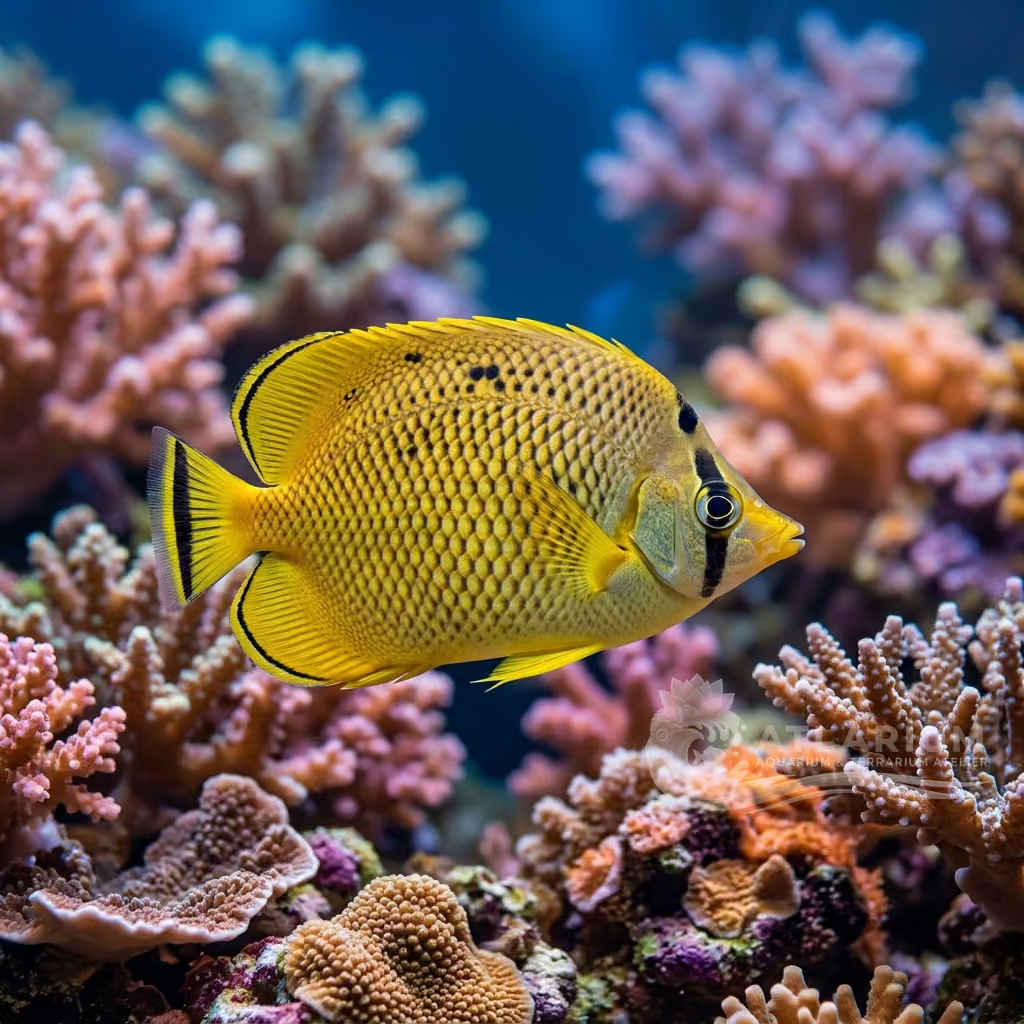
Endemic to the Persian Gulf, this pale olive butterflyfish is adorned with dense black spots and orange margins. As an obligate corallivore, it demands expert care and pristine water.
Water Temperature
22 - 27 °C
pH Value
8.1 - 8.4
Water type
Marine
Tank level
Bottom and middle
Adult size
14 cm
Minimum tank volume
>= 300 L
Minimum group
>= 1

Species description
Geographical Origin and Habitat: Tropical Indian Ocean, endemic to the Persian Gulf, Gulf of Oman, and southern Arabia. Found on shallow coral reefs and rocky areas. Endemic to the Northwestern Indian Ocean, this butterflyfish is restricted to the Persian Gulf and Oman.
Taxonomy and Morphology: Member of the family Chaetodontidae. Features a deep, circular, and highly compressed body. The specific name refers to the dense black spotting. It has a deep, compressed, circular body with a short snout adapted for feeding on hard coral polyps.
Social Behavior: Shy and highly specialized species. Usually found in monogamous pairs or singly. Spends the day grazing on coral polyps in clear, oxygenated waters. Shows a shy and delicate behavior, usually found in pairs or small groups in shallow rocky reef areas.
Coloration and Sexual Dimorphism: Greyish-white to pale olive body. Covered with dense, small black spots. The margins of the dorsal and anal fins are bright orange. The body is dark greyish-brown covered with small dark spots, contrasted by yellow margins on the fins.

Care, breeding and tankmates
Aquarium Setup: Requires a large, well-established reef-style aquarium of at least 300 liters with plenty of high-quality live rock and open swimming areas. A large, quiet aquarium of at least 300 liters with mature live rock is required to reduce stress.
Diet and Feeding: Obligate corallivore. Extremely difficult to feed in captivity as it feeds almost exclusively on live coral polyps. Must be provided with live coral or specialized foods. Extremely difficult to feed as they are obligate corallivores; success requires specialized gel diets or live corals.
Water Quality: Demands pristine marine conditions: temperature 22-27 °C, pH 8.1-8.4, and salinity 1.020-1.025 with strong protein skimming and zero organic waste. Pristine water quality is mandatory, with efficient protein skimming and high oxygenation to maintain health.
Compatibility and Cohabitation: Highly peaceful. Not reef safe as it consumes hard corals. Best housed in large fish-only systems with non-aggressive, quiet tankmates. Not reef-safe; they will feed on most corals. Keep with very peaceful, non-aggressive fish in FOWLR setups.
Aquarium Breeding: Reproduction in home aquariums is undocumented. Spawns pelagic eggs, and the larvae spend weeks drifting in open ocean currents before settling. Captive breeding has not been documented due to the extreme dietary demands and pelagic larval stages.
Risks and Diseases: Very high risk of starvation in captivity. Recommended only for public aquaria or expert hobbyists capable of providing live corals for food. High mortality rate in captivity due to starvation; recommended only for public aquariums or advanced specialists.

Geographic origin and distribution
Tropical Indian Ocean, endemic to the Persian Gulf, Gulf of Oman, and southern Arabia. Found on shallow coral reefs and rocky areas. Endemic to the Northwestern Indian Ocean, this butterflyfish is restricted to the Persian Gulf and Oman.
Origin
Tropical oceans and reefsSouth and Southeast Asia

Fish profile
- Temperament
- Territorial
- This butterflyfish has a generally peaceful temperament towards other non-aggressive marine species. However, they can exhibit territorial behavior towards members of their own species or similarly shaped butterflyfish. They are shy and sensitive, meaning they should not be housed with highly boisterous or aggressive tankmates. Providing plenty of rocky caves will allow them to retreat and feel safe when needed.
- Diet
- Corallivore
- In their natural habitat, these fish are obligate corallivores, feeding almost exclusively on stony coral polyps. This makes their diet in captivity extremely challenging, as they often refuse standard prepared foods. Aquarists must often tempt them with live foods like blackworms, clams on the half-shell, or live coral polyps before transitioning them to mysis or brine shrimp. They are not suitable for reef aquariums as they will quickly destroy coral colonies.
- Life expectancy
- 5-10 years
- Adult size
- 14 cm
- Sex ratio
- 1:1 ratio
- In the wild, the Black-spotted Butterflyfish is commonly found in monogamous pairs or as solitary individuals. For aquarium stocking, it is best kept singly unless a compatible, bonded pair can be acquired. Attempting to house multiple individuals in the same tank can lead to territorial disputes and stress. If a pair is kept, a larger tank with plenty of swimming space and visual barriers is highly recommended.
- Feeding frequency
- Twice daily
- Due to their specialized grazing behavior and high metabolism, they require frequent feedings throughout the day. It is recommended to feed them small portions three to four times daily to ensure they receive adequate nutrition. Continuous access to grazing opportunities, such as live rock or clam shells, can help sustain them between meals. Constant monitoring is necessary to ensure they are actively consuming food and maintaining a healthy weight.
- Bioload
- Medium
- The Black-spotted Butterflyfish has a moderate biological load due to its active nature and necessity for frequent feedings of specialized foods. An efficient filtration system, preferably with a high-capacity protein skimmer, is essential to maintain low nutrient levels. Large aquariums of at least 75 to 100 gallons are recommended to dilute waste and stabilize water quality. Regular water changes and a mature biological filter are necessary to keep this sensitive species healthy.
- Flow
- Strong
- The Black-spotted Butterflyfish thrives in moderate to strong water flow, mimicking the conditions of their native coral reefs. Good water movement is essential as it helps maintain high oxygen levels and clean water quality, which are crucial for their health. Strong currents also simulate their natural environment, encouraging active swimming and natural behaviors. Avoid areas of stagnant water while ensuring there are calmer zones where the fish can rest.
- Jump risk
- No
- Reproduction
- Oviparous
- Reproduction of the Black-spotted Butterflyfish in captivity is exceptionally difficult and has not been reliably achieved. In the wild, they are pelagic spawners that form monogamous pairs and release eggs into the water column. The larvae undergo a unique "tholichthys" stage, characterized by protective bony plates on their heads. The specialized dietary needs of both adults and larvae make captive breeding highly impractical for home aquarists.
- Compatibility & tankmates
- Peaceful
- This species is not reef-safe, as it will readily feed on hard and soft corals, anemones, and other sessile invertebrates. They are compatible with peaceful, non-aggressive tankmates such as small tangs, wrasses, and cardinalfish. Large, aggressive predators or hyperactive fish should be avoided to prevent stress and feeding competition. Keeping them with conspecifics is generally not recommended unless they are a proven mated pair.
- Tank level
- Middle/Bottom
- This species is a reef-associated fish that primarily occupies the bottom and middle zones of the aquarium where rockwork and corals are located. They actively swim through caves and crevices in search of food and shelter. A tank layout with a structured aquascape is ideal to simulate their natural reef habitat. While they may occasionally visit other levels, they rarely spend time near the water surface.

Scientific Parameters & Models
FishBase
Window to the official scientific data of the species
FishBase v25.04Data synced on: 06/15/2026
- Trophic level
- 3.9 ± 0.36 se
- Resilience
- High (less than 15 months)
- Phylogenetic uniqueness (PD50)
- 0.5
- Bayesian Length-Weight
- a = 0.02399, b = 2.98
- VulnerabilityLow vulnerability (10 / 100)

Related species
Recommendations grouped by close relatives, companion choices, and similar care.