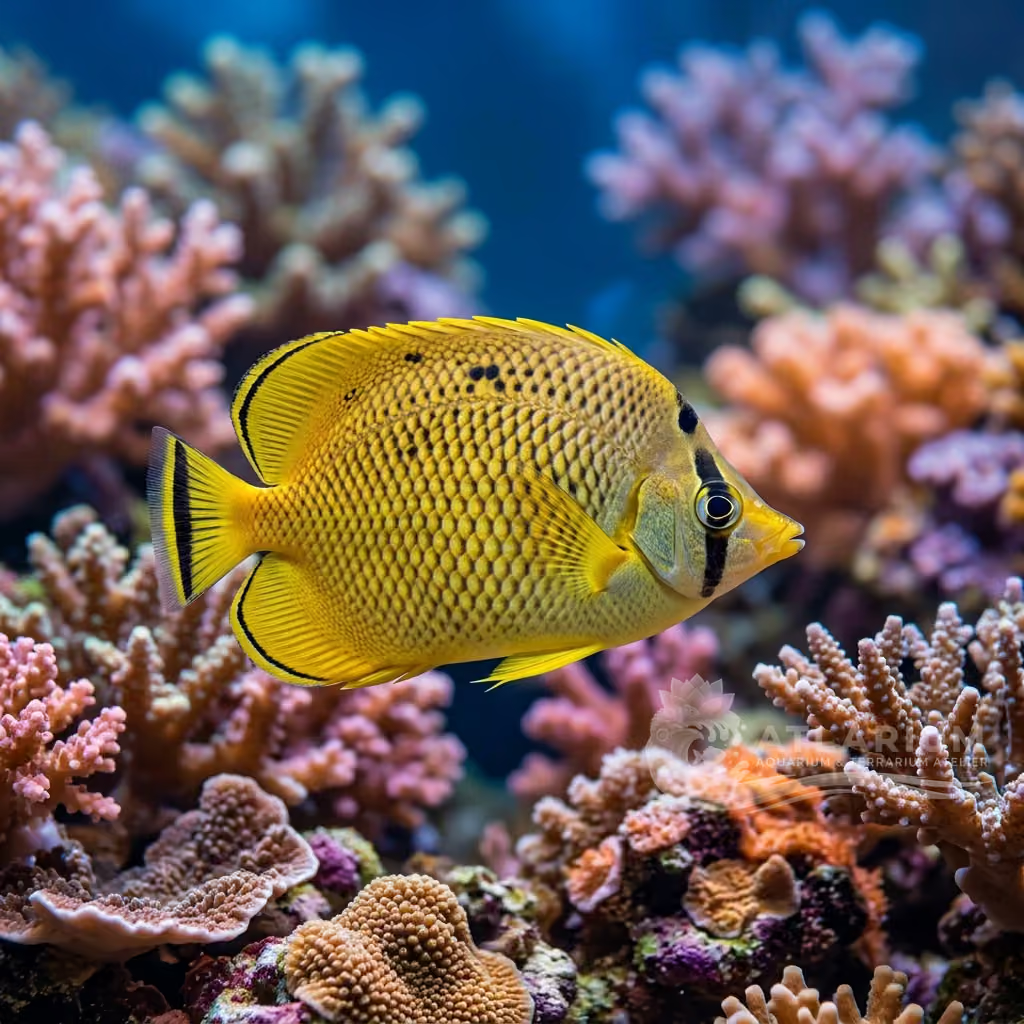
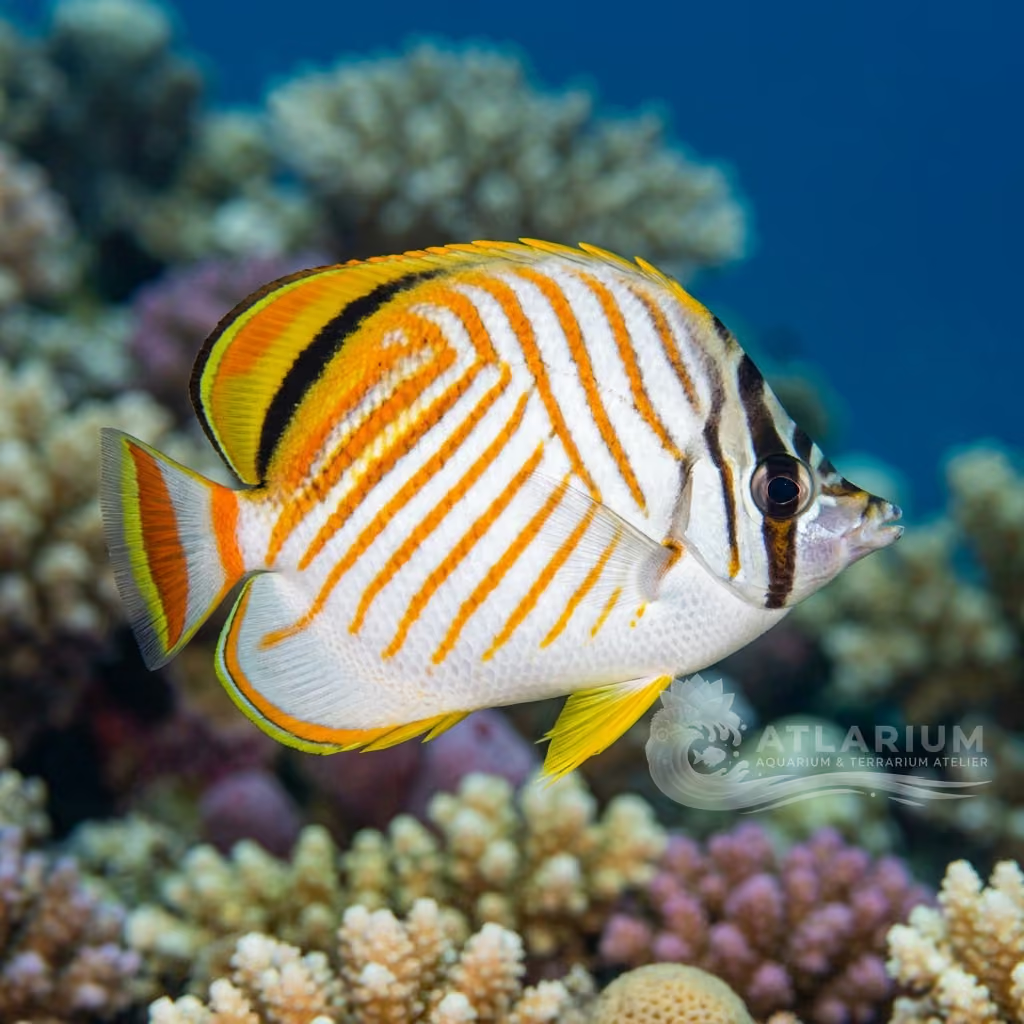
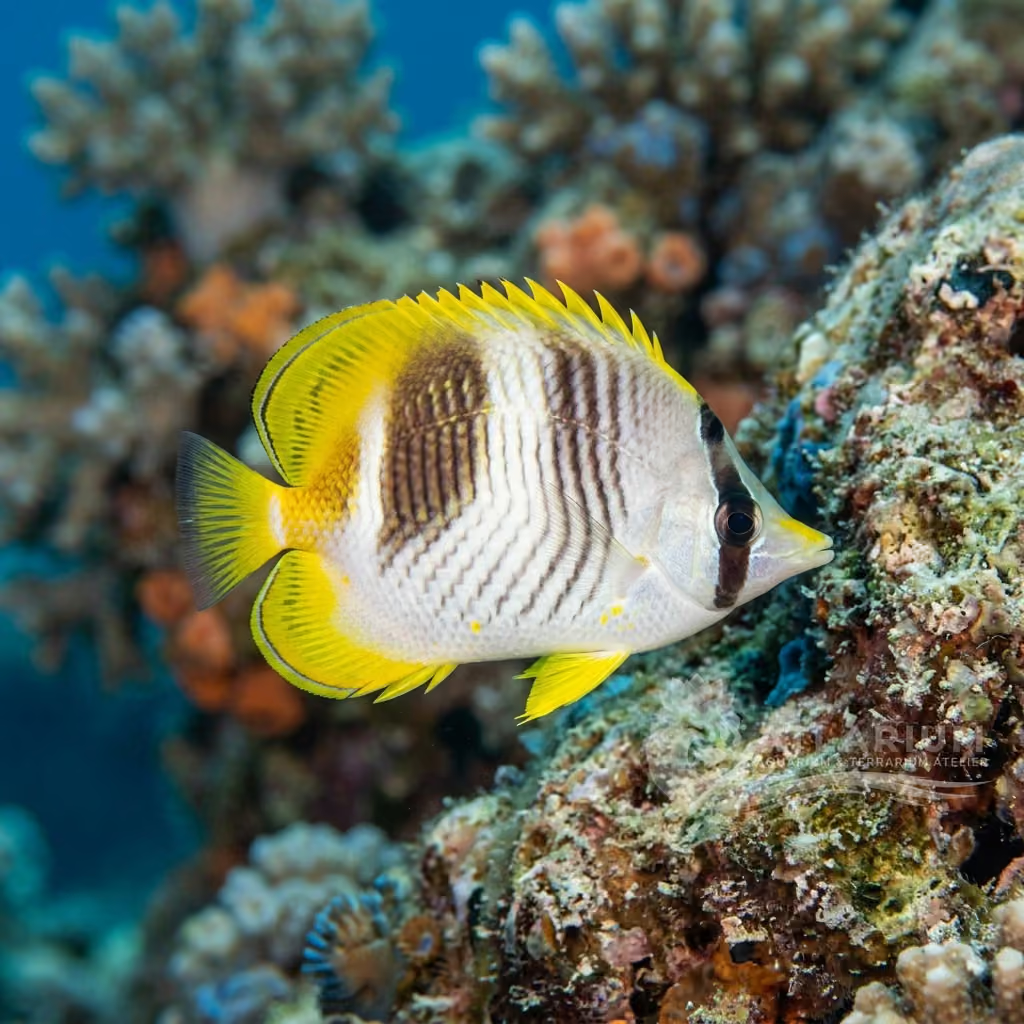
Meyer's butterflyfish
Chaetodon meyeri
Displaying a spectacular pattern of curved concentric lines on a blue-white body, this obligate corallivore is an extreme challenge suited only for advanced specialists.
Water Temperature
22 - 27 °C
pH Value
8.1 - 8.4
Water type
Marine
Tank level
Bottom and middle
Adult size
20 cm
Minimum tank volume
>= 350 L
Minimum group
>= 1

Species description
Geographical Origin and Habitat: Chaetodon meyeri is widely distributed throughout the tropical waters of the Indo-Pacific. Its range extends from the coasts of East Africa and Madagascar to the Hawaiian, Line, and Tuamotu Islands, reaching north to southern Japan and south to the Great Barrier Reef. It inhabits rich, pristine coral reefs, clear lagoons, and outer reef slopes at depths between 2 and 25 meters, where there is a dense growth of stony corals.
Taxonomy and Morphology: Belonging to the family Chaetodontidae, genus Chaetodon. It displays the classic disc-shaped, highly laterally compressed body with a slightly protruding but short snout. Adults reach a maximum length of approximately 20 centimeters. The mouth is equipped with specialized jaws and brush-like teeth adapted for clipping and consuming individual live coral polyps.
Social Behavior: This is a predominantly monogamous species that lives in stable pairs for life, although juveniles may be solitary. It shows peaceful behavior toward other reef species but can be territorial toward other butterflyfishes. It spends the day constantly patrolling the reef in search of active coral colonies to feed upon.
Coloration and Sexual Dimorphism: The coloration is one of the most spectacular in the genus: a blue-white or silvery body crossed by an intricate pattern of curved, concentric black or dark brown lines. The margins of the dorsal, anal, and caudal fins feature alternating yellow and black stripes. There is no visible sexual dimorphism; males and females look identical.

Care, breeding and tankmates
Aquarium Setup: Requires a very large and mature aquarium, with a minimum capacity of 400-500 liters (approx. 100-130 gallons) for a pair. The setup must recreate a natural coral reef with abundant live rock. Since this species feeds on corals, placing it in a reef tank will lead to the destruction of the corals; however, live corals are often the only way to keep it alive.
Diet and Feeding: It is an obligate corallivore. In the wild, it feeds almost exclusively on the polyps of branching stony corals (particularly Acropora and Pocillopora). In captivity, the vast majority of specimens refuse all commercial or frozen foods, leading to starvation. Keeping this fish successfully requires a constant supply of live coral colonies or complex paste foods.
Water Quality: Demands pristine and stable water conditions: temperature 24-26°C (75-79°F), pH 8.1-8.4, specific gravity 1.021-1.025, and nitrates/phosphates close to zero. Powerful filtration, frequent water changes, and an efficient protein skimmer are required, along with strong water movement and high oxygenation.
Compatibility and Cohabitation: Coexists peacefully with other non-aggressive reef fish. It should not be housed with fast or aggressive fish that would increase its stress. It is absolutely not reef-safe, as it will damage or destroy most stony corals (SPS and LPS) in the tank, which it views as food.
Aquarium Breeding: Breeding in home aquariums is considered impossible with current techniques. In the wild, they are pelagic spawners that release eggs and sperm into the water column at dusk. The larvae go through a complex planktonic stage called 'tholichthys', unique to butterflyfishes, which cannot be replicated in captivity.
Risks and Diseases: The greatest risk is starvation: most specimens die within a few weeks due to food refusal. It is also highly sensitive to parasitic diseases like marine ich and Oodinium. This species is recommended only for public aquariums or advanced hobbyists with extensive experience.

Geographic origin and distribution
Chaetodon meyeri is widely distributed throughout the tropical waters of the Indo-Pacific. Its range extends from the coasts of East Africa and Madagascar to the Hawaiian, Line, and Tuamotu Islands, reaching north to southern Japan and south to the Great Barrier Reef. It inhabits rich, pristine coral reefs, clear lagoons, and outer reef slopes at depths between 2 and 25 meters, where there is a dense growth of stony corals.
Origin
Tropical oceans and reefsAfrica and MadagascarEast Asia

Fish profile
- Temperament
- Territorial
- This butterflyfish is generally peaceful and non-aggressive towards other fish species, making it a gentle addition to a community tank. However, it can show territorial behavior towards conspecifics or closely related butterflyfish of similar shape and color. Because of its timid nature, it is easily intimidated by boisterous or aggressive tankmates. It is important to house them with calm, passive species to prevent stress and ensure they are not outcompeted for food.
- Diet
- Corallivore
- Chaetodon meyeri is a strict obligate corallivore, meaning it feeds almost exclusively on live coral polyps and mucus, specifically from Acropora corals. This highly specialized diet makes them incredibly difficult to feed in captivity, as they rarely accept standard aquarium fare like mysis, brine shrimp, or flakes. Attempting to keep them without a constant supply of live corals usually results in starvation. Only experienced aquarists who can provide specialized gel foods, clam on the half shell, or live corals should attempt to keep them.
- Life expectancy
- 5-8 years
- Adult size
- 20 cm
- Sex ratio
- 1:1 ratio
- In the wild, Chaetodon meyeri is typically observed forming stable, monogamous pairs. In the home aquarium, keeping them as a mated pair is the most successful approach and encourages natural behavior. Attempting to house multiple individuals of the same sex in a single tank, especially if it is not sufficiently large, can lead to severe territorial aggression. If a compatible pair cannot be acquired, keeping a single specimen is recommended to prevent conflict.
- Feeding frequency
- Twice daily
- In the wild, these fish graze continuously throughout the day on coral reefs. In an aquarium setting, they must be fed multiple times daily—ideally between three and five times—to replicate this constant grazing behavior. Providing frequent, small portions of specialized food is crucial for maintaining their weight and metabolic health. If they are trained to eat prepared foods, a continuous feeding strategy using automatic feeders or specialized feeding clips is beneficial.
- Bioload
- Medium to High
- Chaetodon meyeri has a moderate to high biological impact on the aquarium ecosystem due to its size and specific dietary needs. Because they require frequent feeding of high-protein foods or live corals to sustain themselves, waste production can escalate quickly. This necessitates a powerful filtration system, including a high-performance protein skimmer and regular water changes, to keep dissolved organics at a minimum. Maintaining pristine water conditions is crucial, as this species is highly sensitive to elevated nitrate and phosphate levels.
- Flow
- Strong
- This species prefers moderate to strong water flow, which reflects the well-oxygenated seaward reefs and clear lagoons they inhabit in the wild. A good current helps keep the water clean and oxygen levels high, which is vital for their respiratory health and overall well-being. However, there should also be calmer areas within the rockwork where they can rest without fighting the current. Proper water movement also assists in distributing food particles and maintaining coral health if live corals are used as a food source.
- Jump risk
- Yes
- Chaetodon meyeri is not classified as a notorious jumper compared to wrasses or gobies, but it still poses a moderate risk of jumping when startled. These fish are relatively timid and can easily dash upward when frightened by sudden movements, shadow changes, or aggressive tankmates. To prevent tragic accidents, a secure, tight-fitting lid or a fine mesh cover is highly recommended. Adequate cover also helps buffer ambient light changes, which reduces their overall stress levels.
- Reproduction
- Oviparous
- Chaetodon meyeri is an oviparous species that practices pelagic spawning, releasing gametes into the water column where fertilization occurs externally. In the wild, they form monogamous pairs that spawn during specific environmental cues, and the eggs float with the ocean currents. There are no records of successful reproduction or raising of fry in home aquariums due to the complexity of their larval stage. The planktonic larvae require microscopic foods and specific environmental conditions that are currently impossible to replicate in captivity.
- Compatibility & tankmates
- Peaceful
- Due to its obligate corallivore diet, Chaetodon meyeri is not reef-safe and will consume hard corals, particularly SPS species like Acropora. They are best suited for a fish-only-with-live-rock (FOWLR) system or a specialized system where corals are grown solely to feed them. They are highly compatible with peaceful community fish such as anthias, small tangs, clownfish, and gobies. They should never be housed with aggressive, boisterous species like large triggers or pugnacious damselfish, which will stress them and outcompete them during feeding.
- Tank level
- Middle/Bottom
- This species primarily inhabits the bottom and middle zones of the aquarium, where it actively searches for food among the rockwork and coral branches. In their natural habitat, they are closely associated with complex reef structures, utilizing them for shelter and grazing. Providing a spacious environment with plenty of open swimming area in these zones, combined with intricate rock formations, will help them feel secure. They will rarely venture to the very top of the water column except occasionally during feeding.

Scientific Parameters & Models
FishBase
Window to the official scientific data of the species
FishBase v25.04Data synced on: 06/15/2026
- Trophic level
- 3.3 ± 0.61 se
- Resilience
- High (less than 15 months)
- Phylogenetic uniqueness (PD50)
- 0.5
- Bayesian Length-Weight
- a = 0.02291, b = 3
- VulnerabilityLow vulnerability (10 / 100)

Related species
Recommendations grouped by close relatives, companion choices, and similar care.