Pinktail Triggerfish
Melichthys vidua
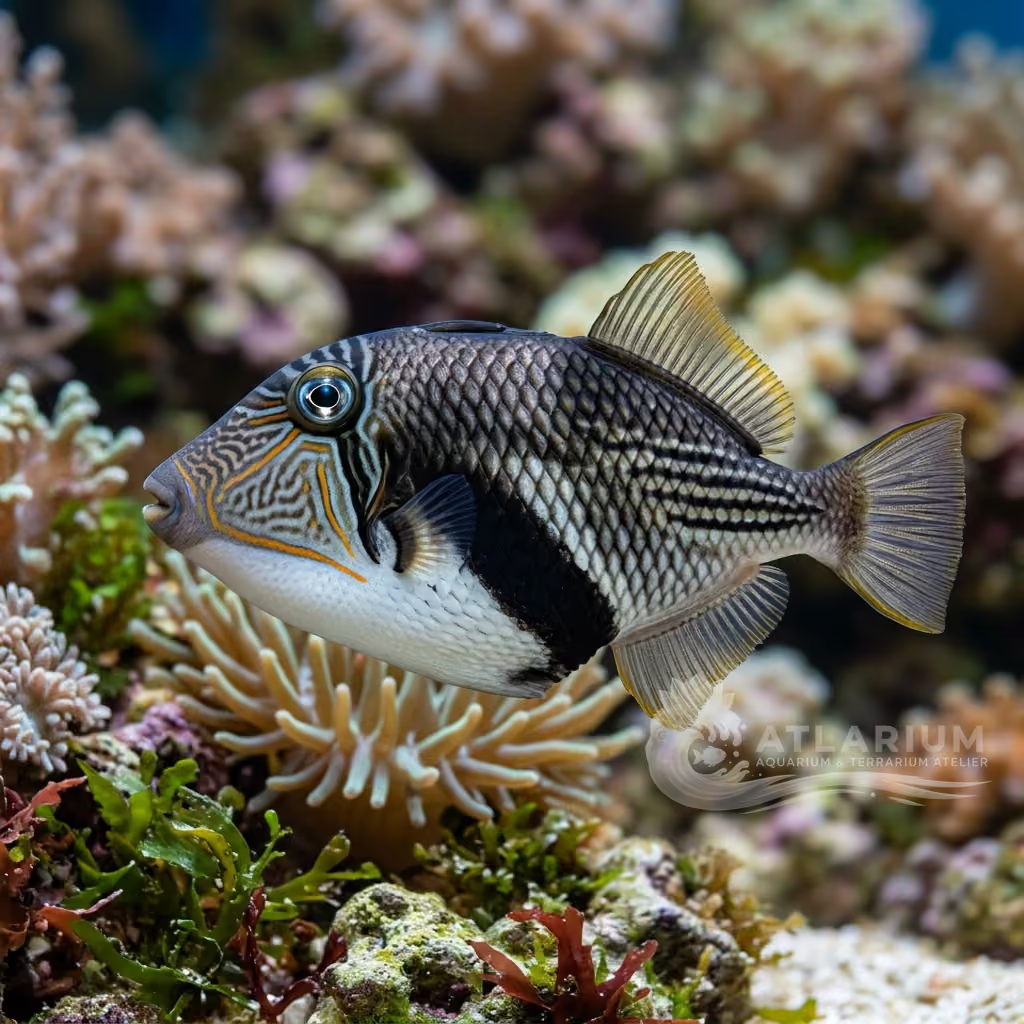
The Pinktail Triggerfish is a dark-bodied marine beauty featuring a striking pink tail. Known for its territorial nature, it requires large tanks with ample caves.
Water Temperature
22 - 27 °C
pH Value
7.9 - 8.5
Water type
Marine
Tank level
All levels
Adult size
40 cm
Minimum tank volume
>= 500 L
Minimum group
>= 1
KH
8 - 12 dKH

Species description
Geographical Origin and Habitat: Tropical Indo-Pacific, from East Africa to Hawaii and French Polynesia, north to southern Japan. Inhabits seaward reefs and outer reef slopes subject to strong currents.
Taxonomy and Morphology: Belongs to the family Balistidae. Reaches a maximum size of 40 cm. It features the typical triggerfish morphology with an oval, compressed body, high-set eyes, and a lockable first dorsal spine used to anchor itself in crevices.
Social Behavior: Solitary and territorial fish. Although considered one of the least aggressive triggerfish, it shows territorial behavior as it matures and may bully slower or smaller tankmates.
Coloration and Sexual Dimorphism: Dark brown to black body contrasted by a spectacular bright pink to translucent caudal fin. The soft dorsal and anal fins are whitish to pale pink with black margins. No external sexual dimorphism.

Care, breeding and tankmates
Aquarium Setup: Requires a tank of at least 500 liters (130 gallons) with plenty of live rock arranged to form deep caves. Needs ample swimming space and strong water movement.
Diet and Feeding: Omnivorous diet, heavily carnivorous. Offer fresh or frozen foods: mysis, krill, whole shrimp, squid, and mussels, supplemented with nori and spirulina.
Water Quality: Demands powerful filtration and an efficient skimmer due to high waste output. Temperature 22-27°C (72-81°F), pH 7.9-8.5, specific gravity 1.020-1.026.
Compatibility and Cohabitation: Reef-safe with caution. It generally ignores stony corals but will devour ornamental shrimp, crabs, snails, and small fish.
Aquarium Breeding: Reproduction has not been recorded in home aquariums. In the wild, they lay eggs in sandy pits, guarding the nest aggressively.
Risks and Diseases: Susceptible to ectoparasites like Marine Ich (Cryptocaryon) under high stress. Watch your fingers during maintenance: it can bite painfully.

Geographic origin and distribution
Tropical Indo-Pacific, from East Africa to Hawaii and French Polynesia, north to southern Japan. Inhabits seaward reefs and outer reef slopes subject to strong currents.
Origin
Tropical oceans and reefsAfrica and MadagascarEast Asia

Fish profile
- Temperament
- Semi-aggressive
- Their temperament is highly aggressive. They can become fiercely territorial over caves. Care is needed when placing hands inside.
- Diet
- Omnivore
- They are primarily carnivorous. Feed them hard-shelled invertebrates and meaty foods. Crunchy foods wear down their growing teeth.
- Life expectancy
- 10-15 years
- Adult size
- 40 cm
- Sex ratio
- Solitary
- They are usually kept singularly. They exhibit high aggression toward conspecifics. Avoid mixing multiple individuals to prevent fights.
- Feeding frequency
- Twice daily
- Feed substantial portions twice a day. They are voracious and aggressive eaters. Ensure all tank mates get adequate food.
- Bioload
- High
- They produce a remarkably large bioload. Powerful skimmers and robust filtration are critical. Frequent water changes control nitrate levels.
- Flow
- Strong
- They require strong water flow. This replicates the dynamic currents of reefs. Rapid water turnover is necessary.
- Jump risk
- Yes
- They present a moderate jump risk. A secure and heavy lid is needed. They spook easily at outside movements.
- Reproduction
- Oviparous
- They are extremely difficult to breed. They are pelagic spawners in the wild. Tank breeding is virtually undocumented.
- Compatibility & tankmates
- Peaceful
- They are generally aggressive and not reef safe. Keep with large, robust tank mates. Small invertebrates will be eaten.
- Tank level
- All levels
- They swim actively at all levels. They constantly explore rocks for hidden food. They require extremely large swimming spaces.

Scientific Parameters & Models
FishBase
Window to the official scientific data of the species
FishBase v25.04Data synced on: 06/15/2026
- Trophic level
- 3.4 ± 0.39 se
- Resilience
- Medium (1.4 - 4.4 years)
- Phylogenetic uniqueness (PD50)
- 0.625
- Bayesian Length-Weight
- a = 0.02754, b = 3.02
- VulnerabilityLow to moderate vulnerability (30 / 100)

Related species
Recommendations grouped by close relatives, companion choices, and similar care.