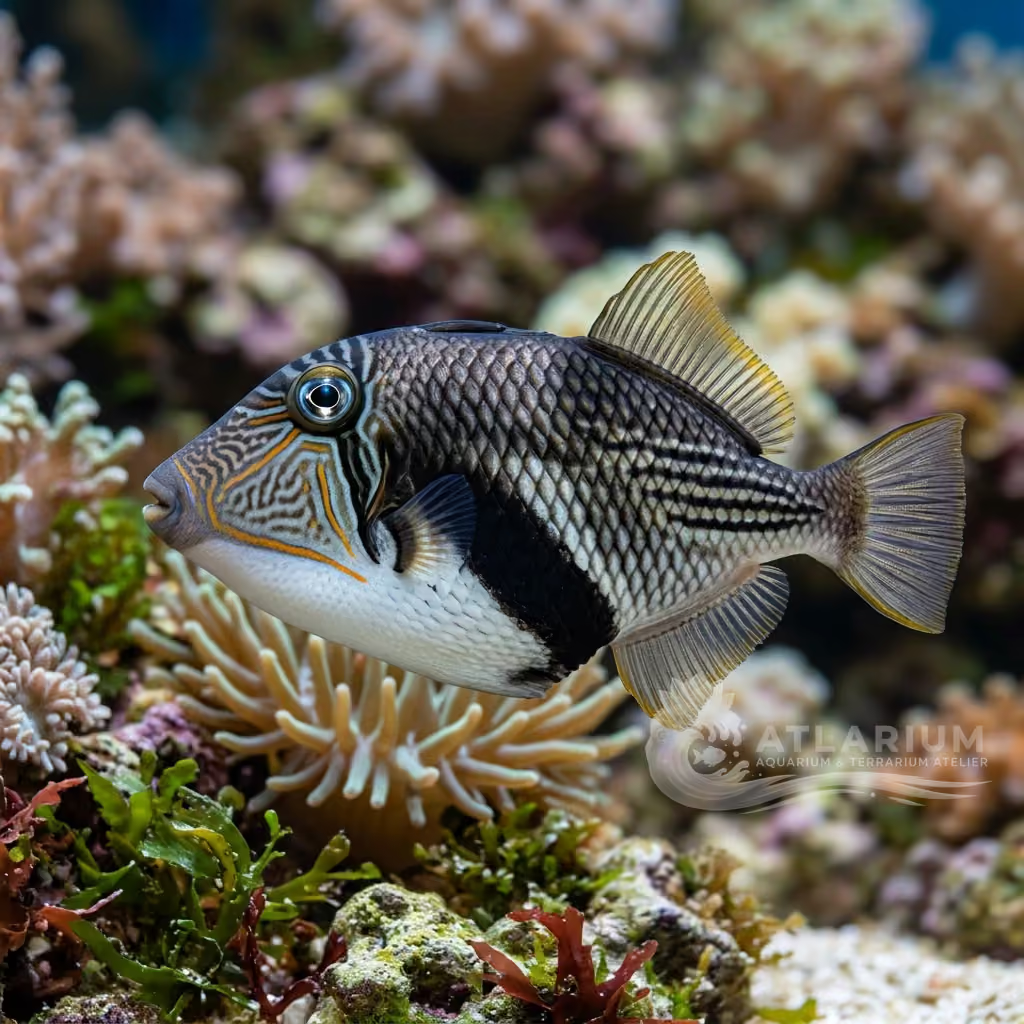
Blue-throat Triggerfish
Xanthichthys auromarginatus
The Bluechin Triggerfish is an active and striking planktivore, highly regarded as one of the most reef-friendly triggerfish available. Unlike more aggressive relatives, it generally ignores corals, though it may occasionally snack on small ornamental invertebrates. A large aquarium with plenty of open swimming space and secure rockwork is essential.
Water Temperature
23 - 27 °C
pH Value
8.1 - 8.4
Water type
Marine
Tank level
Middle
Adult size
30 cm
Minimum tank volume
>= 470 L
Minimum group
>= 1
KH
8 - 12 dKH

Species description
Geographical Origin and Habitat: Indo-Pacific: distributed from the coasts of East Africa to the Hawaiian, Marquesas, and Ryukyu Islands, reaching south to the Great Barrier Reef. It inhabits outer reef slopes exposed to strong ocean currents, at depths between 10 and 45 meters, feeding in open water.
Taxonomy and Morphology: Belongs to the family Balistidae, genus Xanthichthys. Features a laterally compressed, rhomboidal, and robust body, with eyes positioned very high on the head to protect them from the bites of prey. It reaches a maximum length of about 22 centimeters in adulthood, making it one of the most manageable triggerfish.
Social Behavior: Unlike most triggerfish, this species exhibits an unusually peaceful behavior and is largely considered reef-safe. In the wild, it lives in small, loose groups in the water column above the reefs, retreating into rock crevices only in case of danger.
Coloration and Sexual Dimorphism: The body presents a grey-blue or olive coloration with rows of small white or light blue dots. It shows a pronounced sexual dimorphism: males have a brilliant neon blue throat and yellow-orange margins on the dorsal, anal, and caudal fins. Females lack these features and have grey margins.

Care, breeding and tankmates
Aquarium Setup: Requires a spacious marine aquarium of at least 350-400 liters, with ample open areas for free swimming. It is necessary to provide stable rockwork equipped with deep caves or crevices where the fish can lock itself by raising its first dorsal spine to sleep at night. High oxygenation is strongly required.
Diet and Feeding: Omnivorous with a preference for zooplankton. In the aquarium, it must be fed a varied and rich diet: frozen foods such as mysis, krill, brine shrimp, clam meat, and chopped shrimp. It also accepts high-quality dry granular foods. Feeding should occur twice daily to ensure proper nutrition.
Water Quality: Requires stable and well-oxygenated water conditions: temperature between 23 and 26 °C, stable pH between 8.1 and 8.4, and density at 1.020-1.025. Due to its fast metabolism and food waste, efficient filtration with a protein skimmer and regular partial water changes are essential.
Compatibility and Cohabitation: Excellent for marine community and reef aquariums. Generally does not disturb corals or mollusks, though small ornamental shrimp might be considered food if introduced after the triggerfish. Can cohabit with a wide range of fish, excluding excessively small or timid species.
Aquarium Breeding: Oviparous reproduction with parental care. In nature, they lay eggs in nests dug in the sand, which are then guarded and fanned. There are no known cases of successful breeding and rearing of the young in home aquariums due to the complexity of larval development.
Risks and Diseases: It is a hardy species that adapts well to aquarium life. It may exhibit occasional parasitic skin infections if subjected to severe stress or poor water quality. Care must be taken during handling as it can inflict painful bites with its powerful teeth.

Geographic origin and distribution
Indo-Pacific: distributed from the coasts of East Africa to the Hawaiian, Marquesas, and Ryukyu Islands, reaching south to the Great Barrier Reef. It inhabits outer reef slopes exposed to strong ocean currents, at depths between 10 and 45 meters, feeding in open water.
Origin
Tropical oceans and reefsAfrica and MadagascarEast Asia

Fish profile
- Temperament
- Semi-aggressive
- For a triggerfish, they possess a surprisingly mild and peaceful temperament, especially toward dissimilar tank mates. They are confident and bold, often becoming the centerpiece fish in a large reef aquarium. Once acclimated, they are not shy and will eagerly beg for food at the front of the glass. However, they can hold their own and will not tolerate bullying from aggressive tangs or angels.
- Diet
- Carnivore
- In the wild, they are primarily pelagic planktivores, feeding on drifting zooplankton in the water column. In captivity, they eagerly accept a wide variety of meaty foods, including mysis shrimp, krill, chopped squid, and high-quality marine pellets. A varied diet enriched with vitamins is crucial for maintaining their striking blue chin and yellow margins. They should be fed generously to prevent them from looking pinched.
- Life expectancy
- 11 years
- Adult size
- 30 cm
- Sex ratio
- Pair
- They exhibit obvious sexual dimorphism; only the males possess the namesake blue throat and yellow fin margins. They can be kept singly or as a mated pair if introduced simultaneously into a very large aquarium. Keeping a harem with one male and several females is possible in exceptionally massive systems. Multiple males should never be kept together, as they will fight aggressively for dominance.
- Feeding frequency
- Twice daily
- Due to their active swimming nature, they burn a lot of energy and require frequent feedings. Feeding them two to three times a day is ideal to maintain optimal health and coloration. Utilizing an auto-feeder for daytime pellet feeding can supplement frozen meals nicely. Consistent, well-portioned feedings also help reduce any slight aggressive tendencies driven by hunger.
- Bioload
- High
- This triggerfish has a moderately high bioload due to its size and active metabolism. As an open-water planktivore, it requires substantial amounts of meaty foods to maintain its bulk. Consequently, the resulting biological waste demands a robust filtration system, particularly an efficient protein skimmer. Regular water changes and excellent husbandry are necessary to keep nitrates low in a reef environment.
- Flow
- Strong
- As open-water swimmers often found on reef slopes and drop-offs, they thrive in aquariums with strong water movement. Vigorous flow allows them to exercise and swim naturally against the current as they would in the ocean. High flow also keeps their waste suspended, aiding mechanical filtration. Adequate surface agitation is equally important to ensure high dissolved oxygen levels.
- Jump risk
- Yes
- They have a streamlined body built for speed and are prone to bolting when frightened, making them a significant jump risk. They can easily propel themselves out of an uncovered tank during feeding frenzies or if startled at night. A tight-fitting lid or strong mesh top is an absolute requirement for safely keeping this species. Heavy glass or acrylic lids can also prevent water loss from their vigorous swimming.
- Reproduction
- Oviparous
- They are known to be pelagic spawners, releasing their gametes into the swift currents of the open ocean. Reproductive behavior in home aquariums is exceedingly rare due to the vast space required for their courtship rituals. Breeding them in captivity has not been successfully documented or commercialized. Sexually mature males display a distinct blue throat, making identification straightforward.
- Compatibility & tankmates
- Reef safe with caution
- Unlike many other triggerfish, this species is considered one of the most reef-safe options available. It typically ignores corals, anemones, and even larger motile invertebrates like ornamental shrimp, though very small shrimp might be eaten. They are generally peaceful toward other moderately sized reef fish but may assert dominance over similarly shaped planktivores. Avoid housing them with highly aggressive triggers or very timid nano fish.
- Tank level
- Middle
- These triggers are highly active and will utilize the middle to upper levels of the water column. They are constantly on the move, patrolling the open swimming space and looking for food drifting in the current. They will occasionally retreat to the rockwork to sleep or seek shelter if threatened. Providing ample horizontal swimming room with minimal obstructions is vital.

Scientific Parameters & Models
FishBase
Window to the official scientific data of the species
FishBase v25.04Data synced on: 06/15/2026
- Trophic level
- 3 ± 0 se
- Resilience
- Medium (1.4 - 4.4 years)
- Phylogenetic uniqueness (PD50)
- 0.5078
- Bayesian Length-Weight
- a = 0.02754, b = 2.91
- VulnerabilityLow vulnerability (20 / 100)

Related species
Recommendations grouped by close relatives, companion choices, and similar care.