Encyclopaedia

FishMarineEasy
©AI Generated·Proprietary

Red-tail dottyback

Pseudochromis coccinicauda

This small but fiercely territorial reef fish features a darkly contrasted body beautifully enhanced by a striking reddish-orange tail and a vibrant yellow chest area.

Taxonomy
Class:Actinopteri
Order:Perciformes
Family:Pseudochromidae
Subfamily:Pseudochrominae
Genus:Pseudochromis
Species:Pseudochromis coccinicauda

Share

Check out Red-tail dottyback on Atlarium

PracticeRecognition quizzesPhotos, names, origins, and puzzles to review Atlas species.Open quizzes
Water Temperature

23 - 27 °C

pH Value

8.1 - 8.4

Water type

Marine

Tank level

Bottom

Adult size

5.5 cm

Minimum tank volume

>= 80 L

Minimum group

>= 1

KH

8 - 12 dKH

Species description

Geographical Origin and Habitat: Pseudochromis coccinicauda is native to the warm tropical waters of the central Indo-Pacific, with a presence concentrated mainly along the coral reefs of Indonesia, the Philippines, Palau, and the Solomon Islands. It inhabits tidal flats, protected coastal lagoons, and detrital zones rich in coral rubble and madrepores adjacent to the main reefs, at depths between 2 and 20 meters.
Taxonomy and Morphology: It belongs to the family Pseudochromidae. It features a slender, elongated, and moderately laterally compressed body, with a robust head equipped with large mobile eyes and a terminal mouth with small canine teeth suitable for grasping fast prey. It reaches small dimensions, with a maximum length of around 6-7 centimeters in adult specimens.
Social Behavior: It is a solitary and distinctly territorial fish. It establishes a fixed territory within a small rocky cavity or among the branches of hard corals, which it actively defends against any invader. It exhibits strong intraspecific aggression and does not tolerate the proximity of specimens of the same species or related species, demonstrating a brave and bold temperament.
Coloration and Sexual Dimorphism: The coloration is remarkable and contrasting: the anterior and dorsal portion of the body is typically dark brownish-gray or black, while the chest area and belly take on yellowish or orange hues. The caudal fin is a bright red-orange color, from which the specific epithet derives. Adult males show much more pronounced red coloration of the tail and yellow hues on the body.

Care, breeding and tankmates

Aquarium Setup: Requires an aquarium of at least 80 liters for a single specimen. The setup must include an abundance of live rock rich in small holes, caves, and narrow tunnels to allow the fish to establish its territory and find shelter. The rocks must be positioned stably. It is advisable to have a bottom of fine sand mixed with small fragments of coral.
Diet and Feeding: It is a predominantly carnivorous species with a voracious appetite. In the wild, it feeds on small benthic crustaceans, marine insect larvae, and zooplankton. In the aquarium, it quickly accepts high-quality frozen foods such as mysis, brine shrimp, chopped krill, and lobster eggs. It is recommended to feed the fish once or twice a day in portions suited to its activity.
Water Quality: Water parameters must be maintained within the range typical of marine aquariums: temperature between 24 and 26 °C, pH between 8.1 and 8.4, specific gravity stable at 1.020-1.025, and KH between 8 and 12. Efficient filtration is required to keep nitrogenous pollutant levels close to zero, making regular partial water changes and ensuring good water movement.
Compatibility and Cohabitation: Due to marked territoriality, it should not coexist with other dottybacks or with shy, delicate species such as small gobies, pipefish, and small wrasses that could be attacked. It is, however, an ideal companion for robust, active community fish such as damselfish, tangs, dwarf angelfish, and clownfish. It is safe for corals but may prey on small shrimps.
Aquarium Breeding: Breeding in the home aquarium is possible but complex. They are demersal spawners: after courtship, the female deposits a spherical mass of adhesive eggs inside the male's cave, who fertilizes them and guards them by fanning them and driving away intruders. Hatching occurs in a few days and rearing the larvae requires microscopic live foods (rotifers).
Risks and Diseases: It is an extremely robust fish and resistant to common marine fish diseases if kept in a stable environment. The main risk is mutual territorial aggression in tanks that are too small or lack hiding places. It is sensitive to sudden temperature and salinity changes. It is advisable to cover the tank as it is a skilled jumper when frightened.

Geographic Origin and Distribution

Pseudochromis coccinicauda is native to the warm tropical waters of the central Indo-Pacific, with a presence concentrated mainly along the coral reefs of Indonesia, the Philippines, Palau, and the Solomon Islands. It inhabits tidal flats, protected coastal lagoons, and detrital zones rich in coral rubble and madrepores adjacent to the main reefs, at depths between 2 and 20 meters.

Origin

Cosmopolitan or introducedSouth and Southeast AsiaAustralia, New Guinea, and OceaniaTropical oceans and reefs

Fish profile

Temperament
Territorial
They are highly territorial, bold, and can be quite pugnacious despite their relatively small size. Their aggressive tendencies mean they will often dominate the rockwork and harass more timid species. However, their intelligence and active nature make them very engaging pets for the right aquarium setup.
Diet
Carnivore
This species requires a varied, meaty diet to thrive and maintain its vibrant colors. Offer a selection of vitamin-enriched frozen shrimp, finely chopped squid, and high-quality marine pellets. Occasionally offering live foods like brine shrimp can trigger their natural hunting instincts and stimulate activity.
Sex ratio
Solitary
Due to their intense aggression towards their own kind, keeping a single specimen per tank is the golden rule. Even in very large aquariums, multiple individuals will often fight relentlessly until only one remains. Attempting to form a pair is risky and should only be undertaken by highly experienced breeders.
Feeding frequency
Twice daily
To support their rapid metabolism and high activity levels, they should be fed two to three times a day. Careful observation during feeding is needed to ensure they do not outcompete slower eaters. Only feed amounts they can entirely consume in a few minutes to prevent food decay.
Bioload
They produce a typical bioload for a small, predatory marine fish, which is generally quite manageable. Consistent feeding routines mean regular waste production, necessitating strong mechanical and biological filtration. Skimmers and routine substrate siphoning will ensure the water quality remains pristine.
Flow
Moderate
Moderate to brisk water flow is ideal for these active swimmers, simulating the surge zones they inhabit in the wild. Good circulation helps flush detritus out from the rockwork where they spend most of their time. They are skilled at navigating strong currents but will appreciate sheltered areas as well.
Jump risk
Yes
Like all members of this genus, they are notorious jumpers and pose a high risk of escaping the aquarium. A sturdy, gap-free mesh lid is the only reliable way to prevent them from jumping to their demise. Jumping usually occurs during territorial disputes or when startled by sudden changes in lighting.
Reproduction
Oviparous
Breeding is a complex process that involves the male leading a receptive female to a protected rocky crevice. The eggs are laid in a cohesive mass, and the male assumes all guarding and aeration duties until they hatch. The pelagic larvae are extremely difficult to rear, requiring specialized facilities and live microscopic foods.
Compatibility & tankmates
Peaceful
Known for their combative nature, they are not suitable for delicate community tanks or with peaceful, passive fish. They will establish a territory and vigorously defend it against newcomers or similarly sized tank mates. They are best kept with robust companions such as damsels, moderately sized tangs, or sturdy wrasses.
Tank level
Bottom
They are predominantly benthic, favoring the lower levels of the tank where they can easily retreat into the rocks. They use caves and crevices as their home base, darting out to snatch food or chase away intruders. They rarely spend time in the open, upper areas of the water column.

Window to the official scientific data of the species

Data synced on: 06/15/2026

Scientific Parameters & Models

Trophic level
3.3 ± 0.5 se
Phylogenetic uniqueness (PD50)
0.5
Bayesian Length-Weight
a = 0.00501, b = 3.1
VulnerabilityLow vulnerability (10 / 100)

Image gallery

Licensed images linked to the species or, when marked, to the closest representative taxon.

Related species

Recommendations grouped by close relatives, companion choices, and similar care.

Variants and close relatives

Same atlas type, nearby scientific identity, genus, or family.

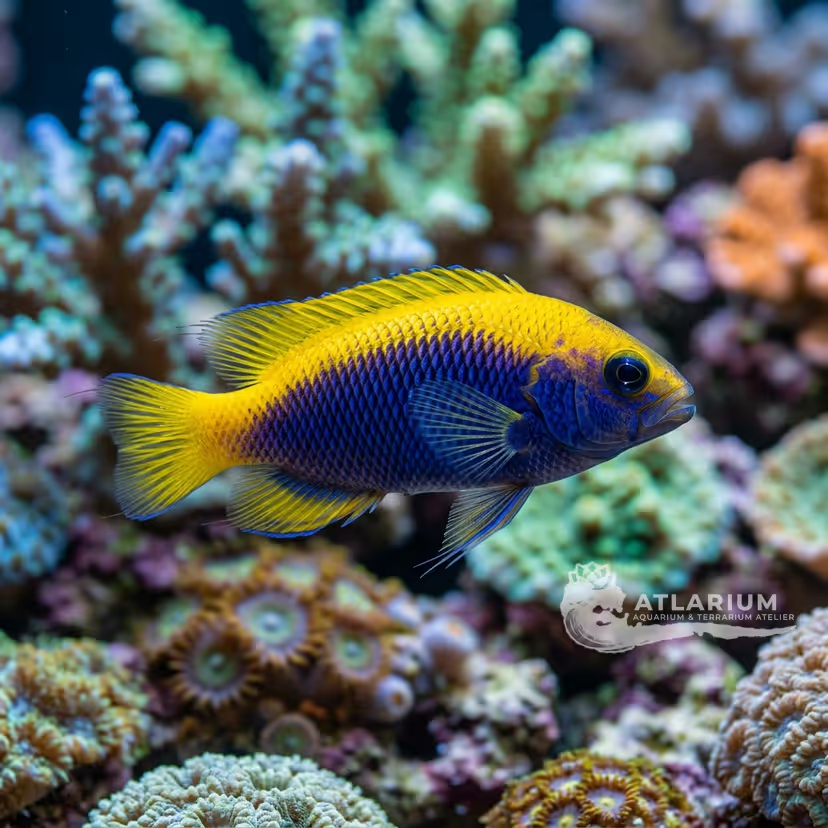
Erdmann's dottyback

Erdmann's dottyback

Pseudochromis erdmanni
View details->
Sunrise Dottyback

Sunrise Dottyback

Pseudochromis flavivertex

View details->
Neon dottyback

Neon dottyback

Pseudochromis aldabraensis

View details->
Blue Dottyback

Blue Dottyback

Pseudochromis

View details->
Springer's Dottyback

Springer's Dottyback

Pseudochromis springeri

View details->
Ammer's dottyback

Ammer's dottyback

Pseudochromis ammeri

View details->
Cole's Dottyback

Cole's Dottyback

Pseudochromis colei

View details->
Comet dottyback

Comet dottyback

Pseudochromis cometes

View details->
Gold-lined dottyback

Gold-lined dottyback

Pseudochromis aurulentus

View details->
Dilectus dottyback

Dilectus dottyback

Pseudochromis dilectus

View details->
Blueback Dottyback

Blueback Dottyback

Pseudochromis cyanotaenia

View details->
Elongate dottyback

Elongate dottyback

Pseudochromis elongatus

View details->
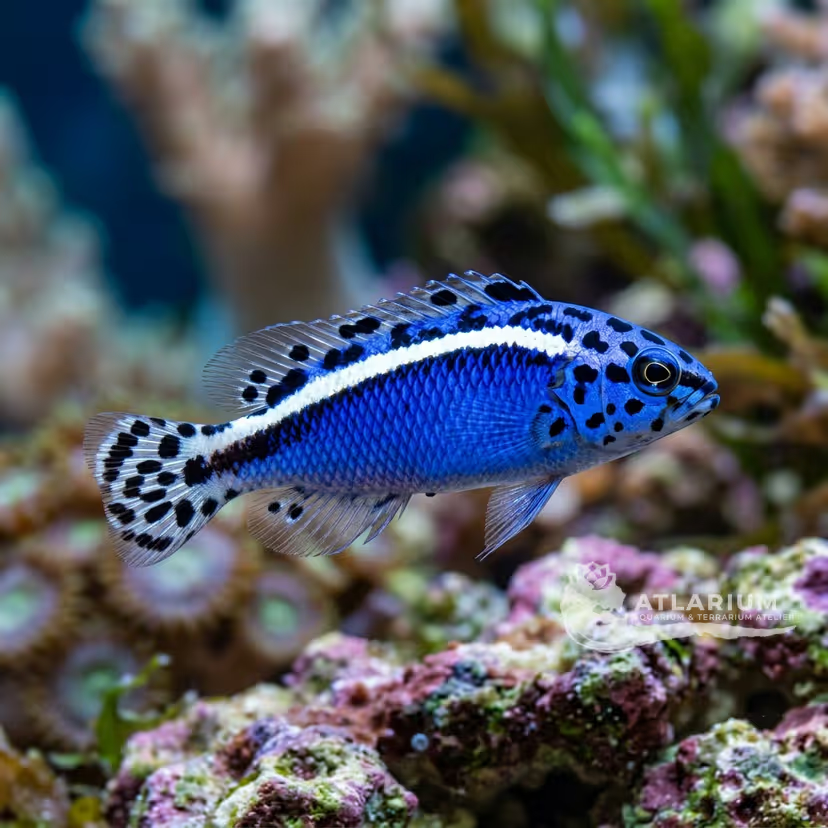
Goldline Dottyback

Goldline Dottyback

Pseudochromis aureolineatus
View details->
Sankey's Dottyback

Sankey's Dottyback

Pseudochromis sankeyi

View details->
Spot-breast Dottyback

Spot-breast Dottyback

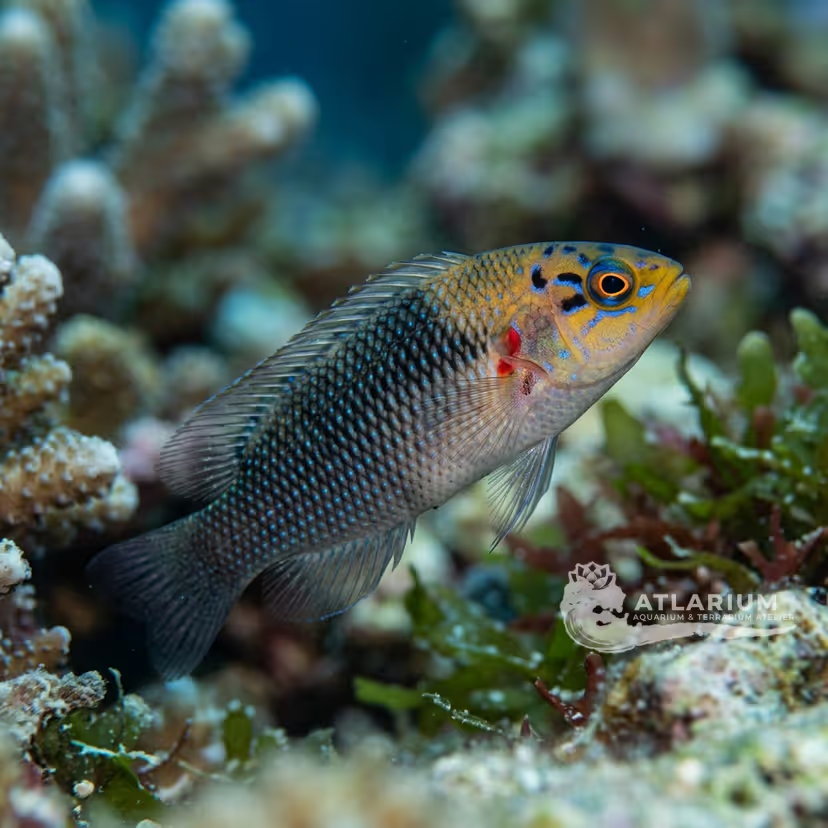
Pseudochromis alticaudex
View details->
Steene's Dottyback

Steene's Dottyback

Pseudochromis steenei

View details->

Recommended companions

Compatible cards from coherent ecosystems with matching parameters.

Grape caulerpa
Plant

Grape caulerpa

Caulerpa racemosa

View details->
Caulerpa prolifera
Plant

Caulerpa prolifera

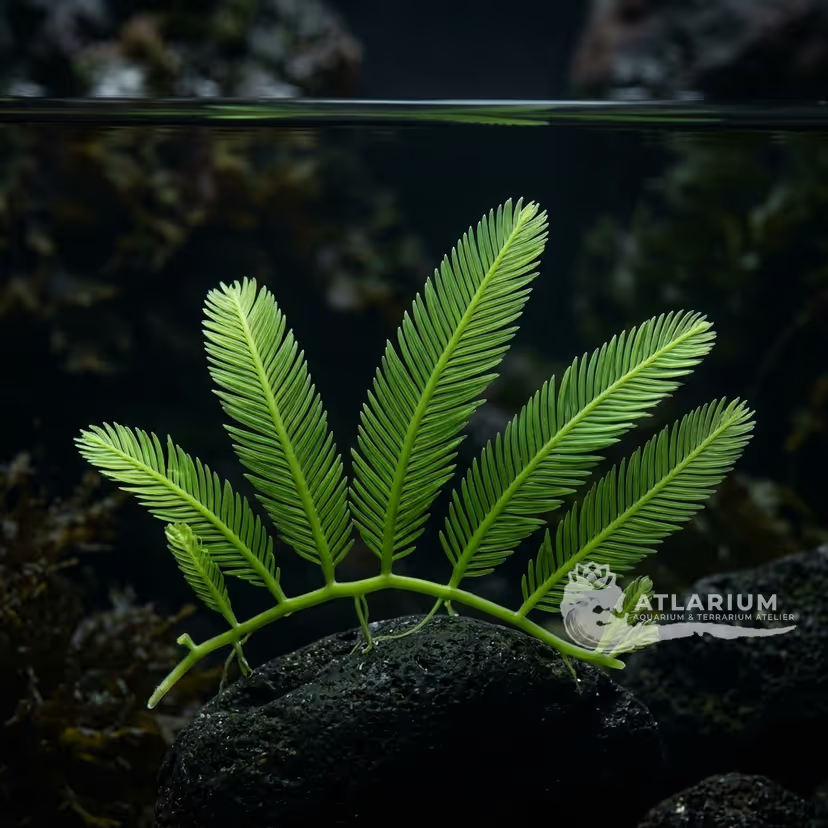
Caulerpa prolifera
View details->
Caulerpa taxifolia
Plant

Caulerpa taxifolia

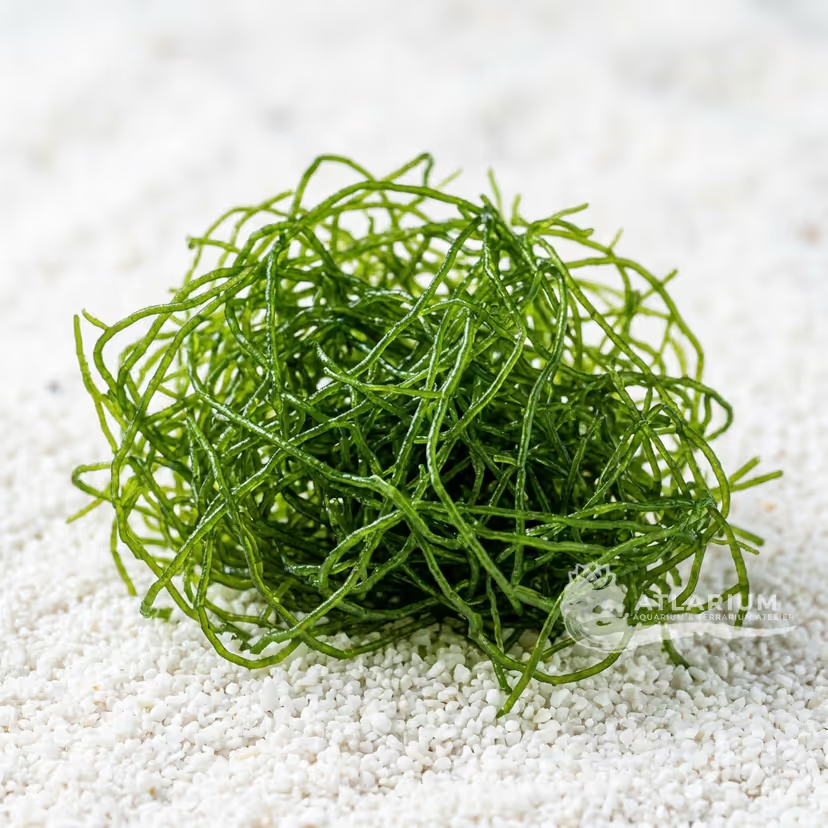
Caulerpa taxifolia
View details->
Chaetomorpha macroalgae
Plant

Chaetomorpha macroalgae

Chaetomorpha linum

View details->
Dead man fingers algae
Plant

Dead man fingers algae

Codium fragile

View details->
Halimeda macroalgae
Plant

Halimeda macroalgae

Halimeda opuntia

View details->
Peacock tail algae
Plant

Peacock tail algae

Padina pavonica

View details->
Red gracilaria
Plant

Red gracilaria

Gracilaria parvispora

View details->
Red grape algae
Plant

Red grape algae

Botryocladia uvaria

View details->
Sea lettuce
Plant

Sea lettuce

Ulva lactuca

View details->
Red Mangrove
Plant

Red Mangrove

Rhizophora mangle

View details->

Similar care

Cards with similar requirements, difficulty, habitat, and husbandry profile.
Tono's Dottyback

Tono's Dottyback

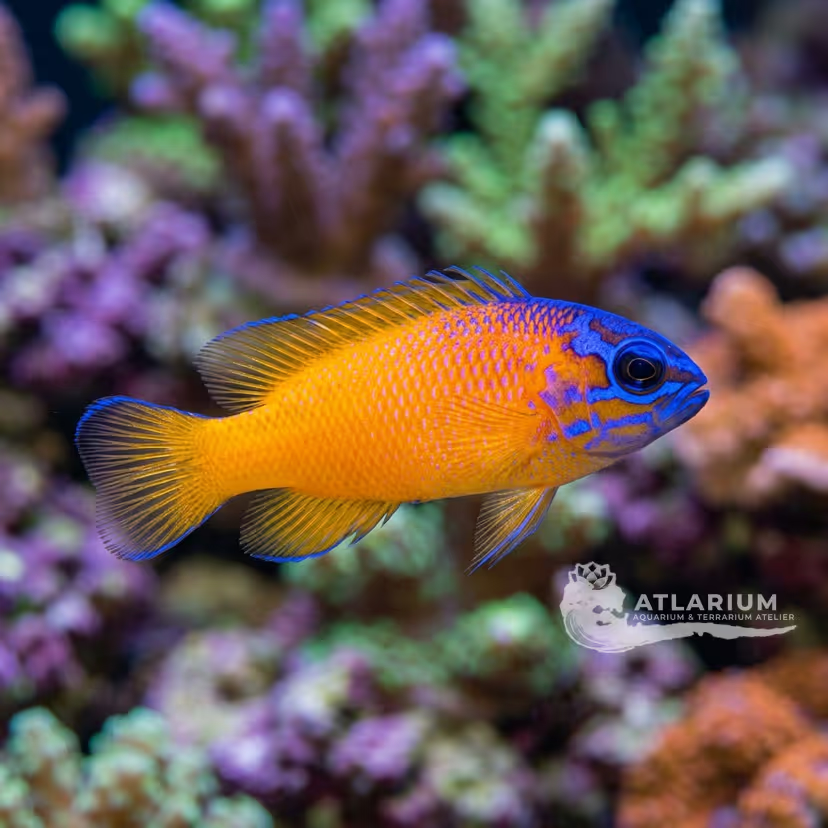
Pseudochromis tonozukai

View details->
Barsnout goby

Barsnout goby

Elacatinus illecebrosus

View details->
Firetail dottyback

Firetail dottyback

Pseudochromis flammicauda
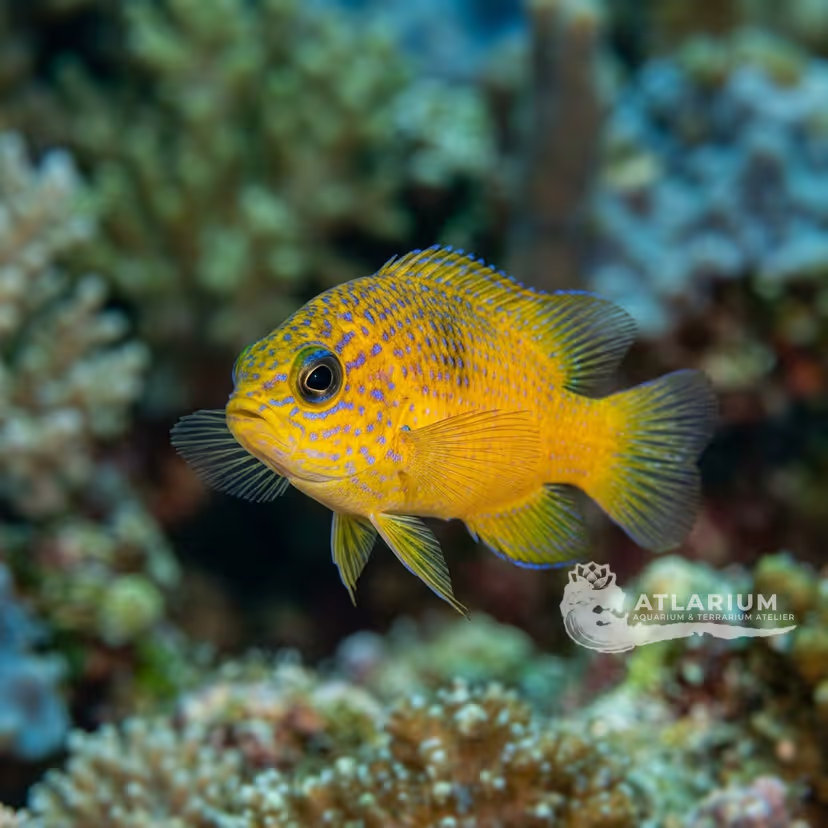
View details->
Gold-spotted dottyback

Gold-spotted dottyback

Pseudochromis chrysospilus

View details->
Beautiful-cheek shrimpgoby

Beautiful-cheek shrimpgoby

Amblyeleotris callopareia
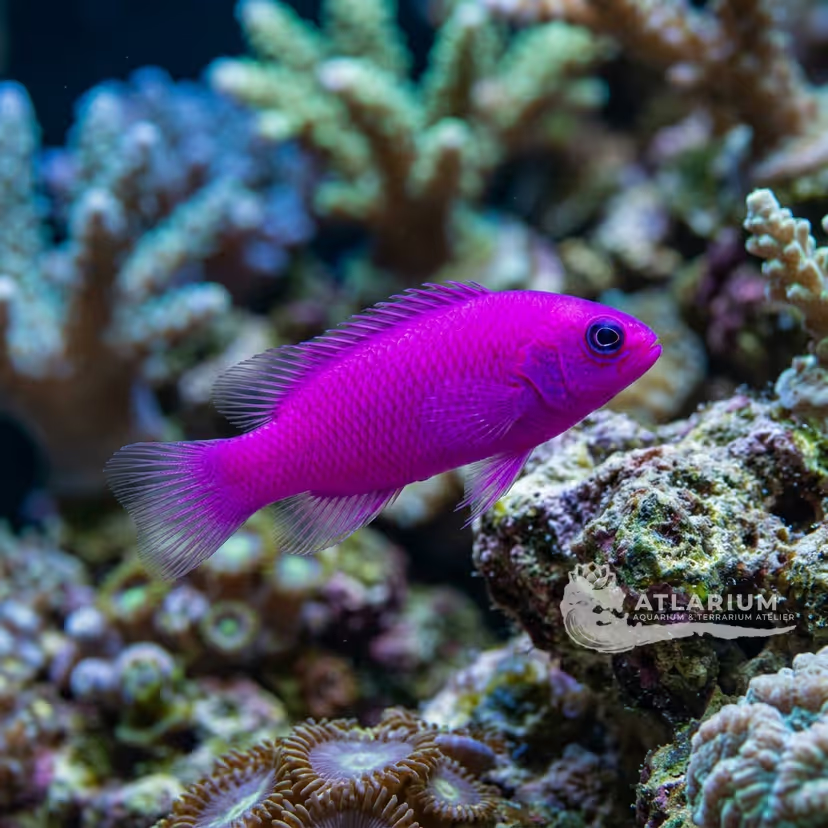
View details->
Strawberry Dottyback

Strawberry Dottyback

Pictichromis porphyrea

View details->
Dusky Dottyback

Dusky Dottyback

Pseudochromis fuscus

View details->
Blackstripe Dottyback

Blackstripe Dottyback

Pseudochromis nigrovittatus

View details->
Arch-fin shrimpgoby

Arch-fin shrimpgoby

Amblyeleotris arcupinna

View details->
Royal Dottyback

Royal Dottyback

Pictichromis paccagnellae

View details->
Axelrod's blenny

Axelrod's blenny

Ecsenius axelrodi

View details->
Yelloweye Combtooth Blenny

Yelloweye Combtooth Blenny

Ecsenius opsifrontalis

View details->
Oblique-lined Dottyback

Oblique-lined Dottyback

Cypho purpurascens

View details->
Andaman Dottyback

Andaman Dottyback

Pseudochromis andamanensis

View details->
Banded-head Shrimpgoby

Banded-head Shrimpgoby

Amblyeleotris cephalotaenius
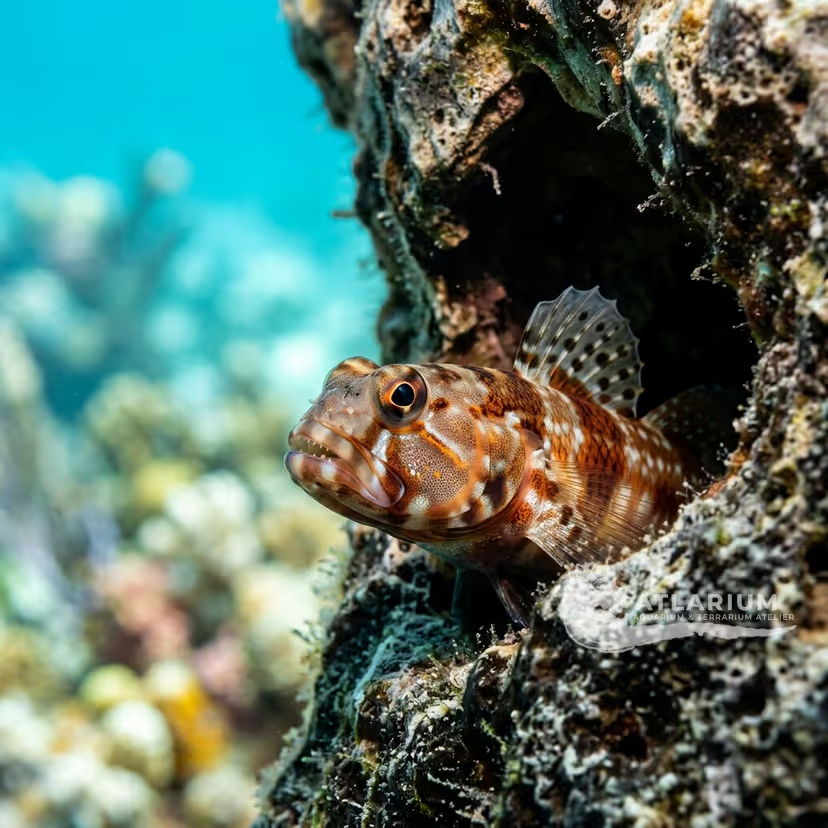
View details->
Ellipse shrimpgoby

Ellipse shrimpgoby

Amblyeleotris ellipse

View details->
Last updated: 06/30/2026