
Encyclopaedia
Hancock's blenny
Acanthemblemaria hancocki
A small and charismatic marine blenny from the Eastern Pacific, famous for its habit of living inside empty barnacle shells and rock holes. Its expressive face delights aquarists.
Share
Check out Hancock's blenny on Atlarium
22 - 26 °C
8.1 - 8.4
Marine
Bottom
5 cm
>= 40 L
>= 1
Species description
Care, breeding and tankmates
Geographic Origin and Distribution
Origin
Fish profile
- Temperament
- Territorial
- Diet
- Carnivore
- Sex ratio
- Solitary
- Feeding frequency
- Twice daily
- Bioload
- This species has a minimal impact on the overall bioload of the aquarium due to its small size and sedentary lifestyle. It produces very little waste compared to more active, open-water swimmers. Routine maintenance and standard filtration are entirely sufficient to keep the water pristine.
- Flow
- Strong
- Jump risk
- No
- Reproduction
- Oviparous
- Compatibility & tankmates
- Reef safe
- Tank level
- Bottom
Window to the official scientific data of the species
Scientific Parameters & Models
- Trophic level
- 3.4 ± 0.45 se
- Phylogenetic uniqueness (PD50)
- 0.5
- Bayesian Length-Weight
- a = 0.00525, b = 3.07
Image gallery
Licensed images linked to the species or, when marked, to the closest representative taxon.
Related species
Recommendations grouped by close relatives, companion choices, and similar care.
Recommended companions
Compatible cards from coherent ecosystems with matching parameters.

Caulerpa prolifera
Caulerpa prolifera
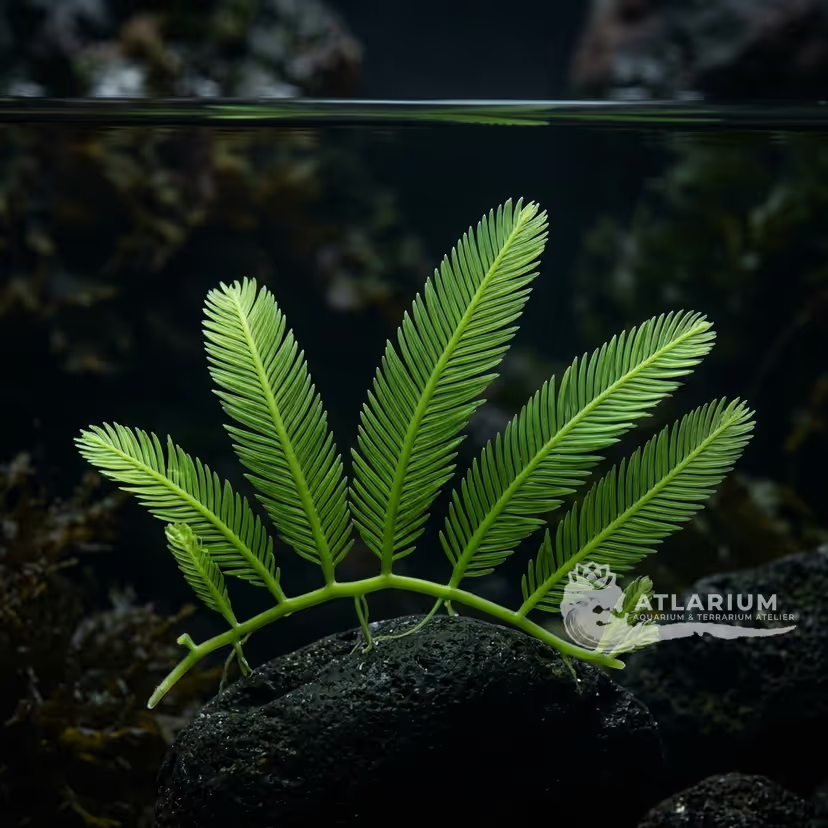
Caulerpa taxifolia
Caulerpa taxifolia
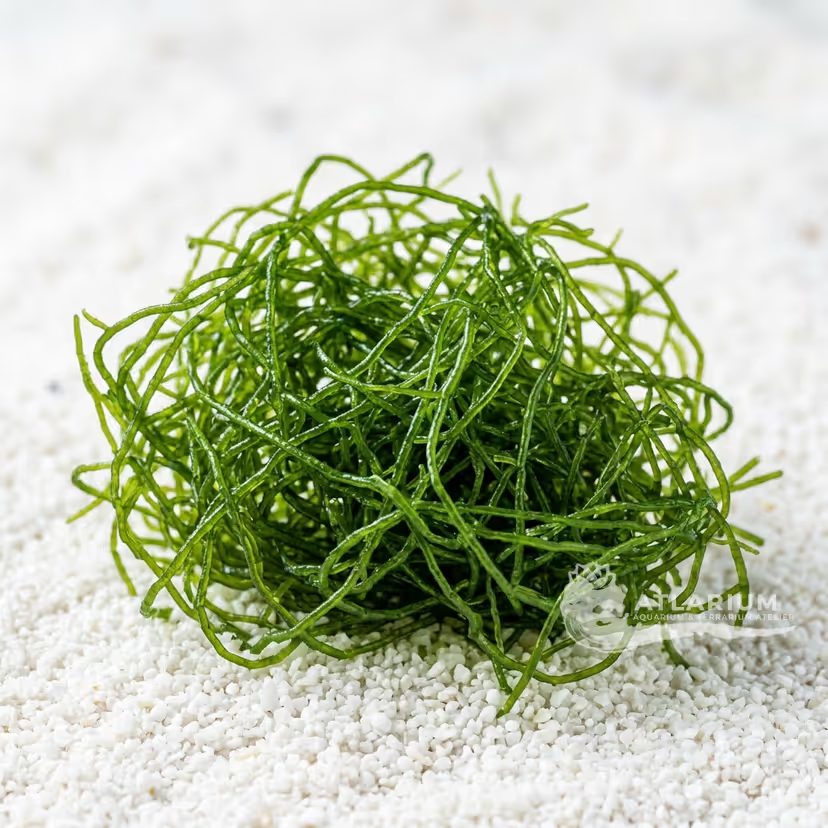
Chaetomorpha macroalgae
Chaetomorpha linum

Dead man fingers algae
Codium fragile

Grape caulerpa
Caulerpa racemosa

Halimeda macroalgae
Halimeda opuntia

Peacock tail algae
Padina pavonica

Red gracilaria
Gracilaria parvispora

Red grape algae
Botryocladia uvaria

Sea lettuce
Ulva lactuca

Red Mangrove
Rhizophora mangle
Similar care
Cards with similar requirements, difficulty, habitat, and husbandry profile.

Banded-head Shrimpgoby
Amblyeleotris cephalotaenius
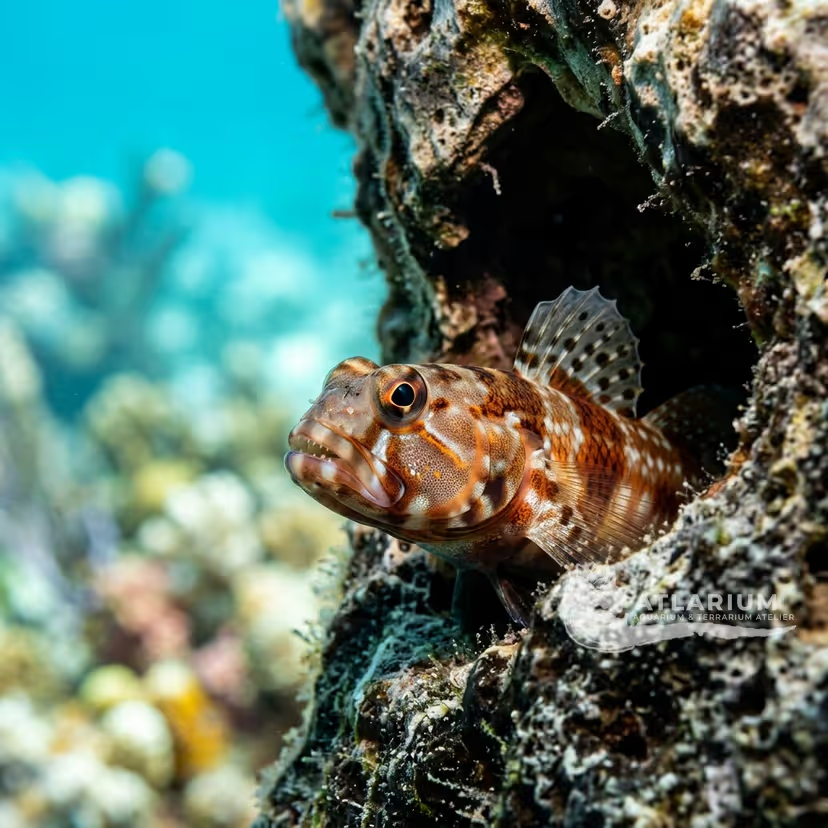
Ellipse shrimpgoby
Amblyeleotris ellipse

Dentex Blenny
Ecsenius dentex

Fourmanoir's Blenny
Ecsenius fourmanoiri

Barsnout goby
Elacatinus illecebrosus

Bleeker's Shrimpgoby
Amblyeleotris bleekeri
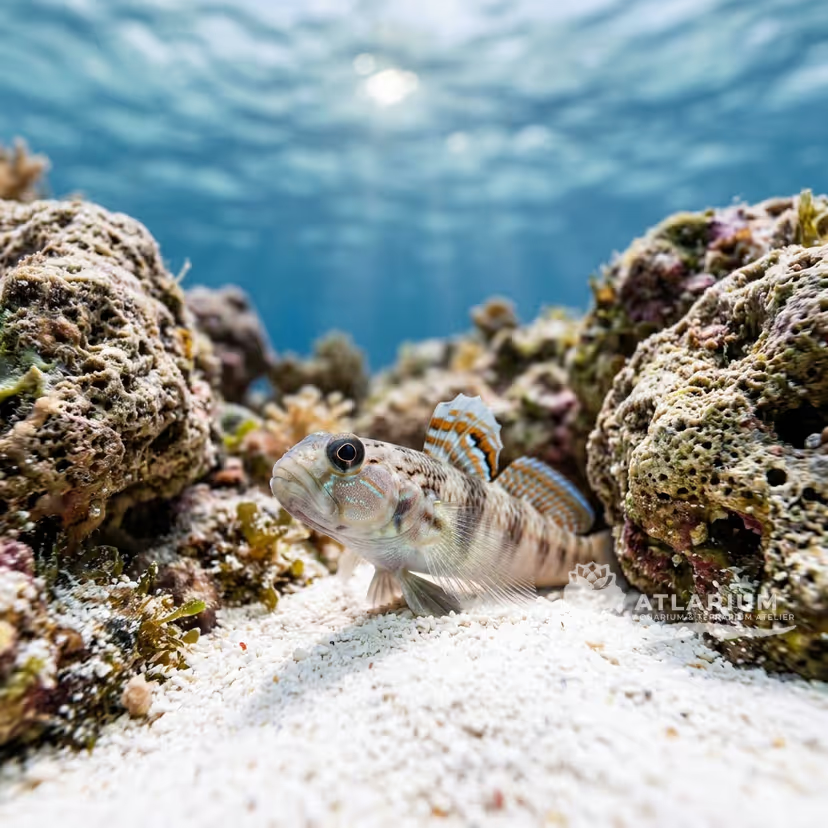
Downing's Shrimpgoby
Amblyeleotris downingi

Arch-fin shrimpgoby
Amblyeleotris arcupinna

Beautiful-cheek shrimpgoby
Amblyeleotris callopareia

Eyebar goby
Gnatholepis anjerensis
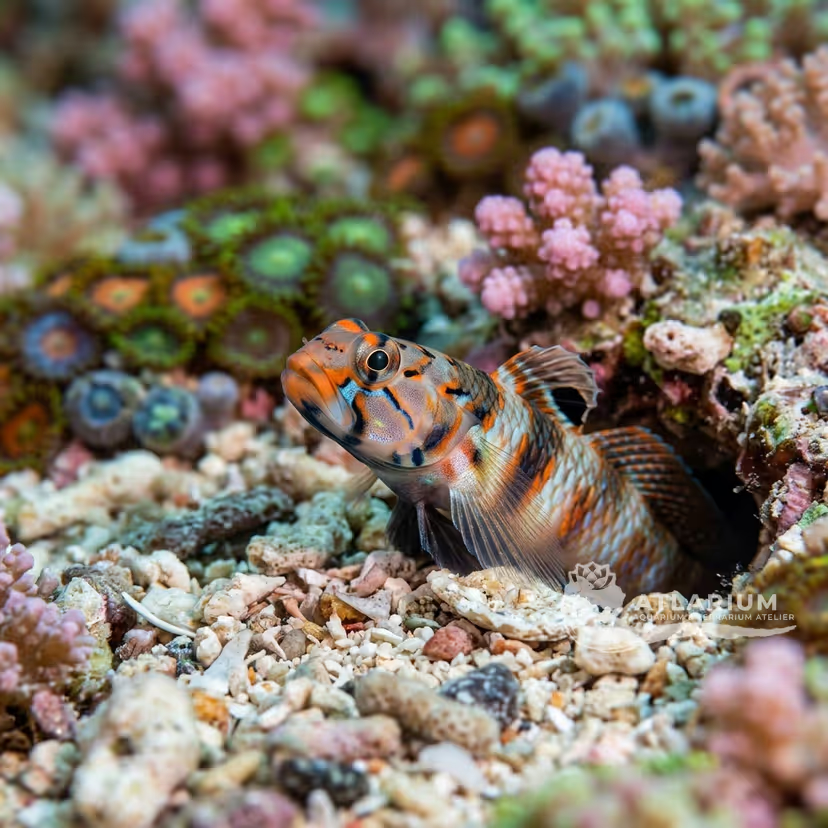
Aurora Goby
Amblyeleotris aurora

Australian combtooth blenny
Ecsenius australianus
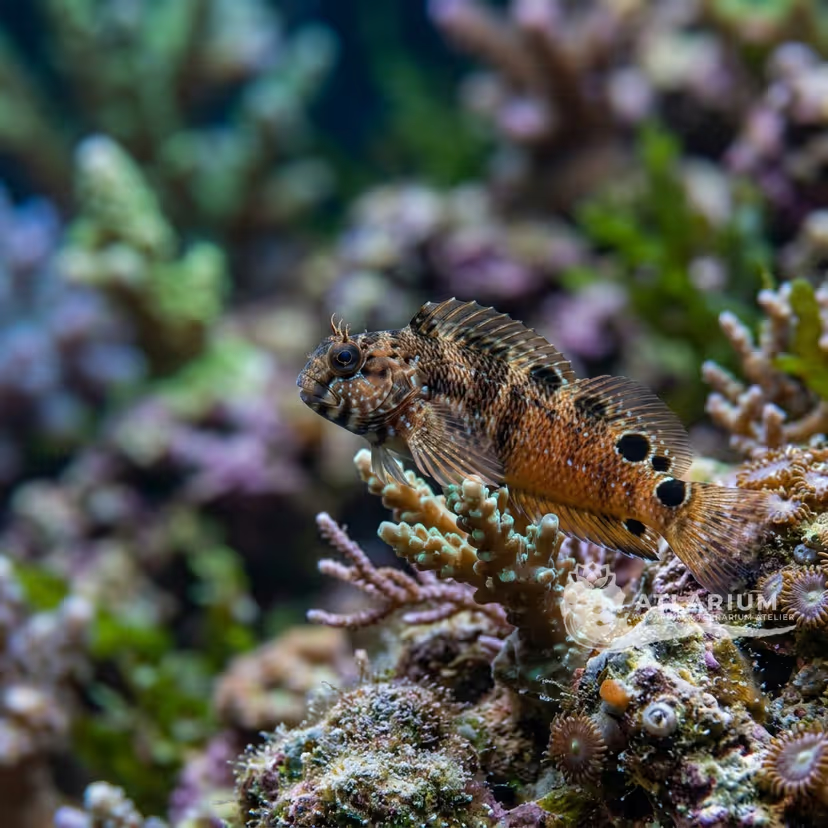
Yellow-eye combtooth-blenny
Ecsenius ops

Barber Goby
Elacatinus figaro

Erdmann's dottyback
Pseudochromis erdmanni

Goldline Dottyback
Pseudochromis aureolineatus