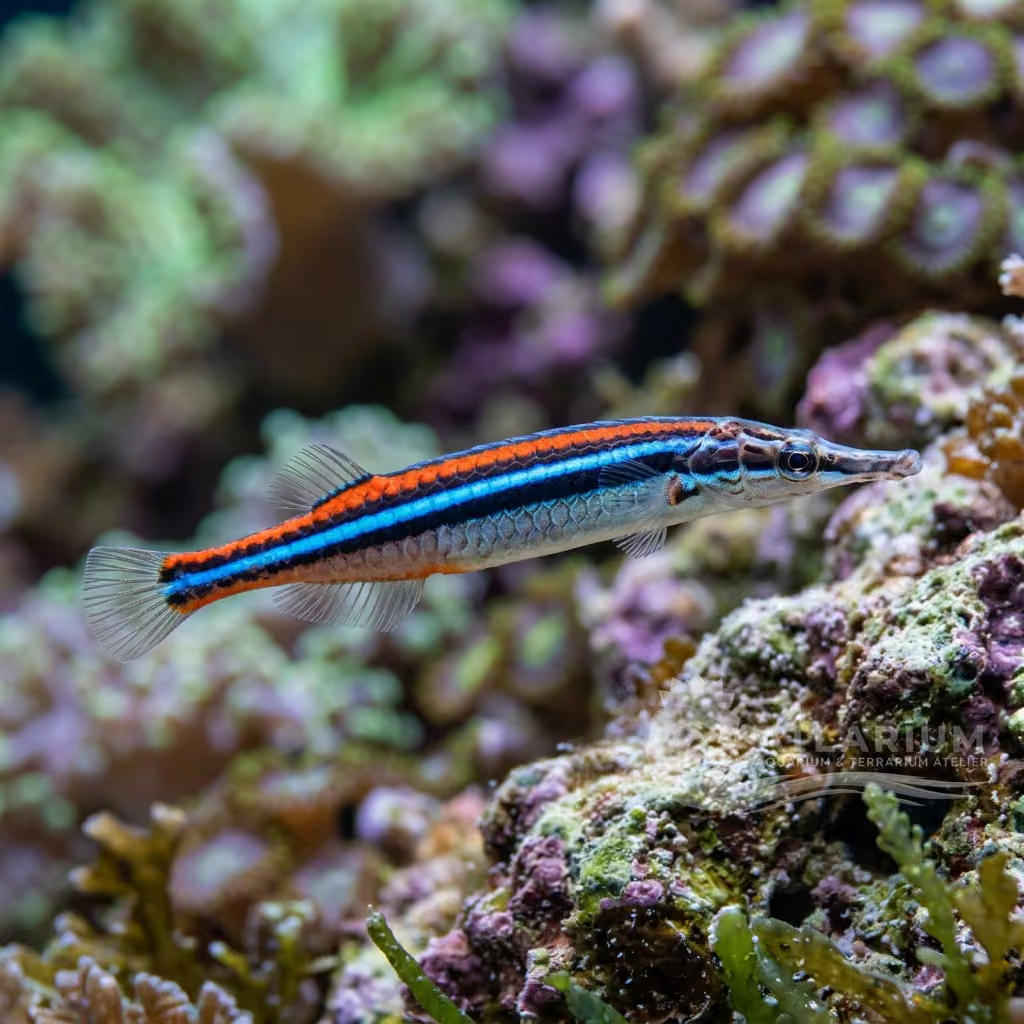
Threadfin Cardinalfish
Zoramia leptacanthus
The Threadfin Cardinalfish is a delicate, ghostly-translucent schooling fish accented with neon blue streaks. Extremely peaceful, it forms mesmerizing mid-water groups that harmoniously elevate any reef biotope.
Water Temperature
24 - 27 °C
pH Value
8.1 - 8.4
Water type
Marine
Tank level
Bottom and middle
Adult size
6 cm
Minimum tank volume
>= 80 L
Minimum group
>= 5
KH
8 - 12 dKH

Species description
Geographical Origin and Habitat: Tropical Indo-Pacific: from the Red Sea and East African coast to Samoa, north to the Ryukyu Islands. Inhabits sheltered coral reefs and lagoons, forming dense schools among branching corals (Acropora) at depths of 1 to 12 meters.
Taxonomy and Morphology: Member of the family Apogonidae. Features a translucent, laterally compressed body, large eyes ringed in bright blue, and a long filamentous ray on the first dorsal fin. Grows up to 6 cm.
Social Behavior: Extremely peaceful and schooling. It is one of the few marine species that forms true tight schools swimming in unison near reef branches.
Coloration and Sexual Dimorphism: Semi-translucent body showing the spine, characterized by iridescent blue and golden hues with thin vertical orange lines. Cobalt blue eyes. Dimorphism is absent. The unusually large eyes feature a dilated pupil that facilitates nocturnal hunting. The semi-translucent skeleton makes the internal organs and the structure of the spine visible under strong illumination.

Care, breeding and tankmates
Aquarium Setup: Requires a tank of at least 80 liters (larger preferred for schools). Provide branching Acropora corals or vertical shelters. Low jumping risk.
Diet and Feeding: Planctivorous carnivore. In captivity, feeds on fine frozen foods like brine shrimp, mysis, copepods, and lobster eggs. Feed twice daily.
Water Quality: Keep parameters stable. Temperature 24-27°C, pH 8.1-8.4, salinity SG 1.020-1.026. GH 15-25. Prefers gentle to moderate water flow.
Compatibility and Cohabitation: 100% reef safe. Ideal for quiet community marine tanks with branching corals. Do not house with fast or aggressive fish that may intimidate it.
Aquarium Breeding: Paternal mouthbrooder. The male holds the egg mass in his mouth until hatching. Captive spawning is difficult to raise.
Risks and Diseases: Susceptible to skin parasites if stressed by aggressive tankmates. May waste away if not fed enough due to food competition. Avoid sudden light changes to prevent startling the school, which could cause them to collide violently with the glass or rocks. The presence of an active carbon filter helps keep the water crystal clear, reducing fish stress.

Geographic origin and distribution
Tropical Indo-Pacific: from the Red Sea and East African coast to Samoa, north to the Ryukyu Islands. Inhabits sheltered coral reefs and lagoons, forming dense schools among branching corals (Acropora) at depths of 1 to 12 meters.
Origin
Tropical oceans and reefsAfrica and MadagascarEast Asia

Fish profile
- Temperament
- Territorial
- The Threadfin Cardinalfish is exceptionally docile and timid, making it a perfect resident for a tranquil reef environment. It prefers to observe its surroundings quietly rather than actively engaging with other fish. Keeping it in a small group or school can significantly reduce its shyness and encourage more natural behaviors. It will rarely, if ever, show aggression toward any other aquarium inhabitants.
- Diet
- Carnivore
- In its natural habitat, the Threadfin Cardinalfish is a nocturnal planktivore that feeds on tiny crustaceans suspended in the water column. In captivity, it readily accepts a variety of small, meaty foods such as frozen cyclops, baby brine shrimp, and finely chopped mysis. It can also be trained to accept high-quality micro-pellets or flakes over time. Offering a varied diet ensures optimal health and vibrant coloration.
- Life expectancy
- 5-10 years
- Adult size
- 6 cm
- Sex ratio
- School
- Telling males and females apart can be challenging, as the Threadfin Cardinalfish exhibits minimal sexual dimorphism. Males may occasionally display a slightly larger jaw structure, especially during the breeding season when preparing to mouthbrood. For the best chances of forming a compatible pair or a small shoal, purchasing a group of individuals is recommended. They generally coexist peacefully in small groups within adequate space.
- Feeding frequency
- Twice daily
- Due to its small stomach and active metabolism, this species benefits from frequent, small feedings. Providing food 1 to 2 times daily is generally sufficient to maintain its weight and health. Since it naturally feeds during twilight and nocturnal hours, offering food when the main aquarium lights are dim can encourage better feeding responses. Target feeding may be necessary if tank mates are aggressive eaters.
- Bioload
- Low to Medium
- The Threadfin Cardinalfish (Zoramia leptacanthus) produces a relatively low bioload compared to larger reef fishes. Due to its small size and efficient digestion, it contributes minimally to the aquarium's overall waste accumulation. Standard protein skimming and regular water changes are usually sufficient to maintain pristine conditions. It is an excellent choice for smaller setups or heavily stocked reef tanks.
- Flow
- Strong
- The Threadfin Cardinalfish prefers areas of gentle to moderate water flow where it can easily hover and capture passing plankton. Extremely strong or chaotic currents can exhaust this small fish and force it to hide continuously. Creating sheltered zones within the rockwork allows it to rest peacefully during the day. A well-balanced flow dynamic ensures it receives food without expending unnecessary energy.
- Jump risk
- No
- Reproduction
- Mouthbrooder
- Zoramia leptacanthus are paternal mouthbrooders, a fascinating reproductive strategy common among cardinalfishes. After a complex courtship dance, the female releases eggs which the male quickly fertilizes and scoops into his mouth. The male incubates the eggs for several weeks, during which he generally refuses to eat. Once the fry hatch, they are released into the water column to fend for themselves.
- Compatibility & tankmates
- Community
- This cardinalfish is incredibly peaceful and makes an ideal addition to a community reef aquarium. It poses no threat to corals, invertebrates, or other small, docile fishes. However, its small size and passive nature make it vulnerable to aggressive or large predatory tank mates. It should be housed with similarly peaceful species such as gobies, blennies, and small wrasses.
- Tank level
- Middle/Bottom
- This cardinalfish predominantly occupies the middle sections of the water column. During the day, it tends to hover motionless near branching corals, rock overhangs, or artificial structures. As the lights dim, it becomes more active and ventures further into open water to hunt for plankton. Providing vertical structures like sea whips or branching SPS corals mimics its natural sheltering behavior.

Scientific Parameters & Models
FishBase
Window to the official scientific data of the species
FishBase v25.04Data synced on: 06/15/2026
- Trophic level
- 3.5 ± 0.5 se
- Resilience
- High (less than 15 months)
- Phylogenetic uniqueness (PD50)
- 0.5156
- Bayesian Length-Weight
- a = 0.01514, b = 3.07
- VulnerabilityLow vulnerability (10 / 100)

Related species
Recommendations grouped by close relatives, companion choices, and similar care.