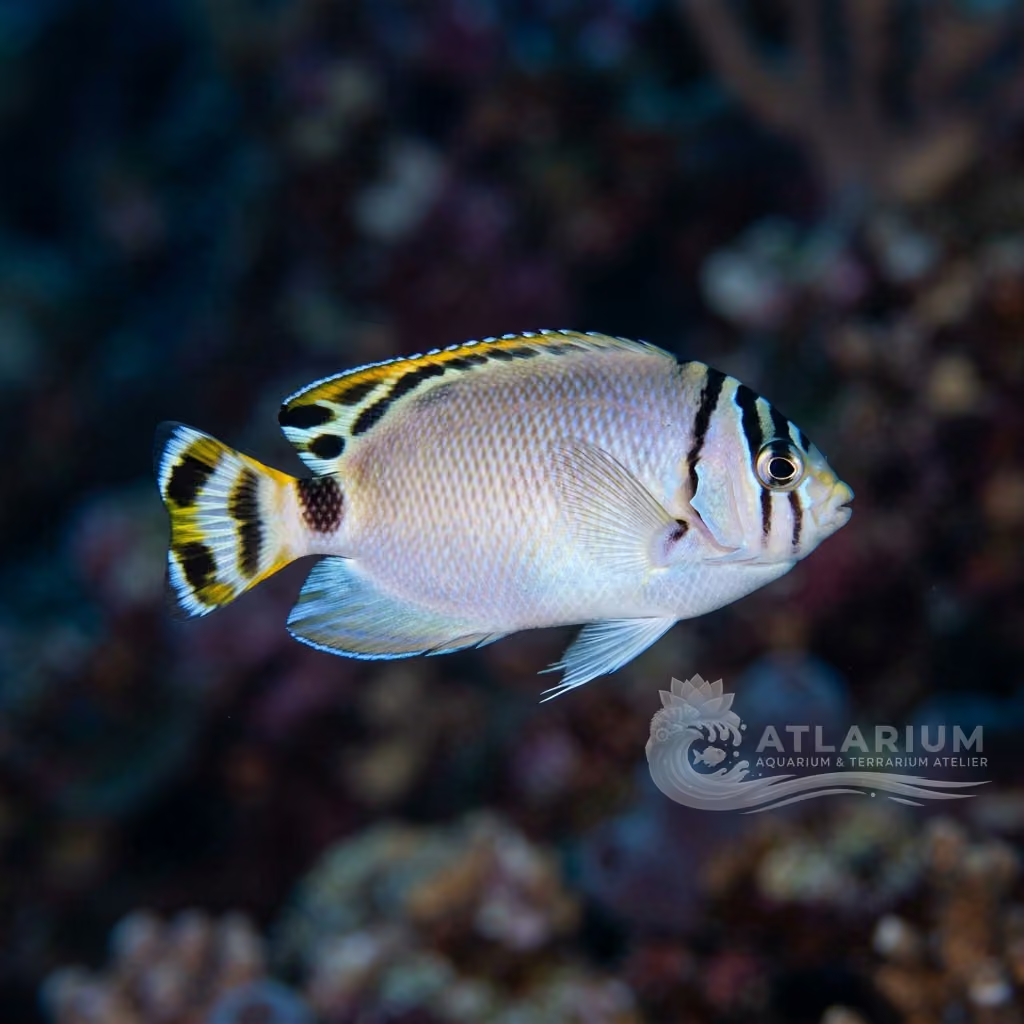
Wolf Cardinalfish
Cheilodipterus artus
A nocturnal, predatory marine cardinalfish characterized by dark stripes and prominent canine teeth. Best kept in spacious aquariums with larger tankmates.
Water Temperature
22 - 28 °C
pH Value
8.1 - 8.4
Water type
Marine
Tank level
Bottom and middle
Adult size
18 cm
Minimum tank volume
>= 250 L
Minimum group
>= 1
KH
8 - 12 dKH

Species description
Geographical Origin and Habitat: Widely distributed throughout the tropical Indo-Pacific, spanning from the eastern coast of Africa and Madagascar to the Ryukyu Islands, the Great Barrier Reef, the Marshall Islands, and the Tuamotu islands. It inhabits sheltered coastal reefs, lagoons, and outer reef slopes at depths of 2 to 15 meters, hiding in caves or among branching Acropora corals during the day.
Taxonomy and Morphology: Belongs to the order Perciformes, family Apogonidae, subfamily Apogoninae, and genus Cheilodipterus. Described by Smith in 1961. It features an elongated body, two separate dorsal fins, and large eyes characteristic of nocturnal predators. It is distinguished by a large mouth lined with prominent, sharp canine teeth. Adult size is 12-15 cm (4.7-6 inches).
Social Behavior: Primarily nocturnal and solitary as adults, while juveniles may form small loose aggregations near staghorn corals. During the day, it hovers nearly motionless in shaded caves or overhangs. It displays intraspecific aggression in smaller tanks and will readily hunt smaller fish and crustaceans.
Coloration and Sexual Dimorphism: The body has a silver-gray to pinkish-tan background marked with 8 to 10 dark brown or black horizontal stripes. The caudal peduncle features a yellow patch with a distinct dark spot at the center. There is no visible external sexual dimorphism; sexes can only be distinguished during spawning.

Care, breeding and tankmates
Aquarium Setup: Requires an aquarium of at least 250 liters (65 gallons) for a single specimen or a mated pair. The aquascape must feature plenty of live rock arranged to create deep caves, overhangs, and shaded spots where the fish can seek shelter from bright lights during the day. Dimmable LED lighting with a moonlight phase is ideal.
Diet and Feeding: Carnivorous predator. Must be fed a diet of fresh or frozen meaty foods such as mysis shrimp, krill, chopped shrimp, pieces of fish, squid, and silversides. They rarely accept dry flakes or pellets. Feeding should take place during the evening or with the lights dimmed, once or twice daily.
Water Quality: Demands stable marine water parameters. Keep temperature at 24-28°C (75-82°F), pH 8.1-8.4, specific gravity 1.020-1.025, and KH 8-12. Nitrates and phosphates should be kept low. A high-performance protein skimmer is highly recommended to manage the high organic load from their meaty diet.
Compatibility and Cohabitation: Can be safely housed with medium to large, semi-aggressive fish such as tangs, angels, larger wrasses, and hawkfish. Absolutely avoid housing them with small gobies, firefish, neon damselflies, or ornamental shrimps (like Lysmata), as these will be quickly swallowed. Avoid hyperactive tankmates.
Aquarium Breeding: Extremely rare in home aquaria. Similar to other cardinalfish, they are paternal mouthbrooders. After fertilization, the male collects the egg mass into his mouth and carries them for about a week until hatching, during which time he does not feed. The newly hatched fry require rotifers and copepod nauplii.
Risks and Diseases: Relatively hardy once acclimated but vulnerable to transport stress and sudden temperature drops. Susceptible to common marine parasites such as Cryptocaryon irritans and Oodinium. Starvation can occur if highly active diurnal tankmates consume all the food before the cardinalfish emerges to feed.

Geographic origin and distribution
Widely distributed throughout the tropical Indo-Pacific, spanning from the eastern coast of Africa and Madagascar to the Ryukyu Islands, the Great Barrier Reef, the Marshall Islands, and the Tuamotu islands. It inhabits sheltered coastal reefs, lagoons, and outer reef slopes at depths of 2 to 15 meters, hiding in caves or among branching Acropora corals during the day.
Origin
Tropical oceans and reefsAfrica and MadagascarEast Asia

Fish profile
- Temperament
- Peaceful
- They are calm, deliberate, and remarkably peaceful fish. They simply observe their surroundings with giant predatory eyes. They never harass fish that are larger than themselves.
- Diet
- Carnivore
- They are dedicated nocturnal predators of small crustaceans. Chopped krill and frozen mysis are eagerly accepted. They can transition to sinking carnivore pellets slowly.
- Life expectancy
- 2-5 years
- Adult size
- 18 cm
- Sex ratio
- Flexible
- They can be kept in small, carefully monitored groups. Maturing males may occasionally squabble over specific territories. A single bonded pair is the most reliable arrangement.
- Feeding frequency
- Twice daily
- Feeding them once daily after lights out is ideal. This matches their natural nocturnal hunting instinct perfectly. They eventually learn to accept daytime feedings well.
- Bioload
- Medium
- The Wolf cardinalfish produces a moderate to high bioload, reflecting its role as an active nocturnal predator that consumes frequent, meaty meals. Because their diet consists largely of small fishes and crustaceans, the digestion of these rich proteins results in significant nitrogenous waste. In a community reef or FOWLR (Fish Only With Live Rock) system, adequate protein skimming and robust biological filtration are necessary to process their waste. Keeping them in small groups multiplies this biological footprint, requiring diligent water testing and routine maintenance.
- Flow
- Strong
- They prefer low flow to hover effortlessly. Chaotic currents force them to expend unnecessary energy. Sheltered caves with gentle flow are deeply appreciated.
- Jump risk
- No
- Reproduction
- Mouthbrooder
- They are dedicated paternal mouthbrooders during the breeding cycle. The fasting male incubates eggs in his large jaws. Captive breeding is achievable in a quiet environment.
- Compatibility & tankmates
- With caution
- They are peaceful toward anything they cannot swallow. Tiny fish and ornamental shrimp will be quickly eaten. They suit peaceful predator or carefully planned reef setups.
- Tank level
- Middle/Bottom
- Cheilodipterus artus primarily inhabits the middle and lower zones of the water column, generally seeking shelter during the bright daylight hours. They prefer to hover quietly under large rocky overhangs, inside reef caves, or among the branching structures of corals. At night, they become much more active, rising slightly higher into the mid-water to actively hunt for small, sleeping prey. Providing a complex rockscape with ample shading is essential to mimic their natural habitat and reduce daytime stress.

Scientific Parameters & Models
FishBase
Window to the official scientific data of the species
FishBase v25.04Data synced on: 06/15/2026
- Trophic level
- 4.1 ± 0.72 se
- Resilience
- High (less than 15 months)
- Phylogenetic uniqueness (PD50)
- 0.5
- Bayesian Length-Weight
- a = 0.01318, b = 3.15
- VulnerabilityLow vulnerability (13 / 100)

Related species
Recommendations grouped by close relatives, companion choices, and similar care.