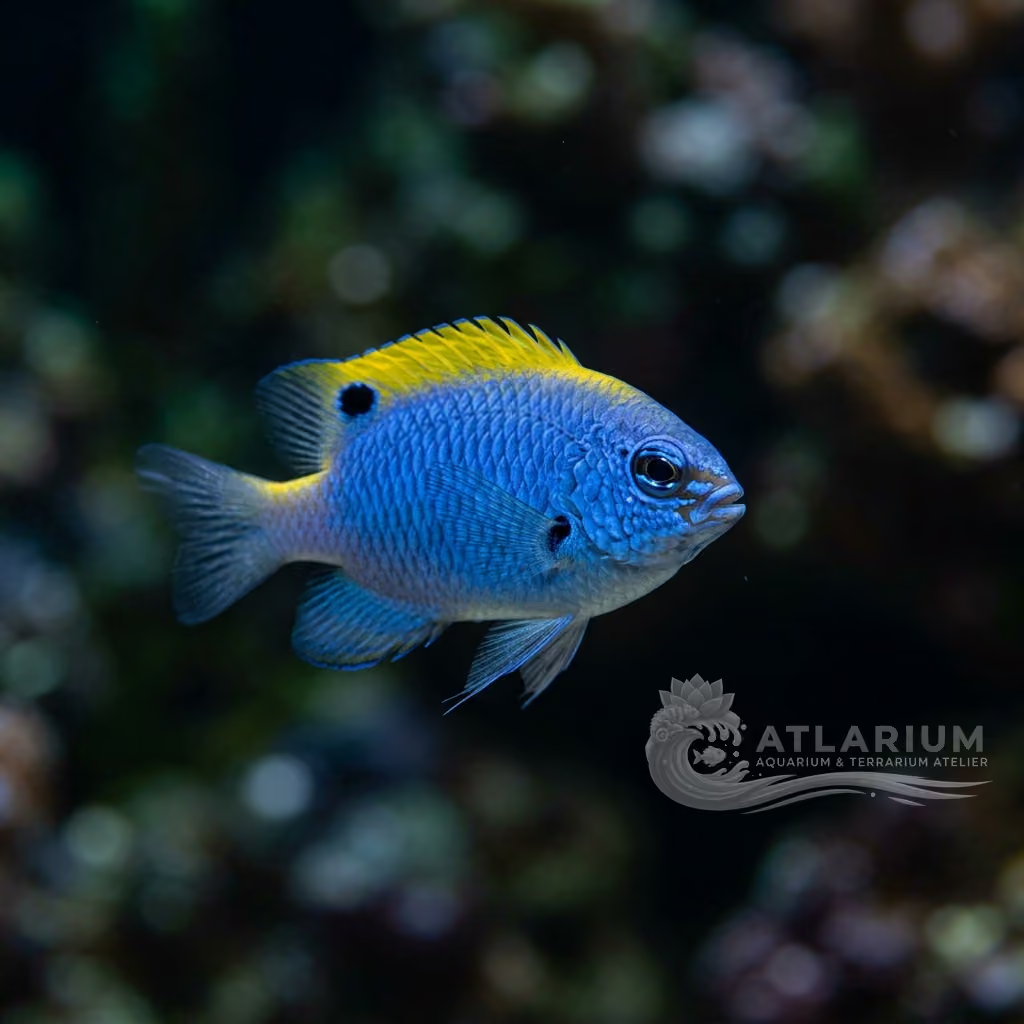
Ochre-striped Cardinalfish
Ostorhinchus compressus
The Ochre-striped Cardinalfish is a vibrant, peaceful schooling fish from the Indo-Pacific. It thrives in dimly lit reef tanks with rocky caves and branching corals for shelter.
Water Temperature
22 - 28 °C
pH Value
8 - 8.5
Water type
Marine
Tank level
Bottom and middle
Adult size
10 cm
Minimum tank volume
>= 115 L
Minimum group
>= 5
KH
8 - 12 dKH

Species description
Geographical Origin and Habitat: Widespread in the tropical Indo-Pacific, from Indonesia and the Philippines to Samoa, north to southern Japan, and south to the Great Barrier Reef. Inhabits protected lagoons, shallow reefs, and branching Porites coral patches at depths of 2 to 20 meters.
Taxonomy and Morphology: Member of the family Apogonidae, scientifically classified as Ostorhinchus compressus. Features a laterally compressed body and large neon blue eyes adapted for nocturnal vision. Reaches approximately 10 cm in length.
Social Behavior: Peaceful and schooling species. During the day, they hover motionless in groups within caves or shaded coral branches, becoming active at night to hunt for zooplankton.
Coloration and Sexual Dimorphism: Whitish body crossed by 6 longitudinal ochre or reddish-brown stripes. Eyes are bright neon blue with dark markings. No obvious external sexual dimorphism, though males display slightly wider jaw structures when mouthbrooding.

Care, breeding and tankmates
Aquarium Setup: Demands at least 115 liters for a single specimen, but a 200-liter tank is preferred to maintain a group of 5 or more. Provide live rock structures creating caves, shaded overhangs, and branching corals. Subdued lighting is appreciated.
Diet and Feeding: Carnivorous. Feeds mainly on zooplankton. In captivity, feed with small frozen foods like mysis, brine shrimp, and chopped krill. Accepts quality pellets after acclimation. Feeding at dusk or dawn is recommended.
Water Quality: Stable parameters: temperature 22-28°C, pH 8.0-8.5, specific gravity (SG) 1.020-1.025, GH 15-25, KH 8-12. Sensitive to high nitrates and phosphates; requires good skimming and regular water changes.
Compatibility and Cohabitation: 100% reef safe. Perfect for coral reef tanks. Coexists peacefully with other docile fishes of similar size. Avoid aggressive tankmates that might intimidate them. May prey on tiny ornamental shrimps.
Aquarium Breeding: Paternal mouthbrooder. After fertilization, the male holds the egg mass in his mouth, guarding and aerating them for about a week without feeding. Fry hatch at night. Rearing the fry is complex.
Risks and Diseases: Hardy and easy to care for. May suffer from starvation if housed with aggressive, fast-feeding competitors. Susceptible to marine ich (Cryptocaryon) under temperature stress.

Geographic origin and distribution
Widespread in the tropical Indo-Pacific, from Indonesia and the Philippines to Samoa, north to southern Japan, and south to the Great Barrier Reef. Inhabits protected lagoons, shallow reefs, and branching Porites coral patches at depths of 2 to 20 meters.
Origin
Tropical oceans and reefsCentral America and CaribbeanSouth and Southeast AsiaEast AsiaAustralia, New Guinea, and Oceania

Fish profile
- Temperament
- Territorial
- The Ochre-striped Cardinalfish is a peaceful and somewhat shy species, especially during daylight hours. They do not pose a threat to other fish and are generally compatible with calm, non-aggressive tank mates. However, they may exhibit mild conspecific territoriality, particularly when forming breeding pairs, so adequate space and structures must be provided.
- Diet
- Carnivore
- As carnivores, Ochre-striped Cardinalfish require a diet rich in small meaty foods to replicate their natural feeding habits. In the aquarium, they should be offered a variety of high-quality frozen or live foods, such as mysis shrimp, brine shrimp, and enriched copepods. Over time, some individuals may adapt to high-quality marine flakes or pellets, though fresh or frozen items should remain the staple of their diet.
- Life expectancy
- 3-5 years
- Adult size
- 10 cm
- Sex ratio
- Group
- In captivity, Ochre-striped Cardinalfish can be kept in small groups when young, but they may form pairs and become territorial as they mature. To minimize aggression in smaller aquariums, stocking a single individual or a confirmed mated pair is highly recommended. In larger systems, a small group of five or more individuals can be housed together, provided there is sufficient cover and space to establish territories.
- Feeding frequency
- Twice daily
- Due to their relatively high metabolism and active nocturnal lifestyle, these fish should be fed at least once or twice daily. Providing food during the evening hours or under dimmed lights can encourage natural feeding behavior, as they are naturally nocturnal. Ensuring that food is distributed evenly allows all individuals, including shyer specimens, to receive adequate nutrition.
- Bioload
- Low to Medium
- The Ochre-striped Cardinalfish is a small species that produces a low to moderate biological waste load, making it relatively easy to manage in terms of filtration. However, they are sensitive to fluctuating water parameters, so a well-established filtration system with efficient mechanical, biological, and chemical media is essential. Regular water changes and a properly sized protein skimmer will help maintain the pristine water quality they require to thrive.
- Flow
- Moderate
- The Ochre-striped Cardinalfish prefers areas with low to moderate water flow within the aquarium. Being slow and deliberate swimmers, strong currents can stress them and exhaust their energy reserves as they struggle to remain stationary. Creating quiet zones with rockwork or branching corals where they can hover comfortably is key to their well-being.
- Jump risk
- Yes
- The Ochre-striped Cardinalfish is a moderately active swimmer but can easily startle, especially when the aquarium lights turn off. If spooked by tank mates or sudden changes in illumination, they may dash upward and leap out of the water. To prevent accidental loss, a secure, tight-fitting lid or mesh cover is highly recommended for the aquarium.
- Reproduction
- Mouthbrooder
- Like many members of the Apogonidae family, this species is a paternal mouthbrooder, with the male carrying the fertilized eggs in his mouth until hatching. Breeding them in captivity is possible, but successfully rearing the fry remains a highly challenging task. The larval fish are extremely small and fragile, requiring specialized live feeds such as rotifers and copepod nauplii in a dedicated rearing tank.
- Compatibility & tankmates
- Reef safe
- The Ochre-striped Cardinalfish is highly compatible with other peaceful reef-dwelling species such as gobies, firefish, and dwarf angelfish. They should not be kept with large, predatory, or overly aggressive fish, which may bully them or view them as prey. While reef-safe and harmless to corals, they may opportunistically consume very tiny ornamental shrimp if they fit into their mouths.
- Tank level
- Middle/Bottom
- This species primarily occupies the lower to middle levels of the water column, hovering near shelters. In the wild, they are closely associated with branching corals and reef crevices, where they seek refuge during the day. In the home aquarium, they will spend most of their time hovering almost motionless near live rock formations or dense coral branches.

Scientific Parameters & Models
FishBase
Window to the official scientific data of the species
FishBase v25.04Data synced on: 06/15/2026
- Trophic level
- 3.5 ± 0.5 se
- Resilience
- High (less than 15 months)
- Phylogenetic uniqueness (PD50)
- 0.5
- Bayesian Length-Weight
- a = 0.01, b = 3.04
- VulnerabilityLow vulnerability (10 / 100)

Related species
Recommendations grouped by close relatives, companion choices, and similar care.