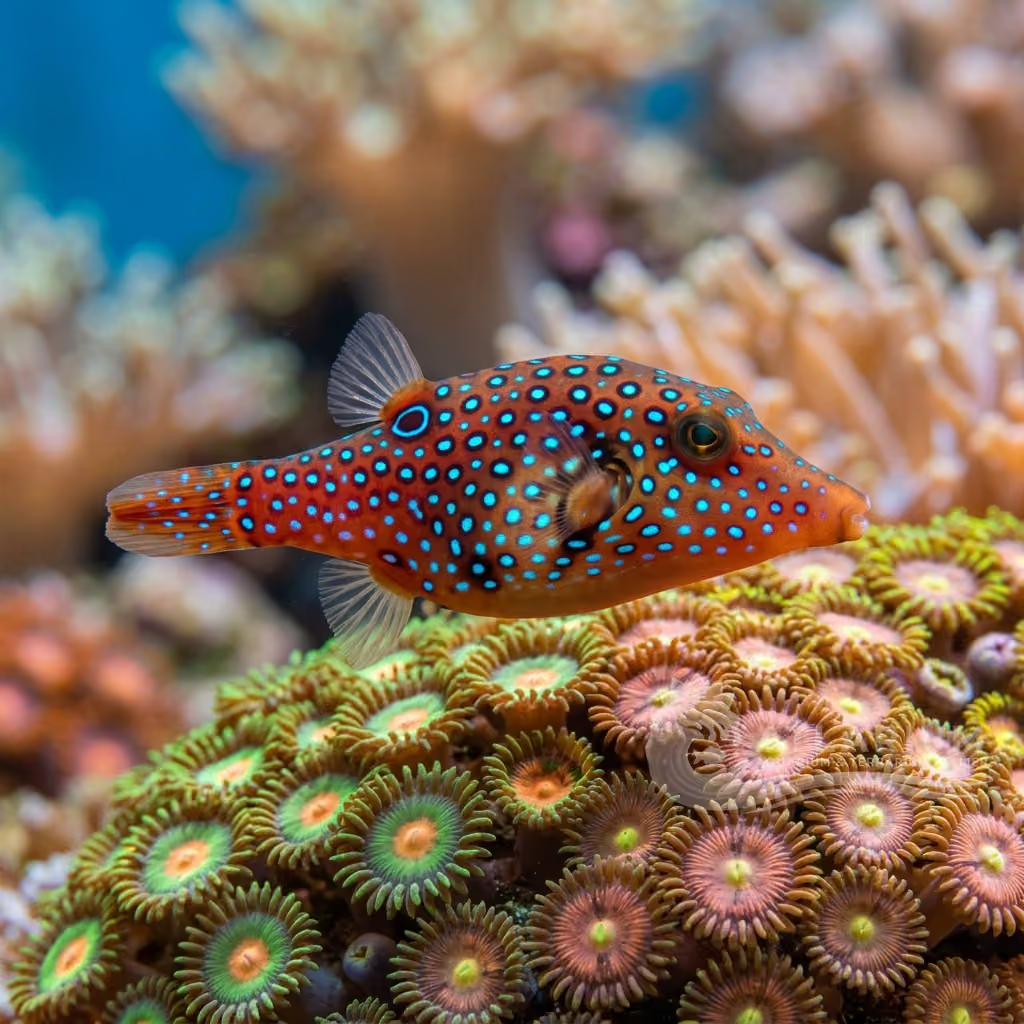
Flamefish
Apogon maculatus
The Flamefish is a vibrant red cardinalfish native to the Western Atlantic. A nocturnal predator, it requires a tank with dim lighting and numerous dark caves to feel secure.
Water Temperature
24 - 27 °C
pH Value
8.1 - 8.4
Water type
Marine
Tank level
Bottom and middle
Adult size
11 cm
Minimum tank volume
>= 120 L
Minimum group
>= 1
KH
8 - 12 dKH

Species description
Geographical Origin and Habitat: This species is native to the Western Atlantic Ocean, ranging from southern Canada and the Florida coast down to the Gulf of Mexico, the Bahamas, the Caribbean, and northern South America (to Brazil). It inhabits coral reefs, rocky reefs, and coastal waters rich in caves, at depths ranging from 1 to 120 meters.
Taxonomy and Morphology: Apogon maculatus belongs to the Apogonidae family, genus Apogon. It features a short, laterally compressed body, large eyes adapted for low-light vision, and a wide, upturned mouth. Adults reach a maximum length of about 8-11 cm (3-4 inches).
Social Behavior: Primarily crepuscular and nocturnal. During the daytime, it hovers nearly motionless in the shadow of caves, rock overhangs, or branching corals, emerging at night to hunt zooplankton. It is peaceful and can be housed in small groups if the tank has sufficient caves and hiding spots.
Coloration and Sexual Dimorphism: The body is bright flame-red or deep orange. It displays two dark lines crossing the eye, a distinct round black spot beneath the second dorsal fin, and a black saddle on the caudal peduncle. There is no visible external sexual dimorphism; males incubate eggs in their mouths.

Care, breeding and tankmates
Aquarium Setup: Needs an aquarium of at least 120-150 liters (30-40 gallons). The aquascaping must feature plenty of live rock arranged to create dark caves, overhangs, and shaded areas where the fish can retreat during the day to escape bright reef lighting.
Diet and Feeding: Carnivorous, feeding on small crustaceans and zooplankton. In captivity, it readily accepts frozen foods like mysis shrimp, brine shrimp, chopped krill, and fish eggs. It can be trained to eat high-quality dry pellets or flakes. Feed in the evening or under dim lighting.
Water Quality: Requires stable reef parameters: water temperature between 23°C and 27°C (73°F - 81°F), pH 8.1-8.4, salinity/specific gravity 1.023-1.025, and dKH 8-12. Keep ammonia and nitrites at zero. Regular maintenance is necessary to keep organic waste low.
Compatibility and Cohabitation: Completely reef-safe. It is compatible with most peaceful community fish. However, due to its large mouth, very small ornamental shrimps (such as sexy shrimp) may be eaten. Avoid housing with aggressive or overly active fish that could intimidate it.
Aquarium Breeding: They are paternal mouthbrooders. After spawning, the male carries the eggs in his mouth, protecting them until they hatch (about 7-9 days), during which time he does not feed. Raising the hatched larvae requires microscopic live foods (rotifers) in a separate rearing tank.
Risks and Diseases: Highly hardy and disease-resistant. However, it can suffer from chronic stress in tanks with high light output and no cave structures. It may contract marine ich (Cryptocaryon) if subjected to rapid temperature drops or handling stress.

Geographic origin and distribution
This species is native to the Western Atlantic Ocean, ranging from southern Canada and the Florida coast down to the Gulf of Mexico, the Bahamas, the Caribbean, and northern South America (to Brazil). It inhabits coral reefs, rocky reefs, and coastal waters rich in caves, at depths ranging from 1 to 120 meters.
Origin
Tropical oceans and reefsExtra-Amazon South AmericaCentral America and CaribbeanNorth America

Fish profile
- Temperament
- Semi-aggressive
- This species is generally peaceful, shy, and semi-aggressive only toward members of its own kind. During the day, they exhibit a calm, hovering behavior inside caves and crevices rather than active swimming. They do not pose a threat to other peaceful reef fish, making them excellent community residents. However, they can show territorial behavior if their personal shelter is invaded by similar species.
- Diet
- Carnivore
- The Flame Cardinalfish (Apogon maculatus) is a strict carnivore that requires a varied diet of meaty foods to thrive. Suitable options include frozen mysis shrimp, brine shrimp, krill, and finely chopped marine seafood. They rarely accept dry flake or pellet food, especially when first introduced to the aquarium. Enriching their food with carotenoids and vitamin supplements is highly recommended to preserve their bright red color.
- Life expectancy
- 3-6 years
- Adult size
- 11 cm
- Sex ratio
- 1:1 ratio
- It is generally recommended to keep the Flame Cardinalfish (Apogon maculatus) singly or as a mated male-female pair. Keeping multiple specimens together in a smaller tank often results in intense territorial aggression and potential fatalities. In larger aquariums of 55 gallons or more, small groups can be maintained if there is sufficient rockwork to define separate territories. For standard community aquariums, a 1:1 ratio for an established pair is the safest approach.
- Feeding frequency
- 2-3 times daily
- It is recommended to feed this species once or twice daily, ideally during twilight hours or after the main lights are turned off. Because they are nocturnal, they may be hesitant to feed under intense aquarium lighting. Target feeding near their hiding spots can ensure they receive sufficient nutrition, particularly in tanks with fast-swimming day-active competitors. Feeding them under actinic or moonlighting is often the most successful strategy.
- Bioload
- Low
- The biological waste produced by the Flame Cardinalfish (Apogon maculatus) is relatively low due to its small size and sedentary lifestyle. However, because it is a carnivore, high-protein meaty foods can impact water quality if left uneaten. A robust filtration system and regular partial water changes are recommended to maintain optimal water parameters. A standard protein skimmer and efficient biological media will easily manage their waste output.
- Flow
- Strong
- This cardinalfish prefers moderate water flow with plenty of low-velocity areas where they can rest. High-flow environments should be avoided, as their physical structure is not suited for battling strong currents. However, some water movement is necessary to prevent stagnant areas within their caves and rockwork. A balanced circulation setup that provides both swimming space and calm retreats is ideal.
- Jump risk
- Yes
- The Flame Cardinalfish (Apogon maculatus) has a low to moderate risk of jumping out of the aquarium. They are generally slow-moving, but they can leap if startled by sudden light changes or aggressive tankmates, especially at night. A tight-fitting lid or mesh cover is highly recommended to prevent accidental escapes. Providing ample hiding spots also helps reduce the anxiety that could trigger a jump.
- Reproduction
- Oviparous
- Flame Cardinalfish (Apogon maculatus) are paternal mouthbrooders, meaning the male carries the fertilized eggs in his mouth until they hatch. During this incubation period, which lasts for several days, the male does not feed and his mouth appears visibly swollen. While spawning occurs relatively frequently in home aquariums, raising the fry is extremely challenging. The microscopic larvae require specialized live foods like rotifers and must be protected from filtration systems.
- Compatibility & tankmates
- Reef safe
- This species is highly compatible with other peaceful marine fish such as gobies, firefish, and dwarf angelfish. They should not be kept with large predatory fish like groupers, lionfish, or large wrasses that might consume them. Caution is also advised when housing them with very small ornamental shrimp, as these may be viewed as prey. Conversely, they are completely reef-safe and will not harm sessile corals or clams.
- Tank level
- Middle/Bottom
- This species primarily occupies the bottom and middle zones of the aquarium, hovering near structures. They are nocturnal and spend daylight hours sheltered under rock ledges, caves, or coral overhangs. They rarely venture to the upper water column unless attracted by food or during nighttime activity when they feel secure. Providing plenty of shaded areas in the lower half of the tank is crucial for their well-being.

Scientific Parameters & Models
FishBase
Window to the official scientific data of the species
FishBase v25.04Data synced on: 06/15/2026
- Trophic level
- 3.5 ± 0.4 se
- Resilience
- High (less than 15 months)
- Phylogenetic uniqueness (PD50)
- 0.5
- Bayesian Length-Weight
- a = 0.01072, b = 3.07
- VulnerabilityLow vulnerability (10 / 100)

Related species
Recommendations grouped by close relatives, companion choices, and similar care.