Encyclopaedia

InvertebrateMarineEasy
©AI Generated·Proprietary

Decorator Crab

Camposcia retusa

A master of disguise, this intriguing marine decorator crab camouflages itself by carefully attaching corals, sponges, and rubble to its velcro-like body.

Taxonomy
Class:Malacostraca
Order:Decapoda
Family:Inachidae
Genus:Camposcia
Species:Camposcia retusa

Share

Check out Decorator Crab on Atlarium

PracticeRecognition quizzesPhotos, names, origins, and puzzles to review Atlas species.Open quizzes
Water Temperature

22 - 27 °C

pH Value

8.1 - 8.5

Water type

Marine

Invertebrate type

Marine crab

Adult size

10 cm

Minimum group

>= 1

KH

8 - 12 dKH

Ecological role

Scavenger

Species description

Geographical Origin and Habitat: Tropical Indo-Pacific, from the Red Sea to Australia. Found in shallow coral reefs and lagoons rich in algae and sponges. They inhabit coral reefs, rocky shores, and mangrove roots where rubble and sponge growth are abundant.
Taxonomy: Family Inachidae, genus Camposcia. Body is covered in hooked setae (bristles) that act like velcro to hold camouflage objects. Belongs to the family Inachidae, commonly known as spider crabs or decorator crabs due to their body shape and behavior.
Social Behavior: Peaceful, slow, and mostly nocturnal. Spends its time collecting sponges, zoanthids, and algae to attach to its shell for camouflage. Nocturnal and solitary. They spend significant time arranging decorations on their shell to avoid predators.
Coloration and Sexual Dimorphism: Natural color is dull brown, but is usually completely hidden under decorations. Males have slightly larger claws than females. Genders are distinguished by the width of the abdomen, which is wider in females to carry eggs.

Care, breeding and tankmates

Tank Setup: An aquarium of at least 100 liters with plenty of live rock and loose items (shells, coral rubble, algae) for camouflage materials. Provide a variety of loose materials like macroalgae and shell fragments so the crab can decorate itself naturally.
Diet and Feeding: Omnivorous scavenger. Consumes leftover fish food, algae, and detritus. Weekly target feeding of chopped shrimp or pellets is beneficial. Accepts frozen mysis, brine shrimp, and sinking pellets. They are opportunistic scavengers that clean the substrate.
Water Quality: Standard reef parameters. Keep pH at 8.1-8.5, and specific gravity 1.023-1.025. Calcium levels must be maintained to ensure proper shell growth. Stable iodine and calcium levels are crucial for exoskeleton development and successful shedding cycles.
Compatibility and Tankmates: Safe with peaceful reef fish. Caution is required as it may harvest pieces of soft corals or zoanthids to decorate itself. May nip at soft corals or zoanthids to use as camouflage. Keep with peaceful community fish.
Aquarium Breeding: Extremely difficult due to the planktonic larval stage which is easily consumed by filtration systems. Larval rearing is extremely difficult due to the delicate planktonic stages which require dedicated rearing setups.
Risks and Diseases: Intolerant of copper. Vulnerable during the molting process; ensure there are safe caves where it can hide while its shell hardens. Copper treatments are lethal. Ensure no predators like triggerfish or large puffers are present in the tank.

Geographic Origin and Distribution

Tropical Indo-Pacific, from the Red Sea to Australia. Found in shallow coral reefs and lagoons rich in algae and sponges. They inhabit coral reefs, rocky shores, and mangrove roots where rubble and sponge growth are abundant.

Origin

Selective breeding and cultivarsNorth AmericaEast AsiaAustralia, New Guinea, and OceaniaTropical oceans and reefs

Invertebrate profile

Diet
Omnivore
Scavenger that will accept most meaty foods, frozen preparations, and uneaten bits in the tank. Not usually destructive to corals for feeding purposes.
Ecological role
Scavenger
A unique scavenger that camouflages itself by attaching sponges, macroalgae, and soft coral polyps to its carapace.
Shock sensitivity
Medium
Needs careful drip acclimation over several hours to adjust to new water chemistry and salinity.
Calcium and minerals
High
Requires sufficient calcium and trace elements for healthy exoskeleton growth and molting.
Molting
Yes
When molting, it sheds its entire exoskeleton, including its carefully curated decorations. It will then begin the process of re-decorating itself.
Reproduction
Oviparous
Captive breeding is highly uncommon as the larval stage requires very specific planktonic foods.
Compatibility & tankmates
Reef safe
Generally reef safe, but might cut small pieces from corals or sponges to decorate itself. Safe with most fish that won't prey on crustaceans.

Image gallery

Licensed images linked to the species or, when marked, to the closest representative taxon.

Related species

Recommendations grouped by close relatives, companion choices, and similar care.

Recommended companions

Compatible cards from coherent ecosystems with matching parameters.

Blue assessor
Fish

Blue assessor

Assessor macneilli

View details->
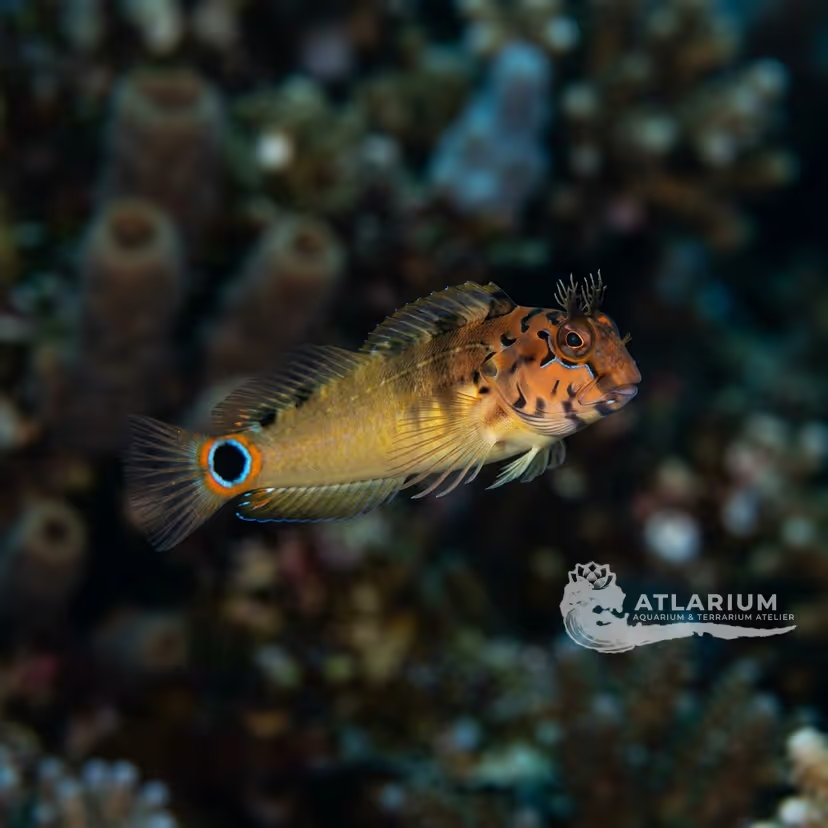
Two-spot bimaculatus blenny
Fish

Two-spot bimaculatus blenny

Ecsenius bimaculatus
View details->
Tailspot blenny
Fish

Tailspot blenny

Ecsenius stigmatura

View details->
Allen's blenny
Fish

Allen's blenny

Ecsenius alleni

View details->
Axelrod's blenny
Fish

Axelrod's blenny

Ecsenius axelrodi

View details->
Black combtooth blenny
Fish

Black combtooth blenny

Ecsenius namiyei

View details->
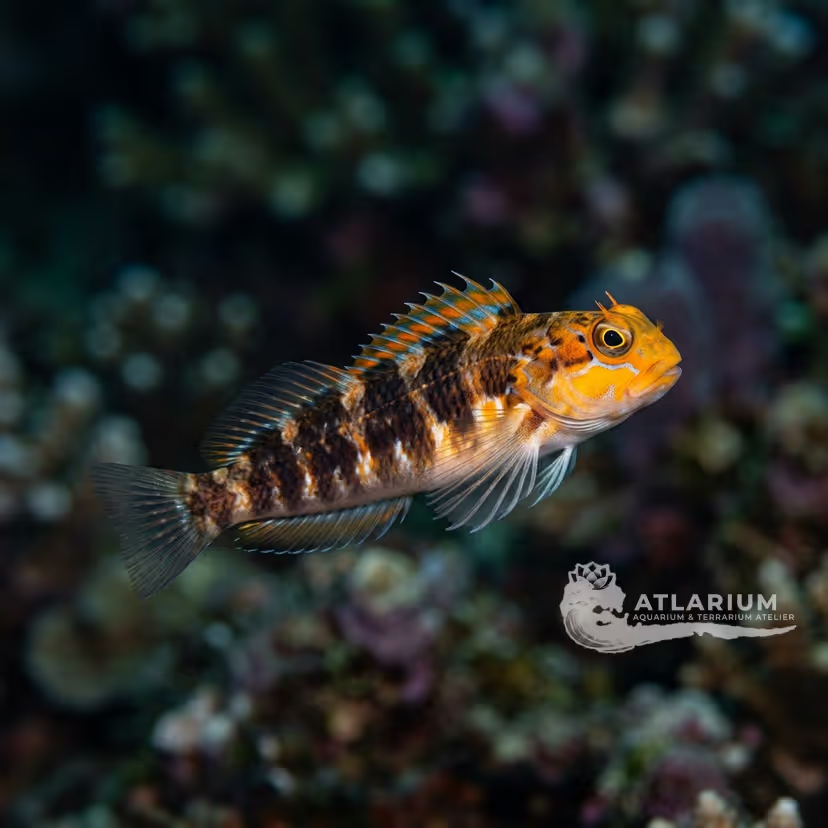
Black-axil Chromis
Fish

Black-axil Chromis

Chromis atripectoralis
View details->
Yelloweye Combtooth Blenny
Fish

Yelloweye Combtooth Blenny

Ecsenius opsifrontalis

View details->
Striped fangblenny
Fish

Striped fangblenny

Meiacanthus grammistes

View details->
Grape caulerpa
Plant

Grape caulerpa

Caulerpa racemosa

View details->
Beautiful Blenny
Fish

Beautiful Blenny

Ecsenius pulcher

View details->
Caulerpa prolifera
Plant

Caulerpa prolifera

Caulerpa prolifera
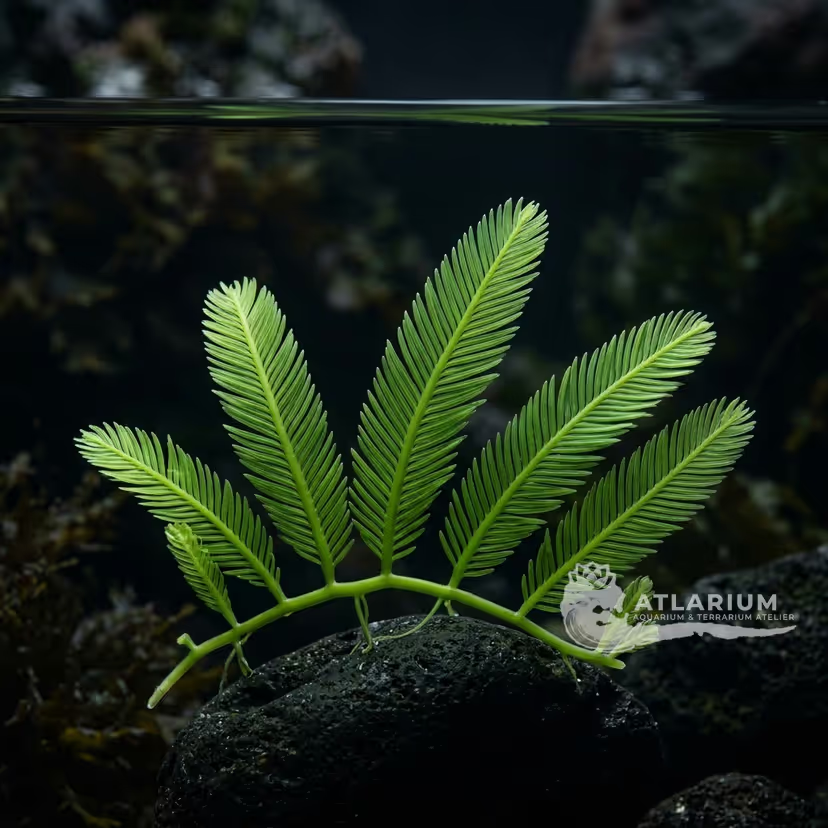
View details->
Caulerpa taxifolia
Plant

Caulerpa taxifolia

Caulerpa taxifolia
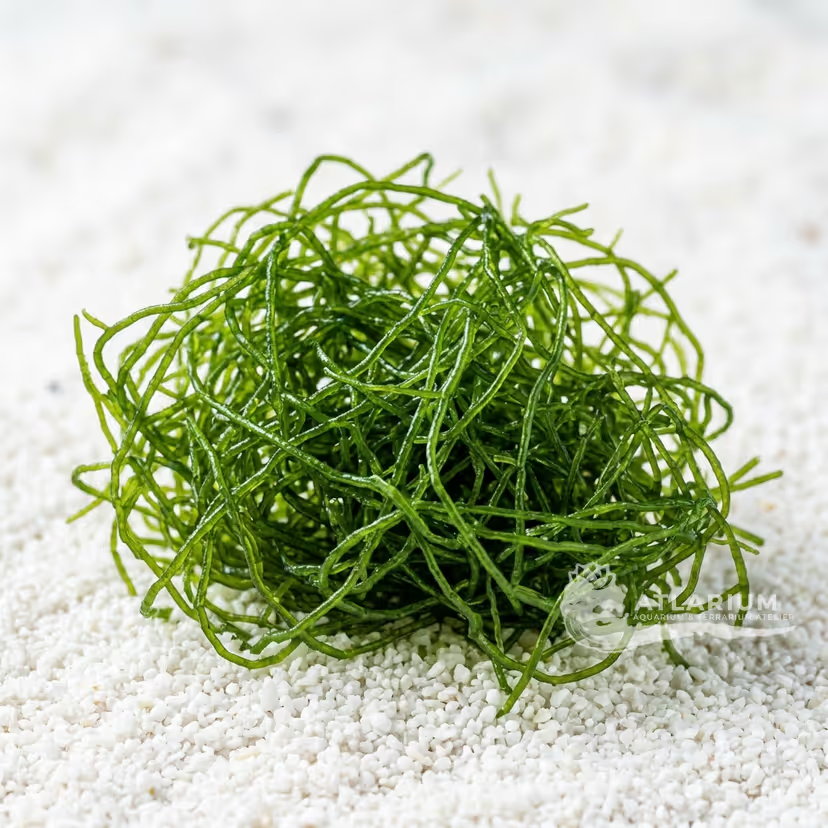
View details->
Chaetomorpha macroalgae
Plant

Chaetomorpha macroalgae

Chaetomorpha linum

View details->
Dead man fingers algae
Plant

Dead man fingers algae

Codium fragile

View details->
Halimeda macroalgae
Plant

Halimeda macroalgae

Halimeda opuntia

View details->

Similar care

Cards with similar requirements, difficulty, habitat, and husbandry profile.

Red Ridged Clinging Crab

Red Ridged Clinging Crab

Mithraculus forceps

View details->
Lamarck's Pebble Crab

Lamarck's Pebble Crab

Xanthias lamarckii

View details->
Pubescent Crab

Pubescent Crab

Neoliomera pubescens

View details->
Green Sea Urchin

Green Sea Urchin

Lytechinus variegatus

View details->
Eurysternus Hermit Crab

Eurysternus Hermit Crab

Clibanarius eurysternus

View details->
Orange-banded hermit crab

Orange-banded hermit crab

Ciliopagurus strigatus

View details->
Cook's hermit crab

Cook's hermit crab

Clibanarius cooki

View details->
Anker's Cleaner Shrimp

Anker's Cleaner Shrimp

Lysmata ankeri

View details->
Boggess' Peppermint Shrimp

Boggess' Peppermint Shrimp

Lysmata boggessi

View details->
Lipke's Cleaner Shrimp

Lipke's Cleaner Shrimp

Lysmata lipkei

View details->
Sharp-femured Pistol Shrimp

Sharp-femured Pistol Shrimp

Alpheus acutofemoratus
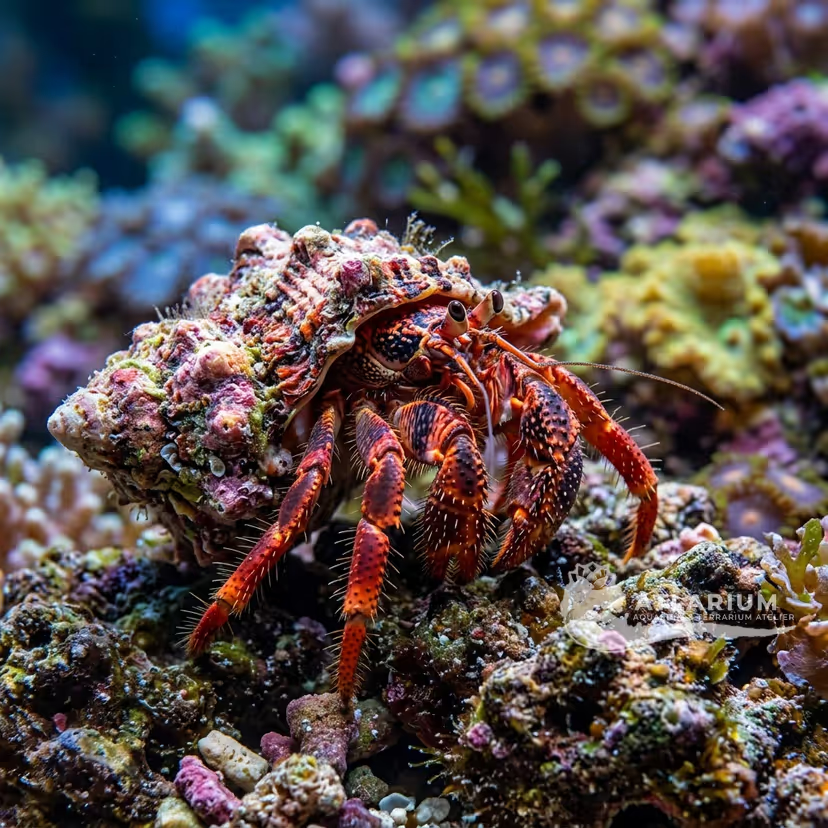
View details->
Carnifex Hermit Crab

Carnifex Hermit Crab

Clibanarius carnifex

View details->
Marble Shrimp

Marble Shrimp

Saron marmoratus

View details->
Saron Shrimp

Saron Shrimp

Saron neglectus

View details->
Sargassum Shrimp

Sargassum Shrimp

Leander tenuicornis

View details->
Anchisteus Cleaner Shrimp

Anchisteus Cleaner Shrimp

Lysmata anchisteus

View details->
Last updated: 06/30/2026
Decorator Crab (Camposcia retusa) Care Guide & Tank Setup | Atlarium