Encyclopaedia

InvertebrateMarineAdvanced
©AI Generated·Proprietary

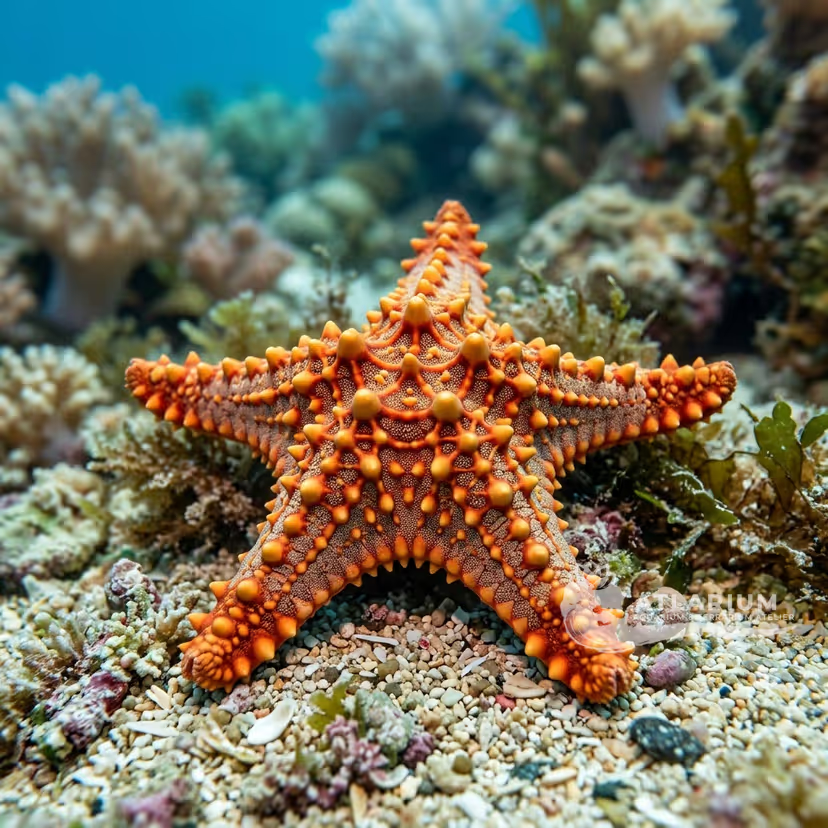
Red knobbed starfish

Protoreaster lincki

A stunningly decorative starfish native to the Indian Ocean, immediately recognized by its bright red knobs and its strictly carnivorous feeding behavior.

Taxonomy
Class:Asteroidea
Order:Valvatida
Family:Oreasteridae
Genus:Protoreaster
Species:Protoreaster lincki
Formerly known as:Protoreaster linckii

Share

Check out Red knobbed starfish on Atlarium

PracticeRecognition quizzesPhotos, names, origins, and puzzles to review Atlas species.Open quizzes
Water Temperature

22 - 26 °C

pH Value

8.1 - 8.4

Water type

Marine

Invertebrate type

Starfish

Adult size

30 cm

Minimum group

>= 1

KH

8 - 12 dKH

Ecological role

Scavenger

Species description

Geographical Origin and Habitat: This species is native to the western Indian Ocean, widely distributed along the coast of East Africa (including Kenya, Tanzania, and Mozambique), Madagascar, the Seychelles, India, Sri Lanka, and parts of Western Australia. It inhabits shallow sandy or muddy seabeds, seagrass meadows, and rocky reefs at depths from 1 to 100 meters.
Taxonomy: Belonging to the phylum Echinodermata, class Asteroidea, order Valvatida, and family Oreasteridae. Originally described within the genus Protoreaster, it features a heavy skeleton composed of calcareous ossicles. It can grow to a maximum diameter of approximately 30 cm (12 inches). It typically possesses five thick arms, though anomalies occur.
Social Behavior: It is a solitary species, active during both day and night. It is a carnivorous predator and opportunistic scavenger that crawls slowly over the substrate searching for food. For defense, it relies on its hard, pointed tubercles and natural skin toxins. It is not suitable for reef tanks containing corals or small delicate invertebrates.
Coloration and Sexual Dimorphism: The coloration is spectacular and distinctive. The body has a light gray, cream, or whitish base color, adorned with a grid-like network of red or orange lines. Along the center and margins of the arms, it features large, prominent, bright red or orange knob-like tubercles (spines) that project upward.

Care, breeding and tankmates

Tank Setup: Requires a large, well-established marine aquarium of at least 300 liters (approx. 80 gallons). The setup must include extensive open sandy areas for the starfish to glide over, combined with stable, secure live rock structures for climbing. Avoid cluttered aquascapes that could restrict the animal's movement.
Diet and Feeding: It has no specific lighting requirements, but a standard light cycle is recommended to support substrate microflora. The water temperature must be kept stable between 23°C and 26°C (73-79°F) using a reliable heater with a thermostat. Avoid rapid temperature drops, which can cause severe stress.
Water Quality: Water quality must be excellent and highly stable. Salinity is a critical parameter and must be kept constant at a specific gravity of 1.023-1.025. This species is extremely sensitive to rapid changes in specific gravity, elevated nitrates, phosphates, and copper-based medications, which can be rapidly fatal.
Compatibility and Tankmates: A voracious carnivore and scavenger. It cannot survive on detritus alone; it must be actively fed 2-3 times a week by placing small pieces of meaty foods directly underneath its body, such as fresh shrimp, clams, mussels, squid, or fish. Without target feeding, it will quickly starve and waste away.
Aquarium Breeding: Strictly not reef-safe. This starfish will actively consume soft corals, zoanthids, sponges, anemones, clams, oysters, snails, and even other starfish. It can only be housed in fish-only-with-live-rock (FOWLR) aquariums alongside moderately sized, non-aggressive fish species.
Risks and Diseases: The primary risk is osmotic shock during introduction; it requires a very slow and meticulous drip acclimation (lasting at least 2 hours). Signs of poor health include loss of color, body softening, or white necrotic patches on the skin. Never expose the starfish to the air during transfers.

Geographic Origin and Distribution

This species is native to the western Indian Ocean, widely distributed along the coast of East Africa (including Kenya, Tanzania, and Mozambique), Madagascar, the Seychelles, India, Sri Lanka, and parts of Western Australia. It inhabits shallow sandy or muddy seabeds, seagrass meadows, and rocky reefs at depths from 1 to 100 meters.

Origin

Tropical oceans and reefsAfrica and MadagascarSouth and Southeast AsiaAustralia, New Guinea, and Oceania

Invertebrate profile

Diet
Carnivore
Carnivore. Eats sponges, soft corals, tubeworms, and can be spot-fed with chopped clams, shrimp, and fish.
Ecological role
Scavenger
A bold scavenger and predator of slow-moving or sessile benthic creatures.
Shock sensitivity
High
Needs very slow drip acclimation. Exposing it to air can cause air bubbles to become trapped inside its body, which is often fatal.
Calcium and minerals
High
Needs adequate calcium to grow and maintain its distinctive red knobs and thick body.
Molting
Yes
Like other stars, it does not molt. Arm regeneration is possible if the central disk is largely intact.
Reproduction
Oviparous
In the wild, these sea stars reproduce by broadcast spawning, synchronously releasing eggs and sperm directly into the water column. However, they do not successfully reproduce in the home aquarium, as the resulting complex, planktonic larvae cannot survive typical captive conditions and mechanical filtration systems.
Compatibility & tankmates
Reef safe
Not reef safe. Will actively prey on many types of corals, clams, and other invertebrates.

Image gallery

Licensed images linked to the species or, when marked, to the closest representative taxon.

Related species

Recommendations grouped by close relatives, companion choices, and similar care.

Recommended companions

Compatible cards from coherent ecosystems with matching parameters.

Black-axil Chromis
Fish

Black-axil Chromis

Chromis atripectoralis

View details->
Blue assessor
Fish

Blue assessor

Assessor macneilli

View details->
Grape caulerpa
Plant

Grape caulerpa

Caulerpa racemosa

View details->
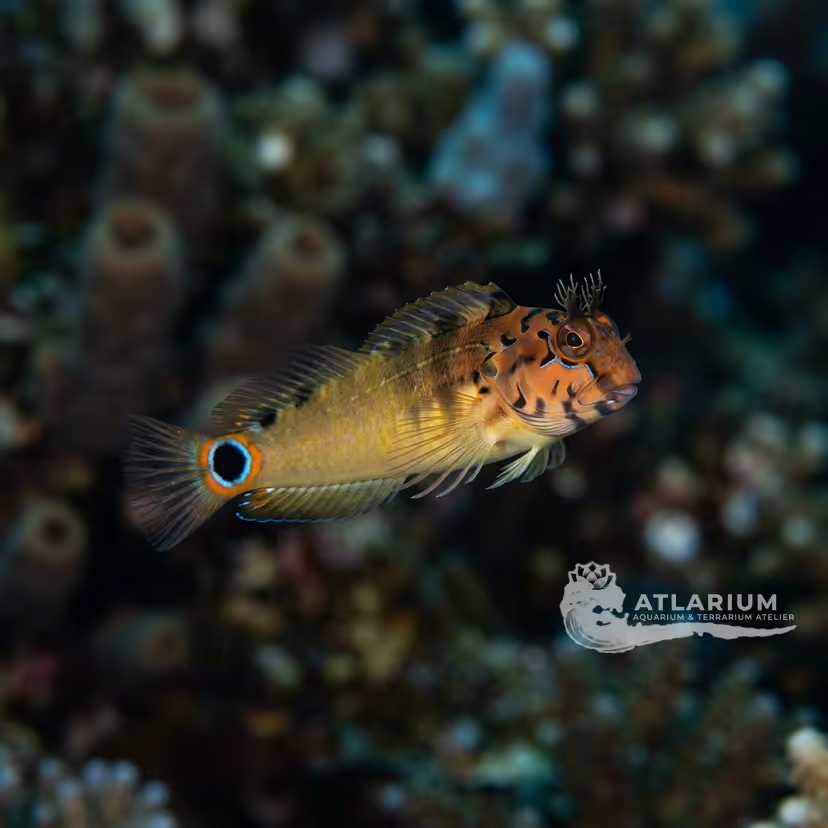
Tailspot blenny
Fish

Tailspot blenny

Ecsenius stigmatura

View details->
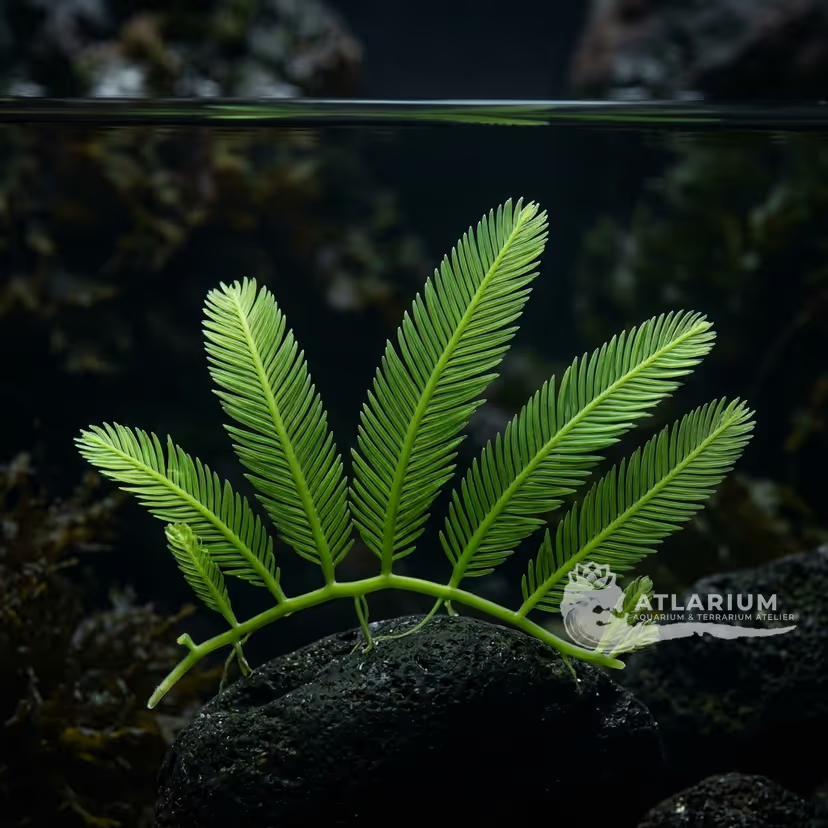
Caulerpa prolifera
Plant

Caulerpa prolifera

Caulerpa prolifera
View details->
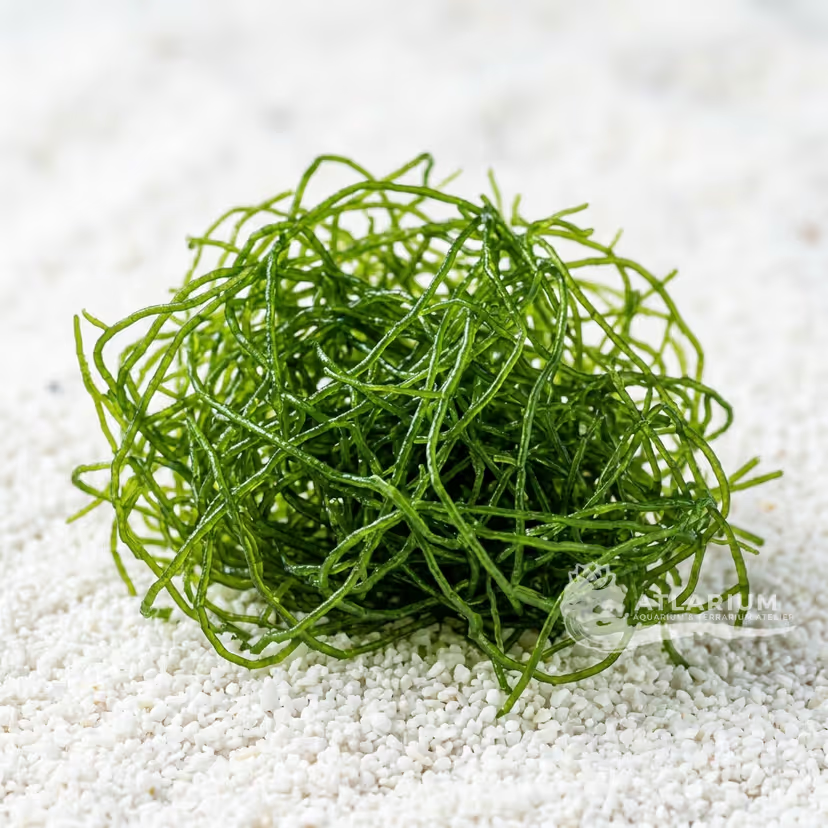
Caulerpa taxifolia
Plant

Caulerpa taxifolia

Caulerpa taxifolia
View details->
Chaetomorpha macroalgae
Plant

Chaetomorpha macroalgae

Chaetomorpha linum

View details->
Dead man fingers algae
Plant

Dead man fingers algae

Codium fragile

View details->
Halimeda macroalgae
Plant

Halimeda macroalgae

Halimeda opuntia

View details->
Red gracilaria
Plant

Red gracilaria

Gracilaria parvispora

View details->
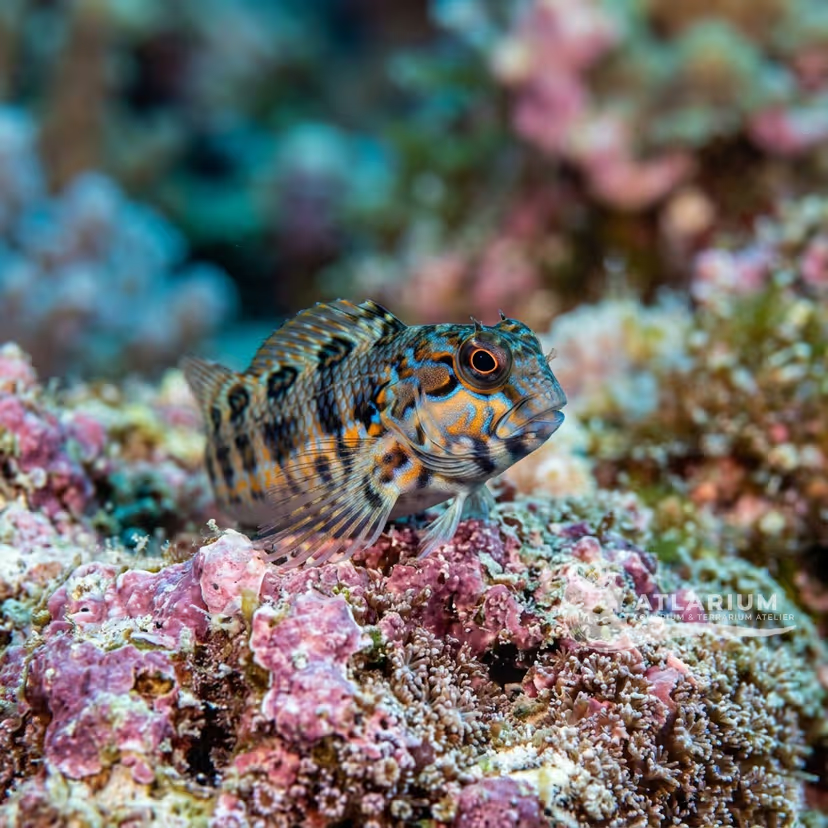
Allen's blenny
Fish

Allen's blenny

Ecsenius alleni

View details->
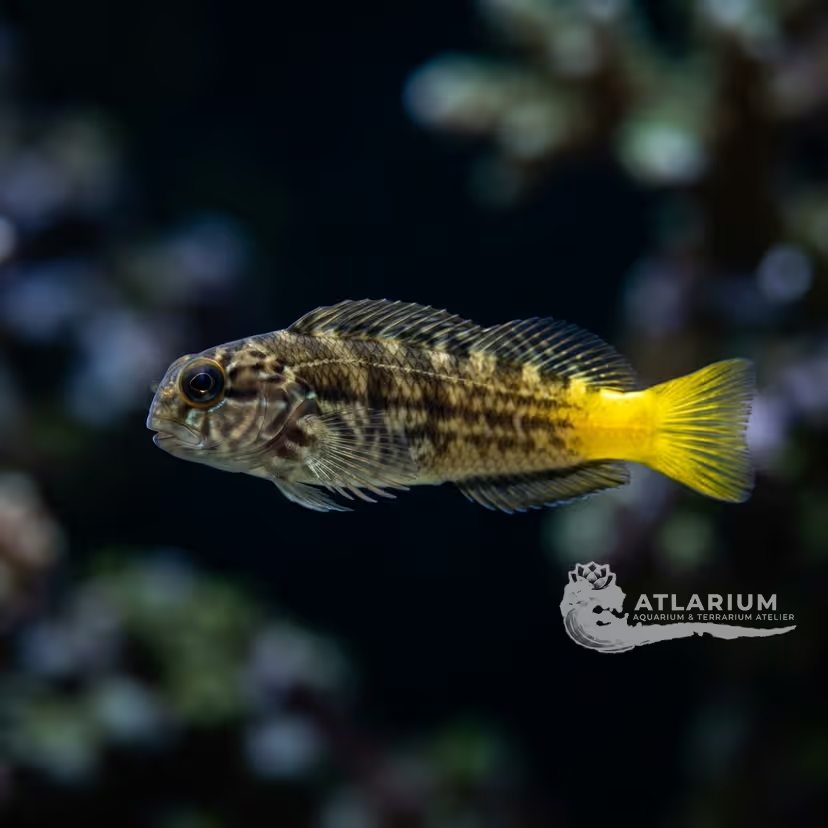
Axelrod's blenny
Fish

Axelrod's blenny

Ecsenius axelrodi

View details->
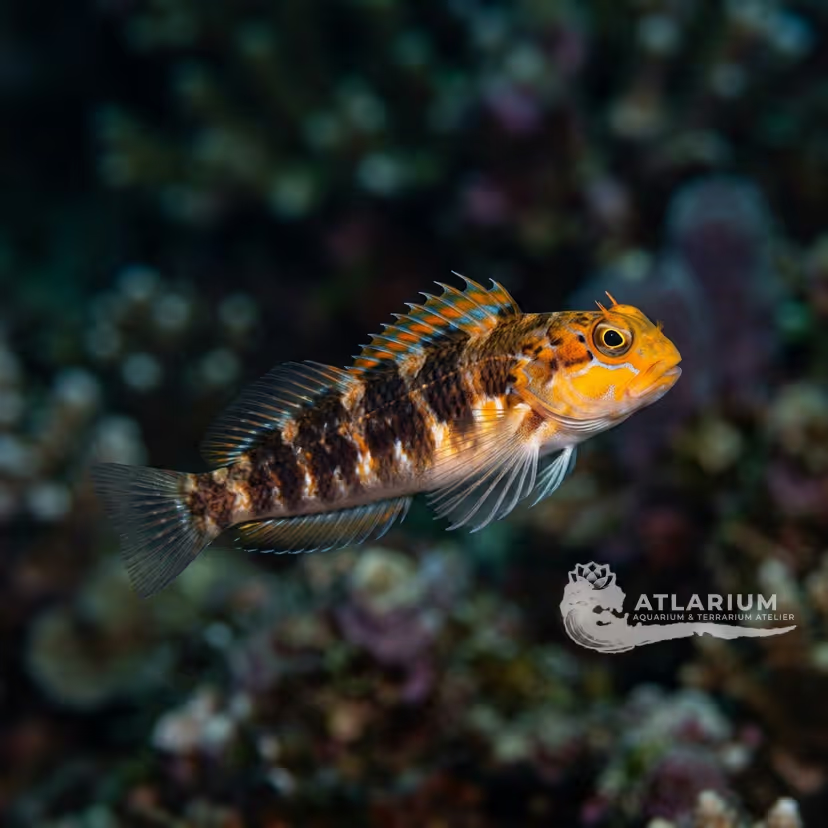
Black combtooth blenny
Fish

Black combtooth blenny

Ecsenius namiyei
View details->
Yelloweye Combtooth Blenny
Fish

Yelloweye Combtooth Blenny

Ecsenius opsifrontalis

View details->
Barrier Reef chromis
Fish

Barrier Reef chromis

Chromis nitida

View details->
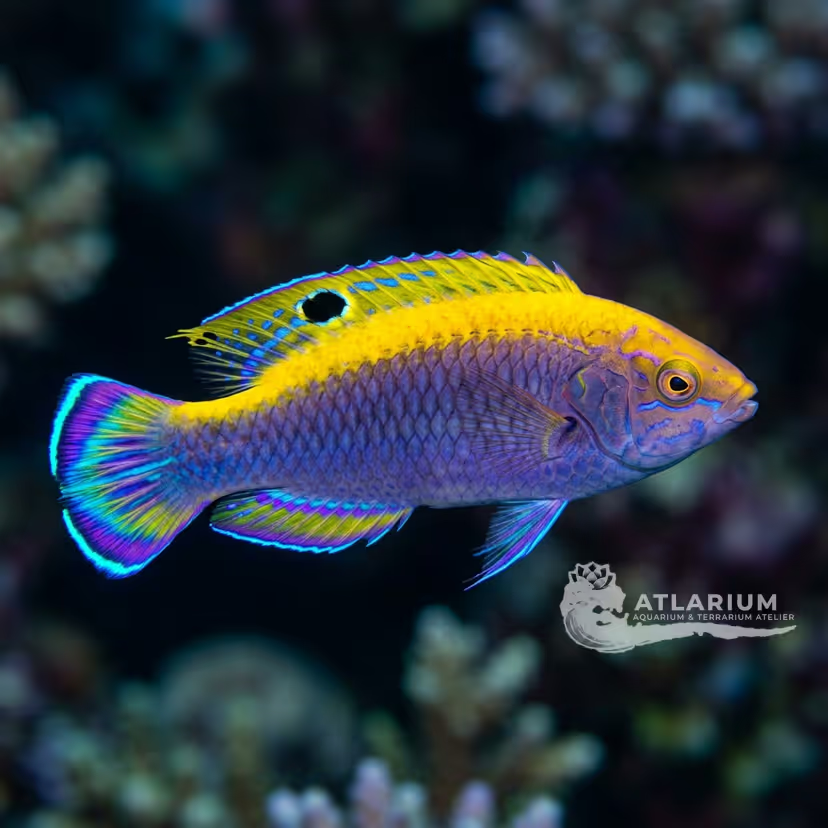
Beau's Fairy Wrasse
Fish

Beau's Fairy Wrasse

Cirrhilabrus beauperryi

View details->

Similar care

Cards with similar requirements, difficulty, habitat, and husbandry profile.

Camel shrimp

Camel shrimp

Rhynchocinetes durbanensis

View details->
Blood-spotted Hermit Crab

Blood-spotted Hermit Crab

Clibanarius cruentatus

View details->
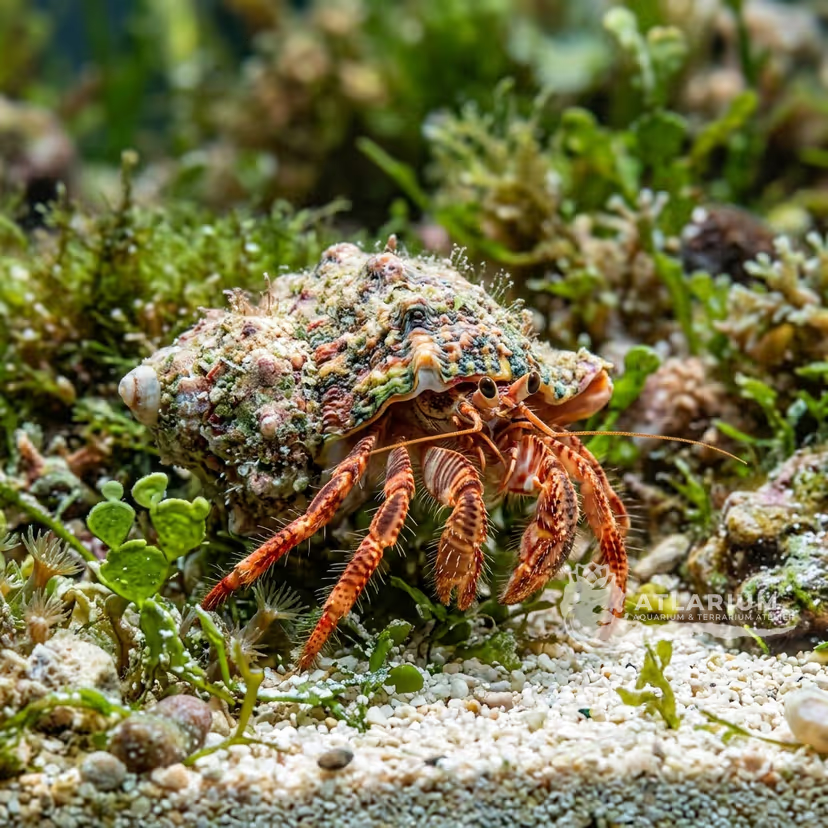
Chapin's Hermit Crab

Chapin's Hermit Crab

Clibanarius chapini
View details->
Antillean hermit crab

Antillean hermit crab

Clibanarius brasiliensis

View details->
Danai's hermit crab

Danai's hermit crab

Clibanarius danai

View details->
Feather Duster Worm

Feather Duster Worm

Sabellastarte spectabilis
View details->
Carnifex Hermit Crab

Carnifex Hermit Crab

Clibanarius carnifex

View details->
Arethusa Hermit Crab

Arethusa Hermit Crab

Clibanarius arethusa

View details->
Boschma's hermit crab

Boschma's hermit crab

Clibanarius boschmai

View details->
Cook's hermit crab

Cook's hermit crab

Clibanarius cooki

View details->
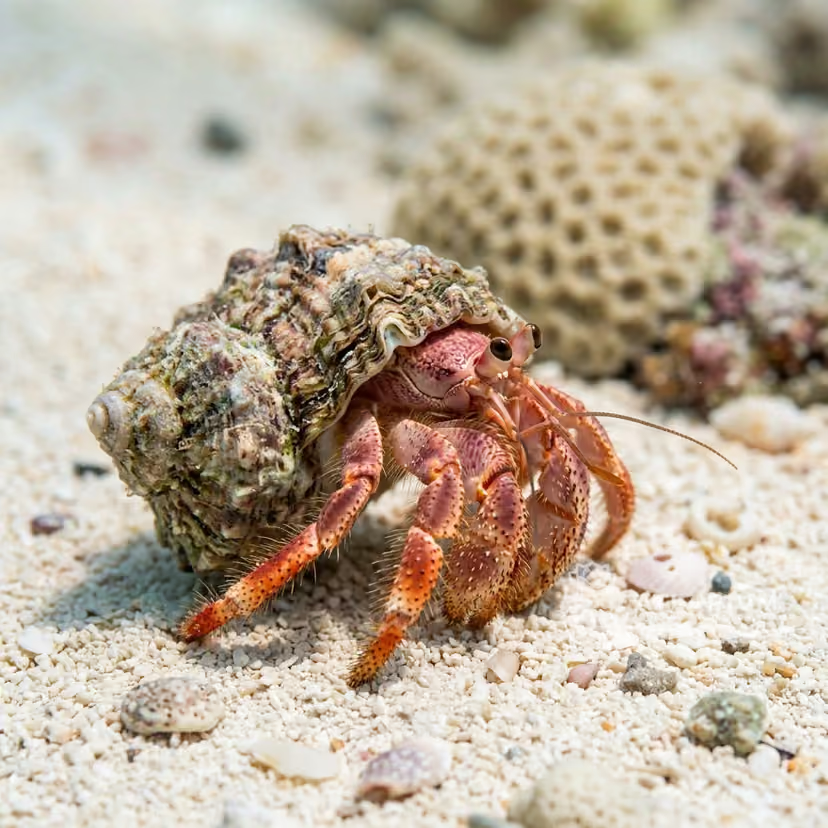
De Man's Hermit Crab

De Man's Hermit Crab

Clibanarius demani
View details->
Rosewater's Hermit Crab

Rosewater's Hermit Crab

Clibanarius rosewateri

View details->
Blue-stripe Hermit Crab

Blue-stripe Hermit Crab

Clibanarius merguiensis

View details->
Ranson's hermit crab

Ranson's hermit crab

Clibanarius ransoni

View details->
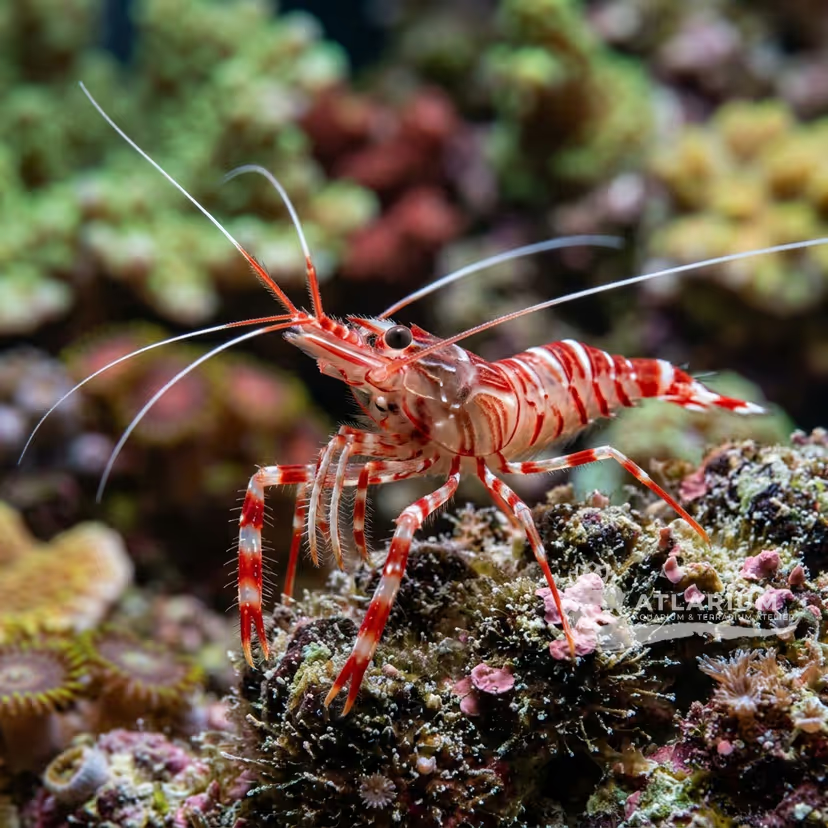
African snapping shrimp

African snapping shrimp

Alpheus africanus
View details->
Anker's Cleaner Shrimp

Anker's Cleaner Shrimp

Lysmata ankeri

View details->
Last updated: 06/30/2026