Arrow Crab
Stenorhynchus seticornis
The Arrow Crab is a fascinating marine crustacean with impossibly long, spindly legs and a pointed snout, prized for consuming bristle worms in reefs.
Water Temperature
22 - 27 °C
pH Value
8.1 - 8.4
Water type
Marine
Invertebrate type
Marine crab
Adult size
10 cm
Minimum group
>= 1
KH
8 - 12 dKH
Ecological role
Pest control
Copper sensitivity
High

Species description
Geographical Origin and Habitat: The arrow crab is native to the warm tropical waters of the Western Atlantic Ocean. Its geographical distribution ranges from North Carolina and Bermuda, extending southwards through the Gulf of Mexico and the Caribbean Sea to the coastal regions of northern Brazil. It commonly inhabits shallow coral reefs, rocky crevice environments, tidal pools, harbor pilings, and sand flats at depths from 1 to 50 meters, often seeking shelter near sea urchins or within the tentacles of sea anemones.
Taxonomy: Belonging to the family Inachidae and classified under the genus Stenorhynchus. The arrow crab is a decapod crustacean, grouped within the spider crabs or decorator crabs, although it does not share the typical behavior of camouflage decoration with algae or sponges. It is highly distinguished by its sharply triangular body carapace and an exceptionally long, serrated rostrum that projects forward from between its eyes.
Social Behavior: This invertebrate has a strongly territorial and highly aggressive temperament towards conspecifics. If two individuals of the same sex are kept together in a confined space, they will engage in combat that frequently results in serious injury or death. It is predominantly nocturnal, hiding during the day and climbing rocks at night. It can show opportunistic predatory behavior towards small, slow-moving fish or other micro-invertebrates if underfed.
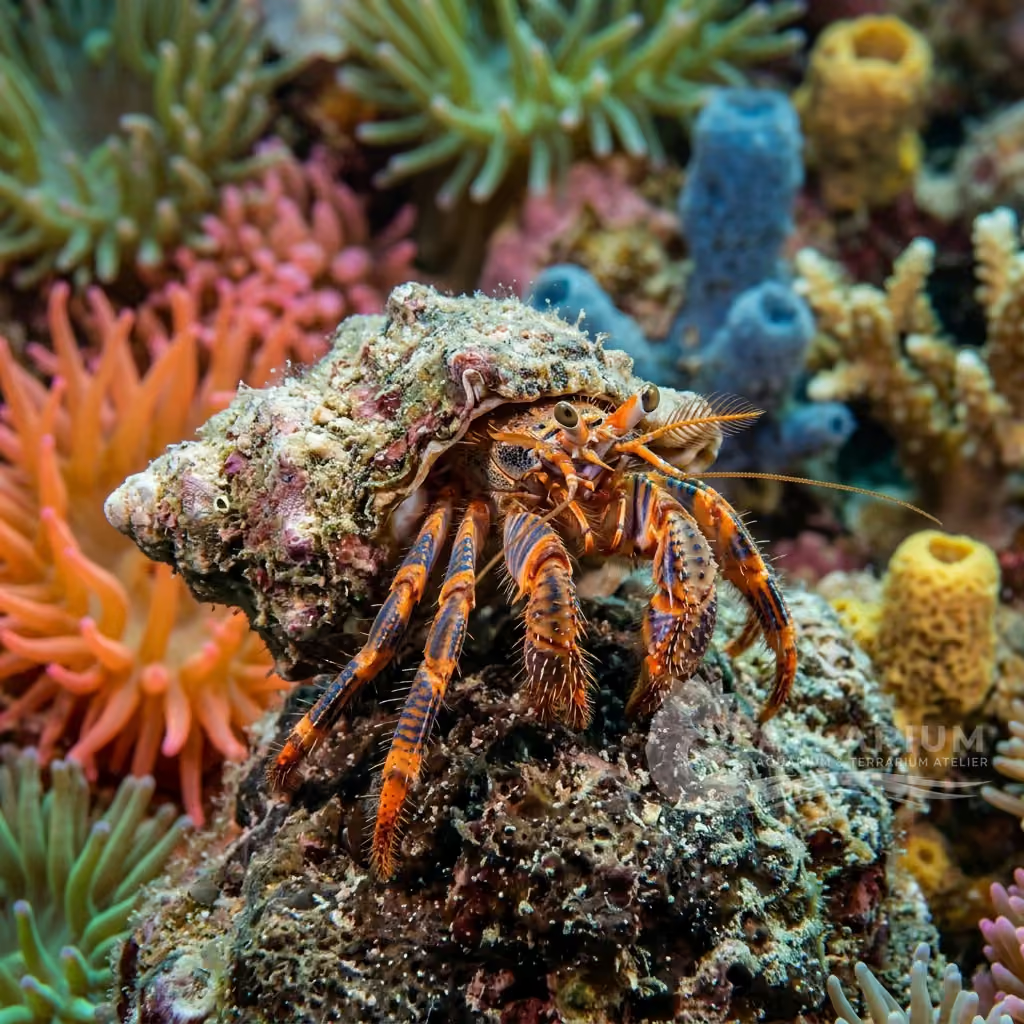
Coloration and Sexual Dimorphism: The carapace and long, thin legs exhibit an intricate and beautiful coloration pattern consisting of gold, brown, and white longitudinal stripes. The rostrum is reddish-orange, and the claws (chelae) are highlighted with striking violet or blue tips. Adult males are generally larger than females and possess significantly longer and more robust front legs (chelipeds), while females have a wider abdomen to carry eggs.

Care, breeding and tankmates
Tank Setup: A minimum aquarium size of 100 liters is required. The tank should feature plenty of mature live rock structured with multiple crevices, ledges, and vertical surfaces for the crab to climb and inspect. Providing ample secure hiding places is critical during its molting cycles, as the crab shedding its old exoskeleton becomes completely soft and highly vulnerable to predation.
Diet and Feeding: An excellent carnivorous scavenger. It is highly valued by reef aquarists for its ability to actively hunt and control populations of nuisance bristle worms (fireworms) in reef aquariums. In addition, it feeds on organic detritus and leftover fish food. Its diet should be supplemented with pieces of raw shrimp, clam, scallop, or meaty frozen foods offered directly using feeding tongs.
Water Quality: Demands stable marine aquarium parameters: specific gravity of 1.023-1.025, temperature of 22-27 °C, and a pH between 8.1 and 8.4. Like most marine invertebrates, this crab is highly sensitive to copper-based medications; any exposure to copper is highly toxic and will result in death. Keep nitrates and phosphates low to prevent molting issues.
Compatibility and Tankmates: Reef-safe with caution. Arrow crabs may occasionally pinch or nip at soft corals, zoanthids, or slow-moving bottom-dwelling fish (such as small gobies or dragonets) if they are hungry. Do not house with large predatory fish that feed on crustaceans, such as triggerfish, puffers, hawkfish, and large wrasses. Keep only one arrow crab per aquarium.
Aquarium Breeding: Breeding in captivity is extremely difficult. A fertilized female carries a prominent mass of bright orange eggs under her abdomen for several weeks. Before hatching, the eggs turn dark grey and release planktonic larvae (zoea) into the water column. Raising these larvae to settlement is virtually impossible in a home aquarium due to their specialized filter-feeding requirements.
Risks and Diseases: The primary risk is molting failure (ecdysis issues), which is typically caused by a lack of essential trace elements like iodine and calcium in the water. Regular monitoring and supplementation of these minerals are highly recommended. Avoid sudden fluctuations in salinity, as rapid changes can cause severe osmotic shock and lead to mortality.

Geographic origin and distribution
The arrow crab is native to the warm tropical waters of the Western Atlantic Ocean. Its geographical distribution ranges from North Carolina and Bermuda, extending southwards through the Gulf of Mexico and the Caribbean Sea to the coastal regions of northern Brazil. It commonly inhabits shallow coral reefs, rocky crevice environments, tidal pools, harbor pilings, and sand flats at depths from 1 to 50 meters, often seeking shelter near sea urchins or within the tentacles of sea anemones.
Origin
Tropical oceans and reefsExtra-Amazon South AmericaNorth AmericaEast Asia

Invertebrate profile
- Diet
- Omnivore
- Carnivorous scavenger. Will eat detritus, bristle worms, and meaty foods such as mysis shrimp or chopped seafood.
- Ecological role
- Pest control
- Excellent at controlling bristle worm populations in reef tanks. Also helps keep the tank clear of meaty scraps.
- Adult size
- 10 cm
- Jump risk
- Yes
- Does not jump, but can climb out if the tank has open edges or accessible cords. A secure lid is beneficial.
- Shock sensitivity
- Medium
- Vulnerable to rapid fluctuations in water parameters, particularly specific gravity and temperature.
- Calcium and minerals
- High
- Requires proper calcium, alkalinity, and magnesium levels to support regular molting.
- Molting
- Periodic
- Like all crabs, it molts to grow. Provide plenty of rockwork with crevices where it can retreat during this vulnerable phase.
- Reproduction
- Oviparous
- Rarely bred in home aquariums due to the complicated and lengthy planktonic larval stage.
- Compatibility & tankmates
- Aggressive
- Can be aggressive towards small fish or other small invertebrates, especially when hungry. Should not be kept with aggressive fish that might eat it.

Related species
Recommendations grouped by close relatives, companion choices, and similar care.