Dwarf Seahorse
Hippocampus zosterae
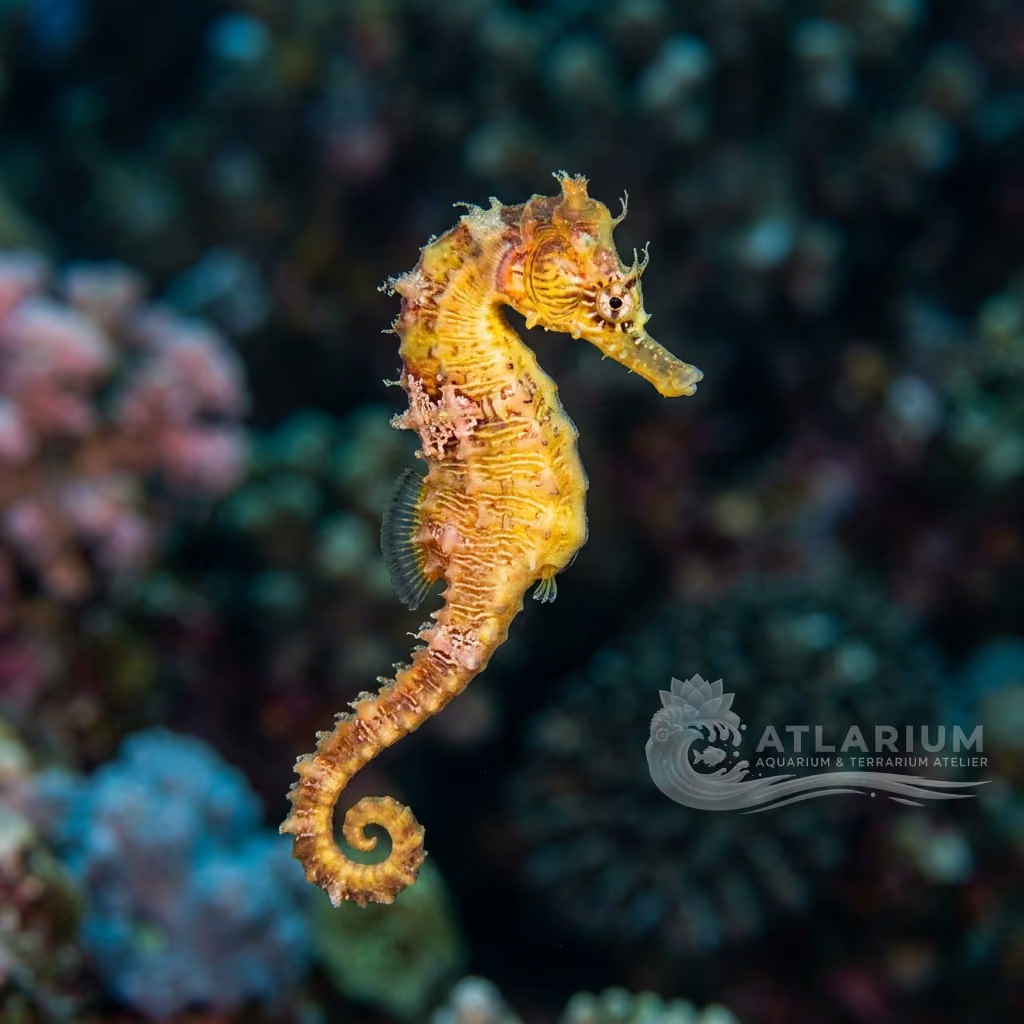
The dwarf seahorse (Hippocampus zosterae) is one of the smallest marine fish species, known for its tiny size and strict requirement for live baby brine shrimp.
Water Temperature
20 - 25 °C
pH Value
8.1 - 8.4
Water type
Marine
Tank level
All levels
Adult size
5 cm
Minimum tank volume
>= 30 L
Minimum group
>= 2

Species description
Geographical Origin and Habitat: Native to the western Atlantic Ocean, including the Gulf of Mexico, the Bahamas, the Florida Keys, and parts of the Caribbean. They inhabit shallow coastal waters, bays, and estuaries dominated by dense seagrass beds, particularly eelgrass (*Zostera*) and shoal grass (*Halodule*).
Taxonomy and Morphology: Belongs to the family Syngnathidae. It is one of the smallest marine fish species, with adults reaching a maximum length of only 2.5 to 5 cm. Features a compressed body, short snout, and a prehensile tail used to anchor themselves to seagrasses.
Social Behavior: Exceptionally peaceful, shy, and slow-moving. Often found in mated pairs that exhibit lifelong monogamy. They are poor swimmers and spend most of their time anchored to a single blade of grass.
Coloration and Sexual Dimorphism: Coloration varies widely for camouflage, ranging from beige, brown, and green to occasional yellow or white, often with tiny black or white mottling. Males are distinguished by a prominent brood pouch on the abdomen, which is absent in females.

Care, breeding and tankmates
Aquarium Setup: Requires a small, dedicated aquarium of 30 to 60 liters to ensure they can easily locate food. Water flow must be extremely gentle. Provide numerous hitching posts such as macroalgae, synthetic corals, or plastic decorations.
Diet and Feeding: Strict carnivore and specialized feeder. Must be fed live, newly hatched baby brine shrimp (Artemia nauplii) enriched with nutritional supplements. They do not accept dry or frozen foods and must be fed 2-3 times daily.
Water Quality: Demands pristine water quality: stable temperature between 22°C and 25°C, pH 8.1-8.4, specific gravity 1.020-1.025. Nitrates and phosphates must be kept near zero, requiring frequent small water changes.
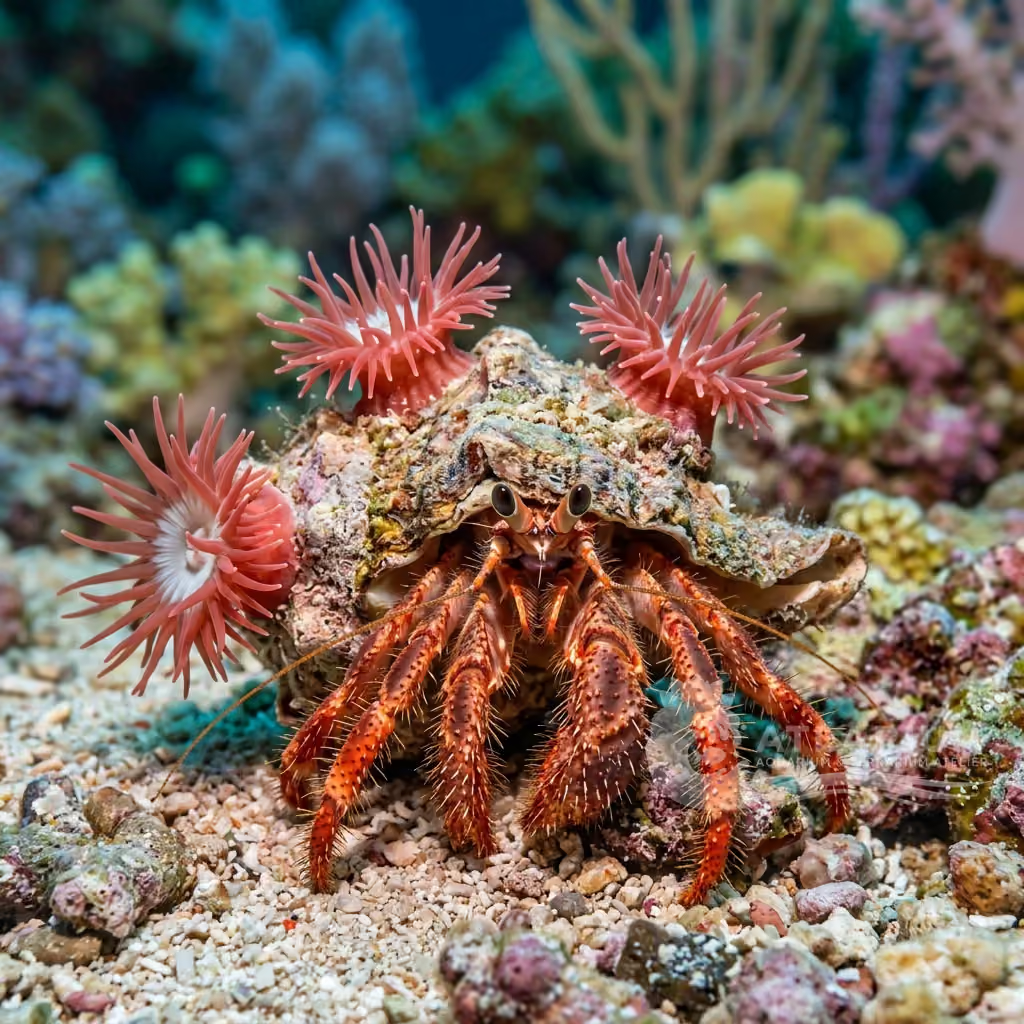
Compatibility and Cohabitation: Best kept in a species-only tank. Incompatible with fast or aggressive tankmates that will outcompete them for food. Can coexist with small, peaceful herbivorous snails or micro-hermit crabs.
Aquarium Breeding: Monogamous breeders. During courtship, the female transfers eggs into the male's brood pouch, where they are fertilized and incubated for 10-14 days before the male gives birth to fully formed, independent miniature seahorses.
Risks and Diseases: Susceptible to bacterial infections (Vibrio) and external parasites due to poor water quality. Hydroids introduced with live food can be lethal. Tight lids prevent salinity swings from evaporation.

Geographic origin and distribution
Native to the western Atlantic Ocean, including the Gulf of Mexico, the Bahamas, the Florida Keys, and parts of the Caribbean. They inhabit shallow coastal waters, bays, and estuaries dominated by dense seagrass beds, particularly eelgrass (*Zostera*) and shoal grass (*Halodule*).
Origin
Tropical oceans and reefsCentral America and CaribbeanNorth America

Fish profile
- Temperament
- Peaceful
- This is a very peaceful and shy species. It will not bother any other inhabitants. They are easily stressed by aggressive tank mates.
- Diet
- Carnivore
- This seahorse requires live food to thrive. Freshly hatched brine shrimp are the staple of its diet. Copepods can also be offered as a supplement.
- Life expectancy
- 1-2 years
- Adult size
- 5 cm
- Sex ratio
- Pair
- Pairs or small groups work well together. A balanced ratio of males and females is natural. Males do not typically show aggression towards each other.
- Feeding frequency
- 2-3 times daily
- They need to be fed multiple times a day. Two to three feedings daily are recommended. Continuous access to live food is ideal.
- Bioload
- Low
- This species has a very low bioload. It produces minimal waste due to its small size. A simple sponge filter is usually sufficient.
- Flow
- Strong
- It requires very low water flow. Strong currents will easily exhaust this weak swimmer. Gentle circulation from a sponge filter is perfect.
- Jump risk
- No
- Reproduction
- Oviparous
- They are relatively easy to breed in captivity. Males carry the developing eggs in their brood pouch. Fry are born fully formed and independent.
- Compatibility & tankmates
- Peaceful
- It is best kept in a species-only tank. Fast-moving fish will outcompete it for food. Peaceful snails and tiny shrimp make acceptable tank mates.
- Tank level
- All levels
- They utilize all levels of the aquarium. You will often find them hitched to vegetation in the middle water column. They rarely venture into open water.

Related species
Recommendations grouped by close relatives, companion choices, and similar care.