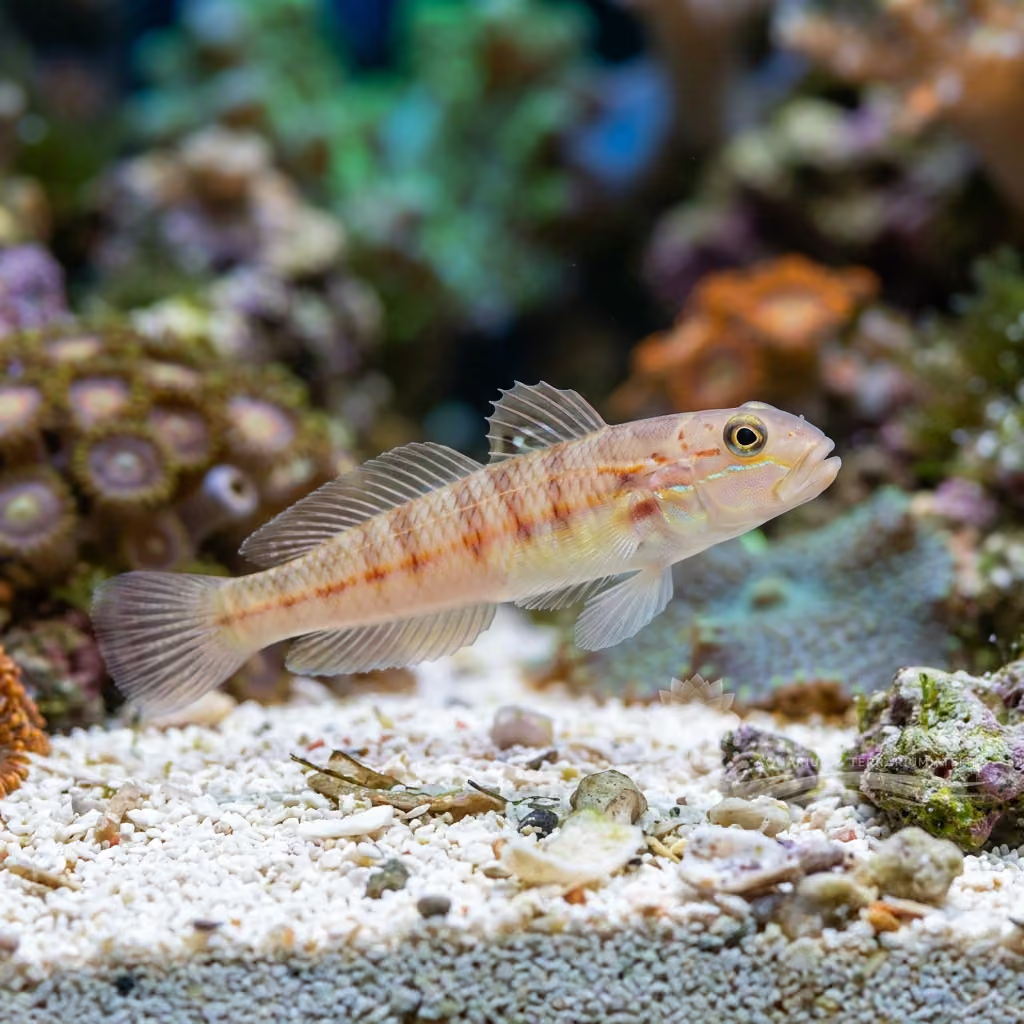
Janss' pipefish
Doryrhamphus janssi
Janss' pipefish is an exquisite, slender beauty exhibiting vibrant blue and orange hues. A delicate, slow-moving feeder, it demands peaceful tankmates and mature reef aquariums with very gentle flow.
Water Temperature
22 - 26 °C
pH Value
8.1 - 8.4
Water type
Marine
Tank level
Bottom and middle
Adult size
14 cm
Minimum tank volume
100 L
Minimum group
>= 1

Species description
Geographical Origin and Habitat: Doryrhamphus janssi is native to the tropical waters of the Western Pacific Ocean, including Indonesia, the Philippines, Palau, Papua New Guinea, and the northern parts of the Great Barrier Reef in Australia. It inhabits outer reef slopes, rocky drop-offs, and crevices at depths of 5 to 35 meters. This species is closely associated with shaded overhangs and small dark caves where it seeks shelter from strong currents.
Taxonomy and Morphology: Belonging to the family Syngnathidae and subfamily Syngnathinae. It features an extremely elongated, slender body encased in bony, armor-like plates. Its snout is long and tubular, acting as a pipette to suck in microscopic planktonic prey with incredible speed. Adults reach a maximum length of 13-14 centimeters. The tail ends in a rounded caudal fin used for precise steering.
Social Behavior: It is a peaceful, slow-moving, and secretive fish. It lives either solitarily or in stable breeding pairs that defend a small cave or ledge as their territory. It is entirely non-aggressive toward other species, but males can fight if housed together in small spaces. It spends much of its time swimming upside down under rocky ledges.
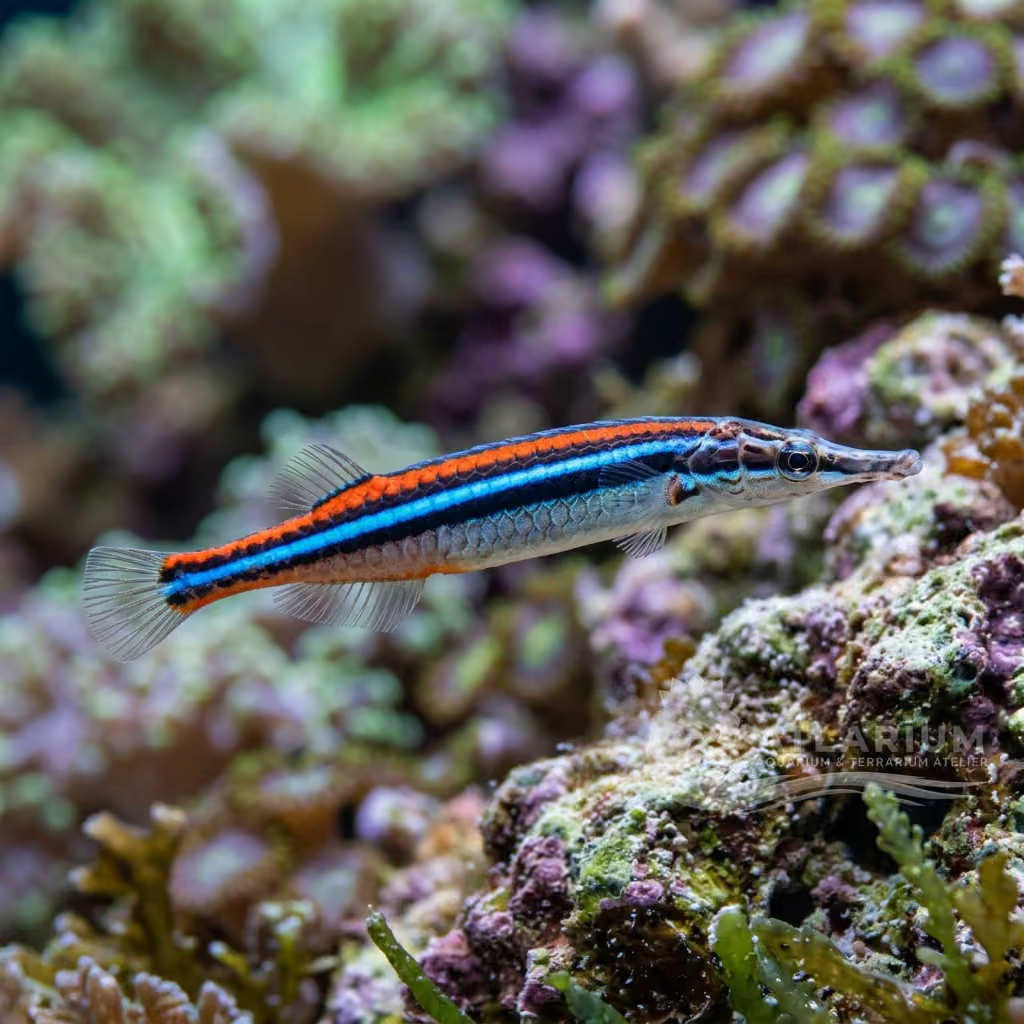
Coloration and Sexual Dimorphism: The color pattern is striking: the anterior half of the body is bright orange, while the posterior portion and tail are dark blue to blackish, with a bright orange spot in the center of the tail and a clean white border. Sexual dimorphism is present, as adult males develop a specialized brood pouch on their underside where they carry eggs.

Care, breeding and tankmates
Aquarium Setup: Requires a mature marine aquarium of at least 100 liters with gentle water flow, as strong currents will quickly exhaust this delicate swimmer. The tank must feature a large volume of mature live rock arranged to create dark caves, overhangs, and tight passages. A peaceful, low-stress environment is essential for its survival.
Diet and Feeding: This is an exceptionally demanding species to feed. It feeds almost exclusively on tiny live crustaceans such as copepods, rotifers, and newly hatched brine shrimp. An established tank with a thriving natural microfauna population is mandatory. It can sometimes be trained to eat tiny frozen foods like cyclops and baby mysis, but must be fed several times a day.
Water Quality: Demands pristine water quality with highly stable chemical parameters. Temperature should be kept between 24°C and 26°C, pH between 8.1 and 8.4, specific gravity between 1.023 and 1.025, and nitrates near zero (under 5 ppm). Efficient protein skimming is necessary, but all pump intakes must be screened to prevent the pipefish from being sucked in.
Compatibility and Cohabitation: Should only be housed with very peaceful, slow-moving tankmates like mandarinfish (Synchiropus), small gobies, and other compatible pipefish. Avoid active, aggressive, or fast-feeding fish (such as tangs, damselfish, or dottybacks) that will easily outcompete the pipefish for food, leading to starvation, or physically harm it.
Aquarium Breeding: Displays the unique reproductive method of syngnathids, where the male carries the eggs. After an elaborate courtship dance, the female transfers eggs to the male's underbelly, where they are fertilized. The male broods them for 10-14 days until they hatch. Raising the tiny planktonic fry is extremely difficult due to their microscopic live food requirements.
Risks and Diseases: Starvation is the leading cause of death for this species due to its fast metabolism and lack of a true stomach. It is highly sensitive to common marine parasites like ich, but tolerates copper-based treatments and freshwater dips poorly. Physical damage from unprotected powerhead intakes or sharp rocks is also a significant risk.

Geographic origin and distribution
Doryrhamphus janssi is native to the tropical waters of the Western Pacific Ocean, including Indonesia, the Philippines, Palau, Papua New Guinea, and the northern parts of the Great Barrier Reef in Australia. It inhabits outer reef slopes, rocky drop-offs, and crevices at depths of 5 to 35 meters. This species is closely associated with shaded overhangs and small dark caves where it seeks shelter from strong currents.
Origin
Tropical oceans and reefsAfrica and MadagascarSouth and Southeast AsiaAustralia, New Guinea, and Oceania

Fish profile
- Temperament
- Semi-aggressive
- This species exhibits a very peaceful, docile, and notably shy temperament. It completely lacks aggressive tendencies and prefers to avoid confrontation by hiding in crevices. Fast-moving or boisterous tank mates will easily overwhelm it, leading to a failure to feed and subsequent starvation.
- Diet
- Omnivore
- This specialized carnivore feeds almost exclusively on tiny copepods and amphipods found in live rock. A mature aquarium with an abundant, self-sustaining pod population is absolutely critical. Supplemental feedings of live baby brine shrimp or newly hatched frozen cyclops can be attempted.
- Life expectancy
- 3-5 years
- Adult size
- 14 cm
- Sex ratio
- Pair
- Males can often be identified by the distinct presence of an incubating brood pouch along their ventral side. They establish strong monogamous pair bonds and should ideally be purchased and kept together. Keeping multiple males in close quarters without enough females may lead to competitive stress.
- Feeding frequency
- Twice daily
- Due to a distinct lack of a true stomach, this fish must eat almost continuously throughout the day. It heavily relies on a steady, self-replenishing supply of live copepods from the aquarium. Without continuous grazing opportunities, it will rapidly lose weight and starve.
- Bioload
- Low
- This species produces a relatively low amount of waste compared to other fish. A standard filtration system is usually sufficient to maintain good water quality. However, regular water changes remain essential to keep the aquarium environment pristine.
- Flow
- Weak
- Doryrhamphus janssi needs gentle circulation; pump outlets should be kept away from the sheltered area where the fish normally rests or feeds. Requires a mature marine aquarium of at least 100 liters with gentle water flow, as strong currents will quickly exhaust this delicate swimmer. The tank must feature a large volume of mature live rock arranged to create dark caves, overhangs, and tight passages. Maintain gas exchange and filtration without turning that protected station into a high-current zone.
- Jump risk
- Yes
- The jump risk for this species is low to moderate, but caution is still advised. They generally remain calm but can be startled by sudden movements or aggressive tank mates. A tightly fitting lid or mesh top is the best insurance against accidental escapes.
- Reproduction
- Oviparous
- Reproduction is fascinating, as the female completely transfers her eggs into a specialized pouch on the male's abdomen. The male then carries, protects, and incubates the eggs until they are fully developed. Miniature replicas of the adults are eventually birthed alive directly into the water column.
- Compatibility & tankmates
- Semi-aggressive
- It is an extremely peaceful and delicate species that cannot compete with aggressive eaters. It must be housed with very docile tank mates like seahorses, dragonets, or small gobies. Large or active fish will outcompete it for food and cause immense stress.
- Tank level
- Middle/Bottom
- Preferring shaded areas, it naturally gravitates towards the bottom and middle sections of the rockwork. It spends a lot of time actively hovering upside down beneath overhangs and exploring deep caves. Intense, direct overhead lighting will often drive it deeper into hiding.

Scientific Parameters & Models
FishBase
Window to the official scientific data of the species
FishBase v25.04Data synced on: 06/15/2026
- Trophic level
- 3.5

Related species
Recommendations grouped by close relatives, companion choices, and similar care.