Many-banded Pipefish
Dunckerocampus multiannulatus
A unique pipefish from the Indian Ocean with a slender red-and-yellow ringed body, requiring live micro-crustaceans and low-to-moderate water flow zones.
Water Temperature
22 - 26 °C
pH Value
8.1 - 8.4
Water type
Marine
Tank level
Bottom
Adult size
18 cm
Minimum tank volume
>= 200 L
Minimum group
>= 1
KH
8 - 12 dKH

Species description
Geographical Origin and Habitat: Widespread throughout the tropical Indian Ocean, from the Red Sea and East African coasts to the Maldives, Chagos Islands, and Andaman Islands. It inhabits sheltered reefs, marine caves, and rock crevices at depths between 5 and 45 meters, staying away from direct sunlight and strong currents.
Taxonomy and Morphology: Belongs to the family Syngnathidae, subfamily Syngnathinae. Features an extremely elongated, rigid body encased in bony armor rings. The snout is tubelike and very long, specialized for sucking in tiny crustaceans. Reaches a maximum standard length of about 19 centimeters as an adult.
Social Behavior: Peaceful, slow-moving, and shy species. It mostly lives in stable pairs that occupy the same territory or cave. It shows little interest in other tankmates but can suffer from food competition or be easily intimidated by highly active species.
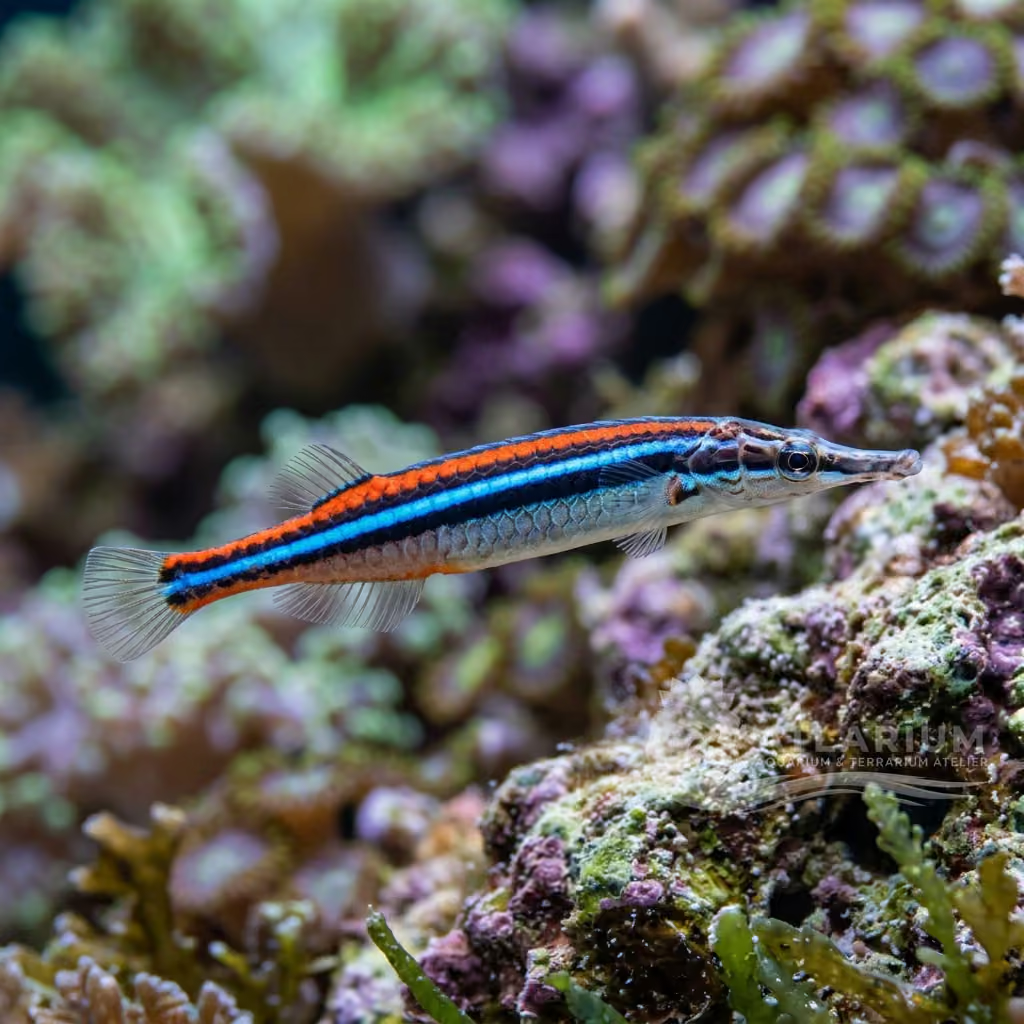
Coloration and Sexual Dimorphism: Characterized by a striking pattern of numerous alternating red-brown and yellow-cream rings along the entire body. The caudal fin is large and flag-like, red with a white border and a yellow center spot. Adult males possess a brood pouch on the ventral surface of their body.

Care, breeding and tankmates
Aquarium Setup: Requires a mature marine aquarium of at least 150 liters with a large amount of live rock arranged to form caves, overhangs, and shaded crevices. It is important to have zones with low or moderate water flow to allow the fish to swim easily without getting exhausted.
Diet and Feeding: Highly demanding micro-carnivorous species. It feeds almost exclusively on tiny live crustaceans such as copepods and amphipods. A marine aquarium, preferably connected to a refugium, is indispensable to ensure a continuous supply of live food. Transitioning to frozen foods (like cyclops and lobster eggs) is difficult.
Water Quality: Requires pristine and stable marine parameters: temperature between 22 and 26 °C (72-79 °F), pH between 8.1 and 8.4, and specific gravity at 1.020-1.025. Nitrates and phosphates must be kept at minimal levels. Salinity stability is critical for its health.
Compatibility and Cohabitation: Ideal for species-only aquariums or reef tanks with peaceful, slow-moving tankmates. Excellent companions include mandarin fish, small gobies, and other pipefish of the genus Doryrhamphus. Avoid fast or aggressive fish (like tangs, active wrasses, or damselfish) that will outcompete them for food.
Aquarium Breeding: Paternal brooding reproduction. During mating, the female transfers eggs to the male's brood pouch, located under his abdomen. The male fertilizes, carries, and oxygenates the eggs for about two weeks until they hatch and release planktonic fry.
Risks and Diseases: The primary and most common risk is death by starvation due to lack of live food. They are also sensitive to bacterial infections (vibriosis) and skin parasites if stressed. Medication use must be restricted, and copper treatments are poorly tolerated.

Geographic origin and distribution
Widespread throughout the tropical Indian Ocean, from the Red Sea and East African coasts to the Maldives, Chagos Islands, and Andaman Islands. It inhabits sheltered reefs, marine caves, and rock crevices at depths between 5 and 45 meters, staying away from direct sunlight and strong currents.
Origin
Tropical oceans and reefsNorth AmericaAfrica and MadagascarSouth and Southeast Asia

Fish profile
- Temperament
- Semi-aggressive
- This is an exceptionally docile and shy species that relies on camouflage rather than aggression. They will not bother any other fish or invertebrates in the aquarium. Their timid nature means they require a peaceful environment to thrive and exhibit natural behaviors. Providing ample hiding spots will help them feel secure and reduce their overall stress levels.
- Diet
- Carnivore
- The Dunckerocampus multiannulatus is a specialized micro-predator that requires a steady supply of small live foods. Their diet in captivity should primarily consist of live copepods, amphipods, and newly hatched brine shrimp. Some individuals can be trained to accept frozen mysis or cyclops with patience. Ensuring a constant food source is vital to prevent starvation in this delicate species.
- Life expectancy
- 5-10 years
- Adult size
- 18 cm
- Sex ratio
- Flexible
- These pipefish are best kept in male-female pairs or in small groups with a balanced sex ratio. Keeping multiple males in a small enclosure can sometimes lead to territorial disputes. Identifying the sexes becomes easier as they mature, with males developing the characteristic brood pouch. A harmonious pair will often be seen exploring the aquarium together.
- Feeding frequency
- 3-4 times daily
- Due to their unique digestive system, this pipefish requires multiple small feedings throughout the day. Offering food three to four times daily is the standard recommendation for optimal health. A mature aquarium with a thriving population of microfauna can supplement their diet between targeted feedings. Consistent and frequent nutrition is the key to successfully keeping them.
- Bioload
- Medium
- The Dunckerocampus multiannulatus produces a very minimal bioload within the aquarium environment. Their small size and specific dietary needs mean they do not contribute significantly to water pollution. Maintaining high water quality is still essential, but their waste production is easily managed. A well-established biological filtration system will effortlessly handle their presence.
- Flow
- Strong
- They prefer environments with low to moderate water flow that mimics their natural protected habitats. Strong currents can easily exhaust these relatively weak swimmers and cause undue stress. Careful placement of powerheads is necessary to provide adequate circulation without creating turbulent zones. Gentle laminar flow allows them to hunt for microfauna comfortably.
- Jump risk
- No
- Reproduction
- Oviparous
- Like other syngnathids, the male Dunckerocampus multiannulatus carries the fertilized eggs in a specialized brood pouch. After an intricate courtship dance, the female deposits her eggs into the male's pouch where they incubate. The male eventually gives birth to fully formed, miniature versions of the adults. Breeding in captivity is possible but rearing the microscopic fry requires specialized live foods.
- Compatibility & tankmates
- Peaceful
- This species is incredibly peaceful and makes a wonderful addition to a dedicated seahorse or pipefish aquarium. They should never be housed with aggressive, fast-moving, or overly competitive fish that might outcompete them for food. Reef-safe invertebrates are generally safe, though very small crustaceans might be consumed. Careful consideration of tank mates is crucial for their long-term survival.
- Tank level
- Bottom
- The Dunckerocampus multiannulatus generally occupies the lower to middle regions of the aquarium water column. They enjoy investigating rockwork, caves, and macroalgae in search of tiny prey. You will frequently observe them hovering near the substrate or closely inspecting the surfaces of live rock. They rarely venture to the uppermost levels unless seeking food.

Scientific Parameters & Models
FishBase
Window to the official scientific data of the species
FishBase v25.04Data synced on: 06/15/2026
- Trophic level
- 3.8 ± 0.55 se
- Resilience
- High (less than 15 months)
- Phylogenetic uniqueness (PD50)
- 0.5078
- Bayesian Length-Weight
- a = 0.00098, b = 3.05
- VulnerabilityLow vulnerability (10 / 100)

Related species
Recommendations grouped by close relatives, companion choices, and similar care.