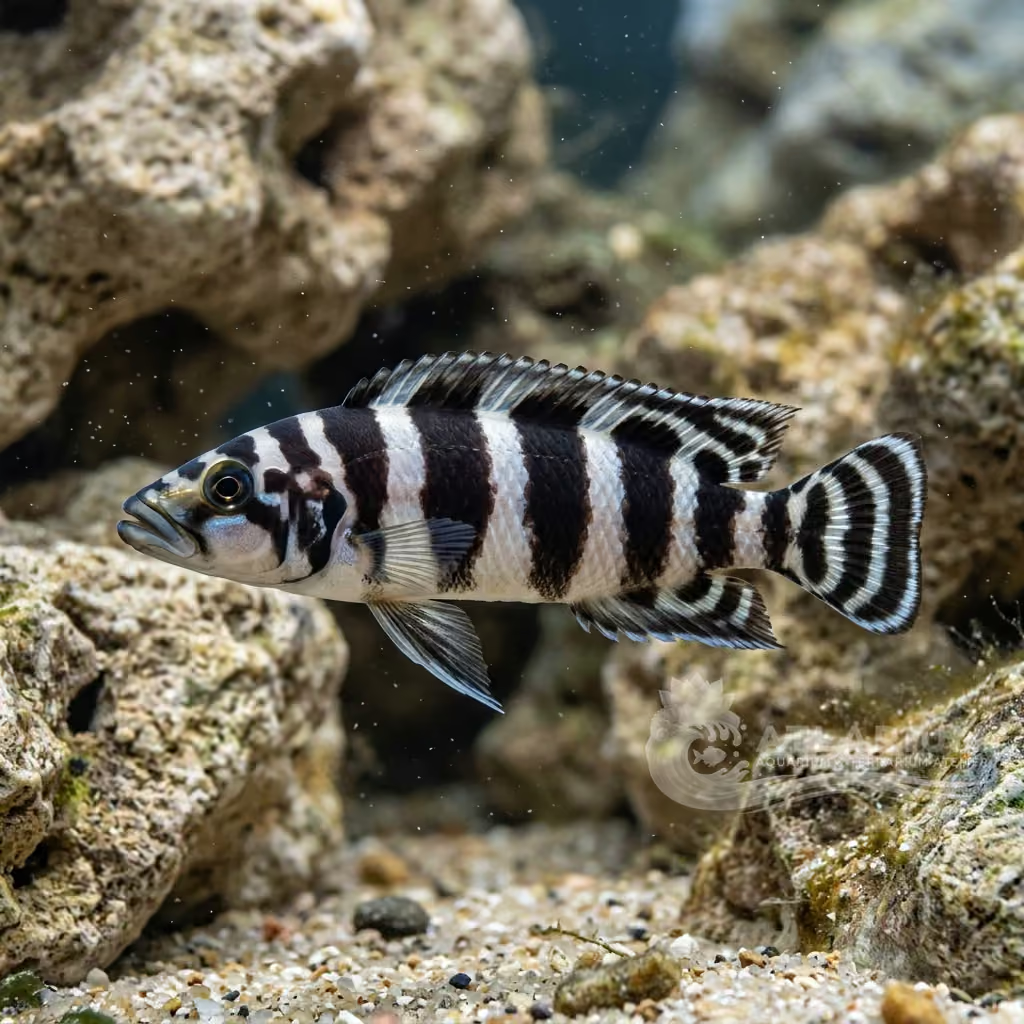
Freshwater Pipefish
Microphis deocata
The Deocata Pipefish is a fascinating freshwater seahorse relative. This stealthy ambush predator requires a dedicated, slow-moving tank and a constant supply of live micro-prey.
Water Temperature
22 - 28 °C
pH Value
7 - 8
Water type
Freshwater
Tank level
Bottom and middle
Adult size
15 cm
Minimum tank volume
>= 180 L
Minimum group
>= 1
GH
10 - 20 dGH
KH
5 - 10 dKH
TDS
200 - 400 ppm
Conductivity
313 - 625 uS/cm

Species description
Geographical Origin and Habitat: India (Assam, Bengal) and Bangladesh. Inhabits clean, fast-flowing rivers, hiding among submerged roots and dense riparian vegetation.
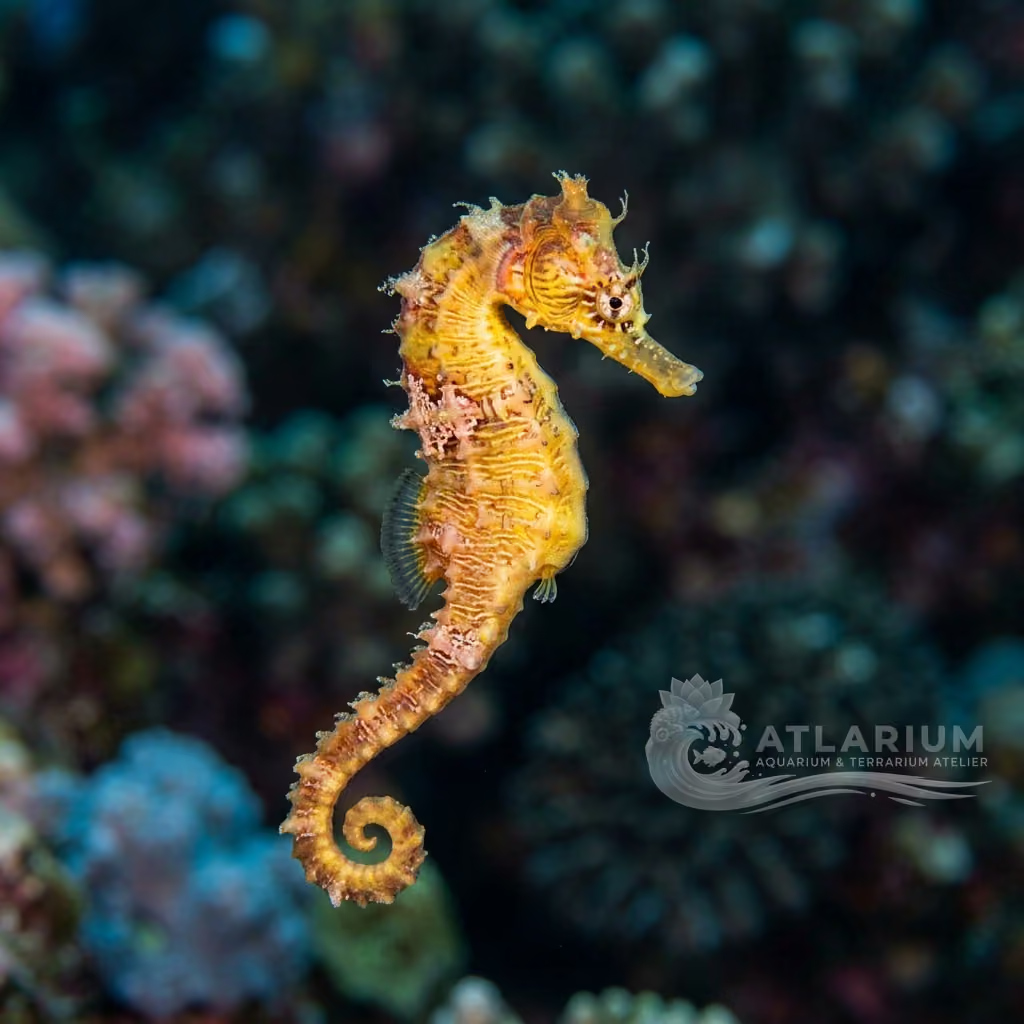
Taxonomy and Morphology: Deocata Pipefish (Microphis deocata). Freshwater pipefish. Closely related to seahorses (Syngnathidae family). Armored, tubular and extremely elongated body, pipette-like mouth.
Social Behavior: Peaceful, slow and methodical. Spends the days peering at every single leaf with its independent eyes (similar to those of chameleons) in search of micro-prey.
Coloration and Sexual Dimorphism: Females are the showy sex (a rare thing): they present a spectacular rainbow-colored ventral "sail" (red, green, blue, yellow) that they unfold during courtship. Males are gray/brown and equipped with a ventral brood pouch.

Care, breeding and tankmates
Aquarium Setup: Long tank (at least 80-100 cm / 32-40 inches) with little current, densely planted (Vallisneria gigantea, Ceratophyllum) to offer vertical holds. Soft sand bottom.
Diet and Feeding: micro-predator. Accepts EXCLUSIVELY live food. Needs a constant supply of brine shrimp nauplii, daphnia, moina or tiny mosquito larvae. Will categorically ignore dry food.
Water Quality: Hard and moderately alkaline water (PH 7.2-8.0). Suffers in excessively soft and acidic waters. Requires highly oxygenated water but with low mechanical flow (sponge filtration or spray-bar directed to the glass).
Compatibility and Cohabitation: Best kept in a dedicated tank (Species tank). Any other fish would steal the food before the very slow pipefish can fixate on the prey. Only static companions (Otocinclus) or small snails are tolerated.
Aquarium Breeding: Very complex. The female exhibits the iridescent sail; after the dances, she transfers the egg filaments into the male's ventral pouch. The male incubates the eggs and "gives birth" to tiny fry that need live infusoria.
Risks and Diseases: Guaranteed starvation in inadequate tanks. If placed in community tanks, they will waste away in a few weeks. Not having a real stomach (like seahorses), they must eat continuously all day long.

Geographic origin and distribution
India (Assam, Bengal) and Bangladesh. Inhabits clean, fast-flowing rivers, hiding among submerged roots and dense riparian vegetation.
Origin
Tropical oceans and reefsCentral America and CaribbeanSouth and Southeast AsiaEast Asia

Fish profile
- Temperament
- Semi-aggressive
- Deocata Pipefish are incredibly peaceful, timid, and methodical in their movements. They rely entirely on stealth and camouflage rather than speed to hunt or evade perceived threats. They do not tolerate stress well and require an aquarist dedicated to meeting their highly specialized environmental and dietary needs.
- Diet
- Omnivore
- They are strict micropredators and arguably one of the most challenging freshwater fish to feed. They often refuse any prepared or frozen foods, requiring a constant supply of live micro-foods such as baby brine shrimp, daphnia, or copepods. Establishing a thriving culture of live foods is absolutely mandatory before attempting to keep this species.
- Life expectancy
- 3-5 years
- Adult size
- 15 cm
- Sex ratio
- Pair
- Sexing is relatively easy as mature males possess the distinctive abdominal brood pouch, and females often display a more colorful belly during courtship. Keeping them in pairs or small groups with a balanced sex ratio is recommended. They are completely peaceful towards each other and display intricate courtship dances.
- Feeding frequency
- Twice daily
- Due to their tiny digestive tracts and constant hunting behavior, they need to be fed small amounts of live food multiple times a day. Ideally, the aquarium should have a continuously self-sustaining population of microfauna for them to hunt throughout the day. Infrequent feeding will quickly lead to starvation.
- Bioload
- Medium
- The Deocata Pipefish produces a very low bioload due to its slender body and small size. Despite this, they require absolutely pristine water conditions with virtually zero nitrates to survive in captivity. Over-filtration is highly recommended not to handle waste, but to ensure water quality remains exceptionally high and stable.
- Flow
- Stagnant
- They originate from the gentle, heavily vegetated streams of India and require very slow-moving water in the aquarium. Strong currents will batter their delicate bodies and prevent them from hunting effectively. Gentle filtration like a carefully baffled sponge filter is the best way to maintain water quality without creating turbulence.
- Jump risk
- Yes
- While not notorious jumpers, their long, slender bodies allow them to easily slip through surprisingly small gaps if startled. A secure lid is recommended, primarily to prevent them from accidentally launching themselves during a feeding strike near the surface. Ensure all openings around filter outputs are covered.
- Reproduction
- Oviparous
- Like their seahorse relatives, pipefish exhibit a fascinating reproductive strategy where the male carries the eggs. The female deposits her eggs into a specialized brooding pouch on the male's abdomen, where he fertilizes and incubates them. The male will eventually release fully formed miniature pipefish after several weeks of gestation.
- Compatibility & tankmates
- Semi-aggressive
- This is a highly delicate and slow-moving species that must only be kept in a dedicated species tank or with extremely docile tank mates. Fast-swimming or aggressive fish will easily outcompete them for food and cause them severe stress. Small, peaceful snails or very timid nano fish are the only potentially viable companions.
- Tank level
- Middle/Bottom
- They utilize all levels of the aquarium, frequently orienting themselves vertically to blend in with tall plants or hardscape. They are ambush predators that rely on their camouflage, spending hours hovering motionless near vegetation waiting for prey to pass by. A densely planted tank is an absolute requirement for them to feel secure.

Scientific Parameters & Models
FishBase
Window to the official scientific data of the species
FishBase v25.04Data synced on: 06/15/2026
- Trophic level
- 3.3 ± 0.4 se
- Resilience
- High (less than 15 months)
- Phylogenetic uniqueness (PD50)
- 0.5
- Bayesian Length-Weight
- a = 0.00098, b = 3.05
- VulnerabilityLow vulnerability (10 / 100)

Related species
Recommendations grouped by close relatives, companion choices, and similar care.