Falco hawkfish
Cirrhitichthys falco
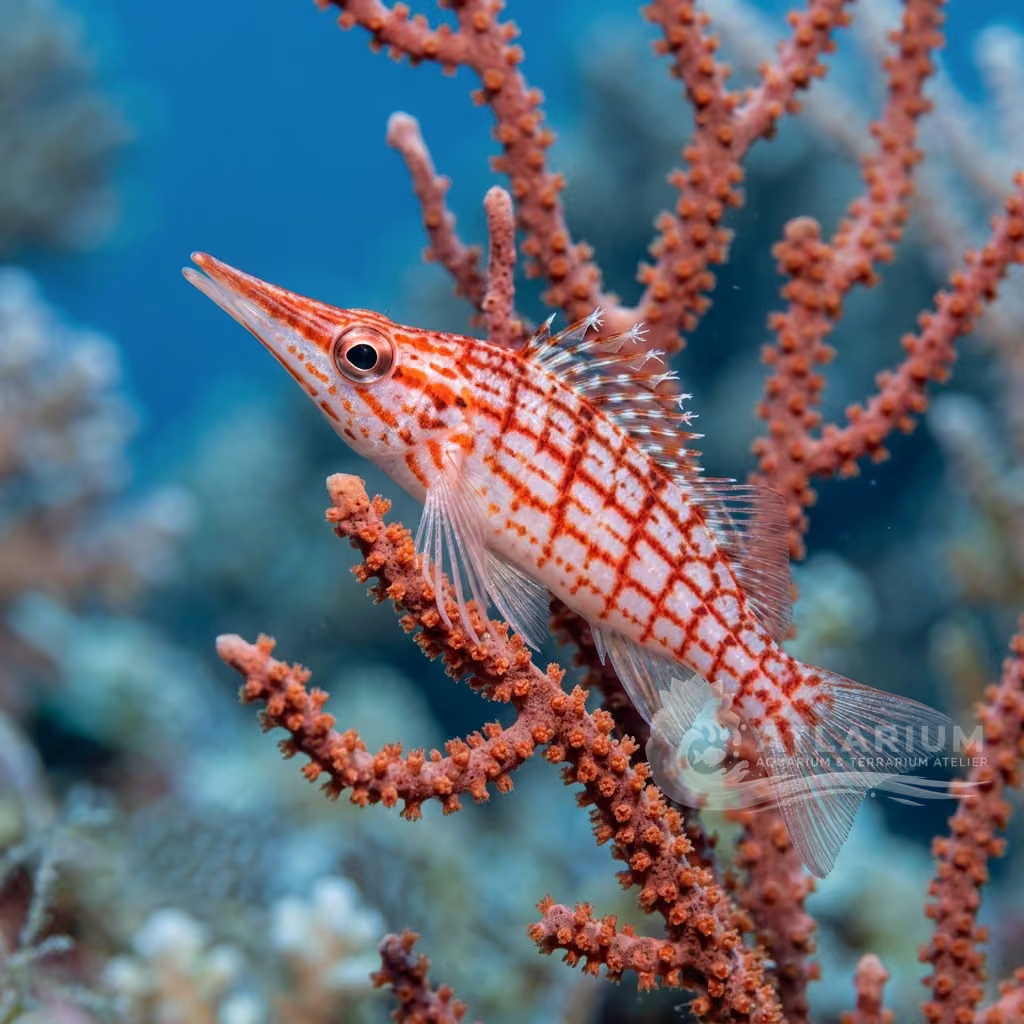
The charismatic dwarf hawkfish features a stunning geometric pattern. It actively perches on rockwork to observe its surroundings, though it poses a risk to small shrimp.
Water Temperature
24 - 27 °C
pH Value
8.1 - 8.4
Water type
Marine
Tank level
Bottom
Adult size
8 cm
Minimum tank volume
>= 100 L
Minimum group
>= 1
KH
8 - 12 dKH

Species description
Geographical Origin and Habitat:
This species is widely distributed across the tropical Western Indo-Pacific. It is commonly found from the coastal waters of Indonesia and the Philippines to Samoa, ranging north to southern Japan and south to the Great Barrier Reef in Australia. It inhabits shallow coral reefs and reef flats rich in hard corals at depths between 4 and 46 meters.
Taxonomy and Morphology:
Belonging to the family Cirrhitidae, it features a stocky, slightly elongated body with thickened lower pectoral fin rays that lack membranes, which are used as 'legs' to perch on rocks and corals. Adults reach a maximum length of about 7 centimeters. It also features small tufts of cirri at the tips of its dorsal fin spines.
Social Behavior:
It is a solitary, bottom-dwelling species with a strong territorial drive. It spends most of its time perched on rock ledges or branching corals (like Acropora) monitoring its surroundings. In the aquarium, it displays a curious and bold personality, protecting its favorite perching spot from other similarly sized fish.
Coloration and Sexual Dimorphism:
The coloration consists of a whitish or pinkish base body color covered in a geometric pattern of reddish-brown spots and vertical bars. Two distinct diagonal red stripes run behind the eye down toward the gill cover. There is no visible external sexual dimorphism, and males and females look identical.

Care, breeding and tankmates
Aquarium Setup:
Can be housed in medium-sized marine aquariums starting from 100 liters. The tank layout must include plenty of live rock arranged to create flat shelves, elevated perches, and caves where the fish can sit and observe the aquarium. Ensure the rockwork is stable, as this fish jumps between rocks frequently.
Diet and Feeding:
It is a carnivorous predator. In captivity, it greedily accepts a wide range of foods, including frozen mysis, brine shrimp, krill, and chopped seafood. It also acclimates quickly to high-quality dry pellet foods. Feed at least once a day, ensuring it gets a share before faster swimmers consume all the food.
Water Quality:
An exceptionally hardy and forgiving species. Maintain standard marine conditions: temperature between 24°C and 28°C, pH from 8.1 to 8.4, specific gravity from 1.020 to 1.025, and nitrates below 25 ppm. A standard filtration system with good water movement and oxygenation is sufficient.
Compatibility and Cohabitation:
It is reef safe with corals but not safe with small mobile invertebrates. It will actively prey on small ornamental shrimps (such as sexy shrimp or young cleaner shrimp) and tiny crabs. It coexists well with larger or active fish like clownfish, tangs, and wrasses. Avoid housing with small gobies.
Aquarium Breeding:
Breeding in home aquariums is extremely rare. They are haremic protogynous hermaphrodites. Courting occurs at dusk, with the pair performing a quick vertical spawning run to release pelagic eggs into the water column. The larval stage is long and difficult to rear due to specific live feed requirements.
Risks and Diseases:
Highly resistant to common marine diseases and parasites. The main risk in captivity is the fish jumping out of the aquarium when startled or chasing prey. A tight-fitting lid or mesh screen is mandatory. It acclimates very quickly to the home aquarium environment.

Geographic origin and distribution
This species is widely distributed across the tropical Western Indo-Pacific. It is commonly found from the coastal waters of Indonesia and the Philippines to Samoa, ranging north to southern Japan and south to the Great Barrier Reef in Australia. It inhabits shallow coral reefs and reef flats rich in hard corals at depths between 4 and 46 meters.
Origin
Tropical oceans and reefsNorth AmericaSouth and Southeast AsiaEast AsiaAustralia, New Guinea, and Oceania

Fish profile
- Temperament
- Semi-aggressive
- The Falco Hawkfish is semi-aggressive, curious, and highly territorial over its selected perching spots. They spend their days sitting on high rock ledges, observing their surroundings before darting to catch food. Keep only one specimen per tank unless introducing a mated pair in a large aquarium.
- Diet
- Carnivore
- Being strictly carnivorous, they require a diet based on meaty preparations. Offer a variety of frozen foods, including mysis, brine shrimp, chopped krill, squid, and clams. They will also adapt quickly to high-quality pellets and flakes designed for marine carnivores.
- Life expectancy
- 5-7 years
- Adult size
- 8 cm
- Sex ratio
- Solitary
- Solitary
- Feeding frequency
- Twice daily
- They should be fed once or twice daily. Providing small, controlled amounts ensures they receive adequate nutrition without polluting the aquarium. Monitoring their feeding is recommended, as they can be bold and may outcompete slower, more timid tankmates.
- Bioload
- Low to Medium
- The dwarf hawkfish generates a relatively low to moderate bioload due to its small adult size and sedentary nature. However, their high-protein diet of meaty marine fare can still introduce significant organics into the aquarium if uneaten food is left to decay. Standard mechanical and biological filtration, coupled with a good protein skimmer, is perfectly adequate for managing their waste. Care should be taken to feed small, appropriately sized portions to minimize unnecessary nutrient buildup.
- Flow
- Strong
- They prefer moderate to strong water flow, which mimics the shallow, oxygen-rich reef zones they inhabit. They use their specialized, unbranched pectoral fins to anchor themselves firmly to rocks in high-flow areas. Strong currents also help keep the water clean and well-aerated.
- Jump risk
- Yes
- There is a moderate to high jump risk associated with the dwarf hawkfish, especially when it is newly introduced or feels threatened by aggressive tank mates. Their sudden, darting swimming bursts can easily propel them out of an uncovered tank. A secure canopy or a fine-mesh screen top is an essential preventative measure for keeping this species. Hobbyists should pay close attention to any small openings near the aquarium rim.
- Reproduction
- Oviparous
- They are haremic protogynous hermaphrodites and pelagic spawners that perform vertical courtship runs at dusk. Breeding in home aquariums is very rare and difficult due to the complex larval phase. The microscopic larvae require specialized live feeds like rotifers and copepods to survive.
- Compatibility & tankmates
- Reef safe
- They are safe with corals, but not safe with small mobile invertebrates. They will actively prey on small ornamental shrimp, crabs, and very small benthic fish like gobies. They coexist peacefully with larger, active fish such as tangs, angelfish, and robust wrasses.
- Tank level
- Bottom
- Dwarf hawkfish are predominantly benthic and lower-level inhabitants, heavily relying on the hardscape for perching. Because they do not possess a swim bladder, they must actively swim to stay suspended and usually prefer resting on rocks or corals. They utilize the lower and middle sections of the aquarium to hunt for benthic invertebrates and establish their territory. It is exceedingly rare to see them swimming freely in the open upper water column.

Scientific Parameters & Models
FishBase
Window to the official scientific data of the species
FishBase v25.04Data synced on: 06/15/2026
- Trophic level
- 4 ± 0.65 se
- Phylogenetic uniqueness (PD50)
- 0.5039
- Bayesian Length-Weight
- a = 0.0123, b = 3.02
- VulnerabilityLow vulnerability (10 / 100)

Related species
Recommendations grouped by close relatives, companion choices, and similar care.