Encyclopaedia

FishMarineIntermediate
©AI Generated·Proprietary

Longnose hawkfish

Oxycirrhites typus

The Longnose Hawkfish is a specialized marine predator defined by its elongated snout. Endemic to deep reefs, it relies on complex branch structures to perch and monitor prey.

Taxonomy
Class:Actinopteri
Order:Perciformes
Family:Cirrhitidae
Genus:Oxycirrhites
Species:Oxycirrhites typus

Share

Check out Longnose hawkfish on Atlarium

PracticeRecognition quizzesPhotos, names, origins, and puzzles to review Atlas species.Open quizzes
Water Temperature

24 - 28 °C

pH Value

8.1 - 8.4

Water type

Marine

Tank level

Bottom and middle

Adult size

13 cm

Minimum tank volume

>= 200 L

Minimum group

>= 1

Species description

Geographical Origin and Habitat: The Longnose Hawkfish (*Oxycirrhites typus*) is a highly distinctive, specialized marine teleost natively endemic to the deep, steep seaward reef drop-offs and current-swept gorgonian fields of the Indo-Pacific Ocean (extending to the Eastern Pacific). Their natural biotope is defined by vertical reef walls absolutely dominated by massive sea fans (Gorgonians) and black corals, where they spend their entire lives perched motionless amidst the branches, waiting to ambush passing zooplankton.
Taxonomy and Morphology: Scientifically classified within the Cirrhitidae (Hawkfish) family, they are the sole member of the *Oxycirrhites* genus. Fully mature adults reach 10.0 to 13.0 centimeters (3.9-5.1 inches) in length.
CRITICAL FEATURE: Like all Hawkfish, they completely lack a swim bladder, meaning they cannot hover in the water column and will sink if they stop swimming. Their morphology is deeply specialized: a highly elongated, tubular snout with tiny jaws, and heavily thickened, unbranched lower pectoral rays used to physically grip coral branches.
Social Behavior: They are strictly benthic, highly observant ambush predators. They spend 95% of their day completely motionless, "perched" securely on the highest branch of a coral or rock, utilizing their independent, rapidly swiveling eyes to scan the surrounding water for tiny prey. When food is spotted, they launch themselves in a rapid, jerky darting motion, snap up the prey, and instantly sink back to a perch. They are highly territorial toward other Hawkfish but ignore dissimilar fish.
Coloration and Sexual Dimorphism: Sexual dimorphism is visually non-existent. Their coloration is a masterpiece of specialized disruptive camouflage designed exclusively to make them invisible when perched on red gorgonians. The base body coloration is stark, translucent white. This canvas is violently overlaid with a highly complex, crisscrossing "tartan" or "crosshatch" pattern of vibrant, deep red horizontal and vertical lines.

Care, breeding and tankmates

Aquarium Setup: The aquarium architecture MUST accommodate their absolute physical need to perch. A minimum 110-liter (30-gallon) marine aquarium is required.
CRITICAL REQUIREMENT: The tank MUST be aquascaped with tall, branching structures. They unconditionally require high vantage points (tall live rock pillars, branching SPS corals, or artificial/live Gorgonians) to sit on. They prefer moderate to strong water flow. Because they lack a swim bladder, they are notorious, powerful jumpers when startled; a tight lid is mandatory.
Diet and Feeding: They are obligate, highly specialized macroscopic carnivores. In the wild, they consume small benthic crustaceans and pelagic zooplankton. In the aquarium, they are voracious and aggressive eaters. They MUST be fed a meaty diet 1-2 times daily. They eagerly consume frozen Mysis shrimp, enriched brine shrimp, krill, and finely chopped seafood. They will rarely accept dry pellets or flakes. They strike with lightning speed during feeding time.
Water Quality: Originating from deep, high-current reef walls, they are incredibly hardy, disease-resistant, and forgiving of minor water parameter fluctuations. They demand stable tropical heat (24-27°C / 75-81°F). Specific gravity (salinity) MUST be maintained precisely between 1.020 and 1.025. They require hard, highly alkaline water (pH 8.1 - 8.4) and a well-oxygenated environment. They do not produce massive amounts of waste, but excellent biological filtration ensures their long-term health.
Compatibility and Cohabitation: Compatibility requires careful planning based entirely on the size of the tankmates.
CRITICAL WARNING: While generally considered "reef-safe" with corals, they are NOT invertebrate safe. They WILL unconditionally hunt, kill, and eat any ornamental shrimp (Peppermint, Skunk Cleaner, Sexy Shrimp) or tiny crab that fits in their mouth. Furthermore, they may harass incredibly small, passive fish (like tiny Gobies). Excellent tankmates are medium-sized, robust fish (Dwarf Angelfish, Tangs, large Wrasses).
Aquarium Breeding: Breeding the Longnose Hawkfish in captivity has occasionally been achieved in specialized commercial facilities but is extremely rare for home hobbyists. They are pelagic spawners. In the wild, courtship occurs at dusk; the pair engages in a rapid, vertical "spawning ascent" toward the surface, releasing thousands of buoyant, microscopic eggs at the apex before instantly darting back to the reef. Rearing the larvae requires complex, multi-stage plankton culturing.
Risks and Diseases: The absolute greatest physical risk is lethal desiccation; because they lack a swim bladder, when they are frightened, they launch themselves upward with immense force and frequently launch themselves completely out of the aquarium. A completely tight-fitting lid or mesh screen is unconditionally mandatory. Medically, they are highly robust and possess a thick slime coat that makes them highly resistant to Marine Ich (*Cryptocaryon*).

Geographic Origin and Distribution

The Longnose Hawkfish (*Oxycirrhites typus*) is a highly distinctive, specialized marine teleost natively endemic to the deep, steep seaward reef drop-offs and current-swept gorgonian fields of the Indo-Pacific Ocean (extending to the Eastern Pacific). Their natural biotope is defined by vertical reef walls absolutely dominated by massive sea fans (Gorgonians) and black corals, where they spend their entire lives perched motionless amidst the branches, waiting to ambush passing zooplankton.

Origin

Tropical oceans and reefsNorth AmericaAfrica and Madagascar

Fish profile

Temperament
Peaceful
They are observant and highly inquisitive fish. They possess a bold personality despite their lack of free swimming. They constantly survey the tank for potential food items.
Diet
Omnivore
This species is strictly a carnivorous predator. They feed on small crustaceans and zooplankton in the wild. Offer them mysis shrimp, brine shrimp, and chopped seafood.
Sex ratio
Group
They are completely intolerant of their own kind. It is highly recommended to keep only one specimen per tank. A mated pair can only be attempted in very large systems.
Feeding frequency
Twice daily
They should be fed one or two times daily. Small, frequent meals keep their metabolism stable. Ensure all food is consumed within a few minutes.
Bioload
Medium
They produce a moderate bioload for a marine tank. Adequate protein skimming is recommended to maintain water quality. Regular water changes are necessary for long-term health.
Flow
Strong
They appreciate areas of strong, turbulent water flow. They often perch on corals in high flow zones. Good water movement simulates their natural reef crest habitat.
Jump risk
No
Reproduction
Oviparous
Breeding this species in a home aquarium is extremely difficult. They are pelagic spawners that release eggs into the water column. Raising the larvae requires highly specialized microscopic live foods.
Compatibility & tankmates
Territorial
They are generally peaceful with larger tank mates. However, they will readily eat small ornamental shrimp. Smaller gobies or blennies might also be at risk.
Tank level
Middle/Bottom
They spend most of their time perched on the hardscape. You will rarely see them free-swimming in the open water. They prefer the middle to upper regions of the reef structure.

Window to the official scientific data of the species

Data synced on: 06/15/2026

Scientific Parameters & Models

Trophic level
3.3 ± 0.37 se
Phylogenetic uniqueness (PD50)
1
Bayesian Length-Weight
a = 0.00389, b = 3.12
VulnerabilityLow vulnerability (10 / 100)

Image gallery

Licensed images linked to the species or, when marked, to the closest representative taxon.

Related species

Recommendations grouped by close relatives, companion choices, and similar care.

Recommended companions

Compatible cards from coherent ecosystems with matching parameters.

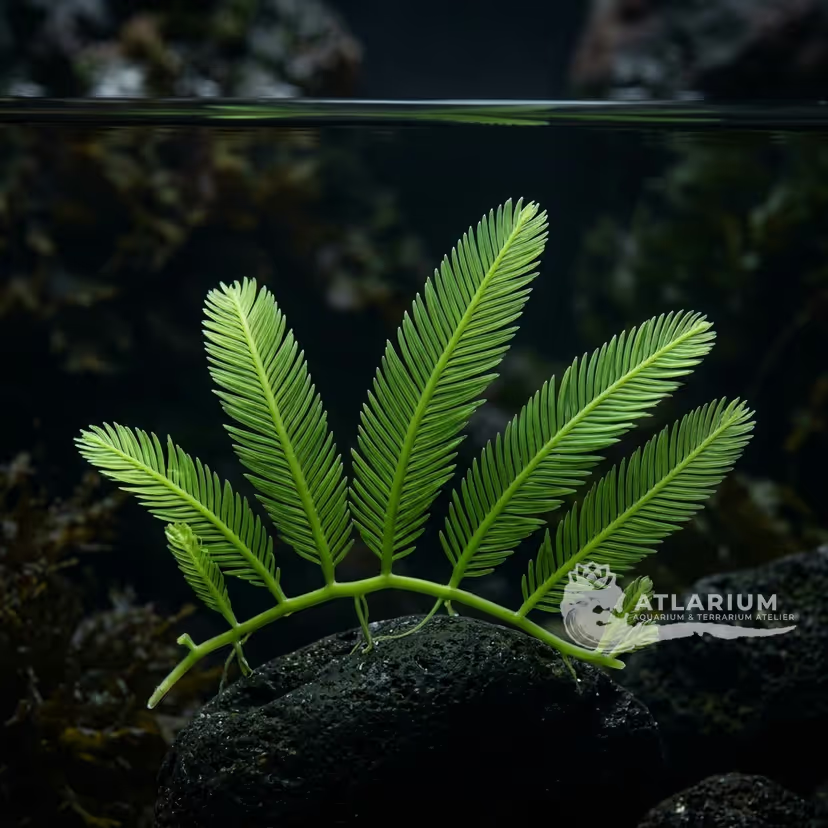
Caulerpa prolifera
Plant

Caulerpa prolifera

Caulerpa prolifera
View details->
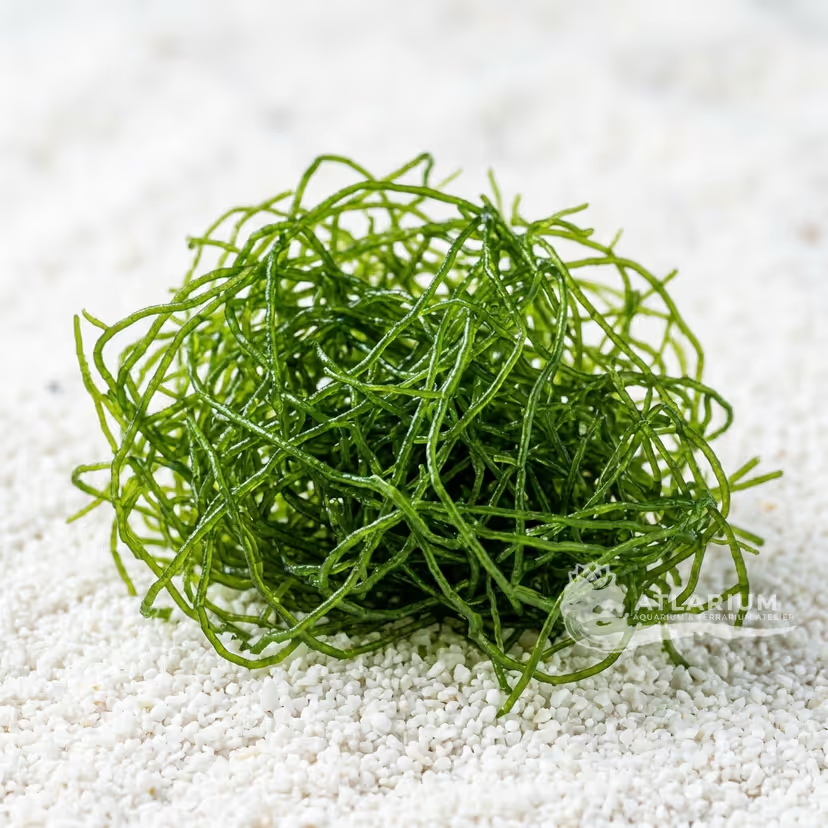
Caulerpa taxifolia
Plant

Caulerpa taxifolia

Caulerpa taxifolia
View details->
Chaetomorpha macroalgae
Plant

Chaetomorpha macroalgae

Chaetomorpha linum

View details->
Dead man fingers algae
Plant

Dead man fingers algae

Codium fragile

View details->
Grape caulerpa
Plant

Grape caulerpa

Caulerpa racemosa

View details->
Halimeda macroalgae
Plant

Halimeda macroalgae

Halimeda opuntia

View details->
Peacock tail algae
Plant

Peacock tail algae

Padina pavonica

View details->
Red gracilaria
Plant

Red gracilaria

Gracilaria parvispora

View details->
Red grape algae
Plant

Red grape algae

Botryocladia uvaria

View details->
Sea lettuce
Plant

Sea lettuce

Ulva lactuca

View details->
Red Mangrove
Plant

Red Mangrove

Rhizophora mangle

View details->

Similar care

Cards with similar requirements, difficulty, habitat, and husbandry profile.

Black Bow Damselfish

Black Bow Damselfish

Neoglyphidodon melas

View details->
Clark's anemonefish

Clark's anemonefish

Amphiprion clarkii

View details->
Black-and-gold Chromis

Black-and-gold Chromis

Neoglyphidodon nigroris

View details->
Neon damselfish

Neon damselfish

Neoglyphidodon oxyodon

View details->
Ambon Chromis

Ambon Chromis

Chromis amboinensis

View details->
Bundoon blenny

Bundoon blenny

Meiacanthus bundoon

View details->
Blue Chromis

Blue Chromis

Chromis cyanea

View details->
Threespot dascyllus

Threespot dascyllus

Dascyllus trimaculatus

View details->
Royal Dottyback

Royal Dottyback

Pictichromis paccagnellae

View details->
Allen's Damselfish

Allen's Damselfish

Pomacentrus alleni

View details->
Black-bar chromis

Black-bar chromis

Chromis retrofasciata

View details->
Goldbelly damselfish

Goldbelly damselfish

Pomacentrus auriventris

View details->
Blue Damselfish

Blue Damselfish

Chrysiptera cyanea

View details->
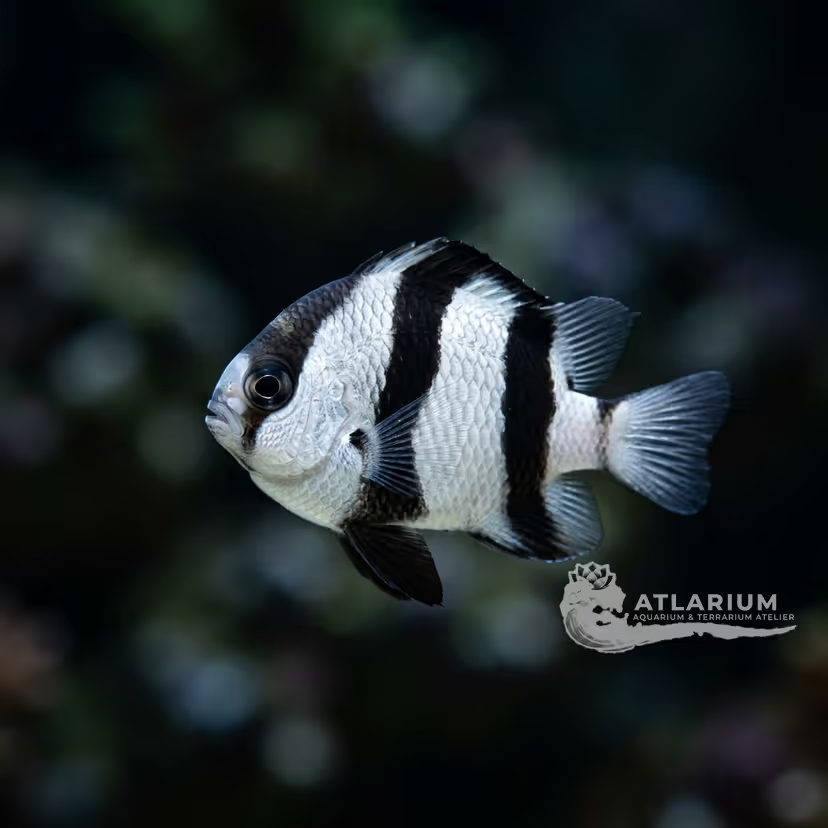
Four-stripe Damselfish / Blacktail Humbug

Four-stripe Damselfish / Blacktail Humbug

Dascyllus melanurus
View details->
Whitetail Dascyllus

Whitetail Dascyllus

Dascyllus aruanus
View details->
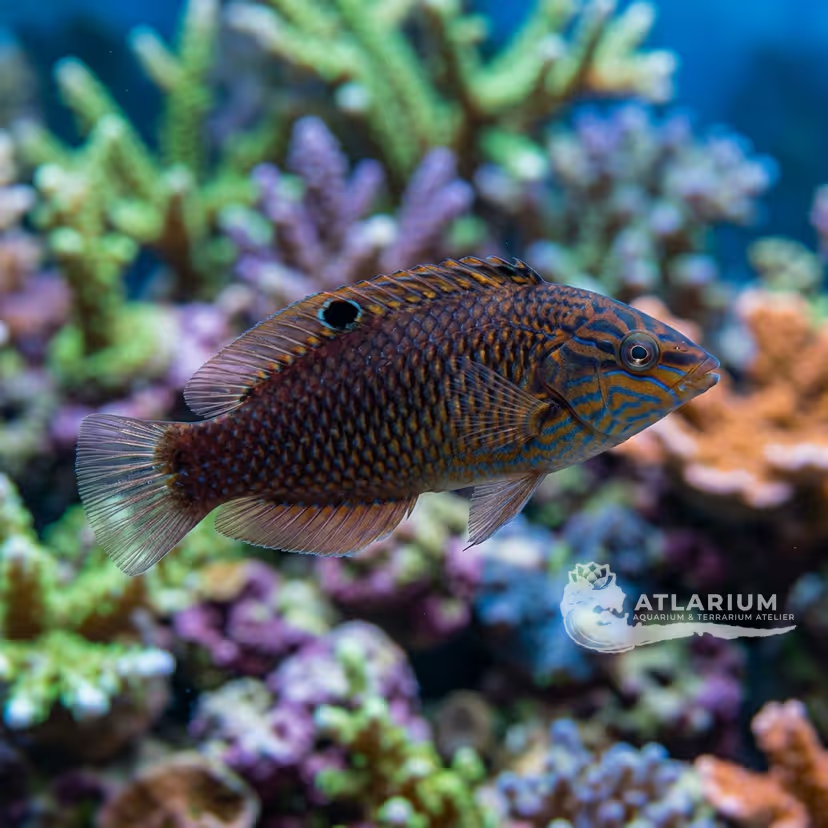
Black Wrasse

Black Wrasse

Halichoeres adustus

View details->
Last updated: 06/30/2026