Hancock's Talking Catfish
Platydoras hancockii
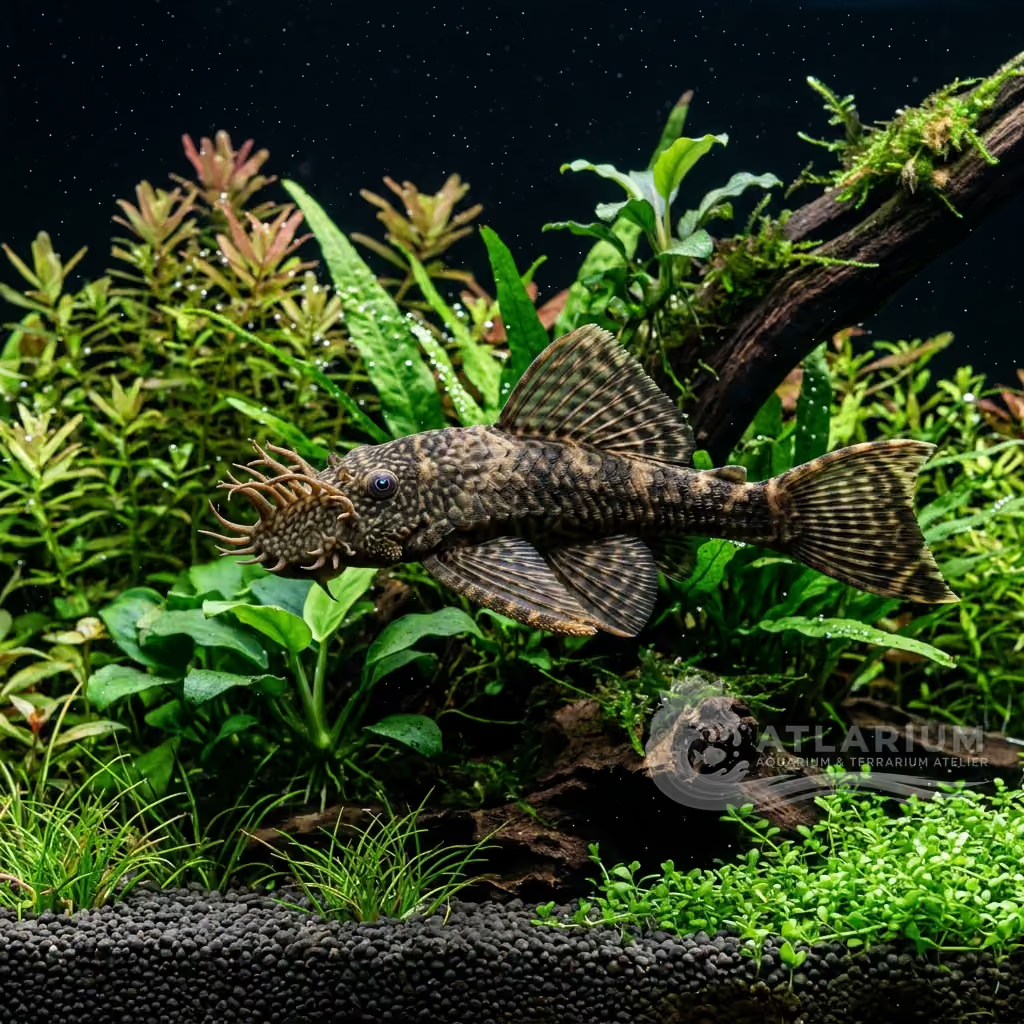
Small and massive siluriform, adorned with large thorny lateral bony plates. It has a mottled coloration from dark gray to sand brown. Famous for its ability to croak when lifted from the water.
Water Temperature
23 - 28 °C
pH Value
6 - 7.5
Water type
Freshwater
Tank level
Bottom
Adult size
15 cm
Minimum tank volume
>= 100 L
Minimum group
>= 1
GH
2 - 15 dGH
KH
1 - 10 dKH
TDS
40 - 325 ppm
Conductivity
63 - 508 uS/cm

Species description
Geographical Origin and Habitat: Distributed in the Orinoco and Upper Amazon basin (Brazil, Colombia, Peru). Prefers calm alluvial lagoons and the shaded margins of streams where there is a thick layer of litter and mud.
Taxonomy and Morphology: Hancock's Talking Catfish (Amblydoras hancockii). Loricariid/Doradid with rough plates. It boasts two imposing rows of bony and spined scales on its sides and a stubby arrow-shaped profile, designed to bury itself quickly.
Social Behavior: Peaceful and extremely squatter. Chooses a root or a leaf cluster and spends all hours of the day holed up there, refusing to swim. Highly gregarious if kept in a large group.
Coloration and Sexual Dimorphism: Irregular pattern of grayish-brown patches and whitish belly. The wide lateral bony plates create a jagged stripe ("black zig-zag") along the body. Females visibly rounder and heavier due to the ovaries.

Care, breeding and tankmates
Aquarium Setup: An aquarium (at least 80-100 cm / 32-40 inches) with a typical "Blackwater" flavor. Sharp-edged gravel is strictly forbidden. It must be furnished with many tortuous bogwood and half sunken coconuts to form "dark caves".
Diet and Feeding: Nocturnal omnivorous/detritivorous explorer. Eats any type of sunken food (industrial pellets and tablets), vigorously supplementing it with daphnia, bloodworms or tubifex provided at dusk.
Water Quality: Very resistant to adverse conditions; does not suffer from occasional oxygen reductions, thanks to a mild capacity for aerial branchial absorption. In the aquarium, slightly amber and acidic water benefits its longevity.
Compatibility and Cohabitation: Wonderful bottom fish for South American biotopes with Corydoras or Apistogramma. Totally ignores companion species (Cichlids, Characins) limiting itself to ignoring them even if disturbed, simply flexing its armor for defense.
Aquarium Breeding: Hidden in mystery in private aquariums. There is a suspicion that they prepare superficial detrital nests defended by both breeders before hatching, a behavior documented in some related genera.
Risks and Diseases: It is at high risk of "Entrapment and Breakage". The sharp pectoral rays will inexorably get stuck in the traditional nylon net during capture operations. The fish will struggle, tearing them out or dying from stress.

Geographic origin and distribution
Distributed in the Orinoco and Upper Amazon basin (Brazil, Colombia, Peru). Prefers calm alluvial lagoons and the shaded margins of streams where there is a thick layer of litter and mud.
Origin
Tropical oceans and reefsAmazon, Orinoco, and Guianas

Fish profile
- Temperament
- Semi-aggressive
- This catfish is exceptionally peaceful and non-aggressive, making it a perfect candidate for community aquariums. However, since they are opportunistic nocturnal feeders, they may swallow very small fry or tiny nano fish if they can fit inside their mouths. They are highly secretive and nocturnal, spending daylight hours completely hidden and only becoming active once the aquarium lights have been turned off.
- Diet
- Omnivore
- Amblydoras hancockii is an omnivorous and opportunistic scavenger that will readily accept a wide variety of foods reaching the substrate. Their diet should consist of high-quality sinking catfish pellets, algae wafers, and regular offerings of live or frozen foods such as bloodworms, tubifex, and brine shrimp. Because they feed mainly in darkness, it is crucial to add food to the aquarium just before or after turning off the lights.
- Life expectancy
- 8-15 years
- Adult size
- 15 cm
- Sex ratio
- Group
- This species exhibits highly gregarious behavior and is very peaceful toward its own kind, meaning it should ideally be kept in a group of at least three or four individuals. There is no strict male-to-female ratio required, as they do not show territorial or intraspecific aggression in the aquarium. Keeping them in a group helps them feel secure, encourages natural behaviors, and significantly reduces the shyness and stress associated with solitary keeping.
- Feeding frequency
- Twice daily
- It is recommended to feed this catfish once per day, preferably in the evening or shortly after the aquarium lights have been turned off to align with their nocturnal activity. Feeding them during the day is generally unsuccessful as they will remain hidden in their caves, allowing other tankmates to consume the food. Ensuring a daily nocturnal feeding routine helps keep them healthy, active, and well-nourished.
- Bioload
- Low to Medium
- The biological load generated by Amblydoras hancockii is relatively low to medium due to their small adult size of 7.5 to 10 cm and their largely sedentary lifestyle. However, because they are bottom-dwelling scavengers that feed on organic debris, they require an efficient filtration system to prevent the accumulation of toxic compounds. A soft, sandy substrate combined with regular mechanical and biological filtration maintenance is essential to process their waste and keep the water clean.
- Flow
- Stagnant
- In their natural habitat, these catfish inhabit slow-moving or standing waters, such as small creeks, swamps, and flooded forest areas. Consequently, they prefer a weak to moderate water flow in the aquarium, and strong, direct currents should be avoided as they can stress the fish. Adequate biological filtration should be maintained while keeping the bottom areas calm and free of excessive water movement.
- Jump risk
- No
- Reproduction
- Oviparous
- Breeding Amblydoras hancockii in captivity is extremely difficult and has not yet been reliably achieved in home aquaria. In nature, they are believed to construct bubble nests among floating vegetation and leaf debris, which are subsequently guarded by the male until the fry hatch. To encourage potential spawning behavior, aquarists recommend using soft, acidic water, providing floating plants, and simulating a rainy season with cool water changes.
- Compatibility & tankmates
- Community
- This catfish is highly compatible with a wide variety of peaceful, medium-sized tankmates such as tetras, peaceful cichlids, Corydoras, and loricariids. However, very small species or tiny shrimp should be avoided as they might be consumed during the night. Additionally, aggressive or highly territorial tankmates should not be housed with them to prevent stress and keep these shy bottom dwellers safe.
- Tank level
- Bottom
- Amblydoras hancockii is a strictly demersal fish that spends almost all of its time on or just above the aquarium substrate. During the daytime, they will remain tightly squeezed into dark caves, rock crevices, PVC pipes, or hidden underneath driftwood and leaf litter. They will only venture out into the open or occasionally swim into the mid-water levels during the night when the lights are completely turned off to scavenge for food.

Scientific Parameters & Models
FishBase
Window to the official scientific data of the species
FishBase v25.04Data synced on: 06/15/2026
- Trophic level
- 2 ± 0 se
- Resilience
- High (less than 15 months)
- Phylogenetic uniqueness (PD50)
- 0.5312
- Bayesian Length-Weight
- a = 0.0123, b = 2.96
- VulnerabilityLow vulnerability (10 / 100)

Related species
Recommendations grouped by close relatives, companion choices, and similar care.