Crassula helmsii
Crassula helmsii
Swamp Stonecrop is an incredibly aggressive, amphibious succulent-like weed from Oceania. It demands intense light to thrive underwater, rapidly rotting at the base if shaded or placed in low-tech setups.
Water Temperature
10 - 25 °C
pH Value
6 - 8
Water type
Freshwater
Light
High
CO2
Medium
Expected height
15 cm
Expected width
10 cm
GH
4 - 20 dGH
KH
2 - 25 dKH

Species description
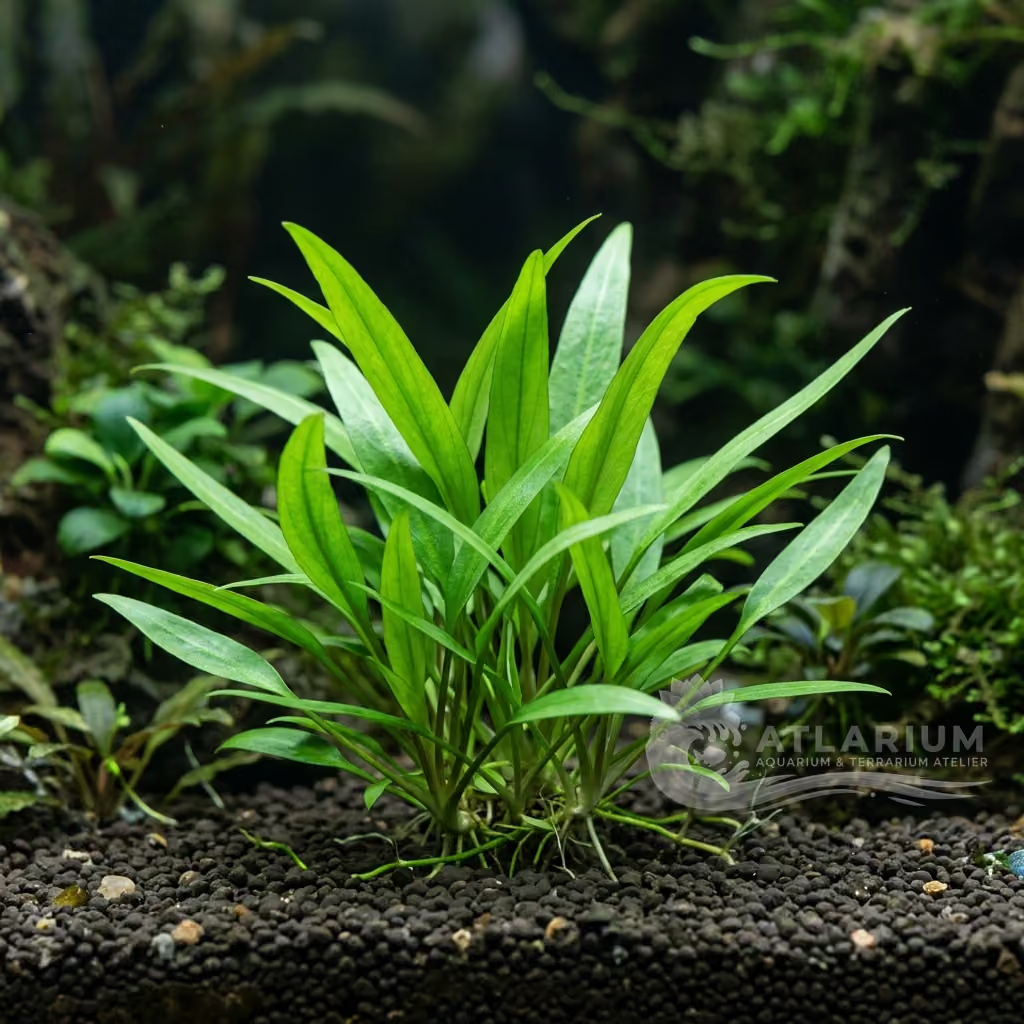
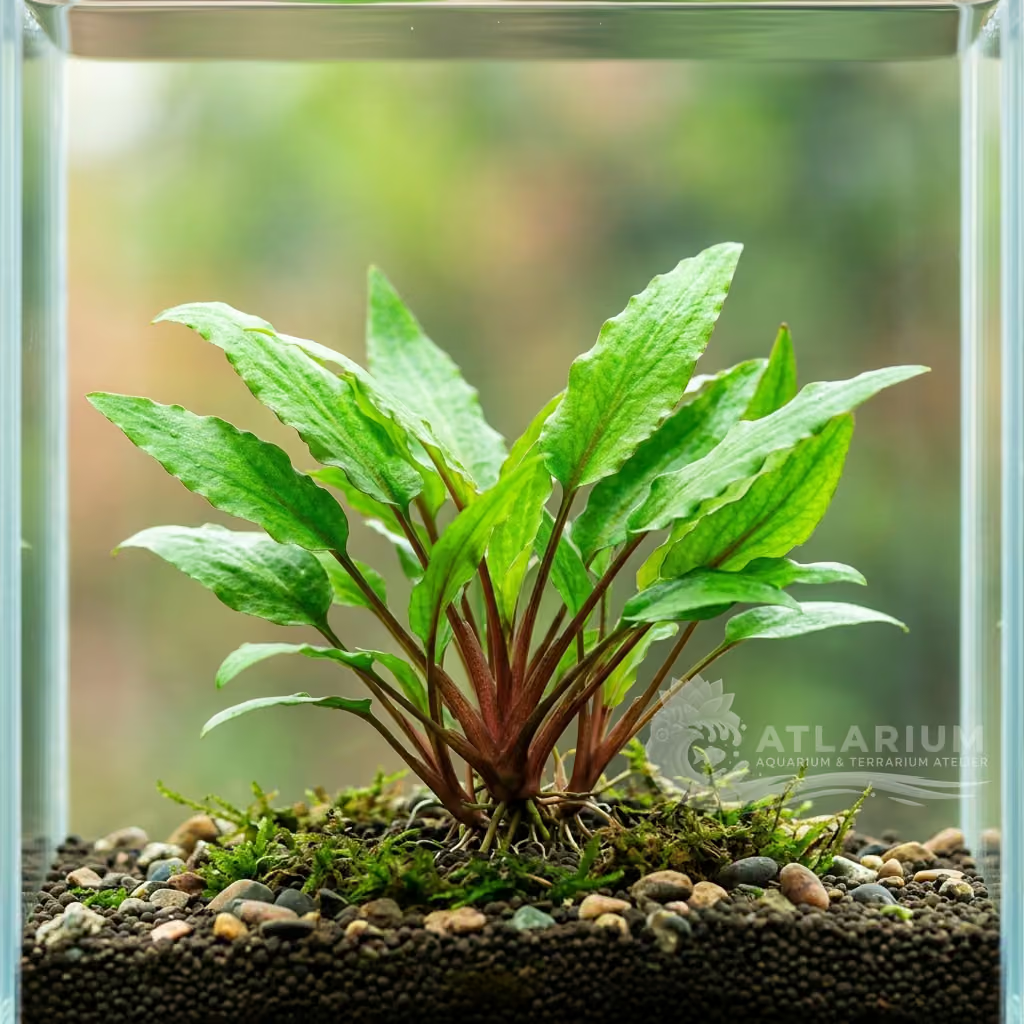
Geographical Origin and Habitat: Endemic primarily to the temperate and subtropical wetland regions of Australia and New Zealand. Commonly known as Swamp Stonecrop, Crassula helmsii is an incredibly aggressive, amphibious, succulent-like aquatic weed. In the wild, it completely dominates the shallow, muddy margins of lakes, slow-moving rivers, and stagnant ponds. It thrives in an extreme amphibious lifestyle, seamlessly transitioning between creeping, highly rigid terrestrial mats on damp soil and sprawling, elongated, fully submerged aquatic forests.
Taxonomy & Genetics: Scientifically classified within the Crassulaceae family, it is a highly unusual plant in the aquascaping hobby. Most aquatic stem plants are delicate, but C. helmsii belongs to a family of true succulents. Taxonomically, its genetics are hardwired for extreme survival and rapid propagation. Because it is so biologically aggressive and adaptable to cold climates, it is globally classified as a severely invasive, prohibited weed across the UK and parts of Europe, where it violently outcompetes native aquatic flora.
Physical Structure: The structural architecture of Swamp Stonecrop is distinctly succulent-like and exceptionally rigid. The central stems are perfectly round, incredibly thick, fleshy, and somewhat brittle, growing strictly vertically when submerged. The leaves grow in perfect, opposing pairs along the entire length of the thick stem. The leaves themselves are small, highly elongated, intensely rigid, and strictly lanceolate (spear-shaped). When the plant breaches the water's surface, the stems become even thicker, and it produces tiny, solitary white flowers at the leaf nodes.
Color & Texture: The coloration is a brilliant, glowing, almost artificial-looking light apple-green to vibrant emerald. It completely lacks the biological mechanism to produce any red or purple pigments, remaining steadfastly bright green regardless of lighting intensity. The texture is notoriously rigid, stiff, and highly fleshy. The thick leaves and stems feel exactly like a terrestrial succulent (like a jade plant) to the touch, drastically contrasting with the soft, delicate, papery texture of typical aquatic stem plants.

Care, breeding and tankmates
Lighting & CO2: It is an intensely demanding plant regarding light. If placed in a shaded or low-tech tank, the lower portions of the thick stems will rapidly drop their leaves, turn black, and rot away, while the top of the plant desperately stretches toward the surface. It absolutely demands blasting, high-intensity LED lighting to maintain its thick, dense, bushy structure. While it can theoretically survive without injected CO2, pressurized CO2 is highly recommended to force the plant to grow compact, thick, and intensely bright green.
Nutrition & Substrate: Crassula helmsii is an extremely aggressive feeder. It rapidly deploys a massive, thick, white root system deep into the substrate. It absolutely demands a deep layer of premium, nutrient-rich aquasoil to fuel its explosive vertical growth. If planted in inert sand or gravel, the stems will quickly stunt and turn yellow. Furthermore, because it grows so incredibly fast under strong light, the water column MUST be heavily dosed with a comprehensive liquid fertilizer containing high levels of potassium and iron to prevent the thick leaves from melting.
Water Chemistry: This plant is essentially indestructible regarding water parameters. It thrives equally in unheated, cold-water tanks (10-15°C) and heated, standard tropical aquariums (up to 28°C). It effortlessly adapts to extreme pH ranges (6.0 - 8.5) and highly alkaline, extremely hard tap water. In fact, it actually prefers harder water to build its incredibly rigid, succulent-like stems. The only critical requirement is pristine water quality; if organic waste builds up, the rigid, bright green leaves become massive magnets for Black Beard Algae (BBA).
Space Management & Placement: Due to its aggressively vertical growth, massive root system, and incredibly thick, rigid structure, Swamp Stonecrop is strictly a background plant. It is used to create massive, dense, bright-green architectural walls at the rear of Dutch-style aquascapes. It provides a striking, fleshy texture that violently contrasts against fine-leaved plants like Rotala or Myriophyllum. It must never be placed in the foreground, as it will quickly obscure the entire tank and aggressively overshadow smaller carpeting plants.
Pruning: Pruning is a brutal, weekly requirement when grown under high-intensity light and CO2. The thick stems will rapidly breach the surface and continue growing emersed. Use heavy-duty, sharp scissors to aggressively cut the thick stems down to the substrate line. Every single cut top can be immediately replanted deep into the aquasoil, where it will instantly grow new roots and form a new thick stem. If the lower stems begin to rot from lack of light, uproot the entire plant, discard the rotten base, and replant only the healthy green tops.
Risks & Diseases: The absolute greatest threat to this plant is inadequate lighting. If the lower stems are shaded by their own dense growth, they will rapidly drop their leaves and melt into a black mush, causing the entire thick top of the plant to uproot and float away. The second major risk is its highly invasive nature; hobbyists MUST NEVER dispose of cuttings in local waterways or toilets, as even a tiny fragment of this resilient succulent can devastate local ecosystems.

Geographic origin and distribution
Endemic primarily to the temperate and subtropical wetland regions of Australia and New Zealand. Commonly known as Swamp Stonecrop, Crassula helmsii is an incredibly aggressive, amphibious, succulent-like aquatic weed. In the wild, it completely dominates the shallow, muddy margins of lakes, slow-moving rivers, and stagnant ponds. It thrives in an extreme amphibious lifestyle, seamlessly transitioning between creeping, highly rigid terrestrial mats on damp soil and sprawling, elongated, fully submerged aquatic forests.
Origin
Australia, New Guinea, and Oceania

Plant profile
- Placement
- Foreground
- Depending on lighting and trimming, it can be used in the foreground as a thick carpet or allowed to grow taller in the midground. When placed in the foreground, intense light is required to keep it growing horizontally rather than vertically. It looks stunning when planted in dense clusters that are regularly shaped with aquascaping scissors. Its fine texture provides an excellent contrast to broader-leaved plants.
- Botanical form
- Stem
- It features thin, fleshy stems adorned with small, oppositely arranged, needle-like leaves of a bright, fresh green. The plant's structure is somewhat fragile, though it quickly recovers and branches out if broken. Under high light, the internodes remain very short, giving it a moss-like, dense appearance. In its emersed form, it may produce tiny, delicate white flowers.
- Growth
- Medium
- This plant is known for its extremely rapid and sometimes invasive growth rate under optimal conditions. In high-light and high-CO2 environments, it requires frequent, aggressive trimming to prevent it from overtaking the aquarium. Even in low-tech setups, it grows reliably, making it an excellent choice for absorbing excess nutrients and combating algae. Its fast growth makes it highly rewarding but demanding in terms of maintenance.
- Substrate
- High
- Crassula helmsii is incredibly adaptable and can root in almost any substrate, from fine sand to coarse gravel. However, an active, nutrient-rich aquasoil will dramatically increase its growth speed and overall hardiness. Its fine roots quickly weave through the substrate, forming a dense mat that holds the soil together. Root tabs can be added to inert substrates to mimic the benefits of a richer soil.
- Column fertilization
- Recommended
- Because of its rapid metabolism, it relies heavily on water column fertilization to sustain its mass. A consistent daily or weekly dosing schedule of liquid fertilizers ensures that its leaves have constant access to nutrients. It is highly efficient at pulling nitrates and phosphates directly from the water, acting as a great natural filter. Keep iron levels stable to maintain its bright green coloration.
- Root fertilization
- None
- While it can survive solely on column feeding, root fertilization provides a stable nutrient reserve that enhances its resilience. Substrate nutrients are especially important when attempting to grow it as a dense, low carpet. Root tabs embedded directly under the plant clusters will promote a deeper, stronger root network. This combined feeding approach yields the most robust and vibrant specimens.
- Trimming
- Occasional
- Frequent, aggressive trimming is necessary to prevent it from overtaking the aquarium or shading out smaller foreground plants. It can be treated like a stem plant; simply cut the tops off and discard them, or replant them to thicken the group. Trimming promotes branching and helps maintain a dense, bushy appearance.
- Propagation
- Cuttings
- Propagation is incredibly simple; virtually any piece of the stem with a few leaves can grow into a new plant. Snip the stems and push the cuttings gently into the substrate, where they will quickly take root. Even floating fragments will continue to grow and can eventually be planted. Frequent trimming naturally encourages the plant to branch out, creating a denser patch.
- Sensitivity
- Moderate
- Crassula helmsii is extremely hardy and tolerates a very wide range of temperatures, from cold water setups to tropical aquariums. It is not picky about water parameters but does require moderate to high light to prevent the lower stems from rotting. It is considered an invasive species in many regions due to its extreme adaptability.
- Layout role
- Midground, Foreground, Nano
- It is highly versatile, serving as a textured foreground carpet if kept meticulously trimmed, or as a dense midground bush. Its fine, slightly succulent leaves provide a unique texture that contrasts well with broader-leaved species. In paludariums, it creates a beautiful, creeping transition from water to land.

Image gallery
Licensed images linked to the species or, when marked, to the closest representative taxon.

Related species
Recommendations grouped by close relatives, companion choices, and similar care.